How to change iPhone graphics

BSC Insights Admin
October 26, 2026
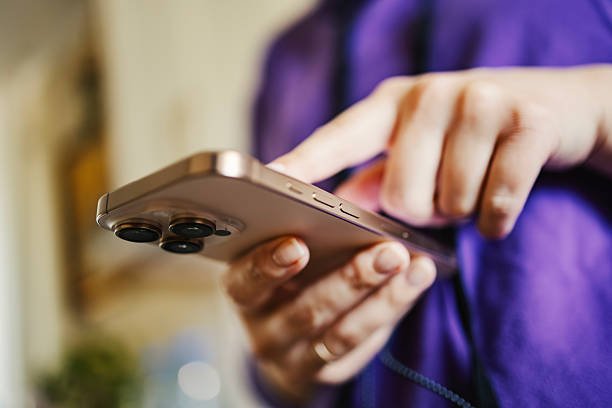
How to Change iPhone Graphics: A Comprehensive Guide to Customizing Your Visual Experience
While you can't manually change your iPhone's screen resolution like on a computer, you can significantly change iPhone graphics by adjusting various display, accessibility, and in-app settings to customize visual comfort, optimize performance, and even extend battery life. This guide will walk you through all the ways to tailor your iPhone's visual presentation, from fundamental display adjustments to advanced accessibility features and performance optimizations for apps and games.
Understanding iPhone Graphics Capabilities
Before diving into how to adjust graphics, it's essential to understand the powerful display technologies built into your iPhone. Apple designs its displays for optimal visual fidelity, but knowing their capabilities helps in making informed customization choices.
Retina and Super Retina Displays
Every modern iPhone features a Retina display, characterized by a pixel density so high that individual pixels are indistinguishable to the human eye at a normal viewing distance. Newer models boast Super Retina XDR displays, which offer even higher contrast ratios, brighter peak brightness, and wider color support (P3 wide color gamut) for incredibly vibrant and lifelike visuals. These displays provide a fantastic foundation, meaning you're working with high-quality hardware from the start.
ProMotion Technology (Adaptive Refresh Rate)
Available on iPhone 13 Pro models and newer, ProMotion technology dynamically adjusts the display's refresh rate up to 120Hz. This means smoother scrolling, more responsive gaming, and a more fluid overall user experience. For static content, it can drop to a lower refresh rate to conserve battery. While you can't set a specific refresh rate, you can influence it by enabling or disabling 'Limit Frame Rate' in Accessibility settings, which caps it at 60Hz to save power.
HDR (High Dynamic Range)
Many iPhones support High Dynamic Range (HDR) content, which allows for a greater range of luminance and color. This results in more detail in both the brightest and darkest parts of an image or video, providing a more immersive and realistic viewing experience for supported content (e.g., HDR videos on YouTube, Netflix, or Apple TV+). The phone automatically adjusts to display HDR content when available.
GPU Performance and its Role in Graphics
The Graphics Processing Unit (GPU) is the dedicated hardware inside your iPhone responsible for rendering all the visuals you see. A more powerful GPU can render more complex scenes, higher resolutions (internally, before scaling to the display), and smoother animations at higher frame rates. While you can't directly 'overclock' or 'underclock' your iPhone's GPU, optimizing settings (especially in games) can ensure the GPU isn't unnecessarily strained, leading to better performance and battery efficiency.
Customizing Your iPhone's Visual Display Settings
The most direct way to change iPhone graphics is through the built-in display and accessibility settings. These options allow for significant personalization of how content appears on your screen.
Dark Mode: Enhancing Visual Comfort and Battery Life
Dark Mode transforms the entire user interface to a dark color scheme, replacing light backgrounds with dark ones. This is not only aesthetically pleasing for many users but can also significantly reduce eye strain, especially in low-light environments. On iPhones with OLED screens (iPhone X and newer), Dark Mode can also help conserve battery life because OLED pixels consume less power when displaying black.
- How to enable: Go to Settings > Display & Brightness. Choose 'Dark' under 'Appearance' or enable 'Automatic' to switch between Light and Dark based on time of day.
True Tone: Dynamic White Balance Adjustment
True Tone technology uses advanced multi-channel sensors to adjust the color and intensity of your display to match the ambient light in your environment. This makes images appear more natural and reduces eye strain by ensuring white objects always look white, regardless of whether you're under warm indoor lighting or cool outdoor light.
- How to enable/disable: Go to Settings > Display & Brightness and toggle 'True Tone' on or off.
Night Shift: Reducing Blue Light Exposure
Night Shift automatically shifts the colors of your display to the warmer end of the spectrum after sunset or on a custom schedule. By reducing blue light exposure, it's thought to help reduce eye strain and improve sleep patterns, especially when using your iPhone before bed.
- How to set up: Go to Settings > Display & Brightness > Night Shift. You can schedule it or manually enable it until the next day.
Display Zoom: Tailoring Content Size
Display Zoom allows you to choose between 'Standard' and 'Zoomed' views. 'Zoomed' makes on-screen content, including app icons, text, and images, appear larger, which can improve readability for some users. This essentially changes the effective pixel density, making everything appear bigger.
- How to adjust: Go to Settings > Display & Brightness > Display Zoom and select your preferred view.
Text Size & Bold Text: Improving Readability
Beyond Display Zoom, you can fine-tune text appearance. Larger Text options increase the font size across most apps, while Bold Text makes all text thicker, enhancing clarity and readability for users with specific visual needs or preferences.
- How to adjust: Go to Settings > Display & Brightness > Text Size and drag the slider. Toggle 'Bold Text' on or off from the same menu.
Color Filters & Tint: Accessibility for Vision Needs
For users with color blindness or other visual impairments, Color Filters can subtly or dramatically change the hue of the entire display. Options include Grayscale, Red/Green Filter, Green/Red Filter, and Blue/Yellow Filter, along with a custom Color Tint that allows you to adjust the hue and intensity across the screen. This is a powerful way to change iPhone graphics for specific accessibility requirements.
- How to enable: Go to Settings > Accessibility > Display & Text Size > Color Filters. Toggle it on and choose your desired filter and intensity.
Optimizing Visual Performance for Apps and Games
When you want to change iPhone graphics to improve performance, especially in graphically intensive applications like games, you'll need to consider a combination of in-app settings and system-level accessibility features.
Adjusting In-Game Graphics Settings
Many modern iOS games offer their own in-app graphics settings. These can include options for:
- Resolution/Quality: Lowering this can significantly boost frame rates.
- Frame Rate Limit: Some games allow you to cap the FPS (frames per second) to 30 or 60 to save battery or ensure stability.
- Visual Effects: Disabling shadows, reflections, anti-aliasing, or complex particle effects can reduce the load on the GPU.
- Texture Quality: Lowering texture quality reduces the amount of memory and processing power needed to render surfaces.
Accessing these settings usually requires navigating to the game's main menu, looking for an 'Options', 'Settings', or 'Graphics' sub-menu. Experimenting with these settings can help you find the best balance between visual fidelity and smooth gameplay.
Background App Refresh: Indirect Impact on GPU
While not a direct graphics setting, Background App Refresh allows apps to update content in the background. While useful, it can indirectly consume system resources, including GPU cycles if apps are doing heavy background processing. Disabling it for less critical apps can free up resources for foreground tasks, potentially leading to smoother performance.
- How to adjust: Go to Settings > General > Background App Refresh.
Reducing Motion and Transparency for Smoother Performance
iOS includes several accessibility settings that, while designed for visual comfort, also have the side effect of reducing the graphical load on the device, potentially improving performance and battery life.
- Reduce Motion: This setting replaces many of the parallax effects, zoom animations, and other system animations with simpler fade transitions. It can make the interface feel snappier for some and is excellent for those prone to motion sickness.
- Reduce Transparency: This makes backgrounds in certain areas (like Control Center, Notification Center, and keyboard suggestions) more opaque, reducing the complex blurring effects that require more GPU processing.
- Increase Contrast: This setting improves the contrast between app foreground and background colors, which can make some elements appear more defined and also simplifies rendering in some cases.
To access these settings: Go to Settings > Accessibility > Display & Text Size. Here you'll find toggles for 'Reduce Transparency' and 'Increase Contrast'. For 'Reduce Motion', go to Settings > Accessibility > Motion.
Advanced Accessibility Settings for Visual Customization
The accessibility features on iPhone are incredibly robust, offering even more ways to profoundly change iPhone graphics for specific needs.
Smart Invert and Classic Invert
Smart Invert is a sophisticated feature that reverses the colors on your display but intelligently leaves images, media, and certain apps with dark color schemes unchanged. It's often considered a more refined alternative to Dark Mode for users who need a high-contrast experience. Classic Invert, on the other hand, reverses all colors on the display, making everything look like a photographic negative.
- How to enable: Go to Settings > Accessibility > Display & Text Size > Smart Invert or Classic Invert.
Per-App Settings
With iOS 15 and later, you can customize display and text size settings on a per-app basis. This means you could have larger text in your Mail app but standard text size everywhere else. This provides granular control over your visual experience.
- How to use: Go to Settings > Accessibility > Per-App Settings. Tap 'Add App' and then configure the display and text size options for that specific application.
White Point Reduction
Reduce White Point lessens the intensity of bright colors on the screen, which can be beneficial for users who find bright whites uncomfortable or painful, especially in low-light environments. It effectively dims the brightest parts of the display without affecting the overall brightness setting.
- How to adjust: Go to Settings > Accessibility > Display & Text Size > Reduce White Point and adjust the slider to your preferred intensity.
Impact of Graphics Settings on Battery Life
Every visual setting you adjust can have an impact on your iPhone's battery life. Understanding this balance is key to optimizing your overall experience.
Balancing Performance and Endurance
Graphically intensive tasks, such as playing high-fidelity games or watching HDR videos, naturally consume more power due to the increased workload on the GPU and display. Conversely, simpler visual settings can help preserve battery life.
Tips for Battery-Friendly Visuals
- Utilize Dark Mode: As mentioned, on OLED iPhones, Dark Mode uses less power for black pixels.
- Reduce Brightness: This is one of the most significant factors. Use Auto-Brightness or manually keep your screen brightness as low as comfortably possible.
- Disable True Tone and Night Shift if not needed: While beneficial, these features use processing power and sensors, slightly impacting battery.
- Limit Frame Rate: If you have a ProMotion display, capping the frame rate to 60Hz via Accessibility settings can save power, especially during prolonged use. (Settings > Accessibility > Motion > Limit Frame Rate).
- Reduce Motion/Transparency: These accessibility features not only improve perceived performance but also reduce GPU workload, leading to battery savings.
- Adjust In-Game Graphics: Lowering graphics settings in games is a primary way to extend gaming sessions.
Troubleshooting Common Visual Issues
Sometimes, what seems like a need to change iPhone graphics is actually a visual anomaly. Here are some common issues and their potential solutions.
Screen Flickering
Flickering can sometimes be due to software glitches or, rarely, hardware issues. Try:
- Restarting your iPhone.
- Updating to the latest iOS version.
- Disabling 'True Tone' and 'Auto-Brightness' temporarily to see if they are culprits.
- Checking for app-specific issues; if flickering only occurs in one app, the app itself might be buggy.
Color Inaccuracies
If your screen colors seem off, consider:
- Disabling 'Night Shift' and 'True Tone' to see if they are affecting color balance.
- Checking 'Color Filters' in Accessibility settings; ensure they are off unless intentionally used.
- Calibrating your display (not directly possible on iPhone, but ensuring software is updated helps).
Performance Lags and Stuttering
When visuals stutter or lag, especially in games:
- Close unnecessary background apps.
- Lower in-game graphics settings.
- Enable 'Reduce Motion' and 'Reduce Transparency'.
- Ensure your iPhone isn't overheating; performance throttles when the device gets too hot.
- Check your iPhone's battery health (Settings > Battery > Battery Health & Charging). A degraded battery can lead to performance throttling.
- Free up storage space; a very full iPhone can sometimes experience performance issues.
Conclusion
While you can't alter the fundamental hardware resolution of your iPhone's display, the ability to change iPhone graphics through its comprehensive software settings is vast and powerful. By leveraging display adjustments like Dark Mode, True Tone, and Night Shift, optimizing in-game configurations, and utilizing advanced accessibility features such as Reduce Motion or Color Filters, you can profoundly customize your visual experience. These adjustments not only cater to personal preference and visual comfort but can also significantly impact app performance and battery longevity. Experiment with these settings to discover the optimal visual balance for your specific needs, ensuring your iPhone delivers the best possible graphical experience every time you use it.
Enjoyed this read?
Share it with your friends and colleagues.