How Is Africa In All 4 Hemispheres

BSC Insights Admin
September 30, 2026
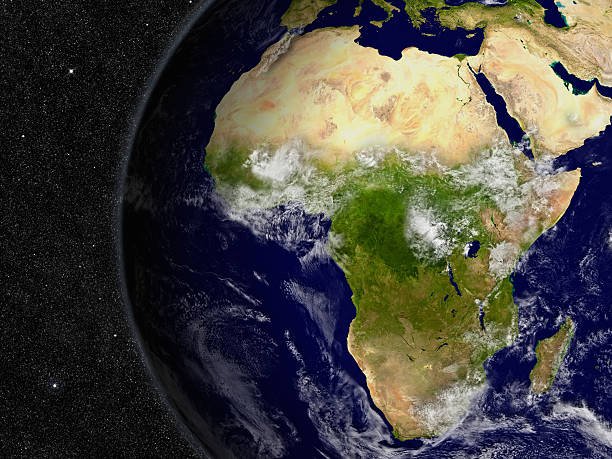
Yes, Africa is indeed unique among continents for spanning all four of Earth's hemispheres: the Northern, Southern, Eastern, and Western. This extraordinary geographical positioning is a direct result of the continent's central location, intersected by both the Equator (dividing north and south) and the Prime Meridian (dividing east and west).
Understanding how Africa is in all 4 hemispheres requires a closer look at global coordinates and how these imaginary lines shape our planet's geography. Africa's central placement makes it a truly unique landmass, influencing its diverse climates, ecosystems, and strategic importance on the global stage, solidifying its reputation as a continent of unparalleled geographical diversity.
The Earth's Four Hemispheres Explained
To fully grasp Africa's geographic location, it's essential to understand the primary imaginary lines that divide our planet into hemispheres. These lines, the Equator and the Prime Meridian, serve as fundamental reference points for global positioning and navigation.
The Equator and the North-South Divide
The Equator is an imaginary line of latitude that circles the Earth at 0 degrees, equidistant from the North and South Poles. It effectively divides the planet into two main halves:
- Northern Hemisphere: Everything north of the Equator.
- Southern Hemisphere: Everything south of the Equator.
Regions in the Northern Hemisphere experience summer when the Northern Pole is tilted towards the sun, and winter when it's tilted away. The opposite is true for the Southern Hemisphere, leading to distinct seasonal patterns. The African continent's unique geography sees it extend significantly into both of these major halves.
The Prime Meridian and the East-West Divide
The Prime Meridian, also known as the Greenwich Meridian, is an imaginary line of longitude that runs from the North Pole to the South Pole, passing through Greenwich, London. It is designated as 0 degrees longitude and, along with the 180-degree meridian on the opposite side of the globe, divides the Earth into another two halves:
- Eastern Hemisphere: Everything east of the Prime Meridian.
- Western Hemisphere: Everything west of the Prime Meridian.
This division primarily impacts time zones, with countries to the east of the Prime Meridian having progressively later times, and those to the west having earlier times. Africa's sprawling landmass means it also straddles this crucial longitudinal line, placing it firmly in both the Eastern Hemisphere Africa and the Western Hemisphere Africa.
Africa's Centrality: How It Crosses Every Meridian and Parallel
The reason Africa is in all 4 hemispheres lies in its remarkable geographical position, making it the only continent to be bisected by both the Equator and the Prime Meridian. This intersection creates four distinct quadrants, and Africa holds territory in each one.
Crossing the Equator: North and South
A substantial portion of the African continent's unique geography lies directly on or very close to the Equator. This means that a significant part of Africa is in the Northern Hemisphere Africa, while another large part is in the Southern Hemisphere Africa.
Countries like Gabon, Republic of the Congo, Democratic Republic of the Congo, Uganda, Kenya, and Somalia are all traversed by the Equator. This equatorial belt is characterized by tropical rainforests and consistent warm temperatures. Further north, countries like Algeria, Egypt, and Morocco are firmly in the Northern Hemisphere. To the south, nations such as South Africa, Namibia, and Zimbabwe are entirely within the Southern Hemisphere. This north-south spread highlights why Africa cannot be defined by just one half of the globe.
Furthermore, Africa is also home to both the Tropic of Cancer Africa in its northern reaches and the Tropic of Capricorn Africa in its southern parts. The Tropic of Cancer passes through countries like Mauritania, Mali, Algeria, Libya, and Egypt. The Tropic of Capricorn cuts across Namibia, Botswana, South Africa, and Mozambique. The area between these two tropics is known as the Tropics, a region characterized by hot climates, where the sun's direct rays are received at some point during the year. This broad spread contributes significantly to Africa's vast climatic diversity.
Straddling the Prime Meridian: East and West
The Prime Meridian's journey through Africa is equally significant. It passes through several West African countries, defining their east-west placement:
- Algeria
- Mali
- Burkina Faso
- Togo
- Ghana
This means that parts of these nations are in the Western Hemisphere, while other parts are in the Eastern Hemisphere. While a much smaller portion of Africa lies in the extreme west (e.g., parts of Senegal and Mauritania are further west than the Prime Meridian), its presence there is enough to classify the continent as being in the Western Hemisphere. The vast majority of the continent, including countries like Nigeria, Chad, Sudan, Ethiopia, and all of Southern and East Africa, falls squarely into the Eastern Hemisphere.
The intersection of the Equator and the Prime Meridian occurs in the Atlantic Ocean, off the coast of West Africa, near the island nation of São Tomé and Príncipe. This specific geographical point is crucial for understanding how Africa is in all 4 hemispheres.
The Quadrants: Africa in All Four
When we combine these two divisions, we get four distinct quadrants. Africa has territory in each one:
- Northeastern Hemisphere: North of the Equator and East of the Prime Meridian. This quadrant includes a significant portion of North and East Africa, such as Egypt, Sudan, Ethiopia, and much of the Sahara Desert.
- Northwestern Hemisphere: North of the Equator and West of the Prime Meridian. Parts of West and North Africa fall here, including Morocco, Western Sahara, Mauritania, and parts of Algeria and Mali.
- Southeastern Hemisphere: South of the Equator and East of the Prime Meridian. This encompasses a large part of Southern and East Africa, including South Africa, Mozambique, Tanzania, and Madagascar.
- Southwestern Hemisphere: South of the Equator and West of the Prime Meridian. This includes parts of Southern and West Africa, such as Angola, Namibia, and portions of Gabon and Congo.
This detailed breakdown clearly illustrates that Africa's global positioning is truly unparalleled, making it the only continent to extend across all four principal divisions of the Earth.
Impact of Africa's Hemispheric Position
The unique geographic location of Africa has profound implications for its environment, climate, and even its cultural diversity. This spread across all major imaginary lines makes it a continent of extremes and incredible variety.
Diverse Climates and Ecosystems
Because Africa straddles the Equator, the Tropics of Cancer and Capricorn, and extends significant distances both east and west, it experiences an unparalleled range of climates and ecosystems. This contributes to its rich biodiversity.
- Equatorial regions: Hot and wet, fostering dense rainforests.
- Tropical regions: Wet and dry seasons, leading to vast savannas and grasslands.
- Subtropical regions: Mediterranean climates in the far north and south, with mild, wet winters and hot, dry summers.
- Desert regions: Dominated by the Sahara in the north and the Kalahari and Namib in the south, characterized by extreme aridity.
This diversity of Africa's climate zones directly results from its wide latitudinal spread, allowing it to experience varied solar radiation throughout the year.
Time Zones and Global Connectivity
Africa's longitudinal spread means it encompasses a range of time zones. While many African countries align their time with neighboring nations or have their own unique offsets, the continent generally spans from UTC (Coordinated Universal Time) in the west to UTC+4 in the far east (e.g., Mauritius, Seychelles, parts of Somalia). This broad coverage affects everything from international trade and communication to travel within the continent. Its central location also historically positioned it as a bridge between the Americas and Asia, influencing trade routes and cultural exchange.
Key Facts and Countries Illustrating Africa's Global Reach
Several countries highlight Africa's hemispheric uniqueness. Here's a brief overview:
- Countries on the Equator: Gabon, Republic of the Congo, Democratic Republic of the Congo, Uganda, Kenya, Somalia. These nations experience very little seasonal variation.
- Countries on the Prime Meridian: Algeria, Mali, Burkina Faso, Togo, Ghana. These countries are split between the Eastern and Western Hemispheres.
- Countries in the Northwestern Hemisphere (only): Morocco, Western Sahara. These are north of the Equator and west of the Prime Meridian.
- Countries in the Southwestern Hemisphere (only): Most of Angola and Namibia, south of the Equator and west of the Prime Meridian.
- Countries in the Northeastern Hemisphere (only): Egypt, Libya, Sudan, Chad, Niger, and others in North and East Africa.
- Countries in the Southeastern Hemisphere (only): South Africa, Mozambique, Tanzania, Madagascar, Zambia, Zimbabwe, and many others in Southern and East Africa.
This means that depending on where you are in Africa, you could be north, south, east, or west of the world's primary geographical dividing lines. This phenomenon makes Africa a truly global continent in every sense.
Understanding the lines of longitude and latitude is key to appreciating Africa's unique positioning. The fact that the continent covers such a vast range of these coordinates is a testament to its scale and diversity.
Conclusion
In conclusion, the question of how Africa is in all 4 hemispheres is answered by its unparalleled geographic placement. Africa stands alone as the only continent to be traversed by both the Equator, dividing it into Northern and Southern Hemispheres, and the Prime Meridian, splitting it into Eastern and Western Hemispheres. This remarkable centrality ensures that every one of Earth's four major quadrants holds a piece of the African continent.
This unique global positioning of Africa is not just a geographical curiosity; it's a fundamental aspect that shapes its incredible climatic diversity, vast range of ecosystems, and rich cultural tapestry. From the scorching deserts of the north to the temperate tip of the south, and from the Atlantic shores of the west to the Indian Ocean coast of the east, Africa truly embraces all corners of our planet, reinforcing its role as a continent of immense importance and fascination.
Enjoyed this read?
Share it with your friends and colleagues.