Does Africa Have 4 Seasons

BSC Insights Admin
October 01, 2026
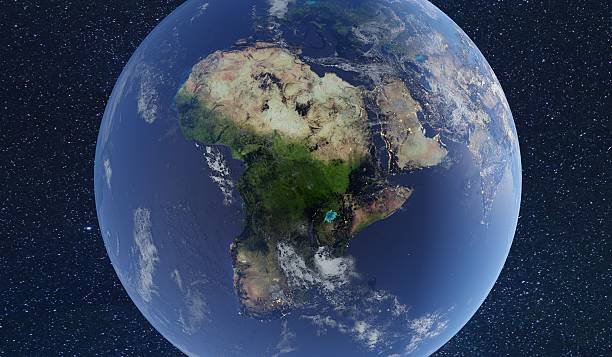
Does Africa have 4 seasons? The simple answer is no, not in the way many people in temperate regions understand the concept of four distinct seasons: spring, summer, autumn, and winter. Africa, a continent of immense size and diverse geography, exhibits a wide array of climates primarily characterized by variations in rainfall, leading to prominent wet and dry seasons across much of its landmass rather than temperature-driven seasonal shifts.
While some specific regions, particularly at its northern and southern extremities, experience climates that might be considered closer to a four-season model, the vast majority of Africa operates on a different climatic rhythm. Understanding African weather patterns requires looking beyond the conventional temperate zone framework and appreciating the dominant influences of latitude, altitude, and proximity to large water bodies.
Understanding Africa's Climatic Diversity
Africa spans both the Northern and Southern Hemispheres, straddling the equator, which is a key factor in its climate. The continent's climate zones range from scorching deserts to lush rainforests, and from cool highlands to sunny coastlines. This incredible diversity means there isn't one single answer to the question of Africa climate; rather, there are many answers depending on where you are on the continent.
The concept of four distinct seasons is largely a characteristic of temperate zones, which are found further away from the equator. In these zones, the tilt of the Earth's axis causes significant variations in the amount of direct sunlight received throughout the year, leading to noticeable changes in temperature and daylight hours, defining spring, summer, autumn, and winter. Africa, however, has a significant portion of its landmass within the tropical and equatorial zones, where the sun's angle changes less dramatically throughout the year, resulting in consistently warm temperatures. Instead of temperature changes, rainfall patterns in Africa become the primary determinant of seasonal variation.
Key Factors Influencing African Weather Patterns
Several critical geographical and meteorological factors dictate Africa's complex climates:
- Latitude: The most significant factor. Regions near the equator experience consistent high temperatures and often heavy rainfall. As one moves away from the equator towards the tropics, distinct wet and dry seasons emerge.
- Altitude: Higher elevations, such as the Ethiopian Highlands or Mount Kilimanjaro, experience significantly cooler temperatures and often different rainfall regimes compared to surrounding lowlands, regardless of their proximity to the equator.
- Oceanic Influences: Proximity to the Atlantic and Indian Oceans, along with the influence of ocean currents (e.g., the cold Benguela Current off Namibia and the warm Agulhas Current off South Africa), can moderate coastal temperatures and affect rainfall.
- Intertropical Convergence Zone (ITCZ): This is a major driver of wet and dry seasons Africa. The ITCZ is a belt of low pressure that circles the Earth generally near the equator, where the trade winds of the Northern and Southern Hemispheres converge. It brings heavy rainfall as it moves north and south with the apparent movement of the sun, dictating when and where Africa experiences its rainy periods.
- Topography: Mountain ranges can create rain shadows, leading to arid conditions on one side and wetter conditions on the other.
Regional Seasonal Variations Across Africa
To truly understand seasonal variations Africa, it's essential to examine the continent region by region.
Equatorial Climate Zone
Regions lying directly on or very close to the equator, such as the Congo Basin, parts of Gabon, and Uganda, experience what is known as an equatorial climate Africa. Here, temperatures are consistently high year-round, typically averaging around 25-30°C (77-86°F). Rainfall is abundant and often distributed throughout the year, though some areas may have two 'wet' seasons and two 'less wet' seasons as the ITCZ passes over them twice a year. The defining characteristic is the absence of a cool or cold season, with high humidity prevalent. There are no traditional spring, summer, autumn, or winter months.
Tropical Savanna Climate Zone
Moving away from the equator, to regions like East Africa (Kenya, Tanzania), West Africa (Nigeria, Ghana), and much of Southern Africa, you find the tropical climate Africa, specifically the savanna climate. These areas are characterized by very distinct wet and dry seasons. The wet season brings heavy rainfall, lush vegetation, and often higher humidity, while the dry season is marked by minimal to no rain, lower humidity, and often parched landscapes. Temperatures remain high throughout the year, with slight variations. For instance, the dry season might feel hotter due to less cloud cover, or slightly cooler in the mornings. This seasonal cycle is crucial for wildlife, driving the famous migrations in places like the Serengeti.
Desert and Semi-Arid Climate Zones
Large portions of Northern Africa (Sahara Desert) and Southern Africa (Kalahari Desert, Namib Desert) are dominated by desert climate Africa. These regions are characterized by extremely low rainfall, often less than 250 mm (10 inches) annually. Temperatures can be extremely high during the day and drop dramatically at night, showcasing vast diurnal temperature ranges. Seasons here are often defined by slight shifts in temperature rather than precipitation, with a generally hot season and a slightly less hot season. Rain, when it occurs, is often sporadic and unpredictable.
Mediterranean Climate Zone
The northernmost parts of Africa (e.g., coastal Morocco, Algeria, Tunisia) and the southernmost tip of Africa (e.g., Cape Town, South Africa) experience a Mediterranean climate Africa. These are the regions that most closely approximate the four-season model, though still distinct from temperate zones. They have hot, dry summers and mild, wet winters. Spring and autumn are transitional periods, similar to their European counterparts, but generally warmer. This is the exception to the rule and is due to their latitude and proximity to the sea, placing them outside the direct influence of the equatorial ITCZ for much of the year.
Highland (Mountain) Climate Zones
Areas of high altitude, such as the Ethiopian Highlands, parts of the Great Rift Valley, and mountainous regions in East and Central Africa, exhibit highland climate Africa. Here, temperatures are significantly cooler than the surrounding lowlands, and rainfall patterns can vary greatly depending on exposure to prevailing winds. Even near the equator, mountainous regions can experience frosty mornings or even snow on the highest peaks (like Mount Kilimanjaro or Mount Kenya). Seasons are typically defined by wet and dry periods, but with a much cooler overall temperature profile.
| Climate Zone | Location Examples | Seasonal Characteristics |
|---|---|---|
| Equatorial | Congo Basin, Uganda | Consistently hot and humid; year-round rainfall or two wet/less wet periods. No traditional 4 seasons. |
| Tropical Savanna | East Africa (Kenya, Tanzania), West Africa | Distinct wet (rainy) and dry seasons; consistently high temperatures. |
| Desert & Semi-Arid | Sahara, Kalahari, Namib | Extremely low rainfall; high diurnal temperature range (hot days, cool nights). |
| Mediterranean | Coastal North Africa, Cape Town | Hot, dry summers; mild, wet winters. Closest to 4 seasons. |
| Highland | Ethiopian Highlands, Mount Kilimanjaro | Cooler temperatures due to altitude; varied rainfall patterns (wet/dry). |
Implications of Africa's Seasonal Patterns
The unique seasonal variations Africa experiences have profound impacts on various aspects of life and the environment across the continent:
- Agriculture: Farming across most of Africa is heavily dependent on the arrival and duration of the rainy season. Crops like maize, millet, and sorghum are timed to coincide with rainfall. Droughts during the wet season can have devastating effects on food security. Understanding rainfall patterns Africa is crucial for planting cycles.
- Water Resources: The cyclical nature of wet and dry seasons dictates water availability. Rivers swell during rainy periods and recede significantly in dry spells, impacting hydroelectric power generation, irrigation, and access to drinking water.
- Ecosystems and Biodiversity: African wildlife has adapted remarkably to these patterns. The famous Great Migration in East Africa is a direct response to the search for fresh grazing lands that emerge with the rains. Many plant species flower and fruit during the wet season, while others are drought-resistant, awaiting the next rains.
- Tourism: The best time for safaris in many regions is often during the dry season when vegetation is sparser, and animals congregate around limited water sources, making them easier to spot. Conversely, some landscapes are at their most vibrant and green immediately after the rains. Travelers considering tourism seasons Africa should research specific regional climates.
- Human Migration and Health: Rainfall can influence patterns of human movement, especially pastoral communities. Furthermore, the wet season often coincides with an increase in mosquito-borne diseases like malaria.
Addressing Misconceptions About Africa's Seasons
A common misconception is that because Africa is generally warm, it has no seasons at all, or that its climate is uniform. This is far from the truth. While much of the continent experiences consistently warm temperatures, the dramatic shift between wet and dry periods constitutes very real and impactful seasons that dictate life and activity. The notion that Africa 'should' have four seasons is a projection of temperate zone climatology onto a continent whose primary climatic drivers are very different.
It is crucial to remember that Africa is not a country, but a massive continent, home to 54 diverse countries and an even greater number of microclimates. Therefore, generalizations about its weather should always be approached with the understanding that local conditions can vary significantly.
Conclusion
In conclusion, the answer to does Africa have 4 seasons is generally no. While specific regions like the Mediterranean coasts of North Africa and the southern tip of South Africa experience climates with distinct hot, dry summers and mild, wet winters, approximating a four-season model, the vast majority of the continent operates on a different rhythm. Africa's immense size, position straddling the equator, and varied topography lead to a mosaic of climates primarily defined by pronounced wet and dry seasons. These seasonal cycles, driven largely by the movement of the Intertropical Convergence Zone (ITCZ), are fundamental to the continent's agriculture, ecosystems, and human activities. Understanding why Africa doesn't have 4 seasons in the traditional sense is key to appreciating its truly unique and diverse climatic landscape.
Enjoyed this read?
Share it with your friends and colleagues.