Is Africa The 4Th Largest Continent

BSC Insights Admin
September 30, 2026
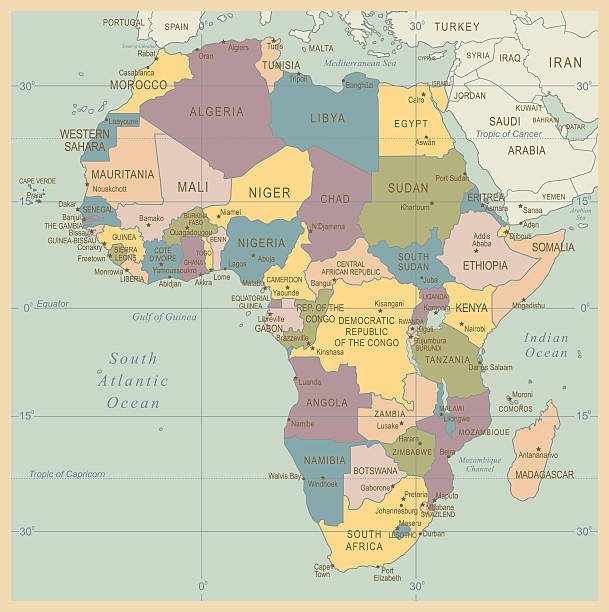
Is Africa the 4th largest continent? No, Africa is not the fourth largest continent; it is, in fact, the second largest continent in the world by both land area and population. This common misconception, widely perpetuated, often arises from distorted world maps and a general underestimation of the African continent's immense scale. With a vast land area covering approximately 30.37 million square kilometers (11.73 million square miles), Africa stands proudly after Asia, making it a monumental player in global geography, demographics, and ecological systems.
Africa's True Continental Ranking: Unveiling the Facts
Dispelling the myth that Africa is the 4th largest continent is crucial for a correct understanding of global geography and for appreciating the true scale of Earth's landmasses. To clarify, let's examine the definitive ranking of the world's continents by their total land area. This data provides an authoritative perspective on how big Africa is compared to its continental counterparts.
| Rank | Continent | Approximate Land Area (sq km) | Approximate Land Area (sq mi) |
|---|---|---|---|
| 1 | Asia | 44,614,000 | 17,227,000 |
| 2 | Africa | 30,370,000 | 11,730,000 |
| 3 | North America | 24,709,000 | 9,540,000 |
| 4 | South America | 17,840,000 | 6,890,000 |
| 5 | Antarctica | 14,200,000 | 5,500,000 |
| 6 | Europe | 10,180,000 | 3,930,000 |
| 7 | Australia (Oceania) | 8,525,989 | 3,291,903 |
As unequivocally demonstrated by this table, Africa holds a clear and indisputable position as the second largest landmass on Earth, significantly surpassing continents often perceived as larger, such as North America and South America. Its immense scale firmly establishes it as one of the world's largest continents, playing a crucial role in global biodiversity, climate, and human history.
Understanding Continental Size: Land Area vs. Perception
Why the Misconception About Africa's Size Persists
The persistent belief that Africa is the 4th largest continent, or even smaller, is largely attributable to the enduring influence of the Mercator projection. This map projection, created in 1569 by Gerardus Mercator, was revolutionary for its time, providing a navigable world map where lines of latitude and longitude crossed at right angles, making it ideal for sea voyages. However, this convenience came at a significant cost: severe distortion of landmass sizes, particularly those far from the equator.
On a Mercator map, regions closer to the poles, like Greenland, Canada, and Russia, appear disproportionately enormous, while equatorial regions, including much of Africa and South America, are visually shrunk. For example, Greenland often looks larger than Africa on a Mercator map, despite Africa being over 14 times greater in actual land area. Similarly, Canada appears to rival Africa in size, though Africa is more than three times larger. This graphical bias has ingrained an inaccurate mental model of the world's geography for generations, leading to a profound underestimation of the African continent's true scale.
The Importance of Accurate Geographical Representation
To grasp the true size of Africa, it's helpful to consider its colossal dimensions in relatable terms. You could comfortably fit the United States, China, India, Japan, and most of Europe within Africa's borders, with substantial land left over. This comparison vividly illustrates the sheer vastness often overlooked when discussing the African continent.
Accurate geographical representation, often achieved through alternative projections like the Gall-Peters or Eckert IV projection, aims to correct these size distortions, offering a more truthful visual understanding of continental proportions. Recognizing the actual ranking of the world's largest continents is not merely an academic exercise; it's fundamental to understanding global power dynamics, resource distribution, climate patterns, biodiversity, and human migration. When we acknowledge how big Africa is, we begin to appreciate its diverse ecosystems, vast natural resources, intricate geopolitical landscape, and profound cultural heritage with greater accuracy and respect.
The Geography of Africa: Vastness in Detail
The African continent is not just impressively large; it is also incredibly diverse in its geography, encompassing an astonishing array of climates, ecosystems, and topographical features. This immense scale contributes significantly to its global impact on climate, biodiversity, and human settlement patterns. From the scorching sands to lush rainforests, Africa presents an unparalleled natural tapestry that highlights its immense area.
Key Geographical Features Highlighting Africa's Immense Size:
- Deserts: The Sahara Desert, the largest hot desert in the world, covers an area roughly equivalent to the United States or China (approximately 9.2 million sq km or 3.6 million sq mi). Other significant deserts include the Kalahari and Namib, further emphasizing the continent's arid expanses.
- Rivers: The Nile River, often considered the longest river in the world, stretches over 6,650 km (4,132 miles), flowing through eleven countries and sustaining millions. The Congo River, with its massive basin, is the second-longest in Africa and boasts the world's second-largest discharge by volume, creating a vast network of freshwater systems.
- Lakes: Lake Victoria, the largest lake in Africa and the second-largest freshwater lake in the world by surface area, is just one example of the continent's impressive internal water bodies. Other large lakes like Tanganyika and Malawi further illustrate the substantial water resources.
- Mountain Ranges: While not as high as the Himalayas, Africa features significant mountain ranges such as the Atlas Mountains in the northwest, the Ethiopian Highlands, and the dramatic Drakensberg Mountains in the south, showcasing diverse geological formations and unique biomes.
- Rainforests: The Congo Basin rainforest is the second-largest tropical rainforest in the world, vital for global climate regulation and biodiversity. Its sheer size underscores the varied ecosystems within the continent.
- Coastline: Despite popular belief, Africa has a surprisingly uniform coastline relative to its size, with fewer deep indentations than continents like Europe. However, its total length is still substantial, contributing to diverse marine ecosystems and coastal communities.
These features underscore the sheer scale and complexity of the geography of Africa, making it a continent of unparalleled natural wonder and vital ecological importance. Its vastness accommodates a multitude of environments, from snow-capped peaks to tropical savannas, each playing a critical role in global ecological balance and demonstrating why Africa's continent size is so significant.
Africa by Population: Another Dimension of Scale
Beyond its expansive land area, Africa also ranks as the second most populous continent globally, further reinforcing its colossal scale and human impact. With a population now exceeding 1.4 billion people, it accounts for roughly 18% of the world's human inhabitants. This makes the question of "Is Africa the 4th largest continent?" even more perplexing when considering its demographic weight and human dynamism.
The continent's population is characterized by its youthfulness and rapid growth, which presents both immense opportunities and significant challenges for its future development. Countries like Nigeria, with its burgeoning population, Ethiopia, and Egypt are among the most populous nations on Earth, reflecting the significant human footprint across the continent. Understanding Africa's population ranking is crucial for grasping global demographic trends, economic potential, and social dynamics. Its young demographic dividend is set to play an increasingly important role in the global workforce and consumer markets.
Continental Population Ranking (Approximate):
- Asia: Over 4.7 billion
- Africa: Over 1.4 billion
- Europe: Approximately 750 million
- North America: Approximately 600 million
- South America: Approximately 440 million
- Australia (Oceania): Approximately 45 million
- Antarctica: No permanent population (researchers only)
This demographic reality further solidifies Africa's position not just as a geographically immense landmass but also as a powerhouse of human potential, cultural diversity, and economic growth. The combination of its vast territory and burgeoning population makes Africa a continent of unparalleled significance in the 21st century and beyond, challenging any notion that it is merely the 4th largest.
Why Does Accurate Continental Ranking Matter?
Understanding the true size and ranking of continents, particularly dispelling widespread myths like "Is Africa the 4th largest continent?", has far-reaching implications that extend beyond simple geographical facts. It impacts our perception of global issues, resource distribution, geopolitical strategies, and international development efforts. An accurate understanding of Africa's continent size is vital for informed decision-making across various sectors.
Impacts of Accurate Geographical Knowledge:
- Resource Allocation and Management: Africa is incredibly rich in natural resources, from vast mineral deposits (gold, diamonds, cobalt) and oil to extensive agricultural lands and abundant freshwater. Recognizing its true scale helps in understanding the magnitude of these resources and the global implications of their sustainable management and equitable distribution.
- Climate Change and Environmental Conservation: The sheer size and diverse ecosystems of Africa mean it plays a critical role in global climate patterns. For instance, the Congo Basin rainforest is a massive carbon sink, and changes in the Sahara Desert can affect weather systems far beyond the continent. Accurate knowledge is crucial for targeted conservation efforts and climate change mitigation strategies.
- Economic Development and Investment: A proper appreciation of Africa's land area underscores its vast potential markets, diverse economies, and significant human capital. This encourages more informed and strategic investment, fostering sustainable economic growth and development across the continent's numerous nations.
- Geopolitics and International Relations: Correct geographical understanding reduces biases and informs more balanced international policies. It helps in recognizing Africa's growing geopolitical importance, its role in global supply chains, and its influence in international forums.
- Cultural Exchange and Education: Correcting geographical misconceptions fosters a more accurate, respectful, and nuanced understanding of different cultures, histories, and peoples. It empowers better educational curricula, reduces unconscious biases, and promotes a more interconnected global society.
- Biodiversity Conservation: Africa's vastness is home to an extraordinary array of wildlife and plant species, many of which are endemic. Knowing its true extent emphasizes the immense importance of conservation efforts across its diverse landscapes, from protecting iconic megafauna to preserving unique ecosystems.
Accurate geographical knowledge is not merely about memorizing facts; it's about building a more informed, equitable, and sustainable world. It helps in appreciating the profound contributions and challenges faced by each major landmass, especially one as historically and presently significant as the African continent. Dispelling myths about Africa's size is a critical step towards this broader understanding.
Dispelling Other Common Myths About Continental Sizes
Beyond the widespread myth that Africa is the 4th largest continent, other common misconceptions often arise from flawed map projections. For instance, the perception that Russia or Canada are disproportionately massive compared to their true size, or that South America is significantly smaller than it actually is. These distortions often lead to an underestimation of the Southern Hemisphere continents and an overestimation of those in the Northern Hemisphere's higher latitudes. This systematic bias has historical roots in Eurocentric cartography, which often prioritized the Northern Hemisphere.
It's vital to rely on accurate data and modern cartography that utilizes projections designed to preserve area, such as the Gall-Peters or Eckert IV projections, when trying to understand the relative sizes of landmasses. Such accurate visual aids reveal the true scale of continents, reinforcing Africa's undisputed position as the second largest continent by area and providing a balanced view of our planet's geography. These alternative maps challenge viewers to reconsider their preconceived notions about global distribution.
Understanding these geographical realities helps in fostering a more balanced global perspective, where the immense scale and significance of regions like Africa are fully recognized and appreciated. This correct understanding is fundamental for informed discussions on global development, environmental challenges, and intercultural relations, ensuring that decisions are based on facts rather than outdated visual distortions.
In conclusion, the answer to the question "Is Africa the 4th largest continent?" is a resounding no. Africa is the second largest continent in the world by both land area and population, trailing only Asia. Its vast expanse of approximately 30.37 million square kilometers (11.73 million square miles) and a population exceeding 1.4 billion people underscore its monumental global significance. The widespread misconception regarding its size is primarily attributable to distorted map projections, particularly the Mercator projection, which visually shrinks landmasses near the equator while exaggerating those closer to the poles. By recognizing the true scale of the African continent, we gain a more accurate understanding of global geography, resource distribution, demographic trends, and the continent's pivotal role in shaping the future of our planet. This factual clarity is essential for a more informed and equitable global perspective.
Enjoyed this read?
Share it with your friends and colleagues.