Does Africa And Asia Connect

BSC Insights Admin
September 30, 2026
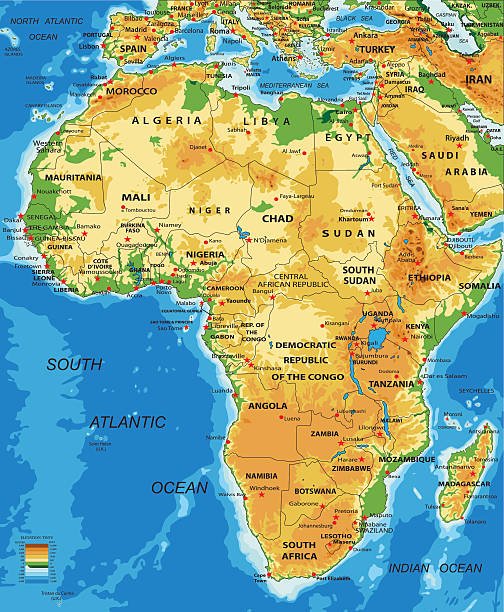
Yes, Africa and Asia are indeed connected. Geographically, these two massive continents share a land boundary, most notably at the Isthmus of Suez, which includes the Sinai Peninsula. While the modern world often perceives them as separate due to the presence of the Suez Canal, this man-made waterway actually cuts through a natural land bridge, underscoring their fundamental connection. This unique geopolitical and geological junction has profoundly influenced global history, trade, and cultural exchange for millennia.
The Geographical Link: The Isthmus of Suez and Sinai Peninsula
The most prominent geographical feature linking Africa and Asia is the Isthmus of Suez, a narrow strip of land situated between the Mediterranean Sea to the north and the Red Sea to the south. This land bridge is part of Egypt and encompasses the vast desert region known as the Sinai Peninsula. Geologically, the Sinai Peninsula is considered part of Asia, making Egypt a transcontinental country with territory in both Africa and Asia. This natural connection point is a testament to the Earth's dynamic geological processes.
Defining the Continental Divide
While continents are often defined by large bodies of water, land connections like the Isthmus of Suez challenge these simple categorizations. Geographers and geologists recognize the natural land continuity. Without the Suez Canal, one could walk directly from continental Africa into Asia. This physical link is crucial for understanding the movement of ancient peoples, flora, and fauna across what is often considered the 'Old World' landmass.
Geological Foundations: Plate Tectonics
The connection between Africa and Asia is deeply rooted in plate tectonics. The African Plate and the Arabian Plate (which is considered part of the larger Eurasian Plate) are in close proximity and interaction in this region. The formation of the Red Sea itself is a result of the Arabian Plate moving away from the African Plate, a process known as rifting. However, further north, the land connection at the Sinai Peninsula remains intact, representing a complex zone of tectonic activity that has shaped the landscape over millions of years.
- African Plate: Underlies most of Africa.
- Arabian Plate: Sub-plate of the Eurasian Plate, moving northward and colliding with the Eurasian Plate.
- Isthmus of Suez: The crucial land bridge formed by these interactions.
The Anthropogenic Link: The Suez Canal
While naturally connected, the perception of Africa and Asia's separation was largely solidified by the construction of the Suez Canal. Completed in 1869, this artificial sea-level waterway dramatically altered global shipping routes and, in a practical sense, created a watery boundary between the two continents.
A Triumph of Engineering
The idea of a canal linking the Mediterranean and Red Seas dates back to ancient times, with evidence of pharaohs attempting similar projects. However, it was Ferdinand de Lesseps who spearheaded the modern Suez Canal project. This monumental engineering feat dramatically reduced travel time for ships by eliminating the need to circumnavigate Africa, making voyages between Europe and Asia far more efficient.
Key facts about the Suez Canal:
- Opened: November 17, 1869
- Length: Approximately 193 km (120 miles)
- Impact: Transformed global trade and geopolitics.
- Function: Connects the Mediterranean Sea (via Port Said) with the Red Sea (via Suez).
The Suez Canal's Impact on Continental Perception
The canal physically severs the land connection, effectively turning Africa into an island from a maritime perspective. While geologically the continents are connected, the canal has created a practical and often psychological divide. For cartographers and geographers, the canal is a clear marker, often used to delineate the boundary between the two continents, even though it is a man-made feature.
The canal's significance extends beyond mere physical separation. It has been a flashpoint for international politics and conflicts, notably the Suez Crisis of 1956, underscoring its strategic importance as a global choke point for shipping. Its continued operation is vital for global supply chains, making the Africa Asia connection a critical economic artery.
Historical and Cultural Intersections: A Shared Past
Long before the Suez Canal, the land bridge between Africa and Asia facilitated extensive interactions, shaping the histories and cultures of both regions. This ancient geographical link between Africa and Asia has been a conduit for human migration, trade, and the exchange of ideas.
Ancient Migrations and Early Human History
The theory of early human migration out of Africa, often referred to as the 'Out of Africa' theory, posits that Homo sapiens spread from Africa into Asia and then to the rest of the world. The Isthmus of Suez likely served as a primary gateway for these early migrations, making the Africa Asia connection fundamental to understanding human dispersal across the globe.
Trade Routes and Cultural Exchange
For millennia, the land and sea routes connecting Africa and Asia were bustling arteries of commerce and cultural diffusion. The Silk Road, though primarily associated with China and Europe, had numerous branches extending into North Africa, facilitating the exchange of goods like spices, textiles, precious metals, and technologies. Similarly, maritime trade routes across the Red Sea and Indian Ocean linked East Africa with Arabia, Persia, India, and beyond.
Examples of historical exchange:
- Spices: From India and Southeast Asia to Africa and Europe.
- Gold and Ivory: From East Africa to Asian markets.
- Ideas and Religions: The spread of Islam from Arabia into North and East Africa.
- Technologies: Agricultural practices, metallurgical skills.
Empires and Influence
Many historical empires spanned parts of both continents. The Ancient Egyptian Empire, for instance, extended into the Levant (modern-day Israel, Palestine, Lebanon, Syria), which is geographically part of Asia. Later, the Ottoman Empire controlled vast territories across North Africa, the Middle East, and parts of Eastern Europe, firmly embedding its influence across the traditional continental divide. This intermingling of political and cultural spheres highlights the artificiality of rigid continental boundaries in the face of shared histories.
Modern Day Connectivity and Economic Ties
Today, the Africa Asia connection continues to thrive, driven by economic interests, cultural exchange, and growing infrastructure development. The Suez Canal remains a cornerstone of this connectivity, but direct investments, trade agreements, and burgeoning diplomatic relations further strengthen the bonds.
Trade and Investment
Asian nations, particularly China, India, and Japan, have become significant trading partners and investors in Africa. This trend has led to a boom in infrastructure projects, resource extraction, and manufacturing, facilitating a new era of economic ties Africa Asia. Ports along Africa's eastern coast, such as Mombasa and Djibouti, serve as vital hubs for goods flowing to and from Asia.
Key aspects of modern economic connection:
- Infrastructure Development: Roads, railways, and ports funded by Asian investments.
- Resource Trade: African raw materials to Asian industries.
- Manufacturing and Consumer Goods: Asian products exported to African markets.
- Technological Transfer: Growing collaboration in IT and telecommunications.
Cultural Exchange and Diaspora
Migration and cultural exchange are two-way streets. Large African diaspora communities exist in various Asian countries, and similarly, growing Asian communities can be found in African nations. This contributes to a rich tapestry of multiculturalism, evident in cuisine, music, art, and language. Educational exchange programs and tourism further bolster these human connections, transcending geographical lines drawn on maps.
The Concept of Afro-Eurasia: A Supercontinent Perspective
When considering whether Africa and Asia connect, it is useful to look at the broader geographical concept of Afro-Eurasia. This term refers to the largest contiguous landmass on Earth, comprising Africa, Europe, and Asia. From a geological and often historical perspective, viewing these as a single supercontinent can provide a more holistic understanding of global interconnectedness.
A Unified Landmass
The distinction between Africa, Asia, and Europe as separate continents is largely a cultural and historical construct, rather than a purely geological one. While the Suez Canal separates Africa from Asia in a practical sense, and the Ural Mountains or Bosphorus Strait define the European-Asian boundary, the underlying geological reality is a continuous landmass. This perspective emphasizes shared evolutionary histories, environmental patterns, and human developments.
Implications for Understanding Global Geography
Understanding Afro-Eurasia as a single entity can shift perspectives on global events. For example, pandemics originating in one part of Afro-Eurasia could rapidly spread across the entire landmass, as demonstrated throughout history. Similarly, major technological innovations or cultural movements could diffuse across this vast area, influencing diverse populations connected by a continuous terrestrial fabric.
Separation Versus Connection: A Dual Perspective
Ultimately, the question of does Africa and Asia connect elicits a nuanced answer: yes, they are fundamentally connected, but also distinctly separated by human intervention. This duality is central to understanding the unique character of this region.
Geological Reality vs. Political Boundaries
Geologically, the continental drift and current plate tectonics confirm a terrestrial link. The Sinai Peninsula serves as a natural bridge, a fact that has remained constant for millions of years. However, political and administrative boundaries, often reflecting historical conflicts or colonial legacies, draw lines that sometimes contradict natural geography.
The Canal's Paradox: Separating to Connect
The Suez Canal presents a fascinating paradox. By physically cutting through the land bridge, it creates a separation. Yet, its very existence facilitates greater connection by enabling faster and more efficient movement of goods and people between the continents by sea. It is a testament to human ingenuity in overcoming natural barriers to foster greater global integration.
Thus, while the land bridge at the Isthmus of Suez unequivocally confirms that Africa and Asia are connected, the Suez Canal introduces an important layer of functional separation, making the relationship between these two continents one of constant interplay between natural geography and human endeavor.
Conclusion
In summary, the answer to the question, "Does Africa and Asia connect?" is a resounding yes, underpinned by geological reality and ancient history. They are directly linked by the Isthmus of Suez and the Sinai Peninsula, forming a crucial land bridge that has been instrumental in human migration, trade, and cultural exchange for millennia. While the construction of the Suez Canal created an artificial maritime boundary, effectively separating the continents for shipping purposes, it simultaneously enhanced the functional connectivity between them. This unique intersection of land and sea, nature and human innovation, defines the enduring and complex relationship between Africa and Asia, emphasizing their deep historical ties and burgeoning modern partnerships. Understanding this connection is vital for comprehending global geography, economics, and culture.
Enjoyed this read?
Share it with your friends and colleagues.