How Africa Became Muslim

BSC Insights Admin
October 01, 2026
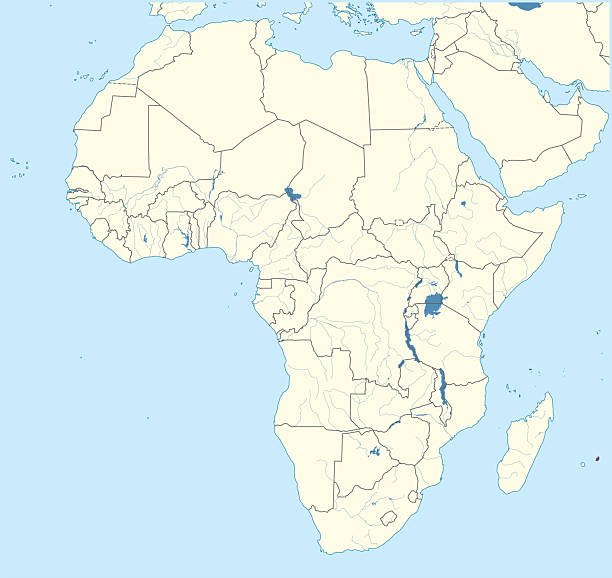
How Africa Became Muslim: A Journey Through Conquest, Trade, and Faith
Africa became Muslim through a complex, multi-faceted process spanning over a millennium, driven by early Arab conquests, extensive trade networks, the influential work of Sufi mystics and scholars, and the voluntary adoption of the faith by numerous rulers and communities. This transformative journey began shortly after Islam's inception, fundamentally reshaping the continent's social, political, and cultural landscape, creating a diverse tapestry of Islamic traditions that endure to this day.
The story of Islam's spread in Africa is not a monolithic narrative of forced conversion, but rather a nuanced exploration of adaptation, integration, and the powerful appeal of a new spiritual and social order. From the deserts of North Africa to the bustling ports of the Swahili Coast, and the vibrant scholarly centers of West Africa, Islam established deep roots, leaving an indelible mark on African identity and history.
The Dawn of Islam in North Africa: Conquest and Early Expansion
The earliest significant penetration of Islam into Africa occurred swiftly after the religion's advent in the Arabian Peninsula. In the 7th century, within decades of Prophet Muhammad's death, Arab armies launched a series of decisive **conquests across North Africa**. Egypt, a vital Roman (Byzantine) province, fell to Muslim forces under Amr ibn al-As in 641 CE. This marked the initial gateway for **Islam in Africa**.
Following the conquest of Egypt, the Muslim armies continued their westward expansion across the Maghreb (modern-day Libya, Tunisia, Algeria, and Morocco). The indigenous Berber populations, who had a long history of resisting foreign rule, initially offered strong opposition. However, over time, many Berbers began to embrace Islam, often finding common ground with the new faith's emphasis on monotheism and social justice. Notable figures like Tariq ibn Ziyad, a Berber convert, even led the Islamic conquest of the Iberian Peninsula, demonstrating the rapid assimilation and active participation of North African Muslims in the broader Islamic world.
This period established the first major **Islamic caliphates in Africa**, including the Umayyads and later the Abbasids, followed by powerful independent dynasties like the Fatimids, Almoravids, and Almohads. These empires not only solidified Islamic rule but also fostered a vibrant culture of Islamic scholarship, law, and art across the region, making North Africa a cornerstone of the global Islamic civilization.
The Trans-Saharan Trade Routes: Pathways to West Africa
While North Africa was largely Islamized through conquest, the **spread of Islam in West Africa** was primarily facilitated by the bustling **trans-Saharan trade routes**. From the 8th century onwards, Muslim merchants and scholars from North Africa traveled south across the Sahara Desert, exchanging salt, textiles, and other goods for West African gold, slaves, and ivory.
These traders were not just economic agents; they were also carriers of faith. They established trading outposts that evolved into significant urban centers, introducing Islam to the rulers and elite of powerful West African kingdoms. The economic benefits of adopting Islam were substantial. Embracing the faith meant access to a vast network of Muslim merchants, standardized legal practices (Sharia), and literacy in Arabic, which was crucial for administration and international commerce.
- Ghana Empire (c. 300-1100 CE): While not fully Muslim, its rulers welcomed Muslim traders and advisors, benefiting from the administrative and economic expertise.
- Mali Empire (c. 1235-1600 CE): This empire saw significant Islamization, especially under the reign of the legendary Mansa Musa (1312-1337). His famous pilgrimage to Mecca showcased Mali's immense wealth and solidified Islam's role as the state religion. Timbuktu, a city within Mali, became a world-renowned center of Islamic learning and scholarship, boasting numerous mosques and universities.
- Songhai Empire (c. 1464-1591 CE): Following Mali, Songhai continued the tradition of Islamic scholarship and governance. Askia the Great (1493-1528) further promoted Islam, building mosques, schools, and establishing a sophisticated Islamic legal system.
These **West African Islamic empires** demonstrate how rulers often adopted Islam to strengthen their legitimacy, consolidate power, and integrate into the broader Islamic world, which offered both prestige and practical advantages.
East Africa: The Swahili Coast and Maritime Networks
The **spread of Islam in East Africa** tells a different but equally compelling story, driven largely by **maritime trade** across the Indian Ocean. Arab and Persian Muslim merchants began settling along the East African coast as early as the 8th century, establishing trade communities that eventually formed the unique Swahili civilization.
These communities, from modern-day Somalia down to Mozambique, were cosmopolitan hubs of commerce and culture. Cities like Kilwa, Mombasa, Lamu, and Zanzibar flourished, linking Africa to the Middle East, Persia, India, and even China. The intermarriage between local African populations and Muslim settlers led to the emergence of the Swahili language, a Bantu language with significant Arabic vocabulary, and the distinct **Swahili culture**, deeply rooted in Islamic traditions.
Conversion to Islam along the Swahili Coast was largely a gradual, organic process. Locals adopted the faith for various reasons, including participation in the lucrative trade networks, social prestige, and the appeal of Islam's universal message. The absence of a strong centralized political power meant that Islam spread more through cultural influence and economic integration rather than military conquest, resulting in a unique form of Islam that blended local customs with orthodox practices.
Sufism and the Spiritual Appeal of Islam
Beyond the corridors of power and trade, the spiritual dimension of Islam played a crucial role in its deep entrenchment across Africa, particularly through the activities of **Sufi brotherhoods**. Sufism, the mystical dimension of Islam, emphasized direct experience of God, devotional practices, and the guidance of saintly figures (marabouts or sheikhs).
Sufi orders, such as the Qadiriyyah, Tijaniyyah, and Muridiyyah, often sent missionaries (daw'ah) into rural areas, adapting Islamic teachings to local customs and languages. Their emphasis on community, spiritual healing, and a more accessible form of piety resonated deeply with many African populations. Sufi leaders became revered spiritual guides, educators, and sometimes even political figures, mediating disputes and organizing resistance against colonial powers.
The **Sufi influence in Africa** allowed for a significant degree of syncretism, where elements of pre-Islamic African spiritual traditions were often integrated into Islamic practices, making the transition smoother and more appealing for converts. This adaptability contributed greatly to Islam's widespread acceptance, especially in regions like the Sahel, Sudan, and parts of Central Africa, where trade and conquest were less dominant factors.
Key Factors Contributing to Islam's Deep Roots in Africa
The enduring presence of Islam across Africa can be attributed to several interconnected factors:
Trade and Commerce
- Economic Advantage: Adoption of Islam often opened doors to extensive Islamic trade networks, providing access to goods, markets, and economic prosperity.
- Legal Framework: Islamic law (Sharia) offered a standardized system for commercial transactions, fostering trust and stability in trade relations.
- Merchant Networks: Muslim traders acted as informal missionaries, sharing their faith and culture as they moved across the continent.
Scholarship and Education
- Literacy in Arabic: The introduction of Arabic provided a common language for administration, commerce, and religious learning.
- Islamic Learning Centers: Cities like Timbuktu, Cairo, and Fes became renowned hubs of scholarship, attracting students and teachers from across Africa and beyond.
- Religious Texts: The Quran and other Islamic texts offered a comprehensive spiritual and ethical framework, appealing to many who sought knowledge and guidance.
Political Patronage and Conquest
- State Building: For many rulers, embracing Islam provided a ready-made administrative structure, a legal code, and a unifying ideology to consolidate power and govern diverse populations.
- Legitimacy: Association with the wider Islamic world brought prestige and political legitimacy.
- Military Expansion: Early Arab conquests and later jihads (e.g., the Fulani Jihads in West Africa) directly led to the establishment of Islamic states and the conversion of territories.
Cultural Exchange and Syncretism
- Cultural Compatibility: Islam's monotheistic message and emphasis on community often resonated with existing African spiritual and social structures.
- Adaptation: Islamic practices were often adapted to local customs, creating unique African Islamic traditions that honored both the new faith and indigenous heritage.
- Social Mobility: Conversion could offer new avenues for social advancement and integration into influential communities.
The Lasting Impact of Islam in Africa
The transformation of Africa into a continent with a significant Muslim population has had a profound and enduring impact that extends far beyond religious belief:
| Aspect | Impact of Islam |
|---|---|
| Language | Arabic became a lingua franca in many regions; influencing languages like Swahili and Hausa. |
| Education | Establishment of madrasas (Islamic schools) and universities, preserving ancient manuscripts and fostering new scholarship. |
| Law & Governance | Introduction of Sharia law, influencing legal systems and administrative practices in many states. |
| Architecture | Development of distinct Islamic architectural styles, evident in mosques and urban planning (e.g., Timbuktu's mud-brick mosques). |
| Arts & Culture | Rich traditions of calligraphy, oral poetry, music, and decorative arts with Islamic motifs. |
| Social Structure | Emphasis on community (Ummah), charity (Zakat), and pilgrimage (Hajj), shaping social norms and interactions. |
Today, Islam is one of Africa's dominant religions, with a presence in almost every country. The continent is home to vibrant and diverse Muslim communities, ranging from the ancient Islamic traditions of North Africa to the dynamic expressions of faith in sub-Saharan Africa. The resilience and adaptability of **African Muslim communities** continue to shape the continent's future, demonstrating the enduring legacy of **how Africa became Muslim**.
Conclusion
The story of **how Africa became Muslim** is a testament to the dynamic interplay of military might, economic opportunity, intellectual exchange, and spiritual yearning. From the strategic conquests of the 7th century that anchored Islam in North Africa, through the patient journeys of trans-Saharan traders and maritime merchants who brought the faith to the continent's interior and eastern coasts, to the profound influence of Sufi brotherhoods who embedded Islam into local cultures, the process was multifaceted and deeply transformative. This rich history has forged a continent where Islam is not merely a foreign import but an integral part of its identity, contributing to its diverse cultures, languages, legal systems, and intellectual traditions, continuing to shape the lives of millions of Africans today.
Enjoyed this read?
Share it with your friends and colleagues.