Did Africa Benefit From The Slave Trade

BSC Insights Admin
October 01, 2026
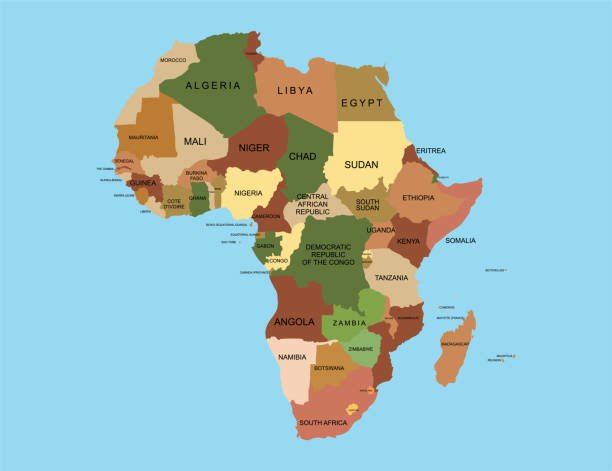
The direct answer to the question, "Did Africa benefit from the slave trade?" is an emphatic no. Far from benefiting, the transatlantic and trans-Saharan slave trades inflicted catastrophic and enduring damage on the continent, profoundly hindering its development, decimating populations, and fracturing societies for centuries. Understanding the impact of slave trade on Africa requires a deep dive into its demographic, economic, social, and psychological consequences, which continue to resonate in contemporary African realities.
The notion that Africa, or any part of it, could have benefited from the forced removal of millions of its most able-bodied people is a historical fallacy that needs rigorous debunking. The continent was not a passive bystander but an active, unwilling participant, exploited by external forces and internal opportunists alike, leading to unprecedented human suffering and widespread underdevelopment.
The Demographic Catastrophe: A Loss Beyond Measure
One of the most immediate and devastating consequences of the slave trade was the massive loss of human life. Estimates suggest that between the 15th and 19th centuries, approximately 12.5 million Africans were forcibly transported across the Atlantic, with millions more dying during capture, the brutal marches to the coast, or the perilous Middle Passage. The trans-Saharan and Red Sea slave trades also accounted for millions more over an even longer period.
Depopulation and Gender Imbalance
- Massive Population Drain: The continuous extraction of people over centuries meant that vast regions of West and Central Africa, the primary sources for the transatlantic trade, experienced significant depopulation. This wasn't just a numerical reduction; it was a demographic hemorrhage that stifled natural growth and recovery.
- Loss of Productive Age Groups: Slave traders predominantly sought young, healthy adults, typically aged 15-35. These were the most productive members of society – farmers, artisans, warriors, and potential parents. Their removal created a demographic vacuum, depleting the very workforce essential for economic and societal progress.
- Skewed Sex Ratios: While initial phases of the transatlantic trade saw a relative balance, later periods often favored male slaves for plantations. This led to a severe gender imbalance in some African societies, impacting marriage patterns, family structures, and the ability of communities to reproduce and rebuild.
The demographic consequences of slavery Africa faced were not merely statistical; they translated into a profound and enduring setback for human capital development that arguably persists to this day.
Economic Ruin and Stagnation: A Legacy of Underdevelopment
Far from fostering economic growth, the slave trade actively sabotaged Africa's indigenous economic systems and diverted its development path. Any short-term gains made by African elites who collaborated in the trade were dwarfed by the long-term, systemic damage.
Hindered Agricultural and Industrial Development
- Agricultural Disruption: With the loss of labor, especially men, agricultural productivity declined significantly in many regions. Farms lay fallow, traditional farming practices suffered, and food security was compromised. This created a cycle of scarcity and heightened vulnerability.
- Stifled Industrialization: While Europe was undergoing industrial revolutions partly fueled by slave labor and resources, Africa was being de-industrialized. The focus shifted away from developing local industries and crafts towards acquiring European goods (e.g., textiles, firearms, alcohol) in exchange for human beings. This created a dependency on external markets for manufactured goods.
- Lack of Capital Investment: The immense profits generated by the slave trade flowed primarily to European merchants, financiers, and colonial powers, not into African communities. Any wealth accumulated by African intermediaries was rarely reinvested into productive infrastructure, education, or diversified economic ventures. Instead, it often fueled further conflict or consumption of foreign goods.
- Underdevelopment of Internal Markets: The constant warfare and insecurity, coupled with the focus on coastal trade for slaves, disrupted internal trade routes and prevented the integration of regional economies. This fragmentation further inhibited economic specialization and growth.
The economic effects of slave trade Africa experienced were transformative, rerouting African economies from organic growth and self-sufficiency towards a destructive extractive model based on human commodities.
Social and Political Fragmentation: Seeds of Instability
The slave trade profoundly destabilized existing African social and political structures, often exacerbating existing tensions and creating new ones. The demand for slaves fueled perpetual warfare and conflict.
Increased Warfare and Militarization
- "Guns-for-Slaves" Cycle: European traders often exchanged firearms for slaves, creating an arms race among African states and communities. This incentivized stronger groups to raid weaker ones for captives, leading to an escalation of violence and the militarization of societies.
- Breakdown of Trust: The pervasive threat of enslavement eroded trust within and between communities. Neighbors turned against neighbors, and families lived in constant fear, making collective action for development exceedingly difficult.
- Weakening of Traditional Institutions: While some states, like Dahomey or Asante, grew powerful through slave raiding, their power was often built on an unstable foundation of violence and exploitation. Many other smaller polities were destroyed or severely weakened, losing their ability to govern effectively and provide for their people.
- Corruption and Insecurity: The immense profits to be made from the trade led to widespread corruption among ruling elites, who often prioritized personal gain over the welfare of their subjects. This bred further resentment and insecurity, hindering any prospect of stable governance and long-term planning.
The social disruption slavery Africa caused led to deep-seated divisions, ethnic tensions, and institutional weaknesses that profoundly impacted the continent's trajectory. These long-term effects Atlantic slave trade contributed significantly to the vulnerabilities that would later be exploited during the colonial era.
Psychological and Cultural Trauma: A Wounded Identity
Beyond the physical and economic ravages, the slave trade left an indelible psychological and cultural scar on the continent. The constant fear, violence, and dehumanization had profound, multi-generational impacts.
- Loss of Identity and Heritage: For those enslaved, their identity was stripped away, and their connection to their cultural heritage severed. For those left behind, the trauma manifested as a collective wound, impacting oral traditions, spiritual practices, and social cohesion.
- Generational Trauma: The experience of witnessing constant violence, the abduction of loved ones, and the pervasive fear of being captured created a deeply ingrained trauma that affected subsequent generations. This can manifest in various social pathologies and a generalized sense of insecurity.
- Erosion of Human Dignity: The very premise of the slave trade rested on the dehumanization of Africans. This racist ideology, propagated to justify the atrocities, had a damaging effect on how Africans were perceived globally and, in some cases, how they perceived themselves.
The legacy of slave trade in Africa is not just in its underdevelopment but also in the subtle, yet powerful, ways it shaped collective memory, identity, and the psychological landscape of its people.
The Myth of African Benefit from Slavery Debunked
Some historical narratives, often misguided or biased, suggest that some African rulers or states benefited from participating in the slave trade. While it is undeniable that certain African individuals and polities enriched themselves or gained temporary military advantages, these isolated instances cannot be construed as a benefit for the continent as a whole. Any short-term gain was vastly outweighed by the systemic destruction.
| Claim of Benefit | Reality of Impact |
|---|---|
| African rulers gained wealth. | Wealth was concentrated, rarely reinvested for societal good, and came at an unbearable human cost, leading to overall societal impoverishment and hindering diversified economic development. |
| African states acquired firearms. | Firearms fueled an incessant cycle of internal warfare and instability, depopulating regions and preventing state-building efforts focused on welfare and peace. |
| Some African states became powerful. | Power was often predatory and short-lived, built on the exploitation of other Africans, contributing to fragmentation rather than unified strength, and leaving a legacy of internal conflict. |
The trade created an environment of dependency, where African economies became focused on supplying a single, destructive commodity—human beings—rather than fostering diversified and sustainable development. This fundamental redirection of resources and human capital represents an immense setback.
Africa's Development Hindered by Slavery: A Modern Echo
The ghost of the slave trade continues to cast a long shadow over Africa. Many scholars and historians argue convincingly that the institutional weaknesses, economic disparities, and social fragmentation witnessed in parts of contemporary Africa have roots stretching back to this era.
- Institutional Weakness: Regions heavily impacted by the slave trade often exhibit weaker state institutions, less trust in government, and higher levels of internal conflict today. The historical legacy of predatory states and corrupt elites, incentivized by the slave trade, undermined the development of inclusive and accountable governance.
- Economic Disparities: Areas that were major sources of slaves tend to have lower levels of economic development today, even when controlling for other factors. This points to the lasting damage inflicted on human capital and economic structures.
- Social Capital Erosion: The breakdown of trust and social cohesion during the slave trade era contributed to lower levels of social capital, which is crucial for collective action, community development, and effective governance.
The discussion around slave trade reparations Africa could potentially explore not just financial restitution but also investments in development initiatives aimed at addressing these deeply embedded historical disadvantages. The scale of the historical injustice demands a comprehensive understanding of its persistent consequences.
Conclusion
In conclusion, the assertion that Africa benefited from the slave trade is not only historically inaccurate but also fundamentally offensive to the memory of millions who suffered and died. The historical evidence overwhelmingly demonstrates that the slave trades, both transatlantic and trans-Saharan, were periods of profound trauma, destruction, and economic stagnation for the African continent. They led to catastrophic population loss, stunted economic development, fostered political instability and incessant warfare, and inflicted deep psychological and cultural wounds that continue to affect African societies today. Any short-term, localized gains by specific African entities were negligible compared to the pervasive, long-term damage that fundamentally redirected Africa's historical trajectory, making it a critical factor in understanding the continent's development challenges.
Enjoyed this read?
Share it with your friends and colleagues.