Is Africa Bigger Than Asia

BSC Insights Admin
October 01, 2026
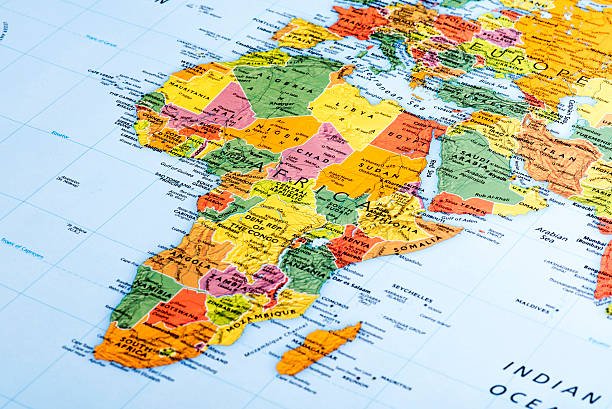
When contemplating the sheer scale of Earth's landmasses, a common question arises: Is Africa bigger than Asia? The definitive answer is no; Asia is significantly larger than Africa in terms of total land area. While both continents are immense, diverse, and home to billions, Asia holds the undisputed title as the world's largest continent, dwarfing all others, including the vast expanse of Africa.
This comprehensive article will delve into the geographical realities, comparing the land areas, populations, and other key metrics of these two colossal continents. We will explore the true size of Africa and Asia, unravel common misconceptions, and highlight the unique attributes that make each a global powerhouse in terms of geography, demographics, and cultural richness.
The Geographic Giants: Unpacking Continental Sizes
Understanding the true scale of continents requires looking at concrete data, moving beyond visual distortions often presented on maps. While intuition might sometimes suggest Africa's massive central bulk makes it the largest, the figures paint a clear picture.
Asia's Staggering Scale
Asia is by far the largest continent on Earth, encompassing an immense land area that covers roughly one-third of the world's total landmass. Its geographical expanse stretches from the shores of the Pacific Ocean in the east to the Ural Mountains in the west, and from the Arctic Ocean in the north to the Indian Ocean in the south. This vastness contributes to an incredible diversity of climates, ecosystems, and geographical features, from the highest mountains on Earth to arid deserts and lush tropical rainforests.
- Total Land Area: Approximately 44.6 million square kilometers (17.2 million square miles).
- Dominant Features: Home to the Himalayan mountain range, the Gobi Desert, the Siberian taiga, and numerous major river systems like the Yangtze and Mekong.
- Largest Countries: Russia (partially in Asia), China, India.
The sheer scale of Asia means it could comfortably contain several smaller continents within its borders. Its landmass is not only vast but also incredibly varied, supporting an unparalleled array of biodiversity and human cultures.
Africa's Immense Proportions
Africa, often underestimated in its size due to common map projections, is the second largest continent globally. It is a continent of immense beauty and diverse landscapes, known for its vast savannas, dense rainforests, colossal deserts like the Sahara, and the longest river in the world, the Nile. The true size of Africa is often a revelation to many, challenging preconceived notions based on distorted visual representations.
- Total Land Area: Approximately 30.3 million square kilometers (11.7 million square miles).
- Dominant Features: The Sahara Desert, Congo Basin, Great Rift Valley, Mount Kilimanjaro.
- Largest Countries: Algeria, Democratic Republic of Congo, Sudan.
Despite being smaller than Asia, Africa is still an enormous landmass, larger than China, India, the United States, and most of Europe combined. The misconception about Africa's size is largely attributed to the Mercator projection, a widely used map layout that distorts the sizes of landmasses, particularly those further from the equator.
Key Metrics: Area, Population, and Density
To truly compare Africa vs Asia size, we need to look at more than just a general statement. Specific figures for land area, population, and population density provide a clearer understanding of these continental giants.
Comparing Land Area: Asia vs. Africa
The most direct way to answer "Is Africa bigger than Asia" is through a side-by-side comparison of their land areas. The difference is substantial, placing Asia in a league of its own.
| Continent | Approximate Land Area (km²) | Approximate Land Area (mi²) | Global Rank |
|---|---|---|---|
| Asia | 44,614,000 | 17,226,000 | 1st |
| Africa | 30,365,000 | 11,724,000 | 2nd |
As the table clearly illustrates, Asia's land area is roughly 1.47 times larger than Africa's. This significant difference underscores Asia's status as the largest continent by a considerable margin.
Population Powerhouses: A Demographic Battle
Beyond land area, population is another critical metric that highlights the scale and impact of these continents. Both Africa and Asia are home to billions of people, but their demographic profiles differ considerably.
- Asia Population: With over 4.7 billion people, Asia is by far the most populous continent, accounting for over 59% of the world's total population. Countries like China and India alone represent a significant portion of humanity. This high population density, especially in East and South Asia, has profound implications for resources, infrastructure, and economic development.
- Africa Population: Africa's population stands at approximately 1.4 billion people, making it the second most populous continent. While its population is considerably smaller than Asia's, Africa boasts the youngest population globally and the fastest growth rate. This demographic trend presents both opportunities and challenges for future development and resource management.
The contrast in population density is striking: Asia, despite being much larger, has vast densely populated regions, while Africa, though also having large cities, generally has a lower overall population density across its expansive landmass.
Coastline Length and Geographic Features
The physical characteristics of these continents extend beyond just total area. Their coastlines and internal geographical features also present interesting comparisons.
- Asia's Coastline: Due to its irregular shape, numerous peninsulas (like Arabia, India, Indochina, Korea), and archipelagos (like Japan, Indonesia, Philippines), Asia has an incredibly long and intricate coastline, estimated at over 62,800 kilometers (39,000 miles). This extensive coastline has historically facilitated trade, exploration, and cultural exchange.
- Africa's Coastline: In contrast, Africa has a surprisingly short and smooth coastline relative to its massive size, estimated at around 30,500 kilometers (18,950 miles). This relative lack of deep indentations and natural harbors is often cited as a factor that historically limited extensive maritime trade compared to other continents.
Internally, both continents showcase immense geological diversity. Asia is home to the world's highest peaks (Mount Everest), deepest lakes (Lake Baikal), and vast plateaus. Africa, while lacking extreme altitudinal variations of Asia, boasts the Great Rift Valley, a dramatic geological feature, and numerous significant mountain ranges like the Atlas and Drakensberg.
Beyond Size: Exploring Diversity and Influence
While size is a fundamental metric, the richness of continents extends far beyond their mere land area or population count. Africa and Asia are vibrant tapestries of cultures, economies, and geopolitical influence.
Cultural and Linguistic Diversity
Both continents are epicenters of human diversity, harboring thousands of distinct cultures and languages.
- Asian Diversity: Asia is the birthplace of major world religions (Buddhism, Christianity, Hinduism, Islam, Judaism), and its cultural landscape is incredibly varied, from the ancient traditions of East Asia to the vibrant societies of South Asia and the unique cultures of the Middle East. Over 2,300 languages are spoken across Asia, reflecting millennia of human migration and development.
- African Diversity: Africa is renowned for its unparalleled linguistic and cultural richness. With over 3,000 distinct ethnic groups and more than 2,000 languages, it is considered the most genetically diverse continent on Earth. This diversity is expressed through art, music, traditions, and social structures that vary immensely from one region to another, making cultural diversity Africa's hallmark.
This immense cultural and linguistic tapestry on both continents presents both challenges in governance and incredible opportunities for innovation and cultural exchange.
Economic Landscapes and Development
The economic landscapes of Africa and Asia are dynamic and rapidly evolving, playing crucial roles in the global economy.
- Asian Economies: Asia hosts some of the world's largest and most influential economies, including China, Japan, India, and South Korea. It is a global hub for manufacturing, technology, finance, and trade. Rapid economic growth in many Asian countries over the past few decades has lifted millions out of poverty and reshaped global economic power dynamics. The economic landscape Asia presents is one of both established giants and rapidly emerging markets.
- African Economies: Africa is a continent of significant economic potential, rich in natural resources such as minerals, oil, and gas. While historically facing development challenges, many African nations have shown robust economic growth in recent decades, driven by increasing foreign investment, technological adoption, and a growing consumer base. The economic landscape Africa is diverse, with varying levels of development and strong regional economic blocs emerging.
Both continents are key players in global trade and investment, with increasing interconnectedness between their economies.
Geopolitical Significance and Global Impact
The geopolitical importance of Africa and Asia cannot be overstated. They are central to global discussions on climate change, resource management, security, and international relations.
- Geopolitical Importance Asia: Asia's massive population, economic powerhouses, and strategic waterways (like the Strait of Malacca and the Suez Canal's connection) make it a focal point of global politics. Issues of regional stability, territorial disputes, and the rise of new superpowers directly impact the global geopolitical landscape.
- Geopolitical Importance Africa: Africa's vast natural resources, growing youthful population, and increasing strategic importance for global powers make it a continent of significant geopolitical interest. Efforts towards regional integration, peace, and security are crucial for global stability, and its role in international forums is continually expanding.
The decisions and developments within these continents have far-reaching global impact, shaping the future of humanity.
Misconceptions About Africa's Size
A crucial aspect of discussing "Is Africa bigger than Asia" involves addressing the persistent misconception about Africa's true size. Many people are surprised to learn that Africa is the second-largest continent, often perceiving it as smaller than it is.
This perception is primarily due to the ubiquitous Mercator projection map. Developed in 1569 by Gerardus Mercator, this cylindrical map projection was revolutionary for navigation because it maintained true compass bearings. However, it achieved this by distorting the sizes of landmasses, particularly those further away from the equator. Areas near the poles, like Greenland, Canada, and Russia, appear disproportionately large, while continents near the equator, such as Africa and South America, appear smaller than their actual relative size.
For example, on a Mercator map, Greenland often looks comparable in size to Africa, when in reality, Africa is roughly 14 times larger than Greenland. This visual distortion Africa creates a lasting, incorrect impression of its actual scale. Understanding the Mercator projection Africa issue is vital for appreciating the true geographical facts of our world.
Why This Comparison Matters
Understanding the relative sizes and characteristics of continents like Africa and Asia is not just an academic exercise. It offers profound insights into global geography, resource distribution, population dynamics, and historical development. Correctly perceiving the scale of these landmasses helps us better comprehend:
- Resource Allocation: How natural resources are distributed across vast areas.
- Population Pressures: The varying challenges and opportunities presented by high versus low population densities.
- Climate Zones: The incredible array of climates influenced by sheer size and geographical positioning.
- Human Migration and Interaction: The historical and ongoing patterns of human movement and cultural exchange.
This knowledge fosters a more accurate and nuanced understanding of our planet and its diverse inhabitants, challenging visual biases and promoting geographical literacy.
Conclusion
In conclusion, when asking, "Is Africa bigger than Asia?" the answer is a resounding no; Asia is significantly larger than Africa in terms of total land area. Asia holds the title of the world's largest continent with approximately 44.6 million square kilometers, while Africa, though immense and the second-largest, covers about 30.3 million square kilometers. This makes Asia nearly one and a half times the size of Africa.
Beyond mere size, both continents are colossal in their own rights, boasting billions of inhabitants, unparalleled cultural and linguistic diversity, and rapidly evolving economic and geopolitical significance. While map projections can sometimes mislead our perception of size, the geographical facts confirm Asia's supremacy in landmass. This comparison not only clarifies a common misconception but also deepens our appreciation for the vastness and complexity of our world's two largest continents.
Enjoyed this read?
Share it with your friends and colleagues.