Is Africa Bigger Than Europe

BSC Insights Admin
September 30, 2026
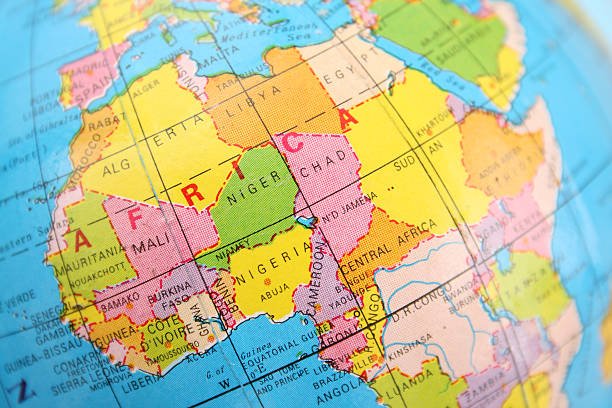
Yes, Africa is significantly larger than Europe. In fact, Africa's landmass is approximately three times the size of Europe's, making it the second-largest continent in the world by area. This stark difference in size often surprises many due to common misconceptions perpetuated by certain map projections, which can distort the true scale of continents, especially those near the equator.
The Staggering Scale: Africa's True Size
Africa, often called the 'Mother Continent,' spans an immense area, boasting incredible diversity in its landscapes, climates, and cultures. Its vastness is truly remarkable when compared to other continents. To fully appreciate the scale, consider the raw numbers:
- Total Area: Africa covers approximately 30.3 million square kilometers (11.7 million square miles).
- Coastline: Its extensive coastline stretches for about 30,500 kilometers (19,000 miles).
- Countries: Africa is home to 54 recognized countries, each with its unique heritage and geography.
To put this into perspective, Africa is large enough to comfortably fit the United States, China, India, and a significant portion of Europe all within its borders. Its sheer landmass influences everything from its diverse ecosystems, including the Sahara Desert, the Congo Rainforest, and the Serengeti plains, to the distribution of its rich natural resources.
Geographical Dominance and Diverse Landscapes
The geographical size of Africa allows for an incredible range of geographical features. From the towering peaks of Mount Kilimanjaro to the expansive Nile River, the world's longest, Africa showcases unparalleled natural grandeur. The continent's vastness also means it encompasses almost every climate zone imaginable, from scorching deserts to lush tropical rainforests and temperate Mediterranean coasts. This diversity is a direct consequence of its immense scale and position straddling the equator.
Europe's Landmass: A Detailed Look
Europe, while a highly influential continent in global affairs, is considerably smaller in terms of land area. It is often described as a peninsula of the larger Eurasian landmass, bordered by the Arctic Ocean to the north, the Atlantic Ocean to the west, and the Mediterranean Sea to the south.
- Total Area: Europe covers approximately 10.18 million square kilometers (3.93 million square miles).
- Coastline: Its intricate coastline is about 38,000 kilometers (23,600 miles), surprisingly longer than Africa's despite its smaller area, due to numerous peninsulas and islands.
- Countries: Europe comprises around 50 countries, including transnational states like Russia and Turkey.
Despite its smaller size, Europe is incredibly diverse, featuring mountain ranges like the Alps and the Pyrenees, vast plains, and extensive river networks such as the Danube and the Rhine. Its temperate climate zones have historically been conducive to agricultural development and population growth.
The Compact Nature of Europe
The relatively compact nature of Europe has shaped its history, fostering closer interactions and greater integration among its nations compared to the more geographically dispersed continent of Africa. This proximity has facilitated trade, cultural exchange, and the rapid spread of ideas, but also, historically, conflicts.
Direct Comparison: Africa vs. Europe by the Numbers
To provide a clear continent land area comparison, let's examine the key statistics side-by-side. The difference in scale becomes undeniable when looking at precise figures.
| Metric | Africa | Europe |
|---|---|---|
| Total Land Area | ~30.3 million sq km | ~10.18 million sq km |
| Approximate Ratio | ~3 times larger than Europe | ~1/3 the size of Africa |
| Estimated Population (2023) | ~1.4 billion people | ~750 million people |
| Number of Countries | 54 | ~50 (depending on definition) |
| Largest Country by Area | Algeria | Russia (European part) |
As evident from the table, Africa's landmass is vastly superior to Europe's landmass across multiple indicators. The sheer continental dimensions highlight Africa's significant position on the global stage. This comparison clearly answers the question of how big is Africa compared to Europe: substantially bigger.
Why the Misconception? The Impact of Map Projections
One of the primary reasons many people underestimate Africa's true scale relative to Europe is the widespread use of certain map projections, most notably the Mercator projection. Developed in 1569 by Gerardus Mercator, this projection was revolutionary for navigation because it rendered lines of constant bearing (rhumb lines) as straight segments. However, it achieves this by significantly distorting the size of landmasses as they get further from the equator.
Understanding Map Distortions
- Mercator's Bias: On a Mercator map, areas near the poles, like Greenland, Canada, and Russia, appear much larger than they are in reality. Conversely, regions near the equator, such as Africa and South America, appear compressed and smaller than their actual size.
- Visual Deception: This visual deception leads to a common misunderstanding where, on a Mercator map, Greenland often looks comparable in size to Africa, even though Africa is actually about 14 times larger. Similarly, Europe often appears disproportionately large next to Africa.
- Impact on Perception: Generations have grown up viewing world maps based on the Mercator projection, inadvertently ingraining an incorrect perception of continental sizes and contributing to the belief that Africa is smaller than it truly is.
To get a more accurate representation of the real size of continents, one might look at other projections like the Gall-Peters projection or the Tissot's Indicatrix, which attempt to preserve area accuracy, though they may distort shapes or angles.
Beyond Area: Other Comparison Metrics
While land area is the primary focus when asking is Africa bigger than Europe, other metrics further emphasize their differences and similarities.
Population Dynamics
The population of Africa vs Europe also tells a story of vastly different scales and demographic trends. Africa is the second most populous continent, with an estimated population of over 1.4 billion people and a very young demographic structure. Europe, on the other hand, has a population of around 750 million and generally an older demographic profile. Africa's population is projected to continue growing rapidly, further widening the gap in human numbers between the two continents.
Number of Countries and Cultural Diversity
Both continents are home to numerous independent nations, contributing to immense cultural and linguistic diversity. Africa's 54 countries speak thousands of distinct languages and boast a rich tapestry of ethnic groups, traditions, and belief systems. Europe, with approximately 50 countries, also presents significant linguistic and cultural variations, though often within a more geographically confined space, leading to a different dynamic of regional interaction and integration.
The Geographical Significance of Africa's Size
Africa's immense size has profound geographical implications:
- Climate Zones: The continent's span across both northern and southern hemispheres and the equator results in an incredible array of climate zones, from extreme deserts (Sahara, Kalahari) to tropical rainforests (Congo Basin) and savannas.
- Biodiversity Hotspots: Its vastness provides habitats for unparalleled biodiversity, including many species found nowhere else on Earth.
- Natural Resources: Africa is incredibly rich in natural resources, including vast reserves of minerals, oil, gas, and arable land, whose distribution and accessibility are influenced by the continent's large geological formations.
- Transportation Challenges: The sheer distances and varied terrain present significant challenges for infrastructure development and intra-continental trade, although this is rapidly evolving.
Understanding these impacts is key to grasping the complexities and potentials inherent in Africa's continental dimensions.
The Geographical Significance of Europe's Size
Europe's relatively smaller and more fragmented geography also has significant impacts:
- Interconnectivity: Its dense network of rivers, coastlines, and relatively flat plains in many areas has historically facilitated easy movement, trade, and communication between different regions and nations.
- Varied Climates: Despite its smaller size, Europe experiences a range of climates, from the Arctic north to the Mediterranean south, influenced by ocean currents and mountain ranges.
- High Population Density: Europe is one of the most densely populated continents, with a significant proportion of its population living in urban areas, a consequence of its smaller landmass supporting a large population.
- Resource Management: With fewer vast untouched natural areas compared to Africa, Europe has had to focus intensively on resource management, conservation, and innovation to sustain its populations and industries.
Understanding Continents: What Defines Them?
The concept of a continent is primarily a geographical and conventional one, referring to a large, continuous landmass that is separated from other such landmasses by oceans or distinct geographical features. While there isn't one universally agreed-upon definition (some models recognize seven, others six, or even five continents), Africa and Europe are almost always recognized as distinct continental entities.
- Geological Separation: Geologically, Africa and Europe are part of the Afro-Eurasian landmass. However, they are traditionally separated by geographical features such as the Mediterranean Sea, the Strait of Gibraltar, the Ural Mountains, and the Bosporus.
- Cultural and Historical Distinction: Beyond geology, the profound cultural, historical, and socio-economic differences have firmly established Africa and Europe as separate continents in human understanding and international discourse.
Conclusion
In conclusion, the answer to the question is Africa bigger than Europe is an emphatic yes. Africa is nearly three times the size of Europe, covering a monumental 30.3 million square kilometers compared to Europe's 10.18 million square kilometers. This significant difference in continent land area makes Africa the world's second-largest continent. The common misconception regarding their relative sizes often stems from distortions in common map projections like the Mercator, which inaccurately inflate the size of landmasses closer to the poles while shrinking those near the equator. Recognizing Africa's true immense scale is crucial for a more accurate understanding of global geography, its diverse ecosystems, vast resources, and complex geopolitical landscape. This geographical reality underscores Africa's profound importance and influence on the planet.
Enjoyed this read?
Share it with your friends and colleagues.