How Much Bigger Is Africa Than Russia

BSC Insights Admin
September 30, 2026
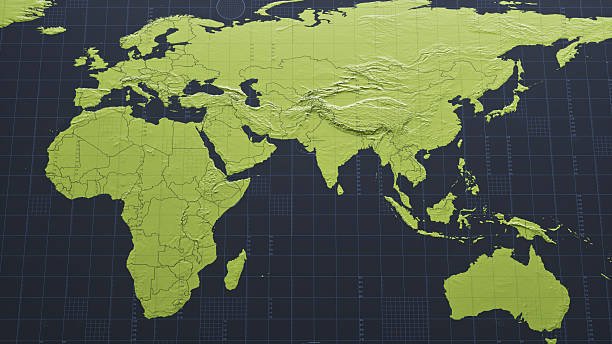
Africa is substantially larger than Russia, covering a land area of approximately 30.3 million square kilometers (11.7 million square miles), making it roughly 1.77 times the size of Russia, which spans about 17.1 million square kilometers (6.6 million square miles). This significant difference in scale highlights Africa's immense geographical footprint, often surprising many who are accustomed to distorted world maps, and underscores its status as the world's second-largest continent.
The Staggering Scale: Africa's True Size Revealed
Africa, a continent of unparalleled diversity, is often underestimated in its sheer physical scale. It is not just one of the largest landmasses on Earth but a vibrant collection of 54 recognized countries, each with its unique cultures, landscapes, and histories. Its vastness means it could comfortably contain several major global powers within its borders, emphasizing its significant contribution to the global land area.
Key Statistics: Africa's Land Area
- Total Land Area: Approximately 30.3 million sq km (11.7 million sq miles).
- Global Landmass Percentage: Represents about 20.4% of Earth's total land area.
- Continental Ranking: Second-largest continent by land area.
- Coastline Length: Roughly 30,500 km (18,950 miles), the longest of any continent, showcasing its expansive borders with the Atlantic and Indian Oceans, and the Mediterranean Sea.
This immense size contributes to Africa's incredible climatic and ecological diversity, ranging from the scorching Sahara Desert in the north to the tropical rainforests of the Congo Basin and the temperate climates of its southern tip. The continent's vastness is a key factor in understanding its rich biodiversity, complex geological features, and the distribution of its natural resources.
Russia's Immense Territory: A Comparative Look
Russia, the world's largest country by land area, is renowned for its colossal size, stretching across eleven time zones and two continents (Europe and Asia). Its vastness is a defining characteristic, influencing its history, climate, and geopolitical significance. Despite its impressive size, it is still considerably smaller than the entire continent of Africa.
Key Statistics: Russia's Land Area
- Total Land Area: Approximately 17.1 million sq km (6.6 million sq miles).
- Global Landmass Percentage: Represents about 11% of Earth's total land area.
- Continental Spanning: Covers parts of Eastern Europe and Northern Asia.
- Neighboring Countries: Shares land borders with 14 countries, more than any other nation.
The sheer expanse of Russia includes diverse environments, from the frozen tundra and boreal forests (taiga) to steppes and mountains. Its territory is rich in natural resources, including vast reserves of oil, natural gas, timber, and various minerals. However, much of its land, particularly in Siberia, is sparsely populated due to harsh climatic conditions, leading to a relatively low overall population density despite its enormous size.
Direct Comparison: Africa Versus Russia
To truly grasp how much bigger Africa is than Russia, a direct side-by-side comparison of their key geographical metrics is essential. The figures underscore a significant disparity in scale, challenging common perceptions influenced by map projections.
Visualizing the Difference
Imagine placing the entirety of Russia within Africa. You would find that Africa has ample room to spare. In fact, you could fit Russia and then some within Africa's borders. This comparison is further illuminated by understanding that Africa is large enough to contain the United States, China, India, and a significant portion of Europe combined, yet still have space remaining.
Below is a table summarizing the key comparative data:
| Feature | Africa | Russia | Difference (Africa vs. Russia) |
|---|---|---|---|
| Total Land Area | ~30.3 million sq km | ~17.1 million sq km | Africa is ~1.77 times larger |
| Global Landmass Share | ~20.4% | ~11% | Africa contributes ~9.4% more |
| Number of Countries/Territories | 54 (recognized countries) | 1 (a single country) | Africa comprises 53 more sovereign nations |
| Population (approx.) | ~1.4 billion | ~144 million | Africa has ~9.7 times more people |
| Population Density (approx.) | ~47 people/sq km | ~8 people/sq km | Africa is significantly more densely populated |
Implications of Continental Size
The vast differences in size between Africa and Russia have profound implications across various domains:
Resource Distribution
- Africa: Its massive land area means an incredibly diverse and abundant array of natural resources, including diamonds, gold, oil, natural gas, uranium, cobalt, and vast agricultural lands. The distribution and management of these resources are complex due to the multitude of sovereign states.
- Russia: Also rich in natural resources, particularly energy resources (oil, gas) and minerals, much of which are concentrated in its vast and often challenging Siberian regions. Its single national governance structure allows for centralized control over resource exploitation, though logistical challenges due to size are immense.
Biodiversity and Ecosystems
- Africa: The immense span across different latitudes and altitudes supports an unparalleled range of ecosystems – from deserts and savannas to rainforests and mountains – hosting a vast diversity of flora and fauna, many of which are endemic.
- Russia: While also diverse, its ecosystems are predominantly subarctic and temperate, characterized by extensive taiga forests, tundra, and steppes. It is home to unique arctic and subarctic wildlife adapted to cold climates.
Demographics and Development
- Africa: With a rapidly growing population exceeding 1.4 billion, spread across many nations, Africa faces diverse developmental challenges and opportunities. Its large youth population is a significant demographic characteristic.
- Russia: Despite its vastness, Russia has a comparatively smaller and aging population, with significant population concentrations in its western, European parts. Its low population density across much of its territory impacts infrastructure development and resource utilization.
Why is Africa's Scale Often Underestimated?
The perception that Africa is not significantly larger than Russia, or even that it is smaller than it truly is, stems from several widespread factors, primarily related to cartography and historical narratives.
Mercator Projection Distortion
One of the most significant reasons for this misperception is the widespread use of the Mercator projection in maps. Developed in the 16th century, this projection was ideal for navigation because it preserves angles and shapes, but at the cost of distorting the size of landmasses, particularly those farther from the equator. Greenland, for example, appears comparable in size to Africa on a Mercator map, when in reality, Africa is about 14 times larger. Similarly, Russia appears disproportionately vast, while equatorial regions like Africa appear smaller than their actual dimensions.
Focus on Individual Countries
People often think of Africa not as a single continent but as a collection of individual countries. Unlike North America or Europe, which are often mentally grouped, Africa's diverse nations are frequently considered separately, which can diminish the perception of the continent's overall size. When comparing Africa's total landmass to that of a single country like Russia, the scale becomes clearer.
Historical Narratives
Historical and colonial narratives have sometimes perpetuated ideas that downplay Africa's importance and scale. This has contributed to a general lack of awareness about its immense geographical and cultural significance, reinforcing inaccurate perceptions of its size and influence on the world stage.
Beyond Land Area: Other Geographic Factors
While land area is a primary metric for comparison, other geographic factors also highlight the distinct characteristics of Africa and Russia.
Coastline Length
- Africa: Possesses a remarkably long and relatively smooth coastline (about 30,500 km). This smooth coastline, however, historically limited the number of natural harbors, which impacted maritime trade and exploration in some eras.
- Russia: Has the world's longest coastline (about 37,653 km or 23,396 miles), much of which borders the Arctic Ocean and is frozen for a significant portion of the year, impacting accessibility and maritime activity.
Number of Countries
- Africa: Comprises 54 sovereign countries, making it a continent of immense political, cultural, and linguistic diversity.
- Russia: Is a single country, albeit a federation with various republics and autonomous regions. This difference profoundly impacts governance, international relations, and internal dynamics.
Climatic Zones
- Africa: Spans all major tropical and subtropical climatic zones, including equatorial rainforests, savannas, deserts (Sahara, Kalahari), and Mediterranean climates.
- Russia: Primarily features temperate and subarctic climates, with large areas of tundra and taiga, known for extreme cold and vast, sparse landscapes.
Fascinating Facts About Africa's Geography
- Africa is the only continent that straddles the equator, with significant portions in both the Northern and Southern Hemispheres, leading to its diverse climates.
- It is home to the world's largest hot desert, the Sahara, which is comparable in size to the entire United States.
- Lake Victoria, located in East Africa, is the largest lake by area in Africa and the second-largest freshwater lake in the world.
- Mount Kilimanjaro in Tanzania is Africa's highest peak, a dormant volcano standing majestically above the plains.
Fascinating Facts About Russia's Geography
- Russia contains nearly one-eighth of the Earth's inhabited land area.
- Lake Baikal in Siberia is the deepest freshwater lake in the world and contains about 20% of the world's unfrozen freshwater.
- The Ural Mountains, an ancient mountain range, conventionally form the boundary between Europe and Asia within Russia.
- The country's vastness means that when it is noon in its westernmost part, it is already night in its easternmost regions.
In conclusion, the facts unequivocally demonstrate that Africa is significantly larger than Russia, nearly 1.8 times its land area. This comparison highlights Africa's true geographical magnitude as the world's second-largest continent and challenges common misconceptions perpetuated by map distortions. Understanding the immense scale of Africa is crucial for appreciating its incredible diversity, rich resources, and profound global importance, distinguishing it fundamentally from the vast but singular nation of Russia.
Enjoyed this read?
Share it with your friends and colleagues.