Is Africa Bigger Than Russia

BSC Insights Admin
September 30, 2026
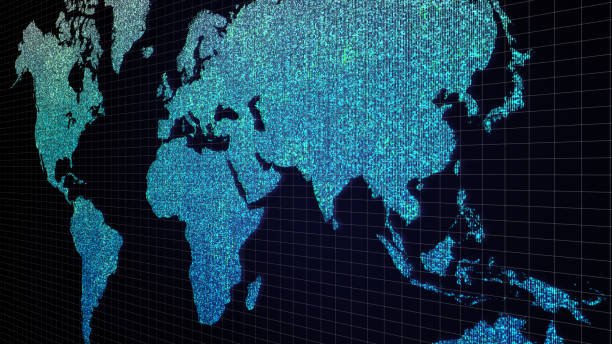
When considering the immense landmasses of our world, a common question arises: is Africa bigger than Russia? The definitive answer is a resounding yes, Africa is significantly larger than Russia in terms of total land area. This misconception often stems from the visual distortions inherent in many common world maps, particularly the Mercator projection, which can greatly exaggerate the size of countries closer to the poles.
The Definitive Answer: Africa's Immense Scale
To put it simply, Africa is nearly twice the size of Russia. Let's delve into the precise numbers to solidify this geographical fact. Africa, the second-largest continent on Earth, boasts an impressive land area of approximately 30.3 million square kilometers (11.7 million square miles). This vast expanse encompasses a diverse array of climates, ecosystems, and human cultures, making it a truly enormous and varied landmass.
In contrast, Russia, while being the world's largest country by land area, measures approximately 17.1 million square kilometers (6.6 million square miles). Comparing these figures directly reveals that Africa is not just marginally larger, but substantially so. Understanding the true Africa size vs Russia helps in rectifying common global perspectives.
Here's a quick comparison:
- Africa's Area: ~30.3 million sq km
- Russia's Area: ~17.1 million sq km
- Difference: Africa is ~13.2 million sq km larger than Russia.
Beyond the Map: Why Perceptions Can Be Misleading
The Mercator Projection and Its Distortions
The primary reason many people incorrectly assume Russia to be larger than Africa, or at least comparable in size, lies with the ubiquitous Mercator projection map. Developed in 1569 by Gerardus Mercator, this cylindrical map projection was revolutionary for nautical navigation because it represents lines of constant course (rhumb lines) as straight segments. However, a significant drawback of the Mercator projection is its severe distortion of size, particularly for landmasses located far from the equator.
On a Mercator map, regions closer to the poles appear disproportionately large. For instance, Greenland often looks comparable in size to Africa, even though Africa is actually about 14 times larger than Greenland. Similarly, Canada and Russia, situated in higher latitudes, are visually inflated, leading to the perception that their territories are much more expansive than they truly are when compared to equatorial regions like much of Africa and South America. This distortion makes it challenging to grasp the true size of continents and countries at a glance.
Comparing Continents and Countries
It is also crucial to remember that we are comparing a continent (Africa) with a single country (Russia). While Russia is an enormous country, Africa is comprised of 54 independent countries, each with its own unique geography, culture, and economy. This inherent difference in classification naturally points to Africa's greater overall scale. The question of Africa land area versus Russia land area often arises from a lack of awareness regarding these fundamental geographical distinctions.
The True Scope of the African Continent
Africa's vastness is truly staggering. To put its size into perspective, one can imagine fitting several of the world's major countries within its borders. For example, the United States, China, India, and a significant portion of Europe could all comfortably fit inside Africa, with room to spare. This continent stretches approximately 8,000 kilometers (5,000 miles) from north to south and 7,500 kilometers (4,700 miles) from east to west.
Key Facts About Africa's Scale:
- Number of Countries: 54 recognized sovereign states.
- Coastline: Over 30,500 km (18,950 miles), reflecting its relatively smooth coastline compared to Europe.
- Diverse Landscapes: From the colossal Sahara Desert in the north to the tropical rainforests of the Congo Basin, the savannas of East Africa, and the temperate regions of the south. This immense diversity underscores its size and varied geography.
- Population: Home to over 1.4 billion people, making it the second-most populous continent.
Understanding these facts helps to illustrate the incredible scale and significance of Africa, often overlooked due to misleading cartography. The geographical facts Africa Russia comparison highlights not just area, but also the complexity and diversity of global regions.
Russia: The World's Largest Country by Land Area
Despite being smaller than Africa, Russia's sheer size as a single nation is undeniably impressive. Spanning Eastern Europe and Northern Asia, it holds the title of the world's largest country by land area, covering over one-eighth of Earth's inhabited landmass. Its immense east-west expanse means it traverses 11 different time zones, a testament to its scale.
Key Facts About Russia's Scale:
- Time Zones: 11, from Kaliningrad in the west to Kamchatka in the east.
- Bordering Countries: Shares land borders with 14 countries.
- Diverse Geography: From the frozen tundras of Siberia to the vast taiga forests, the Ural Mountains (often considered the boundary between Europe and Asia), and extensive plains.
- Key Role: Plays a significant role in global geopolitics and resource supply, partly due to its enormous geographical footprint.
While Russia's land area is monumental for a single country, it still falls considerably short when compared to the combined landmass of an entire continent like Africa. The contrast helps to contextualize the true meaning of continent size comparison.
Debunking Common Misconceptions About Global Landmasses
The "Is Africa Bigger Than Russia" question is just one example of how our perception of the world can be shaped and sometimes skewed by the maps we commonly encounter. Here are some other prevalent geographical misconceptions, primarily due to map projections:
- Greenland vs. Africa: As mentioned, Greenland appears huge on Mercator maps, sometimes larger than South America or even Africa. In reality, Africa is 14 times larger than Greenland.
- Alaska vs. Mexico: Alaska appears much larger than Mexico on many maps. Mexico is actually slightly larger in land area.
- Europe vs. South America: Europe often looks comparable to or larger than South America. South America is significantly larger.
- Canada's True Size: While Canada is the second-largest country by land area, its northern regions are inflated on Mercator maps, making it seem even vaster than its already impressive size.
These distortions are not errors in the maps themselves but rather inherent limitations of trying to represent a spherical Earth on a flat, two-dimensional surface. Different map projections prioritize different aspects: some preserve area (equal-area projections), others preserve shape (conformal projections), and some attempt a compromise. The Mercator projection prioritizes direction and shape for navigation, at the cost of distorting relative sizes.
The Importance of Accurate Geographical Knowledge
An accurate understanding of global geographical facts extends beyond mere curiosity; it has significant implications for various fields:
- Geopolitics and International Relations: Correctly assessing the scale of nations and continents influences strategic thinking, resource distribution, and diplomatic engagements.
- Economic Development: Understanding the vastness and diversity of a continent like Africa is crucial for effective development strategies, infrastructure planning, and market analysis.
- Environmental Studies: The true size of rainforests, deserts, and oceans affects climate models, conservation efforts, and the study of biodiversity.
- Education and Worldview: Accurate maps foster a better-informed global citizenry, challenging ethnocentric biases and promoting a more realistic understanding of our planet's diverse regions.
Dispelling myths like the one surrounding Africa vs Russia size contributes to a more informed and nuanced perception of the world. It encourages deeper engagement with geography and a critical approach to visual information, especially in an age where digital maps are so prevalent.
Summary: Africa's Undeniable Dominance in Size
In conclusion, when asking is Africa bigger than Russia, the answer is an unequivocal yes. Africa, a continent composed of 54 diverse nations, spans approximately 30.3 million square kilometers, making it nearly twice the size of Russia, the world's largest single country at 17.1 million square kilometers. This common misconception is largely due to the visual distortions of the Mercator map projection, which inflates the size of landmasses closer to the poles. Understanding the true size of continents and the factors that influence our perception of them is vital for a comprehensive and accurate grasp of global geography. Africa's immense land area and rich diversity solidify its position as one of the planet's most significant and awe-inspiring landmasses.
Enjoyed this read?
Share it with your friends and colleagues.