Is Africa Bigger Than South America

BSC Insights Admin
October 01, 2026
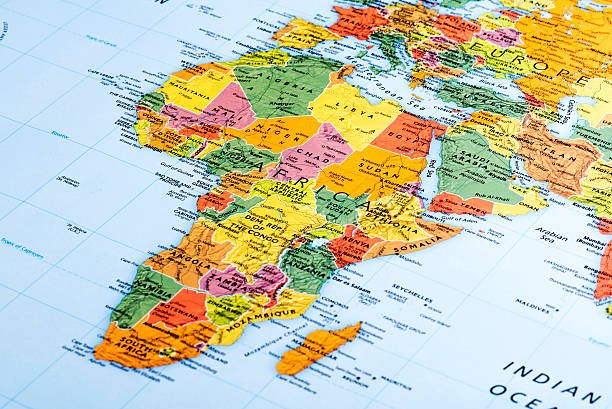
Yes, Africa is significantly larger than South America in terms of total land area, making it the second-largest continent on Earth, while South America ranks as the fourth. This foundational understanding dispels common visual misconceptions often perpetuated by certain map projections and sets the stage for a comprehensive exploration of their vast differences in geographical dimensions, population, number of countries, and overall continental scale. This article will delve into the precise measurements and diverse characteristics that truly define the magnitude of these two remarkable continents, providing a clear and authoritative comparison for anyone wondering about their true sizes.
Understanding Continental Scale: Africa vs. South America - The Definitive Answer
The question of whether Africa is bigger than South America is a common one, often sparked by distorted world maps or a general lack of precise geographical knowledge. The answer is unequivocally yes. Africa dwarfs South America in almost every measurable aspect of continental scale, from its sprawling landmass to its diverse ecosystems and burgeoning population. To truly appreciate this difference, one must look beyond visual representations and delve into the hard data.
Africa spans an immense 30.37 million square kilometers (11.73 million square miles), making it a colossal landmass that stretches across both the Northern and Southern hemispheres. In stark contrast, South America covers approximately 17.84 million square kilometers (6.89 million square miles). This means that Africa is roughly 1.7 times the size of South America, a difference that is far from negligible and carries significant implications for climate, biodiversity, human populations, and geopolitical influence.
This substantial difference in size is a critical factor when discussing not only geography but also demography, resources, and environmental challenges. Understanding the true scale of these continents helps in appreciating their unique contributions to global biodiversity, their distinct historical trajectories, and their present-day roles on the world stage. It's not just a matter of numbers; it's about comprehending the vastness and complexity each continent embodies.
Geographic Dimensions: A Closer Look at the Numbers
To further solidify the understanding of why Africa is so much larger than South America, let's break down the specific dimensions and explore what contributes to each continent's distinct geographic profile.
The Vastness of Africa
Africa's immense size is not just a statistical anomaly; it defines the continent's character. With an area of over 30 million square kilometers, it is large enough to contain the United States, China, India, Japan, and most of Europe combined. This vastness contributes to an incredible diversity of climates and landscapes, from the scorching sands of the Sahara Desert in the north to the tropical rainforests of the Congo Basin, and the temperate zones of its southern tip.
- Total Area: Approximately 30,370,000 km² (11,730,000 sq mi)
- Land Area: Approximately 30,221,532 km² (11,668,598 sq mi)
- Widest Point: Approximately 7,500 km (4,600 mi) from east to west.
- Longest Point: Approximately 8,000 km (5,000 mi) from north to south.
Africa's enormous landmass supports an unparalleled range of ecosystems, making it a powerhouse of biodiversity. Its major rivers, like the Nile, the Congo, and the Niger, carve out extensive basins that are critical for agriculture, transportation, and supporting vast populations. The sheer scale allows for distinct ecological zones that influence everything from local cultures to global weather patterns.
The Substantial Scale of South America
While significantly smaller than Africa, South America is by no means a small continent. It is the fourth-largest continent and home to some of the world's most impressive natural wonders. Its substantial size supports the planet's largest rainforest, the Amazon, and the longest continental mountain range, the Andes. These features highlight its own unique grandeur, even when juxtaposed against Africa's colossal dimensions.
- Total Area: Approximately 17,840,000 km² (6,890,000 sq mi)
- Land Area: Approximately 17,684,285 km² (6,827,935 sq mi)
- Widest Point: Approximately 5,150 km (3,200 mi) from east to west.
- Longest Point: Approximately 7,500 km (4,700 mi) from north to south.
South America's geography is dominated by the west-coast Andes Mountains, creating diverse climate zones ranging from the arid Atacama Desert to the high-altitude Altiplano. The Amazon River system, with its immense discharge, is crucial for global climate regulation and biodiversity. The continent's substantial size ensures a wide array of natural resources and ecological niches.
To put these numbers into perspective, here is a comparative table:
| Metric | Africa | South America |
|---|---|---|
| Total Area | ~30.37 million km² | ~17.84 million km² |
| Rank by Area | 2nd (after Asia) | 4th (after Asia, Africa, North America) |
| Approx. Population (2024 est.) | ~1.4 billion | ~440 million |
| Number of Sovereign Countries | 54 | 12 |
Beyond Area: Other Metrics of Continental Magnitude
While land area is a primary measure of size, other metrics further illustrate the comparative scale of Africa and South America. These include population, the number of countries, coastline length, and biogeographical diversity, all of which paint a more complete picture of their respective magnitudes.
Population Dynamics
The human element is a crucial aspect of continental scale. Africa is home to a rapidly growing population, estimated at over 1.4 billion people as of 2024. This makes it the second most populous continent, characterized by a young demographic and significant growth projections. This demographic trend has profound implications for resource management, economic development, and social structures across its 54 countries.
South America, in contrast, has a population of approximately 440 million people. While substantial, it is less than a third of Africa's population. This difference impacts population density, urban development patterns, and the distribution of human impact on natural environments. The population density in Africa is generally lower than in many parts of Asia or Europe, but its growth rate is among the highest globally, leading to unique challenges and opportunities for its diverse nations.
Number of Countries
The political fragmentation of a continent also reflects its size and historical development. Africa is composed of 54 recognized sovereign countries, making it the continent with the highest number of independent states. This political diversity translates into a rich tapestry of languages, cultures, and governance systems, but also presents challenges in terms of regional integration and cooperation.
South America, on the other hand, comprises 12 sovereign states, along with three major dependent territories. This smaller number of countries implies larger average country sizes and often leads to more significant regional blocs, such as Mercosur and UNASUR, which aim to foster economic and political integration across fewer, but larger, national entities.
Coastline Length
When comparing coastlines, the shape and irregularity of a continent play a significant role. Despite its larger landmass, Africa's coastline is relatively smooth and less indented compared to continents like Europe or even South America. This is due to its ancient geological stability and lack of significant coastal mountain ranges that would create numerous bays and inlets. Africa's coastline is approximately 30,500 km (18,950 miles).
South America, though smaller in area, has a coastline characterized by greater irregularity, particularly along its southern reaches and around the Caribbean. Its coastline is approximately 25,000 km (15,500 miles). While not as long as Africa's, the ratio of coastline to area can be quite different, influencing maritime access, fisheries, and coastal ecosystems for individual nations within each continent.
Biogeographical Diversity
Both continents are renowned for their exceptional biodiversity, yet the scale and distribution differ. Africa, with its vast range from desert to equatorial rainforest, savannahs, and temperate zones, supports an incredible variety of wildlife, including iconic megafauna unique to its savannahs and forests. The sheer longitudinal and latitudinal spread allows for distinct climate zones and corresponding biomes, from the unique flora of the Cape region to the endemic species of Madagascar.
South America is arguably the most biodiverse continent on Earth, thanks primarily to the Amazon Rainforest and the Andes Mountains. These two features alone create an astonishing array of habitats and microclimates, housing a significant percentage of the world's plant and animal species. While Africa's overall land area is larger, South America's concentrated biodiversity hotspots, particularly the Amazon, are globally critical.
Why the Misconception? Dispelling Common Myths
The belief that South America might be comparable in size to, or even larger than, Africa often stems from common misconceptions rooted in cartography. The most significant culprit is the Mercator projection, a cylindrical map projection developed in 1569 by Gerardus Mercator.
The Mercator projection, while useful for navigation because it preserves angles and shapes, severely distorts the size of landmasses as they get closer to the poles. Areas near the equator appear relatively accurate, but those further north or south are exaggerated. For example, Greenland appears similar in size to Africa on many Mercator maps, when in reality, Africa is roughly 14 times larger than Greenland.
Both Africa and South America straddle the equator, but Africa extends much further north and south, encountering more significant distortions on a Mercator map that make its true north-south extent less apparent compared to areas that are heavily distorted (like Europe or North America, which appear relatively larger than they are). This visual bias has historically influenced public perception of continental sizes, making it difficult for many to grasp the true scale of continents, especially those in the Southern Hemisphere or near the equator like Africa.
Other factors contributing to misconceptions include:
- Eurocentrism in old maps: Many historical maps were designed from a European perspective, sometimes diminishing the visual prominence of other continents.
- Lack of direct comparative education: Standard geography lessons might not always explicitly compare continent sizes using accurate projections.
- Familiarity with distorted views: Constant exposure to Mercator maps ingrained an inaccurate mental model of world geography for generations.
Using equal-area projections, such as the Gall-Peters projection, can provide a more accurate visual representation of landmass sizes, though they often distort shapes.
Geological Origins and Tectonic Plates
The relative sizes and shapes of Africa and South America are deeply rooted in their shared geological history. Both continents were once part of the ancient supercontinent Gondwana, which began to break apart approximately 180 million years ago during the Mesozoic Era. This colossal landmass also included Antarctica, Australia, the Indian subcontinent, and the Arabian Peninsula.
The separation of Gondwana involved massive tectonic forces that led to the rifting and drifting of these continental plates. The South American plate began to separate from the African plate around 140 million years ago, leading to the formation of the South Atlantic Ocean. This continental drift continues to this day, albeit at a very slow pace, with the Atlantic Ocean widening by a few centimeters each year.
The size difference can be attributed to the way these plates fractured and moved. The African plate remained largely intact as a single, enormous landmass, while South America drifted westwards. The geological stability of the African plate, characterized by its ancient cratons and lack of significant recent mountain-building along its core, has contributed to its immense, largely unbroken continental shelf and landmass. South America, by contrast, experienced significant geological activity along its western edge as it collided with the Nazca Plate, giving rise to the majestic Andes Mountains. This geological past is fundamental to understanding not just their sizes, but also their geological features, resource distribution, and seismic activity.
Cultural and Economic Footprints: A Brief Overview
The vast differences in size and geographic features have naturally led to profoundly different cultural and economic trajectories for Africa and South America. These footprints are as diverse as the continents themselves.
Africa's Rich Tapestry
Africa is a continent of immense cultural and linguistic diversity, home to thousands of ethnic groups and over 2,000 languages. Its history is marked by ancient civilizations like Egypt and various powerful empires (e.g., Mali, Songhai, Great Zimbabwe). The continent has faced significant challenges, including the legacy of colonialism, political instability, and socioeconomic disparities, but it is also a land of immense potential.
- Economic Potential: Rich in natural resources (minerals, oil, gas, fertile land), with a rapidly growing workforce and increasing investment in technology and infrastructure.
- Cultural Heritage: Vibrant traditions in art, music, dance, storytelling, and spiritual practices, with deep historical roots.
- Challenges: Poverty, conflict, disease, and climate change impacts remain significant hurdles for development across many regions.
Africa's sheer scale means that generalizations often fail to capture the nuanced realities of its many nations, each with its own unique identity and development path.
South America's Vibrant Landscape
South America's cultural landscape is a dynamic blend of indigenous traditions, European colonial influences (primarily Spanish and Portuguese), and contributions from African slaves. This fusion has created a rich mix of languages, religions, culinary traditions, and artistic expressions that define the continent.
- Economic Landscape: Dominated by resource extraction (mining, oil, agriculture), with growing industrial and service sectors. Regional trade blocs like Mercosur aim to boost economic integration.
- Cultural Fusion: A unique mix of Indigenous, European (Latin), and African heritage, evident in music (samba, tango), festivals, and cuisine.
- Environmental Significance: Home to the Amazon, the world's largest rainforest, and the Andes, critical for global biodiversity and climate regulation.
South America's development journey is characterized by efforts to leverage its natural wealth while addressing issues of inequality, political stability, and environmental conservation, especially concerning the Amazon basin.
The Strategic Importance of Continental Scale
The vast difference in size between Africa and South America is not merely an academic geographical fact; it has profound strategic implications across various domains.
- Resource Distribution: A larger continent like Africa inherently possesses a greater potential for diverse geological formations, leading to a wider array and larger quantities of natural resources such as minerals (gold, diamonds, copper), fossil fuels (oil, natural gas), and arable land. This extensive resource base attracts global investment but also presents challenges in equitable distribution and governance. South America also has significant resources, but Africa's overall scale suggests a greater total endowment.
- Climate Zones and Agricultural Potential: Africa's immense north-south extent spans multiple climate zones, from extreme deserts to tropical rainforests and Mediterranean climates. This allows for a vast range of agricultural practices and crops, but also exposes it to diverse climate-related vulnerabilities. South America's climate is largely influenced by the Andes and the Amazon, creating distinct zones but within a smaller overall latitudinal range.
- Logistics and Infrastructure Challenges/Opportunities: Managing infrastructure (roads, railways, communication networks) across a continent as vast as Africa presents enormous logistical challenges. However, it also offers opportunities for large-scale continental projects and interconnected trade routes that can spur regional development. South America faces similar challenges, particularly in traversing the Andes and dense Amazonian forests, but the scale of the task is comparatively smaller.
- Biodiversity Conservation: While both are biodiversity hotspots, the sheer area of Africa provides space for vast, interconnected ecosystems essential for the survival of large migratory species. Protecting these requires cross-border cooperation on an immense scale. South America's challenge often lies in protecting concentrated areas of extreme biodiversity, like the Amazon, from deforestation and resource exploitation within a more confined area.
Conclusion
In conclusion, the answer to the question, "Is Africa bigger than South America?" is a resounding yes. Africa, with its expansive 30.37 million square kilometers, is roughly 1.7 times the size of South America, which measures around 17.84 million square kilometers. This significant difference extends beyond mere land area, influencing everything from population distribution and the number of sovereign countries to biogeographical diversity and geopolitical dynamics. Understanding this fundamental geographical fact helps to correct common map-based misconceptions and provides a more accurate foundation for appreciating the unique characteristics, challenges, and immense potential of both these vibrant and critical continents. Africa stands as the second-largest continent by area, a testament to its colossal scale and a home to unparalleled natural and human diversity, distinctly larger and more complex than its South American counterpart.
Enjoyed this read?
Share it with your friends and colleagues.