Does Africa Have 3 Different Biomes

BSC Insights Admin
September 30, 2026
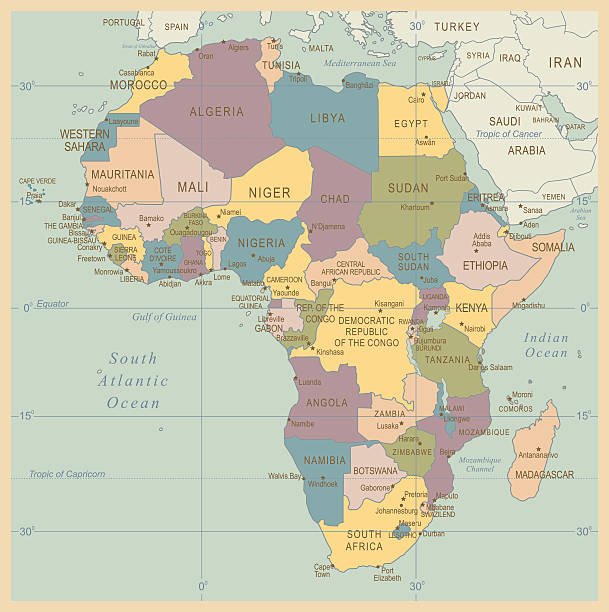
When considering the vast continent of Africa, many might wonder, does Africa have 3 different biomes? The simple and definitive answer is no; Africa is home to a significantly greater number of distinct biomes than just three. While common perceptions or simplified educational materials might highlight the Sahara Desert, the expansive savannas, and the Congo Rainforest as the continent's primary ecological zones, this perspective vastly underestimates the incredible ecological diversity that characterizes Africa.
Africa is a continent of unparalleled geographical and climatic variety, leading to a rich tapestry of ecosystems. From extreme deserts to lush tropical rainforests, towering mountain ranges, extensive grasslands, and unique coastal habitats, Africa supports a wide array of biomes, each defined by its specific climate, vegetation, and animal life. Understanding these diverse biomes is crucial for appreciating the continent's immense biodiversity and ecological importance.
What Exactly is a Biome?
Before delving into the specifics of Africa's ecological zones, it's essential to understand what a biome is. A biome is a large geographical area characterized by distinct types of vegetation, animal life, and climate. These large-scale ecosystems are shaped primarily by factors such as temperature, precipitation, latitude, and altitude. They represent major habitat types, each with its own unique set of conditions that influence the species that can thrive there. Biomes are more extensive than ecosystems and are often classified based on their dominant plant forms, which in turn dictate the types of animals that inhabit them.
The Earth's biomes are broadly categorized into terrestrial (land) and aquatic (water) biomes. Our focus here is primarily on terrestrial biomes, as they are most often discussed in the context of continental geography and biodiversity. The classification of biomes can vary slightly depending on the scientific framework used, but the core idea remains the same: to categorize large-scale ecological communities based on shared environmental conditions and biological characteristics.
The Common Misconception: Why Only Three Biomes?
The idea that Africa possesses only three main biomes—often cited as desert, savanna, and rainforest—is a pervasive simplification. This misconception likely stems from several factors. Firstly, these three biomes are indeed Africa's most iconic and extensive ecological zones, covering vast swathes of the continent and dominating many popular images and narratives about African wildlife and landscapes. The Sahara Desert is the world's largest hot desert, the savannas are legendary for their megafauna, and the Congo Basin rainforest is the second-largest tropical rainforest globally.
Secondly, introductory geography or environmental science courses may simplify the complexity of global biomes for easier comprehension. While useful for initial understanding, such simplifications can inadvertently create an incomplete picture of a continent's true ecological makeup. The sheer size and diversity of Africa defy such straightforward categorization, and a deeper look reveals a much more intricate and fascinating array of natural habitats.
Beyond the 'Big Three': Unveiling Africa's True Biome Diversity
Africa's ecological richness extends far beyond the often-mentioned three biomes. A more comprehensive examination reveals at least seven to ten major terrestrial biomes, each with its own unique characteristics and sub-types. These diverse biomes are crucial for supporting Africa's incredible biodiversity, including countless endemic species.
Tropical Rainforests
Tropical rainforests are among the most biodiverse biomes on Earth, characterized by high annual rainfall (over 2,000 mm) and consistently warm temperatures. In Africa, the largest expanse of rainforest is found in the Congo Basin, primarily across countries like the Democratic Republic of Congo, Gabon, and Cameroon. Smaller pockets exist along the west African coast. These forests boast a multi-layered canopy structure, creating distinct microclimates at different levels. They are home to an astonishing variety of life, from forest elephants and gorillas to diverse bird species, insects, and plant life, many of which are found nowhere else.
- Key Characteristics: High rainfall, consistent warm temperatures, dense canopy, high humidity, rich biodiversity.
- Notable Locations: Congo Basin, parts of West Africa (e.g., Ghana, Ivory Coast).
- Significance: Global carbon sinks, vital for global climate regulation, home to endangered species.
Savannas (Tropical Grasslands)
The savanna biome, also known as tropical grasslands, is perhaps the most iconic African landscape, famous for its vast plains, scattered trees, and spectacular wildlife migrations. It covers approximately half of the continent. Savannas are defined by distinct wet and dry seasons. During the wet season, lush grasses thrive, supporting large herds of herbivores like wildebeest, zebras, and antelopes, which in turn support predators such as lions, leopards, and cheetahs. The dry season brings challenges, with grasses turning brown and water sources becoming scarce, prompting migrations.
African savannas are incredibly diverse, with variations in tree density and grass types. Examples include the famous Serengeti in Tanzania, the Maasai Mara in Kenya, and the Okavango Delta in Botswana, which features unique wetland savanna ecosystems.
- Key Characteristics: Grasslands with scattered trees, distinct wet and dry seasons, large herbivore and carnivore populations.
- Notable Locations: East African plains (Serengeti, Maasai Mara), Southern Africa (Okavango Delta), West African grasslands.
- Significance: Supports immense wildlife populations, crucial for ecotourism, significant role in global biomass.
Deserts and Semi-Deserts
Africa is home to some of the world's most extreme deserts, characterized by extremely low rainfall (less than 250 mm annually) and often extreme temperature fluctuations. The Sahara Desert in North Africa is the largest hot desert in the world, stretching across eleven countries. In Southern Africa, the Kalahari Desert and the coastal Namib Desert (one of the oldest deserts in the world) present similarly arid conditions but with unique geological features and specialized flora and fauna adapted to water scarcity. Semi-deserts, or arid shrublands, transition zones between true deserts and savannas, receive slightly more rainfall, allowing for sparse vegetation.
Life in these harsh environments demonstrates remarkable adaptations, from plants that store water in their tissues to animals that are nocturnal or can survive on minimal moisture.
- Key Characteristics: Extremely low rainfall, extreme temperatures (hot days, cold nights), sparse vegetation, specialized adaptations.
- Notable Locations: Sahara Desert, Namib Desert, Kalahari Desert.
- Significance: Unique geological formations, home to resilient, highly adapted species, important for climate studies.
Mediterranean Biome (Chaparral)
Found in two distinct regions of Africa—the northern coastlines bordering the Mediterranean Sea (e.g., parts of Morocco, Algeria, Tunisia) and the southwestern tip of South Africa (Western Cape)—the Mediterranean biome is characterized by hot, dry summers and mild, wet winters. This climate fosters a unique vegetation type known as chaparral or fynbos (in South Africa), consisting of dense evergreen shrubs, small trees, and herbaceous plants adapted to fire. These regions are recognized as global biodiversity hotspots, particularly the Cape Floristic Region in South Africa, which boasts an extraordinary concentration of plant species found nowhere else.
- Key Characteristics: Hot, dry summers; mild, wet winters; drought-resistant evergreen shrubs; high endemism.
- Notable Locations: Atlas Mountains region (North Africa), Cape Floristic Region (South Africa).
- Significance: Global biodiversity hotspots, high levels of endemism, unique flora and fauna.
Temperate Grasslands (Veld)
While often overshadowed by the tropical savannas, parts of Southern Africa, particularly the high plateaus of South Africa, are home to temperate grasslands, locally known as the Veld. These grasslands experience distinct warm and cold seasons, including occasional frosts and snow in higher elevations, distinguishing them from the tropical savannas. The vegetation consists predominantly of grasses, with fewer trees, and supports a different array of wildlife. The Highveld of South Africa is an important example, historically supporting diverse antelope species.
- Key Characteristics: Distinct warm and cold seasons, mostly grass cover, fewer trees than savannas, often higher elevation.
- Notable Locations: Highveld of South Africa.
- Significance: Important agricultural regions, supports unique grassland species.
Montane Biomes (Highlands and Mountains)
Africa's impressive mountain ranges and high-altitude plateaus host distinct montane biomes, where vegetation and animal life vary significantly with elevation. Examples include the Atlas Mountains in North Africa, the Ethiopian Highlands, Mount Kilimanjaro, Mount Kenya, and the Rwenzori Mountains. These regions exhibit altitudinal zonation, with different vegetation belts (e.g., afro-alpine, montane forest, sub-alpine grassland) occurring at increasing altitudes. They often have cooler temperatures and higher rainfall than surrounding lowlands, leading to unique cloud forests and endemic species adapted to these cooler, wetter conditions. The Ethiopian Highlands, for instance, are a significant center of endemism for birds and mammals.
- Key Characteristics: Varies with altitude, cooler temperatures, higher rainfall, altitudinal zonation of vegetation.
- Notable Locations: Atlas Mountains, Ethiopian Highlands, East African Rift Valley mountains (Kilimanjaro, Kenya, Rwenzori).
- Significance: Biodiversity hotspots, unique microclimates, source of major rivers, home to many endemic species.
Mangrove Swamps and Coastal Zones
Along Africa's extensive coastlines, particularly in tropical and subtropical regions, lie important mangrove swamps and other coastal biomes. Mangrove forests thrive in saline conditions, providing critical nursery habitats for fish, crustaceans, and other marine life. They also protect coastlines from erosion and storm surges. Beyond mangroves, sandy beaches, rocky shores, and coral reefs contribute to the diverse coastal ecosystems, each with its specialized inhabitants. These coastal zones are vital ecological interfaces, connecting terrestrial and marine environments.
- Key Characteristics: Saline environments, specialized vegetation (mangroves), high productivity, transitional zone.
- Notable Locations: West African coast, East African coast, Madagascar.
- Significance: Coastal protection, nurseries for marine life, supports fishing communities.
Freshwater Ecosystems
While often considered aquatic ecosystems rather than terrestrial biomes, Africa's major freshwater ecosystems are so vast and distinct that they function as biomes in their own right, supporting unique terrestrial-aquatic interfaces. The Great Lakes of Africa (Lake Victoria, Lake Tanganyika, Lake Malawi) are among the largest and deepest lakes in the world, renowned for their incredible diversity of cichlid fish and other endemic species. Major river systems like the Nile, Congo, and Zambezi also create extensive riverine biomes, complete with floodplains, deltas, and associated wetlands that support distinct flora and fauna, including hippos, crocodiles, and migratory birds.
- Key Characteristics: Large bodies of fresh water, diverse aquatic and semi-aquatic life, high endemism in Great Lakes.
- Notable Locations: Lake Victoria, Lake Tanganyika, Lake Malawi, Nile River, Congo River, Okavango Delta.
- Significance: Critical water resources, supports unique aquatic biodiversity, important for human livelihoods.
Factors Shaping Africa's Diverse Biomes
The incredible variety of biomes across Africa is a result of several interconnected geographical and climatic factors:
- Latitude: Africa straddles the equator, extending into both the northern and southern temperate zones. This latitudinal spread results in varied solar radiation, influencing temperature and ultimately precipitation patterns.
- Altitude and Topography: Significant mountain ranges (Atlas, Ethiopian Highlands, East African Rift Mountains) and vast plateaus create diverse climatic zones. Higher altitudes generally mean lower temperatures and often higher rainfall, fostering unique montane biomes.
- Ocean Currents: Cold currents (e.g., Benguela Current off southwest Africa) contribute to desert conditions, while warm currents influence coastal temperatures and humidity.
- Rainfall Patterns: Monsoonal winds, the Intertropical Convergence Zone (ITCZ), and localized weather systems dictate where and when rain falls, creating stark differences between arid, semi-arid, and humid regions.
- Geological History: Long-term geological processes, including continental drift and volcanic activity, have shaped Africa's landforms and contributed to its present-day climate and biome distribution.
These factors combine to create a mosaic of environmental conditions, allowing for the astonishing array of biomes that define the African continent. Understanding these drivers is key to appreciating the continent's ecological complexity and the challenges and opportunities for conservation.
Biodiversity Hotspots and Conservation Challenges
Africa's extensive biome diversity contributes significantly to its status as a global biodiversity hotspot. Many of these distinct biomes host unique species found nowhere else on Earth, making them crucial for global ecological health. However, these rich ecosystems face numerous threats, including habitat loss due to agriculture and deforestation, climate change impacts (such as desertification and changes in rainfall patterns), poaching, and human-wildlife conflict.
Conservation efforts across the continent are vital to protect these invaluable natural resources. Recognizing the true breadth of Africa's biomes—far more than just three—is the first step towards developing comprehensive and effective conservation strategies that address the specific needs of each unique ecological zone.
Conclusion
To reiterate, the notion that Africa has only 3 different biomes is a significant oversimplification. The continent is a mosaic of incredibly diverse ecosystems, boasting a spectrum of biomes that include not only the well-known tropical rainforests, savannas, and deserts but also Mediterranean chaparral, temperate grasslands, montane biomes, extensive coastal zones, and vital freshwater systems. Each of these biomes is a complex world unto itself, shaped by unique climatic conditions and supporting a specific array of plant and animal life.
Africa's ecological richness is a testament to its varied geography and climatic patterns, making it one of the most biologically diverse continents on the planet. Appreciating this true complexity moves beyond a simplistic 'three-biome' view and fosters a deeper understanding of Africa's invaluable natural heritage and the critical importance of its conservation for global ecological balance.
Enjoyed this read?
Share it with your friends and colleagues.