Does Africa Breaking Apart

BSC Insights Admin
September 30, 2026
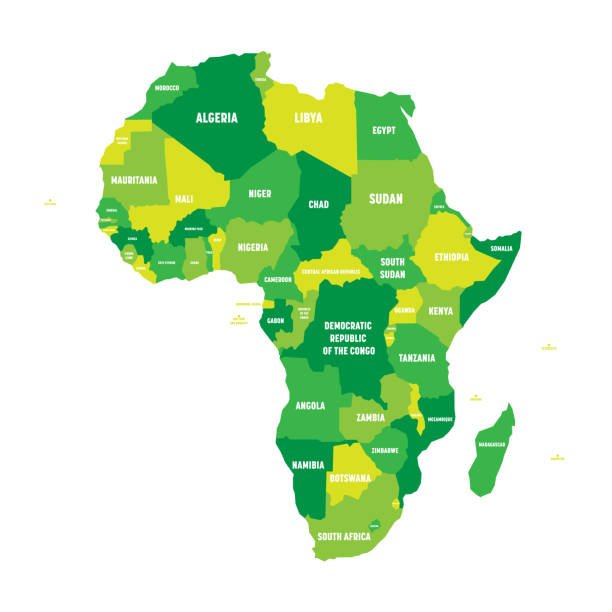
The question of "Does Africa breaking apart?" often conjures dramatic images of the continent splitting overnight, but the scientific reality, while equally profound, unfolds over millions of years. The answer is a resounding yes, though not in the immediate, catastrophic sense many might imagine. Africa is indeed slowly but surely undergoing a monumental geological transformation, driven by the forces of plate tectonics, with the most significant evidence found in the spectacular East African Rift Valley.
This colossal rift system is a prime example of continental rifting, a process where the Earth's rigid outer layer, the lithosphere, is pulled apart. This gradual stretching and thinning of the African continent's crust will, over tens of millions of years, likely lead to the formation of a new ocean basin, effectively detaching a large section of East Africa from the main continent. Understanding this phenomenon requires a deep dive into the dynamic processes occurring beneath our feet, where immense pressures and movements reshape the very land we inhabit.
Understanding Continental Rifting
Continental rifting is a fundamental process in plate tectonics, representing the initial stage of continental breakup and the potential formation of new ocean basins. It begins when extensional forces within the Earth's crust cause it to stretch and thin. Imagine pulling a piece of dough from both ends; it will thin in the middle before eventually tearing. Similarly, the continental crust, being brittle, responds by forming a series of faults, leading to the subsidence of blocks of crust and the formation of characteristic grabens (down-dropped blocks) and horsts (up-lifted blocks) that define a rift valley.
As the rifting continues, magma from the underlying mantle rises towards the surface, often leading to significant volcanic activity and heat flow. This magmatic intrusion further weakens the crust, perpetuating the rifting process. Eventually, if the rifting persists, the continental crust can thin to such an extent that it ruptures completely, allowing oceanic crust to form in the gap. This marks the birth of a new ocean basin, a process that originally formed the Atlantic Ocean when South America and Africa separated.
The Forces at Play: Plate Tectonics
The driving force behind continental rifting, and indeed most geological phenomena on Earth, is plate tectonics. The Earth's lithosphere is fragmented into several large and small tectonic plates that are in constant, albeit slow, motion. These movements are powered by convection currents within the Earth's molten mantle, where hotter, less dense material rises and cooler, denser material sinks, creating a conveyor belt-like motion.
There are three main types of plate boundaries: convergent (where plates collide), transform (where plates slide past each other), and divergent (where plates move apart). The East African Rift Valley is a classic example of a divergent plate boundary on land. Here, the forces are pulling the African continent in opposite directions, specifically separating the largely stable Nubian Plate (which carries most of Africa) from the smaller, emerging Somali Plate to the east. This relentless pulling action is the engine behind the ongoing "breaking apart" of Africa.
The East African Rift Valley: A Grand Geological Laboratory
The East African Rift Valley (EARV) is one of the most active and spectacular continental rift systems on Earth, stretching approximately 3,500 kilometers (2,200 miles) from the Afar Triple Junction in Ethiopia through Kenya, Uganda, Rwanda, Burundi, Tanzania, Zambia, Malawi, and into Mozambique. It is not a single crack but a complex network of valleys, volcanoes, and lakes, representing various stages of continental breakup. Geologists consider it a living laboratory for observing how a continent fragments and how a new ocean basin might form.
The EARV is characterized by immense faults, deep valleys, and some of the world's most impressive volcanoes, many of which are still active. The sheer scale and complexity of the rift make it a unique feature on our planet, providing critical insights into the Earth's internal dynamics and geological evolution.
Key Tectonic Plates Involved
The primary actors in the ongoing continental breakup of Africa are three major tectonic plates: the Nubian Plate (often referred to as the African Plate, comprising the bulk of the continent), the Somali Plate (a smaller plate to the east that is slowly detaching), and the Arabian Plate to the northeast. The interaction of these three plates is particularly intense at the Afar Triple Junction, located in the Afar Region of Ethiopia. Here, three divergent boundaries meet: the Red Sea Rift, the Gulf of Aden Rift, and the main Ethiopian Rift, which is the northern extension of the EARV.
The Nubian Plate is moving westward, while the Somali Plate is moving eastward. This divergent motion is causing the intervening crust to stretch, thin, and eventually fracture. The Arabian Plate's northward movement further complicates the regional tectonics, contributing to the spreading along the Red Sea and Gulf of Aden, which are themselves nascent ocean basins that formed from earlier continental rifting.
Evidence of Rifting in Action
The evidence that Africa is indeed breaking apart is abundant and compelling, manifesting in several distinct geological features:
- Volcanoes: The EARV is home to numerous active and dormant volcanoes, including iconic peaks like Mount Kilimanjaro, Mount Kenya, and the unique carbonatite volcano Ol Doinyo Lengai in Tanzania. These volcanoes are a direct result of magma rising through the thinned and fractured crust, a hallmark of active rifting.
- Earthquakes: The region experiences frequent, though generally shallow, earthquakes. These seismic events are caused by the movement along the extensive fault systems that define the rift valley as the crust stretches and breaks. Monitoring these tremors provides critical data on the ongoing rates and patterns of crustal deformation.
- Rift Lakes: A distinctive feature of the EARV is its chain of long, deep freshwater and saline lakes, such as Lake Tanganyika (the second deepest lake in the world), Lake Malawi, and Lake Victoria (though Lake Victoria is more of an ancient basin associated with rift uplift). These lakes fill the grabens, or down-faulted blocks, within the rift valley, providing visual evidence of the sunken topography.
- Crustal Thinning: Geophysical studies, including seismic surveys and gravity measurements, confirm that the continental crust beneath the EARV is significantly thinner than average continental crust elsewhere. In some parts, it has thinned from an average of 40-45 km to as little as 20-25 km. This thinning is accompanied by the intrusion of basaltic magmas, which further stretch and weaken the crust.
- Visible Cracks: While not a daily occurrence, sometimes dramatic surface manifestations of this stretching are observed. A notable event occurred in 2018 in Kenya, where a large, visible crack several kilometers long and many meters deep suddenly appeared, demonstrating the forces at play, albeit typically at much slower, imperceptible rates.
How Fast is Africa Breaking Apart?
The pace at which Africa is breaking apart is, from a human perspective, incredibly slow. Geological processes operate on vast timescales. Scientists estimate that the Somali Plate is separating from the Nubian Plate at a rate of a few millimeters to a few centimeters per year. For context, this is roughly the same speed at which your fingernails grow. While this might seem negligible, over millions of years, these tiny movements accumulate into substantial geological changes.
For instance, the Red Sea and the Gulf of Aden have widened by hundreds of kilometers over roughly 20-30 million years. This gives us a strong indication of what the future holds for the EARV. It is crucial to understand that these rates are not uniform across the entire rift system. Some segments are more active and spreading faster than others, reflecting the complex interplay of forces within the continental crust.
The Geological Future: A New Ocean in the Making
The long-term geological prognosis for the African continent is clear: the East African Rift Valley is destined to become a new ocean basin, albeit in the extremely distant future. As the divergent forces continue to pull the Nubian and Somali plates apart, the continental crust will thin further, eventually rupturing completely. When this happens, magma will continuously well up from the mantle, solidify, and form new oceanic crust, much like what happens at mid-ocean ridges today. This process will create a new sea that will gradually widen into a vast ocean.
This future ocean will effectively detach the eastern portion of Africa, including parts of Ethiopia, Kenya, Tanzania, and Mozambique, along with Somalia, forming a large island or a new smaller continent. This landmass is sometimes referred to as the "Somali microplate" or "Greater Somalia". The timescale for this complete separation is estimated to be between 10 million and 50 million years from now. While this sounds like an immense period, it is a relatively short span in geological history, making the EARV a unique and ongoing spectacle of planetary evolution.
The formation of the Red Sea and the Gulf of Aden serves as a contemporary analogue for what scientists predict for the EARV. Both of these bodies of water were once continental rift valleys that have now progressed to the stage of having nascent oceanic crust at their centers. The Afar Triple Junction is particularly critical because it represents the convergence of these three active rifts, essentially a geographical point where the continent is actively being torn apart in multiple directions.
Current Impacts and Human Adaptation
While the major separation is millions of years away, the ongoing geological activity in the EARV does have tangible impacts on the human populations living within and around it. These include:
- Seismic Hazards: Frequent earthquakes, while mostly mild, can sometimes be strong enough to cause structural damage to buildings and infrastructure. Communities in rift zones must contend with this ongoing risk.
- Volcanic Hazards: Active volcanoes pose threats of eruptions, ashfall, lava flows, and gas emissions, impacting agriculture, air travel, and human settlements. However, volcanic soils are also incredibly fertile, attracting agricultural communities to these potentially hazardous regions.
- Geothermal Energy: The intense heat flow associated with rifting makes the EARV a significant source of geothermal energy. Countries like Kenya and Ethiopia are harnessing this renewable energy source, turning a geological process into a major economic and environmental benefit.
- Topographical Changes: The formation of valleys and mountains influences local climates, rainfall patterns, and hydrological systems, impacting water availability and biodiversity across the region.
Despite these challenges, human societies have adapted and thrived in the Rift Valley for millennia. The region is famously known as the "Cradle of Humanity" due to the significant fossil discoveries of early hominids found in its sedimentary basins, which were preserved by volcanic ash and faulting activity.
Dispelling Misconceptions About Africa Breaking Apart
It's important to clarify what "Africa breaking apart" truly means in a geological context. It is not an apocalyptic event where the continent will suddenly cleave in two with dramatic fissures appearing overnight across entire nations. Such sensationalized portrayals often misrepresent the scientific reality.
Instead, it is a slow, continuous process driven by deep-seated forces within the Earth. The "breaking" involves gradual stretching, faulting, and thinning of the crust, punctuated by episodes of seismic and volcanic activity that are part of the larger, long-term geological evolution. The observable cracks, like the one in Kenya in 2018, are surface manifestations of these underlying tectonic stresses, offering a rare glimpse into a process that typically unfolds imperceptibly over vast geological timescales.
The term "African continent splitting" accurately describes the long-term trend, but it is essential to emphasize the timescales involved. For current generations, the geological changes will be minor and incremental, predominantly manifesting as ongoing seismic and volcanic activity, and subtle changes in topography, rather than a visible continental division.
Conclusion: Africa's Slow, Inevitable Transformation
In conclusion, the question, "Does Africa breaking apart?" is met with a definitive affirmative from the scientific community. The African continent is indeed in the midst of a profound geological transformation, driven by the relentless forces of plate tectonics. The magnificent East African Rift Valley stands as undeniable proof of this ongoing process, where the Nubian Plate and Somali Plate are slowly but surely diverging.
While the speed of this continental rifting is measured in millimeters per year, the geological evidence—from active volcanoes and frequent earthquakes to the formation of deep rift lakes and crustal thinning—all point towards a future where a new ocean basin will emerge, eventually creating a new landmass or island from Eastern Africa. This incredible journey of Earth's crust reminds us of the planet's dynamic nature, constantly reshaping itself over millions of years, an awe-inspiring testament to the power of geological evolution.
Enjoyed this read?
Share it with your friends and colleagues.