Did Africa Have A Bronze Age

BSC Insights Admin
September 30, 2026
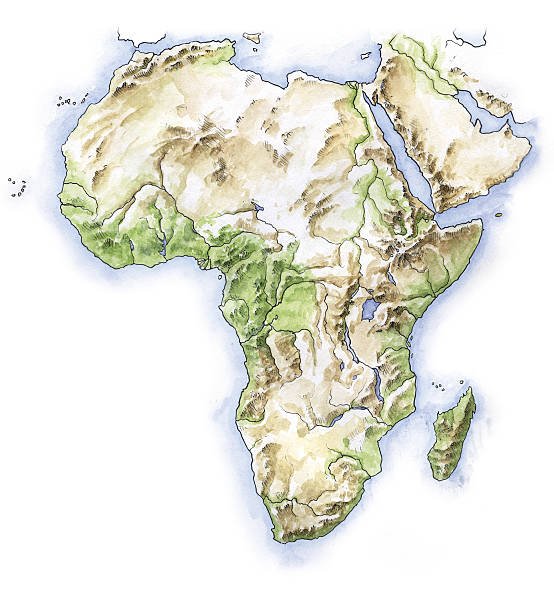
The question, "Did Africa have a Bronze Age?" elicits a nuanced answer: while a widespread, continent-spanning Bronze Age comparable to those in Eurasia did not exist across all of Africa, specific regions, most notably Ancient Egypt and Nubia, experienced a distinct and thriving Bronze Age. Concurrently, other parts of the continent, particularly Sub-Saharan Africa, saw significant indigenous developments in copper metallurgy before uniquely transitioning directly from the Stone Age into an advanced Iron Age, largely bypassing a widespread bronze phase. This rich and diverse history of African metalworking challenges simplistic narratives and highlights the continent's unique path in technological innovation.
Understanding the Bronze Age: A Global Perspective
To fully appreciate Africa's relationship with the Bronze Age, it's crucial to first define what this period typically entails in archaeological and historical contexts. Globally, the Bronze Age is characterized by the widespread use of bronze—an alloy primarily of copper and tin—for tools, weapons, and artistic objects. This technological advancement often coincided with the rise of complex urban societies, specialized labor, extensive trade networks for acquiring tin (which is relatively scarce), and sophisticated governmental structures. It typically follows the Stone Age and precedes the Iron Age.
Key characteristics of a traditional Bronze Age include:
- Metallurgical Innovation: Mastery of alloying copper with tin to create a harder, more durable metal.
- Economic Transformation: Emergence of specialized metalworkers, long-distance trade routes for raw materials, and new forms of wealth.
- Societal Development: Growth of cities, states, and often hierarchical social structures supported by agricultural surpluses and new technologies.
- Material Culture: Abundance of bronze artifacts, including weapons, armor, tools, and decorative items, which reflect the era's technological prowess.
The Bronze Age in North and Northeast Africa: A Clear Presence
When considering whether Africa had a Bronze Age, the unequivocal answer for certain regions is yes. Ancient Egypt, situated in Northeast Africa, stands as a prime example of a civilization that underwent a clear and prolonged Bronze Age, paralleling those in the Near East and the Mediterranean.
Ancient Egypt: A Cradle of Bronze Technology
From roughly 3100 BCE to 1070 BCE, Ancient Egypt's history is largely synonymous with its Bronze Age. Early Dynastic Egypt saw the sophisticated use of copper, which quickly evolved into bronze metallurgy. The availability of copper in regions like the Sinai Peninsula was crucial, but tin had to be imported, suggesting well-established trade routes and economic infrastructure.
- Old Kingdom (c. 2686–2181 BCE): Copper tools were prevalent, used extensively in monumental construction like the pyramids. Bronze use began to emerge.
- Middle Kingdom (c. 2055–1650 BCE): Bronze technology became more refined and widespread. Tools, weapons, and artistic objects were increasingly made from bronze, showcasing advanced casting and smithing techniques.
- New Kingdom (c. 1550–1070 BCE): This period represents the zenith of Egyptian bronze production. Elaborate bronze weaponry, chariots adorned with bronze, and intricate statuary were common. The vast empire facilitated trade for tin from as far away as Afghanistan and Cornwall, highlighting Egypt's geopolitical influence and technological dependency on these networks.
The impact of bronze on Egyptian society was profound, contributing to its military might, agricultural efficiency, and artistic expression. It was integral to the state's power and economic prosperity.
Nubia and the Horn of Africa: Connections and Indigenous Developments
South of Egypt, in what is modern-day Sudan, the ancient civilization of Nubia (including cultures like Kerma and later Meroë) also participated in the Bronze Age. With close cultural and trade ties to Egypt, Nubians adopted and adapted bronze technology. Archaeological finds from Kerma (c. 2500–1500 BCE) demonstrate sophisticated copper and bronze working, indicating a robust indigenous metallurgical tradition that benefited from interaction with Egypt while also developing unique characteristics.
Further east, in the Horn of Africa, early evidence of copper and possibly bronze use suggests a slow diffusion of metal technology, often facilitated by trade networks connecting the region to the Nile Valley and the Arabian Peninsula. However, this region would later become a significant center for iron production.
Sub-Saharan Africa: A Unique Metallurgical Trajectory
Away from the Nile Valley, the narrative around an African Bronze Age takes a different, often misunderstood, turn. For vast swathes of Sub-Saharan Africa, a distinct, widespread Bronze Age did not occur in the same way it did in Eurasia or North Africa. Instead, many societies transitioned directly from the Stone Age to an advanced Iron Age.
The "Iron Age Leap": Bypassing Bronze
Archaeological evidence strongly suggests that many Sub-Saharan African cultures moved from using stone tools directly to smelting and forging iron, often with remarkable sophistication and an early timeline. This phenomenon is often referred to as the "Iron Age Leap." While copper metallurgy did exist independently in several regions, it rarely evolved into a full-scale bronze production period due to the scarcity of tin or the early mastery of iron.
Areas like West Africa (e.g., the Nok culture of Nigeria, dating back to 1200 BCE for iron) and Central Africa developed iron technology independently and at a time contemporaneous with, or even preceding, the widespread use of iron in parts of Europe and Asia. This remarkable indigenous innovation highlights a distinct African technological development path.
Early Copper Production in Sub-Saharan Africa
Despite the absence of a widespread Bronze Age, indigenous copper metallurgy was present in several Sub-Saharan regions well before the advent of iron. These were often distinct "Copper Ages" rather than "Bronze Ages" due to the lack of tin for alloying.
- West Africa: Sites in Mauritania (e.g., Akjoujt) show copper smelting dating back to the late 3rd millennium BCE. Other regions like Niger (e.g., Aïr Mountains) also developed early copper working traditions.
- Central Africa: The Katanga region (modern-day Democratic Republic of Congo and Zambia) was a significant center for copper production from at least the 5th century BCE, developing extensive mining and trade networks for copper ingots (often cruciform or cross-shaped).
- Great Lakes Region: Evidence of early copper use also exists in parts of East Africa.
These African copper cultures demonstrate complex metallurgical knowledge, including mining, smelting, and casting techniques. However, the absence of tin deposits in these regions meant that bronze, as a dominant metal, did not become widespread. Copper, being softer, had limitations for heavy-duty tools and weapons compared to bronze or iron.
Factors Influencing African Metal Ages
Several factors contributed to the varied experience of metal ages across the African continent:
Geographical Distribution of Resources
The availability of raw materials played a crucial role. While copper deposits were relatively common in various parts of Africa, tin—the essential alloying agent for bronze—was exceedingly rare in Sub-Saharan Africa. This geographical reality largely explains why a widespread Bronze Age did not emerge south of the Sahara. In contrast, iron ore is abundant across much of Africa, facilitating the early and independent development of African iron smelting.
Trade Networks and Cultural Exchange
For regions like Egypt and Nubia, extensive trade networks were vital for acquiring tin from distant sources. Their integration into broader Mediterranean and Near Eastern trade systems allowed for the necessary influx of materials and knowledge. Sub-Saharan Africa, while having its own robust internal trade routes, did not develop similar long-distance tin trade that would have supported a widespread bronze industry.
Independent Innovation
The remarkable and early development of iron metallurgy in Sub-Saharan Africa highlights the continent's capacity for independent technological innovation. The ability to directly reduce iron ore to usable metal at high temperatures, often using sophisticated furnace designs (e.g., forced-draft furnaces), indicates advanced engineering and metallurgical knowledge that bypassed the need for bronze as an intermediate step.
Legacy and Addressing Misconceptions
The diverse story of metalworking in Africa is essential for countering historical misconceptions about the continent's technological development. The absence of a continent-wide Bronze Age should not be interpreted as a sign of technological inferiority. Instead, it underscores a distinct and highly effective path of innovation.
Africa's early and independent mastery of iron production is one of humanity's greatest technological achievements. Iron, being stronger and more abundant than bronze, provided significant advantages in toolmaking, agriculture, and warfare. This expertise allowed ancient African civilizations to flourish, develop complex societies, and clear land for farming, shaping the demographic and cultural landscape for millennia.
The following table summarizes the key metallurgical periods across different African regions:
| Region | Predominant Metal Age | Key Characteristics |
|---|---|---|
| North Africa (e.g., Ancient Egypt) | Bronze Age (c. 3100 – 1070 BCE) | Extensive use of copper and bronze for tools, weapons, and art; advanced civilization, monumental architecture, long-distance trade for tin. |
| Northeast Africa (e.g., Nubia/Kerma) | Bronze Age (c. 2500 – 1500 BCE) | Developed metalworking tradition influenced by Egypt; local copper production; significant trade networks; iron smelting later. |
| West Africa | Early Copper Age → Iron Age (c. 2000 BCE for copper, c. 1200 BCE for iron) | Indigenous copper metallurgy, limited widespread bronze; direct transition to highly sophisticated iron smelting, bypassing a generalized Bronze Age. |
| Central/Southern Africa | Early Copper Age → Iron Age (c. 500 BCE for copper, c. 300 BCE for iron) | Local copper exploitation; later introduction of iron technology, often through migration; distinct from Eurasian Bronze Age. |
Conclusion
In conclusion, the question "Did Africa have a Bronze Age?" is best answered with a recognition of the continent's immense historical and geographical diversity. Yes, parts of Africa, notably Ancient Egypt and Nubia, absolutely had a well-defined and influential Bronze Age, fully integrated into the wider Afro-Eurasian metallurgical spheres. However, for most of Sub-Saharan Africa, the story is one of indigenous copper use followed by an impressive and early leap directly into the Iron Age, largely bypassing a widespread bronze-dominated period. This unique trajectory underscores the resilience, ingenuity, and distinct technological achievements of ancient African societies, demonstrating that progress can manifest in diverse forms, often shaped by local resources and independent innovation, rather than a single, universal model.
Enjoyed this read?
Share it with your friends and colleagues.