Does Africa Use Celsius Or Fahrenheit

BSC Insights Admin
September 30, 2026
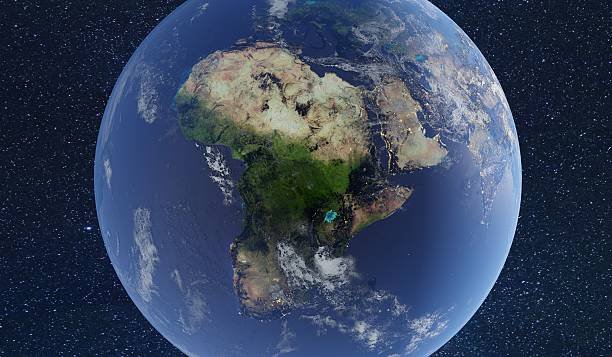
Africa overwhelmingly uses the Celsius temperature scale as its standard for daily weather reports, scientific measurements, and public information. While some legacy or specialized contexts might rarely encounter Fahrenheit, particularly due to historical influences or specific expatriate communities, the metric system, with Celsius as its temperature unit, is the universally adopted standard across virtually all 54 African nations, aligning with most of the world's scientific and public communication.
The Metric System's Dominance Across Africa
The question, "Does Africa use Celsius or Fahrenheit?" finds a clear answer in the continent's widespread adoption of the metric system. This adherence is a direct result of historical processes and a pragmatic move towards global standardization. The vast majority of countries worldwide, including nearly every nation in Africa, have embraced the International System of Units (SI), of which Celsius is the standard unit for temperature.
A Legacy of Colonial Influence and Global Standardization
Many African nations inherited their administrative and educational systems from European colonial powers, most of whom had already adopted the metric system and, consequently, the Celsius scale. As these countries gained independence, they largely maintained and further institutionalized the metric system, recognizing its benefits for international trade, scientific collaboration, and ease of use compared to imperial units.
- British influence: Even former British colonies, despite the UK's historical use of Fahrenheit, largely transitioned to the metric system post-independence.
- French, Belgian, Portuguese, and German influence: Countries colonized by these European powers universally adopted Celsius and the metric system.
- Post-independence decisions: Many newly independent nations actively chose to standardize on the metric system to align with the global scientific and commercial community.
This widespread adoption means that when you check a weather forecast in Nairobi, buy a thermometer in Cairo, or discuss climate in Johannesburg, you will invariably encounter temperatures expressed in degrees Celsius.
Celsius as the Universal Temperature Language
Across the continent, from the Mediterranean coast of Tunisia to the southernmost tip of South Africa, and from the Atlantic shores of Senegal to the Indian Ocean borders of Somalia, Celsius is the standard temperature unit. This consistency simplifies communication and understanding, both within Africa and with the rest of the world. It means that an average daily temperature of 25°C in Lagos, Nigeria, is understood universally by scientists, tourists, and locals alike.
The integration of Celsius into daily life extends beyond just weather. It is the unit of choice in all educational curricula, scientific research, medical practices (e.g., body temperature), and industrial processes. This ubiquitous presence solidifies Celsius's role as the definitive answer to the question of temperature units in Africa.
Understanding Temperature Scales: Celsius vs. Fahrenheit
To fully appreciate Africa's choice, it's helpful to understand the fundamentals of both temperature scales and why one has become globally dominant.
The Celsius (Centigrade) Scale Explained
Invented by Swedish astronomer Anders Celsius in 1742, the Celsius scale (originally called centigrade) is based on the properties of water at standard atmospheric pressure. It designates 0 degrees as the freezing point of water and 100 degrees as the boiling point of water. This 100-degree interval makes it intuitive and easy to use, especially in scientific and engineering contexts. It is part of the International System of Units (SI) and is used by the vast majority of countries worldwide.
- 0°C: Freezing point of water.
- 100°C: Boiling point of water.
- Metric compatibility: Easily integrates with other metric units like meters, kilograms, and liters.
The Fahrenheit Scale and Its Limited Global Use
The Fahrenheit scale, proposed by German physicist Daniel Gabriel Fahrenheit in 1724, sets the freezing point of water at 32 degrees and the boiling point at 212 degrees, creating an interval of 180 degrees. Historically, it was widely used in English-speaking countries. However, over the 20th century, most of these nations transitioned to Celsius. Today, the United States of America is the only major country that primarily uses Fahrenheit for everyday purposes, along with a few smaller nations like Belize, the Cayman Islands, and Liberia (though even in Liberia, Celsius is commonly understood and used in official contexts).
This limited global adoption means that for international communication, particularly in areas like aviation, meteorology, and scientific research, Celsius is the lingua franca. Africa's alignment with Celsius therefore facilitates seamless interaction with its global partners.
Practical Implications for Daily Life and Travel in Africa
For anyone living in or traveling to Africa, understanding that Celsius is the standard for temperature is crucial. This knowledge impacts everything from packing decisions to interpreting local news reports.
Weather Forecasts and Climate Information
All official weather reporting agencies across Africa, from government meteorological departments to popular news channels and online platforms, provide their forecasts in degrees Celsius. When planning your day or a trip across diverse African climates, you will consult Celsius readings for high and low temperatures, ensuring accurate expectations for weather conditions.
- Local news: Television, radio, and newspaper weather segments will use Celsius.
- Online platforms: Major weather websites and apps will display temperatures in Celsius for African locations.
- Public signage: Electronic billboards and public information displays indicating temperature will show Celsius.
Medical, Scientific, and Industrial Applications
Beyond daily weather, Celsius is the exclusive unit for a wide array of critical applications:
- Healthcare: Body temperature is measured and reported in Celsius (e.g., 37°C is normal human body temperature).
- Scientific research: All laboratories, universities, and research institutions across Africa conduct experiments and report findings using Celsius.
- Industry: Manufacturing, agriculture, and other industries rely on Celsius for process control, storage temperatures, and environmental monitoring.
- Education: Temperature concepts are taught exclusively in Celsius in schools and universities throughout the continent.
This consistent application ensures clarity and avoids confusion in critical sectors where precision is paramount. It reinforces Africa's commitment to globally recognized standards.
African Climates and Temperature Extremes in Celsius
Africa is a continent of immense climatic diversity, ranging from scorching deserts to lush rainforests and alpine peaks. All these varied African climates are comprehensively described and understood through the Celsius scale.
Diverse Climatic Zones Across the Continent
Understanding temperature in Celsius allows for a clear appreciation of Africa's diverse zones:
- Saharan Desert: Daytime temperatures can routinely exceed 40°C (104°F) and sometimes reach over 50°C (122°F), with significant drops at night.
- Equatorial Regions (e.g., Congo Basin): Characterized by consistent high temperatures, often around 25-30°C (77-86°F) year-round, with high humidity.
- Southern African Plateaus: Experience a wider range, with summer highs around 25-35°C (77-95°F) and winter lows that can dip to near 0°C (32°F) or even below in higher altitudes.
- Mediterranean Coast (e.g., North Africa): Hot, dry summers with temperatures often 30-40°C (86-104°F), and mild, wet winters around 10-15°C (50-59°F).
- High-altitude areas (e.g., Mount Kilimanjaro): Temperatures decrease significantly with altitude, falling well below freezing (0°C) at the summits.
These examples illustrate how Celsius effectively describes Africa's temperature variations, providing a consistent and internationally comparable framework for climate analysis and weather forecasting.
Recording Temperature Highs and Lows
When records are broken, or significant weather events occur, temperatures are always reported in Celsius in Africa. For instance, the highest reliably recorded temperature in Africa was 55°C (131°F) in Kebili, Tunisia. Such figures are instantly recognized and understood globally, thanks to the widespread use of the Celsius scale. This consistency prevents misinterpretation and allows for accurate tracking of climate trends across the continent.
Why Africa Aligns with the Global Scientific Community
Africa's choice to predominantly use Celsius for temperature is not arbitrary; it's a strategic alignment with international norms that brings numerous benefits, especially in an increasingly interconnected world.
Ease of International Communication and Trade
Adopting the SI metric system, and thus Celsius, facilitates seamless communication with most of Africa's trading partners and international organizations. When importing or exporting goods, particularly those sensitive to temperature (e.g., food, pharmaceuticals), having a universal temperature standard prevents errors and streamlines logistics. This global consistency is a cornerstone of efficient international commerce.
Education and Scientific Research
The uniform use of Celsius in education and research throughout Africa ensures that students and scientists are trained in a system that is recognized and utilized by the vast majority of the world's academic and scientific institutions. This fosters international collaboration, makes scientific findings easily shareable, and prepares African professionals for global engagement. Textbooks, research papers, and laboratory equipment all operate on the Celsius scale, reinforcing its status as the authoritative standard.
Navigating Temperature Data for Visitors
For visitors from countries that primarily use Fahrenheit (like the United States), a quick mental conversion or a reliable conversion tool can be very helpful to fully appreciate African temperature units.
Converting Between Celsius and Fahrenheit
While most modern smartphones and online search engines can perform conversions instantly, knowing the basic formulas can be useful:
- Celsius to Fahrenheit: Multiply the Celsius temperature by 9/5 and add 32. (C × 9/5) + 32 = F
- Fahrenheit to Celsius: Subtract 32 from the Fahrenheit temperature and multiply by 5/9. (F - 32) × 5/9 = C
Here's a quick reference table for common temperatures:
| Celsius (°C) | Fahrenheit (°F) | Description |
|---|---|---|
| 0°C | 32°F | Freezing Point |
| 10°C | 50°F | Cool |
| 20°C | 68°F | Mild/Room Temp |
| 25°C | 77°F | Warm/Pleasant |
| 30°C | 86°F | Hot |
| 35°C | 95°F | Very Hot |
| 40°C | 104°F | Extremely Hot |
Reliable Sources for African Weather Data
When seeking temperature information for Africa, always consult reputable sources that use Celsius:
- Local meteorological department websites.
- Internationally recognized weather apps and websites (e.g., AccuWeather, The Weather Channel, Google Weather, BBC Weather).
- Official government tourism websites for specific countries.
These sources ensure you receive accurate and universally understood temperature data for your planning needs.
Conclusion: The Clear Preference for Celsius
In conclusion, the answer to the question "Does Africa use Celsius or Fahrenheit?" is unequivocally Celsius. As a continent committed to global standardization and scientific consistency, nearly all African countries use the Celsius scale for all temperature measurements, from daily weather forecasts to advanced scientific research. This alignment with the metric system, inherited from historical influences and affirmed through post-independence policies, simplifies international communication, fosters trade, and ensures clarity in education and professional fields. For anyone engaging with Africa, whether as a resident, traveler, or professional, understanding and utilizing Celsius is essential for accurate and effective interaction with its diverse climates and societies.
Enjoyed this read?
Share it with your friends and colleagues.