Did Africa Get Christianity Before Europe

BSC Insights Admin
September 30, 2026
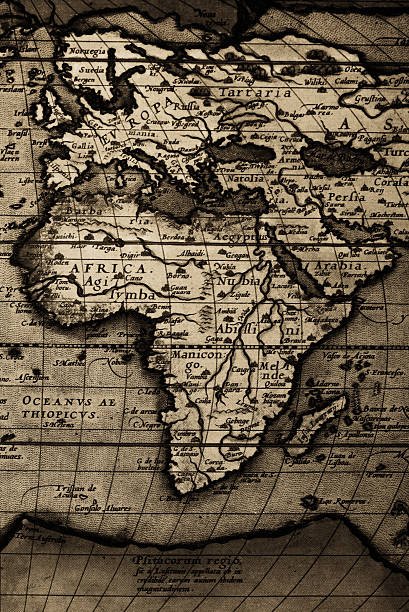
Yes, geographically and historically, Christianity took root in Africa arguably at the same time as, if not slightly before, its widespread establishment in many parts of mainland Europe. African converts were present at Pentecost in Jerusalem (Acts 2:10), indicating a very early connection, and significant Christian communities flourished in North Africa, particularly Egypt and Carthage, well before Christianity became the state religion of the Roman Empire or spread extensively into northern and western Europe. This rich history demonstrates Africa's foundational role in the development and dissemination of the Christian faith, making the question 'Did Africa get Christianity before Europe?' a fascinating journey into the ancient world.
The Apostolic Age: Early Seeds of Christianity in Africa
The earliest documented presence of Africans interacting with the nascent Christian faith dates back to the very dawn of Christianity. The biblical account in the Book of Acts provides compelling evidence of this initial connection:
- Pentecost (Acts 2:10): Among the diverse crowd gathered in Jerusalem for Pentecost, the author lists 'visitors from Egypt and parts of Libya near Cyrene.' These North Africans were present to hear Peter's sermon and witness the outpouring of the Holy Spirit, likely becoming some of the very first converts. This event signifies a direct and immediate link between Africa and the birth of the Christian church.
- The Ethiopian Eunuch (Acts 8:26-40): Shortly after Pentecost, Philip the Apostle encounters an Ethiopian eunuch, a high official of Candace, queen of the Ethiopians. This official, returning from worship in Jerusalem, is converted and baptized by Philip. This narrative is incredibly significant as it represents the earliest documented conversion of an individual from Sub-Saharan Africa and the introduction of Christianity into the Kingdom of Aksum, which would later become the core of the Ethiopian Orthodox Tewahedo Church.
These two accounts suggest that early Christianity in Africa was not merely a later import but was integral to the faith's initial global expansion, establishing a presence even as apostles were still primarily focused on Judea and surrounding regions.
North Africa: A Cradle of Early Christian Thought
While apostolic missions were simultaneously spreading the gospel across parts of the Roman Empire in Europe and Asia Minor, North Africa quickly emerged as a vibrant and intellectually fertile ground for Christian development.
Egypt: The Alexandrian School and St. Mark
Egypt became one of the most significant early centers of Christianity. The city of Alexandria, a Hellenistic metropolis renowned for its library and intellectual prowess, quickly became a focal point. Tradition holds that St. Mark the Evangelist, author of one of the four Gospels, founded the Church of Alexandria in the mid-1st century AD. This claim, if true, places the establishment of Christianity in Egypt squarely in the apostolic era, paralleling the foundational work of apostles in Europe.
- The Catechetical School of Alexandria: By the late 2nd century, Alexandria boasted a world-renowned catechetical school, a center of theological learning and philosophical inquiry. This institution produced influential Christian thinkers who shaped early Christian doctrine.
- Key Figures: Clement of Alexandria and Origen were prominent leaders of this school, contributing immensely to Christian theology through their writings and interpretations of scripture. Their intellectual contributions predated or were contemporary with many of the great Latin Church Fathers in Europe.
- Coptic Christianity: The enduring legacy of this early evangelism is the Coptic Orthodox Church, which maintains a direct historical line to St. Mark's mission and represents one of the oldest continuous Christian communities in the world.
Carthage and Roman Africa: Intellectual Powerhouses
Another crucial region for early Christianity in Africa was the Roman province of Africa Proconsularis, centered around the city of Carthage (modern-day Tunisia). Christianity arrived here by the late 2nd century AD, possibly through Roman soldiers or merchants, and quickly flourished.
- Rapid Growth: By the early 3rd century, Carthage was home to a large and influential Christian community, known for its intellectual vigor and its role in resisting Roman persecution.
- Key Figures:
- Tertullian (c. 160 – c. 220 AD): Often considered the 'father of Latin Christianity,' Tertullian was a prolific theologian and apologist from Carthage. He coined terms and concepts fundamental to Western theology, such as 'Trinity' (Trinitas) and 'substance.' His work significantly predates many major European theologians.
- Cyprian (d. 258 AD): Bishop of Carthage, Cyprian was a leading figure during a period of intense persecution and controversy. His writings on church unity and the authority of bishops were hugely influential.
- Augustine of Hippo (354 – 430 AD): Arguably the most influential theologian in Western Christianity, Augustine was born in Thagaste (modern-day Algeria) and served as Bishop of Hippo Regius (modern-day Annaba, Algeria). His works, such as 'Confessions' and 'City of God,' profoundly shaped Christian thought for centuries, impacting both Europe and beyond.
The contributions of these North African theologians were not merely regional; they were foundational to the development of Christian doctrine and practice across the entire Roman Empire, including its European provinces.
The Unique Case of Ethiopia: A Royal Conversion
While North Africa was heavily influenced by the Greco-Roman world, the story of Ethiopian Christianity offers a distinct and equally ancient trajectory. As mentioned, the conversion of the Ethiopian eunuch in Acts 8 laid an early groundwork. However, the widespread establishment of Christianity in the Kingdom of Aksum (ancient Ethiopia) is traditionally attributed to Frumentius and Aedesius in the 4th century AD.
Around 330 AD, these two Syrian brothers were shipwrecked and eventually became advisors to the Aksumite court. Frumentius, known as 'Abba Salama,' later traveled to Alexandria, where he was consecrated as the first bishop of Ethiopia by Athanasius, the Patriarch of Alexandria. Upon his return, he successfully converted King Ezana, leading to Christianity becoming the official state religion of Aksum. This occurred:
- Before the Roman Empire fully embraced Christianity: While Emperor Constantine's Edict of Milan (313 AD) granted religious toleration, it was only under Emperor Theodosius I (380 AD) that Christianity became the official state religion of the Roman Empire. Ethiopia's official adoption of Christianity under King Ezana thus predates this by several decades.
- Independent of Roman influence: Ethiopian Christianity developed largely outside the direct political and cultural orbit of the Roman Empire, fostering a unique blend of indigenous traditions and early Christian beliefs.
The Ethiopian Orthodox Tewahedo Church stands as a testament to this ancient heritage, maintaining unique practices, a rich liturgical tradition, and a strong sense of its apostolic roots.
Comparing Africa and Europe: A Chronology of Spread
To fully answer the question, 'Did Africa get Christianity before Europe?', it's helpful to consider the parallel timelines of Christian propagation:
Early European Centers (Rome, Greece)
Apostolic missions undoubtedly spread to Europe early on. Paul's missionary journeys covered significant parts of Greece (Corinth, Athens, Philippi, Thessalonica) and eventually led him to Rome. Peter is also traditionally associated with the founding of the Church in Rome. Thus, Christian communities were established in key European urban centers within the 1st century AD.
However, the initial presence of Christians in specific cities doesn't equate to widespread continental adoption or the establishment of dominant intellectual and institutional structures. While Rome, Corinth, and other Greek cities had Christian communities, many areas of central, western, and northern Europe remained untouched by Christianity for centuries.
The Roman Empire's Role
The Roman Empire played a dual role: it provided the infrastructure for Christianity's spread, but also often persecuted Christians. Early European Christianity was largely confined to the Mediterranean rim and gradually moved inland.
Consider the spread:
- 1st Century AD: Presence in Jerusalem, Antioch, major cities in Asia Minor, Greece, Rome, and North Africa (Egypt, Cyrene, potentially Carthage).
- 2nd Century AD: Growth in these regions, emergence of significant communities in Carthage and Alexandria.
- 3rd Century AD: North Africa's intellectual and theological prowess reaches its peak with figures like Tertullian and Cyprian. Christianity is still a minority religion under persecution across the Empire.
- 4th Century AD:
- 313 AD: Edict of Milan (Constantine) grants toleration, ending widespread state persecution.
- c. 330 AD: King Ezana of Aksum converts, making Christianity the state religion of Ethiopia.
- 380 AD: Emperor Theodosius I makes Nicene Christianity the state religion of the Roman Empire. This is a crucial turning point for Christianity in Europe, especially within the Empire's boundaries.
- Late 4th-5th Centuries AD: Augustine of Hippo, the great African theologian, shapes Western Christian thought. Christianity spreads more widely into Gaul (modern France) and Spain, and later to Ireland and Britain.
This timeline highlights that while Europe received Christianity early in urban centers, its widespread adoption and official state recognition across significant European territories (beyond the direct apostolic presence) often occurred later than in parts of Africa, notably Ethiopia's state conversion.
The table below provides a simplified comparative timeline:
| Region | Key Early Christian Development | Approximate Date |
|---|---|---|
| Africa (Egypt) | Founding of Church by St. Mark in Alexandria | Mid-1st Century AD |
| Africa (Ethiopia) | Conversion of Ethiopian Eunuch | Mid-1st Century AD |
| Europe (Rome) | Founding of Church in Rome (Peter/Paul) | Mid-1st Century AD |
| Africa (Carthage) | Significant Christian communities & theologians (Tertullian) | Late 2nd Century AD |
| Africa (Ethiopia) | Christianity becomes state religion under King Ezana | c. 330 AD |
| Europe (Roman Empire) | Christianity becomes state religion under Theodosius I | 380 AD |
The Wider African Context: Beyond North Africa
While much of the earliest detailed historical and archaeological evidence for Christianity in Africa focuses on North Africa, it's important to acknowledge the potential for its presence in other regions, even if less documented. The routes of trade, travel, and migration across the continent suggest that ideas and beliefs would not have been contained to the Mediterranean coast.
- Nubia: To the south of Egypt, the ancient kingdoms of Nubia (modern-day Sudan) embraced Christianity from the 6th century AD, becoming significant Christian powers for centuries. This spread, while later than the initial North African surge, shows a distinct and influential Christian presence in Northeast Africa.
- Early East African Contacts: Trade routes along the Red Sea and Indian Ocean likely facilitated early, albeit sporadic, contacts with Christian communities in the Middle East and Northeast Africa.
The narratives of early Christianity in Africa are diverse, reflecting the continent's vastness and varied cultures.
Why This History Matters
Understanding that Africa received Christianity early, often in parallel with, or even preceding, its widespread adoption in many European regions, is crucial for several reasons:
- Challenges Eurocentrism: It counters a common perception that Christianity is primarily a European religion brought to other continents by missionaries much later.
- Highlights African Agency: It underscores the active role of Africans in shaping early Christian theology, institutions, and spiritual practices.
- Enriches Christian History: It provides a more complete and accurate global history of Christianity, recognizing the vital contributions from African intellectual and spiritual traditions.
- Connects to Modern Faith: For many contemporary African Christians, this history provides a deep sense of heritage and continuity, affirming that their faith is rooted in ancient, indigenous soil, not merely a colonial import.
Conclusion
In conclusion, the question 'Did Africa get Christianity before Europe?' reveals a complex and rich historical tapestry. While early Christian communities emerged almost simultaneously in various parts of the Roman Empire, including both European and North African territories, Africa's role was undeniably foundational. With evidence of African converts at Pentecost, the apostolic founding of the Church in Egypt by St. Mark, the rise of influential theologians like Tertullian, Cyprian, and Augustine in Carthage, and the early state conversion of Ethiopia, Africa clearly established deep and significant Christian roots very early on. These traditions not only flourished independently but also profoundly influenced the broader development of Christian thought and practice across the globe, solidifying Africa's indispensable place in Christian history.
Enjoyed this read?
Share it with your friends and colleagues.