Did Africa Start Christianity

BSC Insights Admin
October 01, 2026
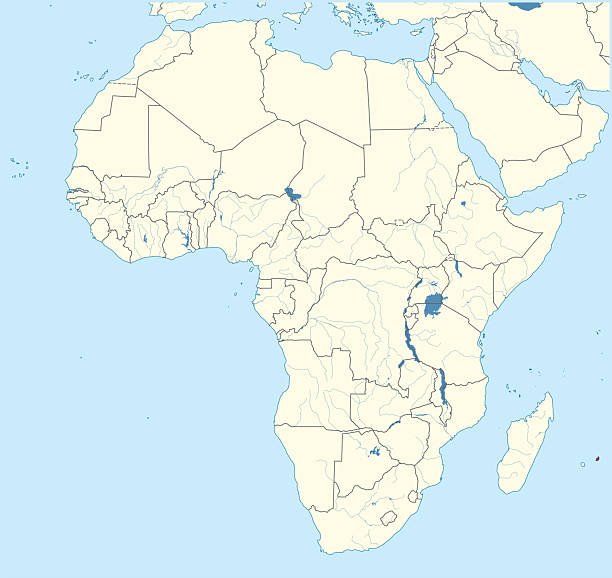
Did Africa start Christianity? While the absolute origin of Christianity is rooted in the Middle East, specifically Judea, Africa played an immediate, profound, and indispensable role in its early spread, intellectual development, and theological formation. From the very beginnings of the faith, the African continent became a vibrant crucible for Christian thought and practice, contributing significantly to what Christianity is today.
The Genesis of Christianity: A Middle Eastern Beginning
To directly address the question did Africa start Christianity, it is important to first acknowledge that the faith originated with Jesus of Nazareth in ancient Judea, a region in the Middle East. His ministry, crucifixion, resurrection, and the subsequent mission of his apostles and disciples began in this geographic location. The initial spread of the Christian message emanated from Jerusalem, reaching Jewish communities and Gentiles throughout the Roman Empire and beyond.
However, the narrative of Christianity's global journey is incomplete without recognizing the significant contributions and early establishment of early Christian communities in Africa. The continent was not a passive recipient but an active participant and shaper of the faith from its earliest moments.
Africa's Immediate Embrace: New Testament Connections to Early Christianity
Africa's connection to Christianity is not merely historical; it is embedded within the sacred texts themselves, demonstrating a relationship that began almost immediately after Jesus's ministry.
Simon of Cyrene: An African Bearing the Cross
One of the most poignant and direct connections is found in the New Testament accounts of Jesus's crucifixion. Simon of Cyrene, identified as a man from Cyrene in modern-day Libya (North Africa), was compelled to carry Jesus's cross (Matthew 27:32, Mark 15:21, Luke 23:26). This act places an African figure directly at the heart of Christianity's foundational event, symbolizing Africa's early involvement and sacrifice in the Christian narrative.
The Ethiopian Eunuch: An Early Convert
Another pivotal event is recorded in the book of Acts (Acts 8:26-40), detailing the conversion and baptism of the Ethiopian Eunuch. This high-ranking official from the ancient Kingdom of Aksum (present-day Ethiopia and Eritrea) was traveling from Jerusalem when he encountered Philip the Apostle. After Philip explained the prophecies of Isaiah, the eunuch immediately confessed his faith and was baptized. This event is widely considered to be one of the earliest instances of Gentile conversion and demonstrates the rapid spread of Christianity into northeastern Africa, establishing African roots of Christianity with apostolic precedent.
The Holy Family's Refuge in Egypt
According to the Gospel of Matthew (Matthew 2:13-23), Joseph, Mary, and the infant Jesus fled to Egypt to escape King Herod's persecution. This flight established Africa as a place of refuge and safety for the nascent Christian faith's central figures, further solidifying the continent's profound, early connection.
Egypt: A Cornerstone of Early Christian Thought and Monasticism
Egypt, with its ancient civilization and intellectual centers, quickly became a powerhouse for early Christianity in Africa, profoundly influencing the faith's theological and spiritual development.
Alexandria: An Intellectual Beacon
The city of Alexandria, founded by Alexander the Great, was one of the largest and most influential cities of the ancient world. It boasted a vast library, a thriving Jewish community, and a significant intellectual tradition. It quickly became a crucial center for Christian scholarship and theology. The Catechetical School of Alexandria, established possibly as early as the late 2nd century, produced towering figures like Clement of Alexandria and Origen. These scholars were instrumental in integrating Greek philosophy with Christian doctrine, shaping foundational theological concepts, and developing methods of biblical interpretation that continue to influence Christian thought.
The Birthplace of Christian Monasticism
The deserts of Egypt also gave birth to a revolutionary form of Christian devotion: monasticism. Figures like Saint Antony the Great (c. 251–356 AD) and Pachomius (c. 292–348 AD) pioneered the eremitic (hermit) and cenobitic (communal) forms of monastic life, respectively. The ascetic practices and spiritual wisdom of the Egyptian Desert Fathers and Mothers spread rapidly throughout the Christian world, inspiring movements in Syria, Palestine, Cappadocia, and eventually Western Europe. Monasticism, a defining characteristic of ancient and medieval Christianity, has its undeniable origins in African soil.
The Enduring Coptic Church
The Coptic Church history dates back to the apostolic era, with its origins traditionally attributed to Saint Mark the Apostle in Alexandria around 42 AD. The Coptic Orthodox Church of Alexandria represents one of the oldest Christian denominations globally, maintaining ancient traditions, a unique liturgy, and a rich legacy of martyrdom. Its resilience through centuries of diverse rule speaks to the deep roots of Christianity in Egypt.
North Africa: Shaping Western Christian Theology
The Roman provinces of North Africa, particularly the region around Carthage (modern-day Tunisia), were another vital cradle of early Christianity, producing some of the most influential theologians whose impact on Western Christianity is immeasurable.
Carthage: A Hub of Latin Christianity
Carthage emerged as a major center of Latin Christianity, often seen as a theological rival to Rome itself. The North African church was vibrant and at times fiercely independent. It was also a place of intense persecution, leading to profound acts of faith and martyrdom, such as that of Saints Perpetua and Felicity in 203 AD, whose testimonies continue to inspire.
Tertullian: The Father of Latin Theology
Tertullian (c. 155–220 AD), from Carthage, is often referred to as the father of Latin theology. He was a prolific writer who laid the groundwork for many Latin Christian concepts. He was the first to use the term “Trinity” (Trinitas) and articulated key theological concepts like “substance” and “person” in relation to God, concepts that became fundamental to Trinitarian doctrine.
Cyprian of Carthage: Bishop and Theologian
Cyprian (d. 258 AD), another significant figure from Carthage, was a bishop and martyr who wrote extensively on the unity of the church, the authority of the bishop, and the nature of penance for lapsed Christians during times of persecution. His writings were crucial in shaping ecclesiology (the doctrine of the church) in the West.
Augustine of Hippo: The Giant of Christian Thought
Perhaps the most towering figure in all of Western Christian history, Augustine of Hippo (354–430 AD) was born in Thagaste (modern-day Souk Ahras, Algeria) and served as the Bishop of Hippo Regius (modern-day Annaba, Algeria). His autobiographical masterpiece, Confessions, and his monumental theological work, City of God, among hundreds of other writings, profoundly shaped Western theology, philosophy, and political thought for over a millennium. His doctrines on original sin, divine grace, free will, predestination, and the nature of the church became foundational for both Catholic and Protestant traditions. Augustine's intellectual legacy alone firmly establishes Africa's unparalleled contribution to Christian doctrine.
Ancient African Kingdoms: Independent Christian Traditions
Beyond the Mediterranean coast, ancient African kingdoms also embraced Christianity, developing unique and enduring traditions that continue to thrive today.
Ethiopia: An Apostolic Heritage and Enduring Faith
The Ethiopian Christianity history is among the oldest in the world. While the tradition of the Ethiopian Eunuch suggests early contact, the formal establishment of Christianity as a state religion in the Kingdom of Aksum occurred in the 4th century under King Ezana. This was largely due to the efforts of Frumentius and Aedesius, shipwrecked Syrian Christians who rose to prominence in the Aksumite court. Frumentius eventually became the first bishop of Ethiopia. The Ethiopian Orthodox Tewahedo Church developed distinctive practices, including its unique Ge'ez liturgy, a strong monastic tradition, and the profound belief in possessing the Ark of the Covenant in Axum. This ancient church represents a living testament to Christianity's deep and original penetration into sub-Saharan Africa.
Nubia: The Lost Christian Kingdoms
Further north, the ancient kingdoms of Nubia (modern-day Sudan) also embraced Christianity in the 6th century AD. The kingdoms of Nobatia, Makuria, and Alodia became vibrant Christian states, building magnificent cathedrals, monasteries, and developing a unique Nubian Christian art and literature. For nearly a millennium, these kingdoms thrived as Christian strongholds in a region increasingly surrounded by Islam. Though eventually succumbing to Islamic expansion by the 14th-15th centuries, their archaeological remains testify to a rich and flourishing period of Nubian Christianity.
Africa's Continuing Christian Journey and Modern Resurgence
After periods of decline in North Africa due to Islamic expansion, and the relative isolation of Ethiopian Christianity, the modern era saw a resurgence and expansion of Christianity across the entire continent. From the 15th century onwards, European missionaries (Portuguese, then later Protestant and Catholic) played a significant role in re-introducing and spreading the faith, particularly in Sub-Saharan Africa.
In the 20th and 21st centuries, Africa has witnessed an unprecedented explosion of Christian growth, making it a new global center of Christianity. The rise of indigenous African leadership, the formation of countless African Independent Churches (AICs), and the vibrant, evangelistic spirit of African Christianity have reshaped global Christianity. Today, a significant portion of the world's Christian population resides in Africa, demonstrating its enduring and dynamic relationship with the faith.
Clarifying the Question: Africa's Indispensable Role
To reiterate, while Christianity's absolute point of origin was in the Middle East, the question of did Africa start Christianity is best understood by acknowledging Africa's immediate and fundamental role. It was not the birthplace of Jesus or the site of Pentecost, but it was instrumental in providing refuge, producing foundational theological giants, pioneering new forms of spiritual life like monasticism, and establishing some of the oldest continuous Christian traditions in the world. The continent's contribution to the formation, articulation, and preservation of Christian faith and doctrine is unparalleled in the early centuries of the church.
In conclusion, while the geographical starting point of Christianity was Judea, Africa's role in the development and global spread of the faith was not merely secondary but absolutely essential from the earliest days. From the carrying of the cross by Simon of Cyrene, the conversion of the Ethiopian Eunuch, the intellectual power of Alexandria, and the monumental contributions of North African Church Fathers like Augustine, to the enduring ancient churches of Ethiopia and Nubia, Africa provided a fertile ground for Christianity to take deep root, flourish, and evolve. The continent continues to be a vibrant heartland of Christian faith, demonstrating its rich and continuous legacy in the global Christian narrative.
Enjoyed this read?
Share it with your friends and colleagues.