Is Africa Close To The Equator

BSC Insights Admin
October 01, 2026
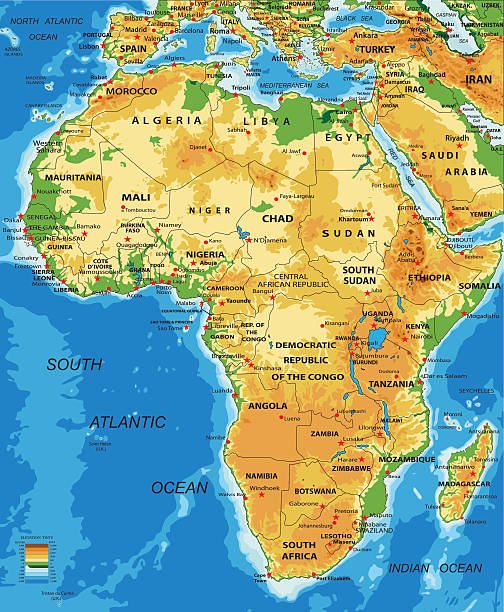
Is Africa Close To The Equator? Absolutely. Africa is uniquely positioned on Earth, straddling the Equator and extending significantly both north and south of this crucial imaginary line. This geographical characteristic means that a vast portion of the continent experiences direct sunlight and consistent high temperatures year-round, profoundly influencing its diverse climates, rich biodiversity, and the daily lives of its inhabitants.
Africa's Unique Equatorial Position
The continent of Africa holds the distinction of being the only continent that stretches across all four hemispheres (Northern, Southern, Eastern, and Western), and the Equator dissects it almost precisely in the middle. This central placement ensures that Africa is exposed to intense solar radiation throughout the year, making it the hottest continent on Earth. The Equator passes through several African countries, making their territories central to understanding the continent's climate and ecological zones.
The Equator, or 0 degrees latitude, is an imaginary line that circles the Earth, equidistant from the North and South Poles. For Africa, this line is not merely a geographical marker; it is a fundamental determinant of its environmental conditions. Countries that lie directly on the Equator experience specific climatic patterns that are distinct from those further north or south, closer to the Tropics of Cancer and Capricorn, or the continent's northern and southern extremities.
African Countries Crossed by the Equator
- Gabon: The Equator passes through the northern part of this Central African nation.
- Republic of the Congo: Crossing the southern region, influencing its rainforest climate.
- Democratic Republic of the Congo (DRC): A significant portion of the DRC, including the vast Congo Basin, lies directly on the Equator.
- Uganda: The Equator passes through the southern part of Uganda, south of its capital, Kampala.
- Kenya: Traversing the central highlands and Lake Victoria region.
- Somalia: The Equator cuts through the southernmost tip of Somalia, near the town of Kismayo.
- São Tomé and Príncipe: The Equator passes just south of the island of Ilhéu das Rolas, part of this island nation.
This distribution of land along the Equator highlights Africa's equator proximity as a defining characteristic of its geography, setting the stage for the wide array of natural landscapes and human adaptations found across the continent.
The Impact of the Equator on Africa's Climate
The direct overhead sun at the Equator, coupled with the Earth's rotation, drives a unique set of climatic patterns across Africa. The sun's energy heats the land and oceans, leading to significant evaporation and cloud formation, which in turn results in high levels of precipitation. This consistent energy input creates a range of African climate zones, from perpetually wet rainforests to arid deserts, all shaped by their distance from the Equator.
Equatorial Climate Zone: The Heart of Africa's Heat
In the immediate vicinity of the Equator, Africa experiences what is known as a tropical rainforest climate. This climate is characterized by consistently high temperatures (averaging around 25-30°C or 77-86°F) and abundant rainfall throughout the year, with no distinct dry season. Humidity levels are also very high. This perpetual warmth and moisture foster dense, evergreen rainforests, such as those found in the vast Congo Basin, the second-largest rainforest in the world.
- Consistent Temperatures: Minimal seasonal variation in temperature, daily temperatures hover around the annual average.
- High Rainfall: Convectional rainfall is common, often occurring in heavy afternoon downpours. Annual precipitation can exceed 2,000 mm (80 inches).
- High Humidity: The constant evaporation and transpiration from dense vegetation contribute to very high humidity.
This climate zone is critical for global biodiversity and climate regulation, acting as a significant carbon sink and hosting an immense variety of plant and animal life. The equatorial regions of Africa are thus vital ecosystems.
Beyond the Equator: Diverse Climate Zones
As one moves away from the Equator, either north or south, the angle of the sun's rays becomes less direct, leading to more pronounced seasonal variations and a gradual transition into different climate zones. This creates a remarkably symmetrical pattern of climates on either side of the Equator.
Tropical Savanna (Wet & Dry)
Flanking the equatorial rainforests are the expansive tropical savanna zones. Here, temperatures remain high, but rainfall becomes seasonal, with distinct wet and dry periods. The vegetation shifts from dense forest to grasslands interspersed with scattered trees and shrubs. This is the iconic landscape of much of East Africa and parts of Southern Africa, famous for its abundant wildlife.
- Wet Season: Typically experiences heavy rainfall for several months, allowing for lush growth.
- Dry Season: Can be prolonged, leading to drought conditions and sparse vegetation, crucial for species migration.
Desert & Semi-Arid Climates
Further away from the Equator, approximately between 15° and 30° latitude in both hemispheres, lie Africa's vast desert and semi-arid regions. These areas receive very little rainfall, leading to extreme temperatures and sparse vegetation. The most prominent examples are the Sahara Desert in North Africa and the Kalahari Desert and Namib Desert in Southern Africa. The Sahel region, a semi-arid zone, serves as a transition between the Sahara and the more fertile savanna to its south.
Mediterranean Climates
At the very northern and southern tips of the continent, specifically along the Mediterranean coast (Maghreb region) and in parts of South Africa (Cape Town area), Africa experiences a Mediterranean climate. This is characterized by hot, dry summers and mild, wet winters, quite different from the tropical climates dominating the rest of the continent.
Highland Climates
Despite Africa's overall warmth, specific high-altitude areas, such as the Ethiopian Highlands and parts of the East African Rift Valley, experience cooler temperatures and different precipitation patterns due to their elevation. These regions can even have temperate conditions, supporting unique agricultural practices and ecosystems.
To summarize the diversity influenced by Africa's equator proximity, here's a helpful table:
| Climate Zone | Location Relative to Equator | Key Characteristics | Example Regions |
|---|---|---|---|
| Equatorial Rainforest | 0° Latitude (direct on Equator) | High constant temps, heavy year-round rain, high humidity | Congo Basin, parts of West Africa |
| Tropical Savanna | 5°-15° North/South of Equator | High temps, distinct wet/dry seasons, grasslands | East Africa (Serengeti), Southern Africa |
| Desert / Semi-Arid | 15°-30° North/South of Equator | Extreme temps, very low rainfall, sparse vegetation | Sahara Desert, Kalahari Desert, Sahel |
| Mediterranean | >30° North/South (coastal extremities) | Hot dry summers, mild wet winters | Northern Morocco, Western Cape (South Africa) |
| Highland | Variable (high elevation) | Cooler temps due to altitude, varied rainfall | Ethiopian Highlands, Rwanda, Kenya highlands |
How Proximity to the Equator Influences Africa's Biodiversity
The consistent warmth and abundant rainfall in equatorial regions of Africa provide ideal conditions for lush vegetation and diverse animal life, making it one of the world's most biodiverse continents. The high solar energy input drives rapid plant growth, forming the base of complex food webs.
Rainforest Ecosystems: A Biodiversity Hotspot
The Congo Basin rainforest is a prime example of how Africa's closeness to the Equator fosters incredible biodiversity. This ecosystem is home to an astonishing array of species, many of which are endemic. Large numbers of primates, birds, insects, and unique plant species thrive in this humid, stable environment. The continuous growing season supports a rich biomass and complex canopy layers, creating diverse habitats.
Savanna Grasslands: Iconic Wildlife Habitats
Even the tropical savannas, with their seasonal rainfall, support vast numbers of large mammals, including wildebeest, zebras, lions, elephants, and giraffes. The availability of water during the wet season and the migration patterns during the dry season are directly linked to the broader climatic patterns influenced by the Equator. These migrations, such as the Great Migration in East Africa, are among the most spectacular natural phenomena on Earth.
Socio-Economic and Human Implications
The impact of the Equator on Africa extends beyond its natural environment, deeply influencing human societies, cultures, and economies.
Challenges Posed by Equatorial Proximity
- Heat Stress: Consistent high temperatures can pose health risks and reduce productivity, requiring specific adaptations in building design, clothing, and daily routines.
- Disease Patterns: Many tropical diseases, such as malaria, yellow fever, and dengue, thrive in warm, humid conditions prevalent in equatorial and tropical zones, posing significant public health challenges.
- Agricultural Constraints: While long growing seasons are possible, intense rainfall can lead to soil erosion and nutrient leaching. Specific crops suited to tropical conditions are necessary.
Opportunities Arising from Equatorial Proximity
- Abundant Rainfall: High rainfall supports extensive agriculture, particularly for crops like cocoa, coffee, palm oil, and various fruits, which are important exports.
- Hydroelectric Potential: Major rivers, such as the Congo River, benefit from consistent rainfall, offering significant potential for hydroelectric power generation, crucial for economic development.
- Tourism: The unique biodiversity, especially the rainforests and savanna wildlife, attracts millions of tourists annually, contributing substantially to local economies.
Navigating the Tropics: Tropic of Cancer and Tropic of Capricorn
Africa is distinctively situated between two other significant lines of latitude: the Tropic of Cancer (approximately 23.5° North) and the Tropic of Capricorn (approximately 23.5° South). These lines mark the northernmost and southernmost points where the sun can appear directly overhead at noon. Because Africa spans both these tropics, it is often referred to as the most tropical continent. This means that direct sunlight reaches every part of Africa at some point during the year, contributing to its generally warm climate.
- Tropic of Cancer: Crosses North Africa, passing through countries like Western Sahara, Mauritania, Mali, Algeria, Niger, Libya, and Egypt.
- Tropic of Capricorn: Crosses Southern Africa, passing through Namibia, Botswana, South Africa, and Mozambique.
The areas between the Tropic of Cancer and the Tropic of Capricorn are collectively known as the "Tropics." The sun is directly overhead at the Equator during the equinoxes (around March 20 and September 22), and at the Tropics during the solstices (around June 21 for Cancer and December 21 for Capricorn). This celestial movement dictates the patterns of solar radiation across the continent, further emphasizing the profound geography of Africa and its relationship with the sun.
Frequently Asked Questions about Africa and the Equator
Which African countries does the Equator pass through?
The Equator passes through seven African countries: São Tomé and Príncipe (an island nation), Gabon, Republic of the Congo, Democratic Republic of the Congo, Uganda, Kenya, and Somalia. This unique geographical alignment contributes significantly to their climates and ecosystems.
What is the weather like in equatorial Africa?
Weather in equatorial Africa is characterized by consistent warmth, high humidity, and abundant rainfall throughout the year. There are no distinct four seasons; instead, there might be two wet seasons and two relatively drier periods, but never a true dry season like in savanna zones. Daily temperatures typically range from 25°C to 30°C (77°F to 86°F), with significant afternoon convective thunderstorms being common.
Does the Equator affect daily life in Africa?
Yes, profoundly. The constant high temperatures and humidity influence everything from clothing styles (light, breathable fabrics) and architecture (designs maximizing airflow and shade) to agricultural practices (crops suited for tropical conditions). Disease prevalence, especially of vector-borne illnesses like malaria, is also higher. Conversely, the long growing seasons and rich biodiversity offer opportunities for food security and economic activities like eco-tourism.
How does Africa's position relative to the Equator influence global climate?
Africa's large landmass straddling the Equator plays a crucial role in global climate patterns. The intense solar heating drives atmospheric circulation cells (Hadley Cells), influencing global wind patterns and precipitation distribution. The vast rainforests, particularly the Congo Basin, act as significant carbon sinks, absorbing carbon dioxide and releasing oxygen, which is vital for regulating Earth's atmosphere.
Conclusion
In summary, Africa is exceptionally close to the Equator, with the imaginary line cutting across its central part and influencing a vast majority of its landmass. This pivotal geographical placement is not just a statistical fact but the primary driver behind the continent's remarkable climatic diversity, from the steamy, biodiverse rainforests of the Congo Basin to the expansive savannas and even the arid deserts further afield. Understanding Africa's equator proximity is key to comprehending its unique environmental challenges and opportunities, its unparalleled biodiversity, and the socio-economic realities of its people. The Equator fundamentally shapes Africa, making it a continent of unparalleled natural richness and human adaptation.
Enjoyed this read?
Share it with your friends and colleagues.