Did Africa Ever Colonize Anything

BSC Insights Admin
October 07, 2026
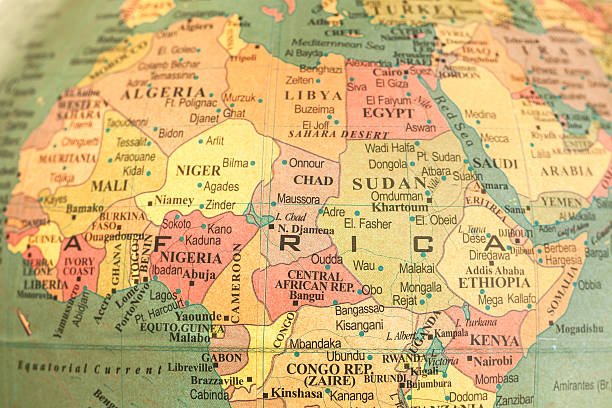
Did Africa Ever Colonize Anything? Unpacking the History of African Empires and Influence
While African civilizations certainly established powerful empires, expanded their territories, and exerted significant influence over neighboring regions, the historical record does not show them engaging in the same form of large-scale, overseas, systemic colonization of distant continents as seen with European powers. African expansion was typically characterized by control over contiguous lands, trade networks, and cultural diffusion, rather than the transatlantic or intercontinental settlement, resource extraction, and administrative subjugation that defines the colonial era often associated with other global powers.
Understanding Colonization in a Historical Context
To properly address the question "Did Africa ever colonize anything?", it's crucial to define what we mean by "colonization." In its most common historical understanding, particularly concerning the modern era, colonization involves a powerful nation establishing political, economic, and often demographic control over a distant territory, typically for resource extraction, market access, strategic advantage, or the settlement of its own population. This process usually involves the systematic exploitation of the colonized land and people, the imposition of the colonizer's culture and governance, and often a significant power imbalance. Historically, this has largely been associated with European powers expanding into the Americas, Asia, Africa, and Oceania.
However, if we consider a broader definition of "colonization" to include any act of a more powerful group establishing dominance over another group's territory, whether contiguous or distant, then various forms of expansion and imperial rule have occurred throughout history, including within Africa itself. African empires certainly expanded their borders, incorporated diverse peoples, and extracted tribute or resources from subjugated groups. Yet, these actions generally occurred within the African continent and typically differed in scope, intent, and methodology from the overseas colonial enterprises that reshaped global power dynamics from the 15th century onwards.
Powerful African Empires and Their Reach
Throughout its long and rich history, Africa has been home to numerous powerful and influential empires. These civilizations demonstrated immense organizational skill, military prowess, and economic sophistication, often dominating vast territories and shaping the course of regional history. However, their methods of expansion and control typically did not align with the modern understanding of intercontinental colonization.
Ancient Egypt and Nubia
Perhaps one of the most enduring and well-known African civilizations, Ancient Egypt, certainly expanded its influence and control beyond its immediate borders. For millennia, Egypt projected its power south into Nubia (modern-day Sudan), establishing forts, mines, and administrative centers. At various times, Nubia was an Egyptian province, ruled directly by pharaohs or their appointed viceroys. This was a form of imperial expansion and control over a contiguous territory, with significant Egyptian cultural and political influence. However, this expansion was largely land-based, within the Nile Valley, and did not extend to overseas colonization of other continents.
Conversely, the Kingdom of Kush (also in Nubia) later rose to power, even conquering and ruling Egypt as the 25th Dynasty (c. 744–656 BCE). This demonstrates the cyclical nature of power and influence within the region, with African empires asserting dominance over each other, rather than over distant, non-African lands.
The Horn of Africa: Aksum
The Kingdom of Aksum, flourishing from the 1st to the 7th century CE in what is now Ethiopia and Eritrea, was a significant regional power. Aksum controlled crucial trade routes linking Africa, Arabia, and India. Its wealth was immense, and its military was capable of projecting power across the Red Sea. Aksumite kings, notably King Kaleb in the 6th century CE, launched successful military campaigns across the Red Sea into the Arabian Peninsula, specifically against the Himyarite Kingdom in what is now Yemen, to protect Christian populations and secure trade. They established a period of Aksumite control and influence in parts of Arabia. This represents one of the closest examples of an African power projecting military and political control across a significant body of water to another landmass, though it was confined to the immediate Arabian Peninsula and driven by specific religious and economic motivations, not broad-scale colonization and settlement.
West African Empires: Ghana, Mali, Songhai
The great empires of West Africa – Ghana (c. 300–1100 CE), Mali (c. 1235–1670 CE), and Songhai (c. 1340–1591 CE) – controlled vast territories, immense wealth derived from gold and trans-Saharan trade, and fostered centers of learning like Timbuktu. These empires expanded through military conquest, absorbing smaller kingdoms and tribes, and demanding tribute. They established sophisticated administrative systems, legal codes, and powerful armies that maintained control over diverse populations stretching across thousands of miles of savanna and desert.
- Ghana Empire: Known for its vast wealth in gold, it exerted control over a large territory in the Sahel region, influencing trade and politics across West Africa.
- Mali Empire: Under leaders like Sundiata Keita and Mansa Musa, Mali became one of the largest and wealthiest empires in the world, renowned for its gold, salt, and intellectual centers. Its influence spread across much of West Africa, with a clear system of governance and tributary states.
- Songhai Empire: Following Mali, Songhai rose to prominence, conquering much of the former Malian territory and expanding further. Its rulers, like Askia the Great, consolidated power and organized a vast, centralized state.
These empires certainly engaged in expansion and imperial rule within the African continent, but their focus remained on consolidating power, controlling trade routes, and managing diverse populations within a geographically contiguous region. They did not establish colonies overseas.
Southern African Kingdoms: Great Zimbabwe, Zulu
Further south, kingdoms like Great Zimbabwe (c. 11th–15th centuries CE) built an extensive trading network reaching as far as China and Persia, and exerted considerable influence over its neighbors through economic and political power. While its exact political structure is still debated, it was a regional power hub.
Later, in the 19th century, the Zulu Kingdom under Shaka Zulu engaged in a period of intense military expansion and consolidation (the Mfecane), forming a powerful, highly centralized state that subjugated and absorbed numerous surrounding groups. This was a clear example of imperial expansion and control over a large contiguous territory and diverse populations within southern Africa, but again, not overseas colonization.
Trade, Influence, and Cultural Exchange: A Different Form of African Impact
African civilizations have always been interconnected with the wider world through extensive trade networks, leading to significant cultural exchange and influence, rather than colonization.
Trans-Saharan Trade Routes
For centuries, the Trans-Saharan trade routes connected West and North Africa with the Mediterranean and beyond. Goods like gold, salt, slaves, and textiles flowed across the desert, bringing immense wealth and cultural diffusion. This interaction led to the spread of Islam, Arabic language, and various technologies and ideas across the continent, profoundly shaping West African societies. While this facilitated a diffusion of culture, it was a process of mutual exchange and influence, not colonization by African powers.
Indian Ocean Trade Networks
Along Africa's east coast, the Swahili city-states (e.g., Kilwa, Mombasa, Zanzibar) were vital nodes in the Indian Ocean trade network, linking Africa with the Middle East, India, and Southeast Asia. These city-states were cosmopolitan centers, blending African (Bantu), Arab, Persian, and Indian cultures. They exported African gold, ivory, and timber, and imported silks, spices, and pottery. The Swahili culture itself is a testament to extensive cross-cultural exchange. While Arab and Persian merchants often settled in these cities, and some sultanates developed, these were primarily mercantile relationships and cultural fusions, not a process where African powers colonized parts of Asia or the Middle East.
Why "Colonization" as Understood by Europe is Different
The lack of African-led overseas colonization, in the style of European powers, can be attributed to several factors:
- Geographic and Technological Focus: African empires generally focused on land-based expansion and control within their continent. While some, like Aksum, engaged in limited overseas campaigns, the sustained investment in long-distance naval technology for intercontinental voyages and settlement was not a primary focus, unlike European maritime powers.
- Economic Motives: African empires were immensely wealthy from internal resources (gold, salt, iron) and overland trade. The imperative to find new resources or markets by establishing distant colonies was less pressing.
- Population Dynamics: While various migrations occurred within Africa, the systematic demographic transfer of large populations to distant, controlled territories to establish settler colonies was not a prevalent practice.
- Nature of Imperialism: African imperial expansion often involved incorporating existing polities into a larger system, demanding tribute, or controlling trade routes. While sometimes harsh, it generally involved a different approach to cultural imposition and systemic exploitation compared to European overseas colonialism, which often sought to completely transform or replace indigenous systems.
The Legacy of African Power and Influence
The absence of African overseas colonization should not be misinterpreted as a lack of power, sophistication, or global impact. On the contrary, African empires and civilizations were formidable forces that shaped continental and, in some cases, global history. Their innovations in governance, trade, metallurgy, art, and intellectual thought contributed significantly to human development. The wealth of West African gold fueled economies far beyond its borders, and the intellectual contributions of centers like Timbuktu were profound.
The question itself, "Did Africa ever colonize anything?" often implicitly frames African history through a Eurocentric lens, expecting to see a mirroring of European historical patterns. A more nuanced understanding reveals that African powers engaged in their own forms of empire-building, expansion, and influence, which were distinct yet equally significant within their historical and geographical contexts.
Conclusion
In summary, while powerful African empires like Ancient Egypt, Aksum, Ghana, Mali, and Songhai undoubtedly expanded their territories, exerted influence, and controlled neighboring regions, they did not engage in the type of large-scale, overseas, systemic colonization of distant continents characterized by European colonial powers. African expansion was predominantly land-based, focused on contiguous territories, trade control, and regional hegemony. The historical record demonstrates Africa's profound internal power dynamics, rich imperial traditions, and significant contributions to global trade and culture, without conforming to the specific model of intercontinental colonization that defined later eras. Understanding these distinctions is crucial for a comprehensive and balanced view of world history and the diverse ways in which power and influence have been wielded across different civilizations and continents.
Enjoyed this read?
Share it with your friends and colleagues.