Did Africa Colonize Europe

BSC Insights Admin
October 01, 2026
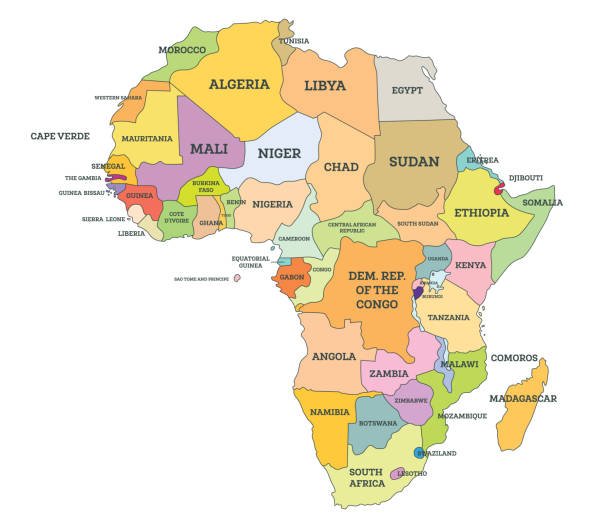
The direct answer to the question, Did Africa colonize Europe, is no, not in the traditional sense of sustained political and economic subjugation by an African power over European territories. However, this seemingly simple question masks a rich and complex history of profound interactions, conquests, cultural exchanges, and significant influences that flowed from Africa into Europe over millennia, challenging simplistic Eurocentric narratives of history.
While Europe embarked on its brutal colonization of Africa from the 15th century onwards, the history prior to this era reveals a dynamic relationship where African civilizations played a crucial role in shaping European development, particularly through trade, knowledge transfer, and even direct territorial rule in certain regions. Understanding this history requires a nuanced look at what constitutes 'colonization' and how different forms of influence have shaped continents.
Defining Colonization in Historical Context
Before delving into the historical interactions, it is crucial to establish a working definition of 'colonization.' Traditionally, colonization involves the establishment of control by a foreign power over a dependent territory or people. This includes the transfer of population to a new territory, the imposition of the colonizer's political, economic, and social structures, and often the exploitation of resources and labor for the benefit of the colonizing power. Classic examples include European colonization of the Americas, Africa, and parts of Asia.
The question of whether Africa colonized Europe typically arises when examining periods where African-based or African-originating groups exerted significant military, political, or cultural power within parts of Europe. While these interactions certainly occurred, they rarely fit the broad, systemic definition of colonization involving large-scale population transfers and long-term, continent-wide political subjugation characteristic of later European imperialism.
Ancient African Civilizations and Their European Connections
Egypt and the Mediterranean World
One of the earliest and most enduring sources of African influence on Europe comes from ancient Egypt. For thousands of years, ancient Egypt, an advanced civilization in North Africa, had extensive trade, diplomatic, and even military interactions with civilizations in the Near East and the Mediterranean, including early Greek and Roman societies. Egyptian advancements in architecture, mathematics, medicine, astronomy, and religious thought significantly impacted the development of classical Greek civilization, which in turn laid foundations for much of Western thought.
- Architectural Innovations: Egyptian pyramid building and temple designs influenced early Greek monumental architecture.
- Philosophical Exchange: Greek philosophers like Pythagoras and Plato are believed to have studied in Egypt, absorbing knowledge that shaped their own philosophies.
- Trade Routes: Extensive trade brought Egyptian goods, ideas, and technologies across the Mediterranean.
Carthage: A North African Power in Europe
The ancient city-state of Carthage, located in modern-day Tunisia, was a powerful Phoenician colony that grew into a formidable North African empire. From the 6th to the 3rd centuries BCE, Carthage was a major maritime and commercial power that directly competed with Rome for control of the Western Mediterranean. Carthaginian influence extended to Sicily, Sardinia, Corsica, and parts of the Iberian Peninsula (modern Spain and Portugal).
The Punic Wars (264–146 BCE) between Carthage and Rome were epic conflicts, showcasing Carthage's military might, including the legendary general Hannibal Barca, who famously marched elephants across the Alps to invade Italy. While Carthage did not 'colonize' Italy in the sense of establishing permanent Carthaginian settlements across the peninsula, its control and influence over various European islands and coastal areas for centuries represented a significant exertion of African-based power and presence in Europe.
Roman North Africa: A Shared Destiny
After the fall of Carthage, North Africa became a vital part of the Roman Empire, often referred to as the 'breadbasket of Rome' due to its agricultural productivity. Provinces like Africa Proconsularis, Numidia, and Mauretania were fully integrated into the Roman world, contributing immensely to its economy, culture, and intellectual life. Prominent Roman figures, including emperors, saints, and scholars, hailed from North Africa, such as Septimius Severus (Roman Emperor) and St. Augustine of Hippo (one of the most influential Christian theologians).
This period highlights a deep intermingling rather than colonization in one direction. North Africa was Roman, and Rome was shaped by North Africa, demonstrating the interconnectedness of the Mediterranean world.
The Moorish Conquest and Al-Andalus: A Powerful African-Led Presence in Europe
Perhaps the most direct and impactful instance where the question Did Africa colonize Europe gains some traction is the Moorish conquest of the Iberian Peninsula (modern Spain and Portugal) in the 8th century CE. In 711 CE, an army predominantly composed of Berbers from North Africa, led by Tariq ibn Ziyad, and Arabs from the Umayyad Caliphate, crossed the Strait of Gibraltar and rapidly conquered most of Visigothic Hispania.
The Golden Age of Al-Andalus
For nearly eight centuries (711-1492 CE), large parts of the Iberian Peninsula were under Muslim rule, known as Al-Andalus. This period is often described as a 'Golden Age' of cultural, scientific, and intellectual flourishing, starkly contrasting with much of contemporary Christian Europe. Cities like Cordoba, Seville, and Granada became centers of learning and innovation, attracting scholars from across the known world.
Key Contributions of Al-Andalus to Europe:
- Science and Mathematics: Preservation and advancement of Greek and Roman knowledge; introduction of Arabic numerals, algebra, algorithms, and concepts of zero.
- Medicine: Advanced surgical techniques, pharmacology, and development of hospitals.
- Astronomy: Sophisticated observatories, accurate astronomical tables, and improved navigational instruments.
- Agriculture: Introduction of new crops (e.g., rice, citrus fruits, sugarcane, cotton) and advanced irrigation systems that revolutionized European farming.
- Philosophy and Literature: Translation of classical texts, original philosophical works, and rich poetic traditions.
- Architecture and Art: Distinctive architectural styles, intricate tile work, and decorative arts that left an indelible mark on Spanish culture (e.g., the Alhambra, Mezquita of Cordoba).
- Urban Development: Paved streets, street lighting, public baths, and vast libraries were common in Al-Andalusian cities when many European cities lacked such amenities.
While the rulers of Al-Andalus were not a 'state of Africa' in the modern sense, the vast majority of the population and the dominant cultural influences were indeed from North Africa and the wider Islamic world. The military conquest and subsequent political, economic, and cultural dominance over an indigenous European population for centuries share some characteristics with colonization, particularly in the imposition of a new ruling class, religion, and administrative system. However, it was also characterized by a degree of religious tolerance and cultural synthesis unique for its time, especially for Jews and Christians living under Muslim rule (dhimmis).
The Reconquista and Lasting Legacy
The gradual Christian reconquest (Reconquista) eventually pushed out the Muslim rulers, culminating in the fall of Granada in 1492. Despite the expulsion, the Moorish legacy in Spain and Portugal remains profound, evident in language (thousands of Arabic loanwords), architecture, music, cuisine, and academic traditions. This period unquestionably represents one of the most significant examples of African-derived power and cultural transformation within Europe.
Beyond the Mediterranean: Sub-Saharan Africa and Early European Interactions
While less direct in terms of territorial control in Europe, sub-Saharan African empires and kingdoms also had important, albeit different, interactions with Europe long before the era of intensive colonization.
Trans-Saharan Trade and European Connections
For centuries, powerful West African empires like the Ghana, Mali, and Songhai Empires controlled vast reserves of gold, salt, and other valuable commodities. Trans-Saharan trade routes connected these empires with North Africa, and from there, goods made their way into Europe. European demand for gold, in particular, fueled a significant portion of this trade, contributing to the wealth of these African empires and influencing European economies.
Accounts like that of Mansa Musa, the legendary emperor of the Mali Empire, who undertook a lavish pilgrimage to Mecca in the 14th century, carrying immense quantities of gold, spread awareness of Africa's immense wealth throughout the Mediterranean and even into Europe. This contributed to Europe's interest in finding direct sea routes to West Africa, eventually leading to the age of exploration and, tragically, the transatlantic slave trade and colonization.
Early European Exploration and Coastal Trade
From the 15th century, Portuguese explorers began to establish trading posts along the West African coast. While this marked the beginning of a shift towards European dominance, initially these interactions were primarily trade-based, with African kingdoms often controlling the terms of trade. European powers sought gold, ivory, and other goods, and in return offered textiles, metals, and firearms. This pre-colonial trade, while a precursor to later exploitation, was not yet full-scale colonization by African powers.
The Reverse: European Colonization of Africa
It is important to contrast the historical interactions discussed above with the well-documented and devastating European colonization of Africa. From the 15th to the 20th centuries, European powers systematically invaded, conquered, and exploited virtually the entire African continent. This involved military subjugation, the transatlantic slave trade, the imposition of artificial borders, the extraction of resources, and the systematic dismantling of African political and economic structures for European benefit.
This period of European colonization of Africa represents a clear, unmistakable, and prolonged instance of one continent colonizing another, standing in stark contrast to the more nuanced and often reciprocal influences that flowed from Africa into Europe in earlier epochs.
Why the Question 'Did Africa Colonize Europe?' Matters
The question Did Africa colonize Europe, while perhaps inaccurately framed in the strict definition of colonization, is vital because it challenges prevailing Eurocentric views of history. It prompts a re-evaluation of:
- The richness of African history: It highlights powerful African civilizations and their significant contributions to global development.
- Interconnectedness of continents: It emphasizes that historical development was not isolated but a complex web of interactions and mutual influences.
- Challenging historical narratives: It pushes back against the idea of Africa as a continent solely acted upon, rather than an active agent in world history.
- Acknowledging forgotten contributions: It brings to light the profound intellectual, cultural, and material contributions that flowed from Africa into Europe, particularly during Europe's 'Dark Ages'.
Recognizing these historical contributions is crucial for a balanced and accurate understanding of world history, moving beyond simplistic narratives of dominance and submission.
Conclusion
In conclusion, while Africa did not colonize Europe in the conventional sense of establishing widespread, long-term political and economic subjugation, the historical record unequivocally demonstrates profound and transformative African influence on Europe. From the ancient Egyptian legacy impacting Greek civilization, through the formidable presence of Carthage in the Mediterranean, to the unparalleled cultural and scientific golden age of Moorish Al-Andalus in the Iberian Peninsula, interactions originating from the African continent significantly shaped European development.
These historical exchanges involved military conquests, vibrant trade networks, and invaluable transfers of knowledge, technology, and culture that were foundational to Europe's progress, especially during periods when much of Christian Europe was in decline. Understanding this complex tapestry of historical relationships is essential for a complete and accurate global history, acknowledging the powerful contributions and active role of African civilizations in shaping the world.
Enjoyed this read?
Share it with your friends and colleagues.