Is Africa Considered The Middle East

BSC Insights Admin
October 01, 2026
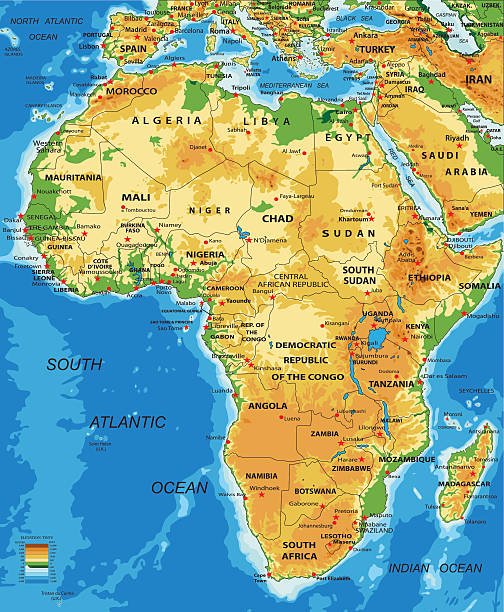
No, Africa is not considered the Middle East as a whole, although there are significant geographical, cultural, and historical overlaps, particularly with the countries of North Africa. While the Middle East primarily refers to a transcontinental region encompassing Western Asia and parts of North Africa, Africa itself is a vast continent with immense diversity that extends far beyond this specific regional definition. Understanding the nuances of these two complex regions requires a look at their distinct geographical boundaries, cultural identities, historical trajectories, and how different nations within them perceive their own place in the world.
Defining the Middle East: A Region of Crossroads
The term "Middle East" itself is a geopolitical construct, often debated in its exact definition and origins. It generally refers to a transcontinental region centered on Western Asia, including parts of North Africa and sometimes Southeastern Europe. Historically, the term gained prominence in the early 20th century, particularly through British colonial perspectives, to describe the lands between Europe and what was then called the "Far East."
Geographical Scope of the Middle East
Geographically, the core of the Middle East typically includes countries like Saudi Arabia, Iraq, Iran, Syria, Jordan, Lebanon, Israel, Palestine, Yemen, Oman, Qatar, Bahrain, Kuwait, and the United Arab Emirates. However, its definition often extends to incorporate North African nations such as Egypt, Libya, Tunisia, Algeria, and Morocco, primarily due to their strong cultural, linguistic, and historical ties to the Arabian Peninsula. Turkey, geographically split between Europe and Asia, is also frequently included, as are Sudan and Mauritania by some broader definitions.
Cultural and Linguistic Commonality
A significant unifying factor for many countries traditionally identified as part of the Middle East is the prevalence of the Arabic language and the Islamic faith. While not exclusively Arab or Muslim, these elements form a strong cultural bedrock across much of the region. This shared heritage contributes significantly to why North African countries are often grouped with the Middle East, blurring the lines of what constitutes "Africa" in this specific context.
Understanding Africa: A Continent of Unrivaled Diversity
Africa is the world's second-largest and second-most-populous continent, home to 54 recognized countries and a population exceeding 1.3 billion people. Its immense size is matched only by its staggering diversity, making any single, monolithic definition impossible. Geographically, Africa is often divided into five distinct regions:
- North Africa: Countries bordering the Mediterranean Sea and stretching into the Sahara.
- West Africa: Nations along the Atlantic coast and inland to the Sahel.
- Central Africa: Countries around the Congo Basin.
- East Africa: Regions along the Indian Ocean, including the Horn of Africa.
- Southern Africa: Countries at the southernmost tip of the continent.
Beyond Geography: Africa's Cultural and Ethnic Richness
The vastness of Africa translates into an extraordinary mosaic of cultures, languages, religions, and ethnic groups. With over 3,000 distinct ethnic groups and more than 2,000 different languages spoken, Africa boasts unparalleled human diversity. From the ancient traditions of the Sahelian kingdoms to the bustling modern metropolises of South Africa, and from the indigenous religions of many communities to widespread Christianity and Islam, the continent represents a tapestry of human experience that resists easy categorization. This profound internal diversity is a critical factor when discussing Africa's relationship to other regions like the Middle East.
The Overlap: North Africa and the Middle East Intertwined
The primary source of confusion regarding whether Africa is considered the Middle East stems from the unique position of North African countries. These nations, while geographically part of the African continent, share profound cultural, linguistic, and historical connections with the Middle East that often lead to their inclusion in both regional definitions.
Shared Historical and Cultural Ties
The countries of the Maghreb (Morocco, Algeria, Tunisia, Libya) and Egypt have been deeply influenced by waves of migration and conquest from the Arabian Peninsula. The Arab conquests of the 7th century spread Islam and the Arabic language across North Africa, profoundly shaping its cultural landscape. Later, the Ottoman Empire also exerted significant influence over parts of North Africa for centuries. As a result, these nations exhibit a strong Arab identity, with Arabic as an official language and Islam as the predominant religion, alongside their indigenous Berber and other African roots.
Political and Economic Groupings
Many North African countries are members of the Arab League, an organization of Arab-speaking states in Africa and Asia. This political alignment further reinforces their cultural kinship with Middle Eastern nations. Economically, these countries often engage in significant trade and diplomatic relations with Gulf states and other Middle Eastern nations, sometimes more so than with their Sub-Saharan African counterparts. This intricate web of shared identity and interaction makes the distinction less clear-cut for North Africa than for other parts of the continent.
Key Distinctions Between the Wider African Continent and the Middle East
Despite the close ties between North Africa and the Middle East, it is crucial to recognize the broader distinctions that firmly separate the majority of the African continent from the Middle Eastern region.
Geographical Boundaries
The most conventional geographical boundary between Africa and Asia (which houses the bulk of the Middle East) is the Suez Canal. While Egypt straddles this divide, with the Sinai Peninsula in Asia, the vast majority of the African landmass lies distinctly west of this point. Sub-Saharan Africa, stretching south from the Sahara Desert, is geographically and climatically distinct from the arid landscapes of much of the Middle East.
Cultural and Ethnic Diversity South of the Sahara
Once you move south of the Sahara, the cultural and ethnic landscape shifts dramatically from the Arab-dominated identity often associated with the Middle East. Sub-Saharan Africa is home to a staggering array of ethnic groups, languages (e.g., Swahili, Yoruba, Hausa, Zulu, Amharic), and unique cultural practices that bear little direct resemblance to those in the Arabian Peninsula or the Levant. While Islam and Christianity are widely practiced, they coexist with numerous indigenous belief systems, contributing to a truly diverse religious environment.
Distinct Historical Trajectories
The historical paths of Sub-Saharan African nations often diverge significantly from those of the Middle East. While both regions experienced colonialism, the specific colonial powers, the nature of exploitation, and the post-independence challenges varied greatly. Furthermore, the pre-colonial histories of great African empires like Mali, Songhai, Ashanti, and Great Zimbabwe have unique narratives that are distinct from the empires and caliphates that shaped the Middle East.
Economic Structures and Development Agendas
While both regions contain developing economies and resource-rich nations, their overall economic structures and development agendas often differ. The Gulf states of the Middle East are prominent oil and gas exporters with significant sovereign wealth funds, whereas many Sub-Saharan African economies are diverse, relying on a broader range of agricultural products, minerals, and emerging industries, each facing unique sets of challenges and opportunities. Global economic bodies and development initiatives often categorize them separately due to these distinct characteristics.
Regional Nuances and Self-Identification: The MENA Concept
The complexity of these regional definitions has led to the creation of hybrid terms, such as "MENA" (Middle East and North Africa). This acronym is widely used in academic, economic, and geopolitical discourse to acknowledge the interconnectedness of North Africa with the Middle East without fully subsuming all of Africa into the Middle Eastern definition. The MENA region is recognized for its shared socio-economic challenges, political dynamics, and cultural influences.
The Arab World vs. Africa
It is important to differentiate between "The Middle East" and "The Arab World." The Arab World is a linguistic and cultural designation, primarily encompassing the 22 Arabic-speaking countries of the Arab League, which includes nations in both North Africa and Western Asia. All of these countries are part of Africa or Asia, but not all African or Asian countries are part of the Arab World. This distinction helps clarify why countries like Somalia or Mauritania, despite being in Africa, are often considered part of the Arab World due to language and culture, while Ethiopia or Kenya are not.
Why Accurate Terminology Matters
Using precise and accurate terminology when discussing geographical and cultural regions is more than just an academic exercise; it has significant implications for understanding global dynamics, fostering respectful discourse, and avoiding harmful stereotypes.
- Avoiding Oversimplification: Grouping entire continents like Africa under a term primarily defined by Western Asia risks erasing the unique identities and diverse experiences of billions of people.
- Respecting Identities: Nations and communities often have strong preferences for how they are identified. Acknowledging these preferences respects their self-determination and cultural heritage.
- Informing Policy and Research: Accurate regional classifications are crucial for effective policy-making, targeted development aid, scholarly research, and geopolitical analysis. Misconceptions can lead to misguided interventions or flawed understandings of complex situations.
- Promoting Cultural Understanding: By recognizing distinctions and overlaps where they exist, we encourage a deeper appreciation for the rich tapestry of human cultures and histories across the globe.
In conclusion, while the Middle East is a distinct geopolitical region encompassing countries in Western Asia and parts of North Africa, Africa itself is a separate, vast, and incredibly diverse continent. The confusion often arises from the strong cultural, linguistic, and historical ties that link North African countries to the Middle East, leading to their inclusion in regional groupings like the MENA concept or the Arab League. However, to consider the entirety of Africa as part of the Middle East would be a fundamental misrepresentation of its immense geographical, cultural, and ethnic diversity, particularly when considering the vibrant and distinct regions of Sub-Saharan Africa. Understanding these intricate distinctions is key to a nuanced and accurate global perspective.
Enjoyed this read?
Share it with your friends and colleagues.