How Is Africa A Continent

BSC Insights Admin
September 30, 2026
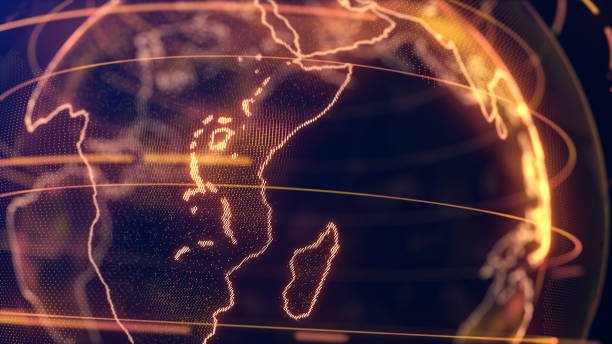
Africa is unequivocally a continent, defined by its massive geological plate, distinct geographical boundaries, and vast expanse of land separated by oceans. It meets all the traditional criteria for continental classification, encompassing a diverse array of biomes, cultures, and nations within its coherent landmass, making its status as a continent clear and undeniable.
Understanding the Definition of a Continent
To fully grasp how Africa is a continent, it's essential to first understand what defines a continent. Geographers and geologists generally agree on several key characteristics that distinguish a continent from smaller landmasses or subcontinents. These criteria are primarily based on geology, size, and political or cultural distinctiveness, though the exact number and boundaries of continents can sometimes be debated in different regions of the world.
Key Criteria for Continental Classification
- Vast Size: A continent must be a very large, continuous landmass. While there's no precise minimum size, continents are typically measured in millions of square kilometers.
- Geological Plate: Most continents sit on their own tectonic plate or a significant portion of a major plate, exhibiting distinct geological features and stability over vast periods. This geological independence is a crucial factor in defining Africa's continental status.
- Distinct Boundaries: Continents are generally separated by oceans or large bodies of water. In some cases, mountain ranges or other prominent geological features can serve as natural boundaries between adjacent continents (e.g., the Ural Mountains separating Europe and Asia).
- Significant Cultural and Ecological Diversity: Due to their vastness, continents typically host a wide array of ecosystems, climates, and human cultures. This diversity contributes to their unique identity.
- Sufficient Political Independence: While not a primary geological criterion, continents often comprise multiple independent nations, further emphasizing their distinct identity from subcontinents which are usually part of a larger continent.
Africa's Unmistakable Geological Identity
At the heart of Africa's continental definition lies its robust geological foundation. Africa is not merely a large landmass; it is a stable and ancient geological entity that has been largely intact for hundreds of millions of years.
The African Tectonic Plate
Africa rests predominantly on its own major tectonic plate, known as the African Plate. This single, massive plate underlies almost the entirety of the continent, as well as parts of the Atlantic and Indian Oceans. The African Plate is moving northeastward, slowly converging with the Eurasian Plate to the north and diverging from the South American Plate to the west. This geological independence is a fundamental reason why Africa is classified as a continent. The plate's relative stability and ancient cratons (very old, stable parts of the lithosphere) demonstrate its long-standing geological integrity.
Natural Boundaries: Oceans and Seas
The geological boundaries of Africa are strikingly clear, marked by vast bodies of water on almost all sides. To the west, the expansive Atlantic Ocean separates Africa from North and South America. To the north, the Mediterranean Sea provides a distinct boundary with Europe. To the northeast, the Red Sea separates Africa from the Arabian Peninsula, which is part of the Arabian Plate. Finally, to the east and southeast, the immense Indian Ocean clearly distinguishes Africa from Asia and Australia. These oceanic divisions reinforce Africa's status as a discrete and bounded landmass.
While the Suez Canal creates an artificial waterway, historically, the narrow Isthmus of Suez provided a land bridge to Asia. However, even before the canal, the geological and geographical separation was understood, and the Red Sea itself served as a significant natural barrier. The canal simply reinforces the perceived boundary, making the separation even more pronounced.
The Immense Scale and Diverse Geography of Africa
One of the most immediate indicators of Africa being a continent is its sheer size and astonishing geographical diversity. It is a land of extremes and unparalleled natural beauty.
Sheer Size and Global Significance
Africa is the world's second-largest continent in both land area and population. Covering approximately 30.3 million square kilometers (11.7 million square miles) including adjacent islands, it constitutes about 20% of the Earth's total land area. This makes it larger than China, India, the United States, and most of Europe combined. Its vastness alone speaks to its continental scale, far exceeding the size of any subcontinent.
This immense scale contributes to its global significance, influencing everything from global climate patterns to biodiversity and human migration histories. The continent stretches from the temperate northern and southern tips to the equator, encompassing a vast range of climatic zones and physical environments.
A Tapestry of Biomes and Landscapes
The geographical diversity of Africa is truly remarkable, supporting an incredible array of ecosystems and biodiversity. This wide range of physical environments further cements Africa's continental characteristics:
- Deserts: The Sahara Desert, the world's largest hot desert, dominates much of North Africa, while the Namib and Kalahari deserts are prominent in the south. These vast arid regions shape climate and life.
- Rainforests: The Congo Basin is home to the world's second-largest tropical rainforest, teeming with unique flora and fauna, playing a crucial role in global oxygen production.
- Savannas and Grasslands: Extensive savannas, like the Serengeti, characterize East and Southern Africa, supporting iconic wildlife populations and vast plains.
- Mountains: Africa boasts impressive mountain ranges such as the Atlas Mountains in the northwest, the Ethiopian Highlands in the east, and Mount Kilimanjaro, Africa's highest peak, in Tanzania.
- Great Lakes: East Africa is home to a series of large freshwater lakes, including Lake Victoria (Africa's largest), Lake Tanganyika, and Lake Malawi, formed by the East African Rift Valley.
- Major Rivers: The Nile, the world's longest river, flows through northeastern Africa, historically sustaining civilizations. Other vital rivers include the Congo, Niger, and Zambezi.
This incredible variation in landscapes, climates, and ecosystems is typical of a continent, providing a home to an estimated 25% of the world's biodiversity and a multitude of distinct regional identities.
Beyond Geography: Cultural, Economic, and Political Distinctiveness
While geology and physical geography are primary definers, the human element also plays a significant role in understanding how Africa is a continent. Its vastness has allowed for the development of distinct cultural, economic, and political systems that, while diverse internally, collectively contribute to an overarching African identity.
A Rich Mosaic of Cultures and Languages
Africa is arguably the most culturally diverse continent on Earth. It is home to over 3,000 distinct ethnic groups and approximately 2,000 different languages, representing a staggering portion of global linguistic and cultural heritage. From the ancient traditions of the Maasai to the vibrant urban cultures of Lagos and Cairo, the continent showcases an unparalleled range of human expression, art, music, and belief systems.
Despite this incredible internal diversity, there are often shared historical experiences, artistic motifs, and social structures that, when viewed from a global perspective, contribute to a unique "African" identity. This shared, albeit complex, cultural landscape reinforces its status as a distinct continental entity, rather than just a collection of disparate lands.
Shared Historical Narratives and Modern Aspirations
Africa's history is rich and profound, encompassing ancient empires, vibrant trade networks, colonial encounters, and hard-fought independence movements. These shared historical narratives, particularly the impact of colonialism and the subsequent struggles for self-determination, have forged common bonds and aspirations across the continent. Institutions like the African Union (AU) exemplify efforts towards greater continental unity, cooperation, and progress, reflecting a shared vision for Africa's future.
Economic Diversity and Regional Integration
Economically, Africa is a continent of immense potential and diversity. It boasts vast natural resources, including minerals, oil, gas, and agricultural land. Economies range from resource-dependent nations to rapidly industrializing countries with burgeoning tech sectors. While facing common challenges such as poverty, infrastructure gaps, and climate change impacts, African nations are increasingly working towards regional economic integration through blocs like the Economic Community of West African States (ECOWAS) and the Southern African Development Community (SADC). These efforts further underscore a continental approach to development and governance, distinguishing it as a cohesive economic zone in the global landscape.
Dispelling Misconceptions: Why Africa is a Continent, Not a Country or Subcontinent
A common misconception, particularly outside the continent, is to view Africa as a single country. This overlooks the incredible diversity and complexity of its continental nature. Understanding why Africa is a continent is crucial for accurate global understanding.
Africa: A Continent of 54 Nations
Africa is composed of 54 recognized sovereign countries, each with its own distinct government, culture, history, and economy. These range from Egypt in the north to South Africa in the south, and from Senegal in the west to Somalia in the east. To refer to Africa as a country is to ignore the rich tapestry of its independent nations and the individuality of its peoples. This political fragmentation, paradoxically, reinforces its continental status by demonstrating its capacity to host numerous self-governing entities, much like Europe or Asia.
Contrasting Africa with Subcontinents
The concept of a subcontinent is often applied to large landmasses that are part of a larger continent but possess distinct geographical and cultural characteristics, like the Indian subcontinent within Asia. However, Africa does not fit this definition. The Indian subcontinent, for example, is separated from the rest of Asia by the Himalayan mountain range but is still considered part of the Eurasian landmass and tectonic plate. In contrast, Africa's geological plate is separate and distinct, and its oceanic boundaries fully encircle its landmass, cementing its status as a stand-alone continent. There is no larger continent of which Africa is merely a part; it is a self-contained continental unit.
The table below summarizes key differences:
| Characteristic | Continent (e.g., Africa) | Subcontinent (e.g., Indian Subcontinent) |
|---|---|---|
| Tectonic Plate Status | Typically sits on its own major tectonic plate (e.g., African Plate). | Part of a larger continental plate (e.g., Indian Plate part of Eurasian Plate). |
| Boundaries | Primarily surrounded by oceans or vast seas, providing clear separation. | Often defined by significant geological features (e.g., mountains) but shares a landmass with a larger continent. |
| Political Structure | Comprises numerous independent sovereign nations (e.g., 54 in Africa). | Often dominated by one or a few major nations within a larger continent. |
| Geographical Scope | Vast, standalone landmass with diverse climates and ecosystems. | Large but geographically distinct region within a continent. |
Conclusion: Africa's Undeniable Continental Status
In conclusion, Africa is a continent not by arbitrary definition, but by meeting every fundamental criterion used to classify Earth's major landmasses. Its robust and independent geological foundation on the African Tectonic Plate, its clear and extensive oceanic boundaries, its unparalleled vastness and ecological diversity, and its rich tapestry of distinct cultures, economies, and sovereign nations all unequivocally establish its continental status. Dispelling misconceptions and recognizing Africa for what it truly is — a vast, dynamic, and unique continent — is essential for appreciating its global significance and incredible human and natural heritage.
Enjoyed this read?
Share it with your friends and colleagues.