Does Africa Count As Europe

BSC Insights Admin
September 30, 2026
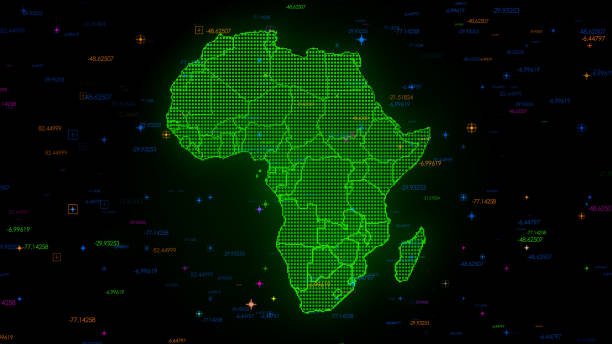
No, Africa does not count as Europe. Geographically, culturally, and politically, Africa stands as a distinct and diverse continent, separated from Europe by natural boundaries like the Mediterranean Sea and the Strait of Gibraltar. While there are historical interactions, economic ties, and migration patterns between the two, these connections do not alter their fundamental continental identities.
Understanding the clear distinction between Africa and Europe is crucial for accurate geographical knowledge, cultural appreciation, and informed geopolitical analysis. This article will delve into the various facets that define Africa as a separate continent, exploring its unique characteristics while acknowledging its complex relationship with Europe.
Understanding the Geographical Divide Between Africa and Europe
The most immediate and undeniable factor distinguishing Africa from Europe is their clear geographical separation. Despite their relative proximity in certain areas, particularly in the Mediterranean basin, they are fundamentally distinct landmasses.
The Strait of Gibraltar: A Natural Border
Perhaps the most iconic natural boundary is the Strait of Gibraltar. This narrow waterway, at its narrowest point only about 13 kilometers (8 miles) wide, separates the southern tip of the Iberian Peninsula (Europe) from the northern tip of Morocco (Africa). It serves as a stark visual and physical demarcation, underscoring that while one can see one continent from the other, they remain distinct geographical entities.
This natural chokepoint has immense historical and strategic significance, controlling the Atlantic Ocean's access to the Mediterranean Sea. The presence of such a significant natural barrier clearly defines Africa Europe geographical boundaries, reinforcing the understanding of them as separate continents rather than an extension of one another.
The Mediterranean Sea: A Shared but Separating Body of Water
Beyond the Strait, the vast Mediterranean Sea forms a significant natural boundary between the two continents. While it has historically served as a vital highway for trade, cultural exchange, and migration for millennia, it remains a sea separating two distinct landmasses. The Mediterranean's expanse means that the majority of African and European coastlines are separated by hundreds or even thousands of kilometers of water.
This body of water defines the northern borders of North African countries like Egypt, Libya, Tunisia, Algeria, and Morocco, and the southern borders of European countries such as Spain, France, Italy, Greece, and Turkey. Despite shared ecosystems and maritime routes, the Mediterranean acts as a fundamental divisor in the continental definitions.
Tectonic Plates and Continental Drift
From a geological perspective, the separation is also evident. Africa and Europe sit on different tectonic plates: the African Plate and the Eurasian Plate. The interaction between these plates over millions of years has shaped the topography of both continents, leading to mountain ranges like the Atlas Mountains in North Africa and the Alps in Europe.
The ongoing movement of these plates, a process known as continental drift, further emphasizes their distinct geological identities. While they are part of the larger Afro-Eurasia supercontinent in a broad sense, the geological forces confirm their separate evolution and structure, highlighting the geographical separation of Africa and Europe as distinct landmasses with their own unique geological histories.
Exploring the Cultural and Social Landscapes
Beyond geography, the vast cultural and social differences solidify Africa's independent status. While both continents are incredibly diverse, their underlying cultural matrices, historical narratives, and societal structures are distinct.
Diverse Cultures and Traditions of Africa
Africa is arguably the most culturally diverse continent on Earth. It is home to 54 recognized countries and boasts thousands of distinct ethnic groups, each with its own unique languages, customs, traditions, and belief systems. This incredible tapestry includes:
- Languages: Over 2,000 languages are spoken across Africa, ranging from major lingua francas like Swahili, Arabic, and Hausa, to countless indigenous languages. This linguistic diversity is unparalleled globally.
- Religions: While Christianity and Islam are widely practiced, Africa also harbors a rich array of traditional African religions, each deeply integrated into local cultures and societal structures.
- Art and Music: African art, music, dance, and storytelling traditions are distinct and incredibly varied, reflecting the continent's diverse communities and their unique expressions of life, spirituality, and history.
- Social Structures: From nomadic pastoralist societies to ancient kingdoms and modern nation-states, African societies exhibit a vast array of organizational forms, family structures, and community values.
These African continent characteristics showcase a profound and independent cultural evolution that is fundamentally distinct from European traditions.
European Cultural Heritage: Distinct Traits
Europe, while also diverse, shares certain overarching historical and cultural threads that bind its various nations. Influences from ancient Greece and Rome, the Renaissance, the Enlightenment, and centuries of interwoven political and religious histories have shaped a distinct European cultural heritage. Key aspects include:
- Languages: Predominantly Indo-European language families (Romance, Germanic, Slavic, Celtic), with Latin and Greek having foundational impacts.
- Legal and Political Systems: Strong historical roots in Roman law and the development of democratic principles, nation-states, and international cooperation bodies like the European Union.
- Art and Philosophy: A rich tradition of Western art, philosophy, and scientific inquiry that has evolved through distinct historical periods.
The cultural differences between Africa and Europe, while not absolute due to historical interactions, are profound and rooted in distinct developmental paths.
Language and Religion: Key Differentiators
While colonial legacies have introduced European languages and Christianity to parts of Africa, the indigenous linguistic and religious landscapes remain vibrant and distinct. Africa is a continent where Arabic, Swahili, Amharic, Yoruba, Zulu, and many others thrive alongside French, English, and Portuguese. Similarly, while Christianity and Islam are major faiths, their manifestations often blend with local customs and traditions, creating unique syncretic practices.
In contrast, Europe's linguistic tapestry, while diverse, is overwhelmingly dominated by Indo-European languages, and historically, Christianity (Catholicism, Protestantism, Orthodoxy) has been the predominant religious force, albeit with growing secularization and significant Muslim minorities in many countries.
Historical Intersections and Influences
The history between Africa and Europe is long, complex, and often fraught, but it is a history of interaction between distinct entities, not of merger.
Ancient Civilizations and Early Interactions
For millennia, there have been connections across the Mediterranean. Ancient Egypt, a powerful African civilization, had interactions with Greek and Roman cultures. The Roman Empire extended its reach across North Africa, incorporating regions like Carthage (modern-day Tunisia) and parts of present-day Algeria and Morocco. These were instances of conquest and cultural exchange, where parts of Africa were integrated into a European-centric empire, but Africa as a continent remained separate.
The Moorish conquest of parts of the Iberian Peninsula (Spain and Portugal) from the 8th to the 15th centuries also represents a significant period of historical ties Africa Europe, bringing African and Arab influences deeply into European culture, science, and architecture. However, even this period of extensive cultural exchange saw North Africa as the origin point of a distinct culture interacting with, rather than being part of, Europe.
Colonialism's Lasting Impact
A more recent and profoundly impactful chapter in historical connections Africa Europe is the era of European colonialism from the late 19th to the mid-20th century. European powers carved up the entire African continent, imposing artificial borders, introducing European languages as official ones, and fundamentally altering political and economic structures. This period undoubtedly created deep, often painful, links between the two continents.
However, colonialism did not make Africa part of Europe; instead, it established a relationship of dominance and exploitation between two distinct geographical and cultural entities. The legacy of colonialism continues to shape economic ties Africa Europe and political relations Africa Europe to this day, but it underscores the distinctness of the continents, even as their fates became intertwined.
Post-Colonial Relations and Modern Ties
In the post-colonial era, Africa and Europe have continued to maintain significant relationships in areas such as trade, aid, security, and migration. The European Union is a major trading partner and donor to many African nations. African diasporas have established strong communities across Europe, fostering cultural exchange and remittances.
These ongoing interactions highlight a dynamic relationship between two separate continents that share a complex history and ongoing mutual interests, rather than indicating any merging of their fundamental identities.
Economic and Political Realities
The economic and political landscapes of Africa and Europe are also vastly different, reflecting distinct development paths and geopolitical priorities.
Differing Economic Development Paths
Europe generally represents a highly industrialized and developed economic bloc, particularly within the framework of the European Union, which fosters deep economic integration among its member states. It is characterized by high GDP per capita, advanced infrastructure, and robust social welfare systems.
Africa, on the other hand, is a continent of developing economies. While rich in natural resources and showing significant growth in many regions, it faces unique challenges such as infrastructure deficits, poverty, and political instability in some areas. There are diverse economic models across Africa, from resource-dependent economies to emerging manufacturing hubs and increasingly vibrant tech sectors. Organizations like the African Continental Free Trade Area (AfCFTA) aim to boost intra-African trade and development, reflecting a distinct continental economic strategy.
Political Structures and Governance
Europe is characterized by numerous independent nation-states, many of which are members of the European Union, a unique political and economic union with its own parliament, court, and currency. Other European nations participate in various regional blocs and alliances.
Africa also consists of independent nation-states, with the African Union (AU) serving as the continent's primary political body. The AU focuses on promoting unity, peace, security, and socio-economic development across the continent. While both the EU and AU aim for regional integration and cooperation, their institutional structures, historical contexts, and geopolitical objectives are distinct. This reinforces the separate geopolitical landscape Africa Europe.
Migration and Geopolitical Dynamics
Migration flows, particularly from Africa to Europe, are a significant contemporary issue, highlighting the disparity in economic opportunities and the challenges faced by both continents. This movement across the Mediterranean Sea is a stark reminder of the distinct economic and demographic realities on either side. Discussions around immigration, border control, and development aid are central to the current geopolitics Africa Europe, but these discussions are precisely about the relationship between two distinct entities.
Addressing Common Misconceptions: Is North Africa European?
A common point of confusion arises concerning North Africa's proximity to Europe. Countries like Morocco, Algeria, Tunisia, Libya, and Egypt are often perceived as culturally or geographically ambiguous due to their historical ties with Europe and the Middle East.
Geographical Proximity vs. Continental Identity
Despite being geographically close to Europe and having significant historical interaction, particularly with Roman, Spanish, and French influences, North Africa remains unequivocally part of the African continent. For example, is Morocco in Europe? No, Morocco is firmly in Northwest Africa. Similarly, is Egypt in Europe? Absolutely not; Egypt is a transcontinental country, with the Sinai Peninsula often associated with Asia, but the vast majority of its landmass and population are in Northeast Africa.
The shared histories and cultural exchanges, such as the Andalusian influence in North Africa or the strong presence of the French language in the Maghreb, are testaments to cross-continental interaction, not a blurring of continental lines. These regions possess unique identities that blend indigenous African cultures with Arab, Islamic, and, to a lesser extent, European elements, yet their foundational identity and geographical location place them squarely in Africa.
Why Distinguishing Continents Matters
Clearly defining continents is not merely an academic exercise; it has practical implications.
Academic and Scientific Clarity
For geology, geography, and various scientific disciplines, maintaining precise continental definitions is fundamental for accurate research and understanding of Earth's physical and human systems. It provides a structured framework for studying planetary processes and biodiversity.
Cultural Understanding and Identity
Recognizing Africa as a distinct continent honors its unique cultural heritage, vast diversity, and independent historical trajectory. It helps combat Eurocentric biases and promotes a more nuanced and respectful understanding of global cultures and identities.
Policy Making and Development Strategies
For international relations, economic development, and humanitarian aid, understanding the distinct challenges and opportunities within Africa, separate from Europe, is critical. Policies designed for Europe often do not translate effectively to African contexts without significant adaptation, underscoring the need for tailored approaches based on accurate continental differentiation.
Conclusion
In conclusion, the answer to does Africa count as Europe is a resounding no. Africa stands as a magnificent, diverse, and independent continent, clearly demarcated by geographical features such as the Strait of Gibraltar and the Mediterranean Sea. Its unique cultural tapestry, distinct historical trajectory, and evolving political and economic landscapes firmly establish its separate identity from Europe.
While centuries of interaction, including ancient ties, colonialism, and modern migration, have woven complex connections between the two continents, these interactions are between two fundamentally separate entities. Recognizing and respecting Africa's distinct identity is essential for accurate global understanding, fostering cultural appreciation, and supporting effective international cooperation between these two important parts of the world.
Enjoyed this read?
Share it with your friends and colleagues.