Is Africa A Country Or A Continent

BSC Insights Admin
October 01, 2026
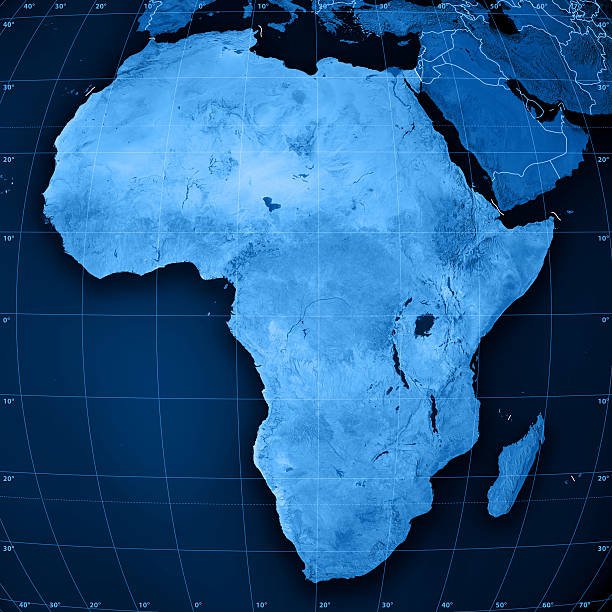
When people ask, “Is Africa a country or a continent?” the unequivocal answer is: Africa is a continent. It is the world's second-largest continent by both land area and population, a magnificent expanse comprising 54 distinct and sovereign countries, each with its unique history, culture, geography, and political landscape. The widespread misconception of viewing Africa as a single country often stems from a lack of geographical and cultural understanding, significantly underestimating the immense diversity and complexity that defines this vibrant landmass.
Africa: A Continent of Immense Proportions and Unmatched Diversity
Africa's sheer scale is staggering, covering approximately 30.3 million square kilometers (11.7 million square miles), which accounts for about 20% of the Earth's land area. This makes it larger than China, India, the United States, and most of Europe combined. Its geographical position spans both the northern and southern hemispheres, bordered by the Mediterranean Sea to the north, the Suez Canal and the Red Sea to the northeast, the Indian Ocean to the southeast, and the Atlantic Ocean to the west. This vastness contributes to its incredible climatic and ecological variety, making African geography extraordinarily diverse.
Geographical Grandeur of the African Continent
The African continent is a mosaic of stunning natural wonders. From the colossal Sahara Desert in the north, the largest hot desert in the world, to the lush tropical rainforests of the Congo Basin, Africa boasts an unparalleled range of ecosystems. Iconic features include the majestic Nile River, the longest river in the world; Mount Kilimanjaro, Africa's highest peak; and the Great Rift Valley, a geological marvel that has played a crucial role in human evolution. This incredible physical diversity supports an equally rich biodiversity, home to an array of wildlife found nowhere else on Earth. Understanding this geographical scope is essential when considering is Africa a country or a continent, as no single country could encompass such a range.
Consider these examples of Africa's diverse landscapes:
- Deserts: Sahara, Kalahari, Namib.
- Rainforests: Congo Basin (second-largest in the world).
- Savannas: Serengeti, Maasai Mara, rich in wildlife.
- Mountains: Mount Kilimanjaro, Mount Kenya, Atlas Mountains.
- Major Rivers: Nile, Congo, Niger, Zambezi.
- Lakes: Lake Victoria (largest in Africa), Lake Tanganyika.
The Many Nations of Africa: A Political Landscape
To fully grasp why Africa is a continent, one must acknowledge its intricate political map. The continent is divided into 54 recognized sovereign states, each with its own government, capital city, legal system, and national identity. These African countries vary dramatically in size, population, economic strength, and cultural heritage, presenting a complex tapestry of independent entities.
How Many Countries in Africa?
There are officially 54 countries in Africa, a number that reflects centuries of historical development, including the profound impact of colonialism and the subsequent movements for independence. This includes the generally recognized 54 UN member states and territories. This multitude of nations underscores the fact that Africa is not a monolithic entity but a collection of distinct states, each navigating its own path in the global arena. The question is Africa a country or a continent becomes clearer when one recognizes this political fragmentation and diversity.
Here are just a few examples of the diversity among African countries:
- Egypt: A transcontinental country bridging northeast Africa and Southwest Asia, famous for its ancient civilization and the Nile River.
- Nigeria: The most populous country in Africa, with a highly diverse ethnic and linguistic makeup and a significant economic influence in West Africa.
- South Africa: Located at the continent's southern tip, known for its multicultural society, rich mineral resources, and sophisticated infrastructure.
- Kenya: A prominent East African nation famous for its wildlife safaris, the Great Rift Valley, and a vibrant tourism industry.
- Morocco: A North African country with a rich Berber and Arab culture, bordering both the Atlantic Ocean and the Mediterranean Sea.
- Ethiopia: An East African nation with ancient historical roots, unique traditions, and one of the fastest-growing economies in the region.
The Legacy of Colonialism and Nation Formation
The current political map of Africa largely resulted from the 'Scramble for Africa' in the late 19th century, when European powers arbitrarily drew borders, often disregarding existing ethnic, linguistic, and cultural boundaries. This colonial legacy continues to shape the political and socio-economic realities of many African nations today. After gaining independence in the mid-20th century, these new nations worked to forge their unique identities while often grappling with inherited challenges, including border disputes and internal conflicts. This complex history further reinforces that the notion of Africa as a single country is a profound oversimplification.
Dispelling the Myth: Understanding the Misconception
The idea that Africa might be a country rather than a continent is a surprisingly common misconception. This error often arises from various factors, including limited exposure to comprehensive geographical education, media portrayals that generalize the continent, and historical narratives that tend to homogenize diverse cultures.
Why the Confusion About Africa Being a Country?
Part of the confusion stems from how Africa is sometimes discussed in global contexts, often lumped together as a singular entity when addressing issues like economic development, public health, or political stability. While there are shared challenges and aspirations across the continent, this generalized framing can inadvertently obscure the vast differences between, for example, Tunisia and Botswana, or Ghana and Somalia. The sheer scale and number of African countries make it impossible for it to be a single nation. This simplification is also fueled by maps that sometimes depict the entire continent with uniform labeling, rather than highlighting its individual states.
Impact of the Misconception on Global Perception
This persistent misconception has tangible negative consequences. It fosters stereotypes, undermines the unique identities and achievements of individual African nations, and can lead to oversimplified policy approaches. Recognizing Africa as a continent with a multitude of distinct countries is crucial for a nuanced understanding of its contributions to global economy, culture, and politics. It challenges outdated views and promotes a more accurate, respectful engagement with the continent.
A Kaleidoscope of Cultures, Languages, and Histories
Beyond its geography and political divisions, Africa's true richness lies in its unparalleled cultural and linguistic diversity. This aspect alone makes the idea of Africa a country or a continent question an easy one to answer: no single country could possibly house such an expansive range of human expression.
Linguistic and Ethnic Diversity Across the Continent
Africa is home to an astonishing array of languages—estimated to be between 1,500 and 2,000, representing over a quarter of the world's languages. These include major language families such as Afro-Asiatic (e.g., Arabic, Amharic), Nilo-Saharan, Niger-Congo (e.g., Swahili, Yoruba, Zulu), and Khoisan. Each language often corresponds to distinct ethnic groups, traditions, and historical narratives. For instance, in Nigeria alone, over 500 languages are spoken, making it one of the most linguistically diverse countries in the world. This level of diversity within single nations, let alone across the entire continent, utterly refutes the notion of a singular 'African' identity that would fit into one country.
Key facts about African diversity:
- Over 3,000 distinct ethnic groups.
- More than 1,500 indigenous languages.
- Rich variety in religious practices, including Christianity, Islam, and various traditional African religions.
Rich Cultural Heritage and Ancient Civilizations
Africa is the cradle of humanity, where Homo sapiens originated. Its history is replete with ancient civilizations and powerful empires that flourished long before European colonization. The grandeur of Ancient Egypt, the sophisticated kingdoms of Nubia, the wealthy empires of Mali and Songhai in West Africa, the Axumite Empire in East Africa, and the Great Zimbabwe in Southern Africa all attest to a long and complex history of innovation, governance, art, and trade. This profound historical legacy, varying significantly from region to region, highlights the absurdity of treating Africa as a single, homogenous entity. The continent's vibrant music, dance, art, literature, and culinary traditions are as varied as its landscapes and peoples, contributing immensely to the global cultural tapestry.
Economic Dynamics: Challenges and Promising Horizons
The economic landscape of Africa is as varied as its geography and cultures. While often associated with poverty and underdevelopment, the continent is a powerhouse of natural resources and boasts some of the world's fastest-growing economies, presenting both significant challenges and immense opportunities. The economic realities further solidify the understanding that Africa is a continent, not a country.
Diverse Economies Across the Continent
African economies are highly diverse. Some nations are rich in oil and gas (e.g., Nigeria, Angola, Algeria), others in minerals like diamonds, gold, and platinum (e.g., South Africa, Botswana, Democratic Republic of Congo). Agriculture remains a cornerstone for many, with cash crops like coffee, cocoa, and cotton being major exports. In recent years, there has been a significant push towards diversification, with growing sectors in telecommunications, technology, renewable energy, and manufacturing. Countries like Kenya, Rwanda, and Ghana are emerging as tech hubs, fostering innovation and attracting international investment.
Economic Snapshot:
| Economic Trait | Description | Examples of Countries |
|---|---|---|
| Resource-Rich | Heavy reliance on mineral or oil extraction. | South Africa, Nigeria, Angola, DRC |
| Agriculture-Based | Economy driven by cash crops and subsistence farming. | Ethiopia, Côte d'Ivoire, Malawi |
| Emerging Tech Hubs | Growing innovation in digital and tech sectors. | Kenya, Rwanda, Egypt |
| Tourism-Dependent | Significant income from wildlife safaris and coastal resorts. | Kenya, Tanzania, Morocco |
Challenges and Opportunities for African Development
Despite progress, many African nations face common challenges, including poverty, income inequality, political instability, inadequate infrastructure, and the impacts of climate change. However, the continent also presents enormous opportunities. Its young and rapidly growing population offers a vast labor force and an expanding consumer market. Significant investments are being made in infrastructure development, education, and healthcare. Regional integration efforts, such as the African Continental Free Trade Area (AfCFTA), aim to boost intra-African trade and foster economic growth, further highlighting the interconnectedness yet distinct nature of African economies.
Exploring Africa's Diverse Regions
To truly appreciate that Africa is a continent and not a singular nation, it's helpful to break it down into its distinct geographical and cultural regions:
North Africa
Comprising countries like Egypt, Morocco, Algeria, Tunisia, Libya, and Sudan, this region is largely defined by the Sahara Desert and its strong historical and cultural ties to the Arab world and the Middle East. Major languages include Arabic and various Berber dialects.
West Africa
Home to nations such as Nigeria, Ghana, Senegal, Côte d'Ivoire, and Mali, West Africa is known for its vibrant cultures, diverse languages (including Yoruba, Igbo, Hausa, French, English), rich musical traditions, and historical empires like the Ghana, Mali, and Songhai Empires. It features coastal plains, savannas, and some rainforests.
Central Africa
Countries in this region, including the Democratic Republic of Congo, Cameroon, Gabon, and the Central African Republic, are characterized by vast rainforests, major river systems like the Congo, and a complex history often marked by resource conflicts. This region holds immense biodiversity.
East Africa
This region includes countries like Kenya, Tanzania, Ethiopia, Uganda, Rwanda, Somalia, and Eritrea. East Africa is famous for its extensive savannas, abundant wildlife, the Great Rift Valley, and the origin point of humanity. Swahili is a widely spoken lingua franca alongside numerous indigenous languages.
Southern Africa
Encompassing nations such as South Africa, Botswana, Namibia, Zimbabwe, and Zambia, Southern Africa is known for its mineral wealth (diamonds, gold, platinum), diverse landscapes ranging from deserts to lush coastlines, and a complex history including apartheid in South Africa. English and Afrikaans are common alongside many indigenous languages like Zulu, Xhosa, and Setswana.
Conclusion: Embracing the True Identity of Africa
In conclusion, the question “Is Africa a country or a continent?” can only be answered by acknowledging its identity as a vast, complex, and incredibly diverse continent. With its 54 sovereign nations, unparalleled geographical variety, thousands of languages, and a rich tapestry of cultures and histories, Africa stands as a monumental and integral part of our global community. Dispelling the misconception of it being a single country is vital for fostering accurate understanding, appreciating its unique contributions, and engaging respectfully with the dynamic future of African countries. Embracing Africa's true continental identity is key to recognizing its profound impact on human civilization and its ongoing role in shaping the world.
Enjoyed this read?
Share it with your friends and colleagues.