Does Africa Cover All 4 Hemispheres

BSC Insights Admin
September 30, 2026
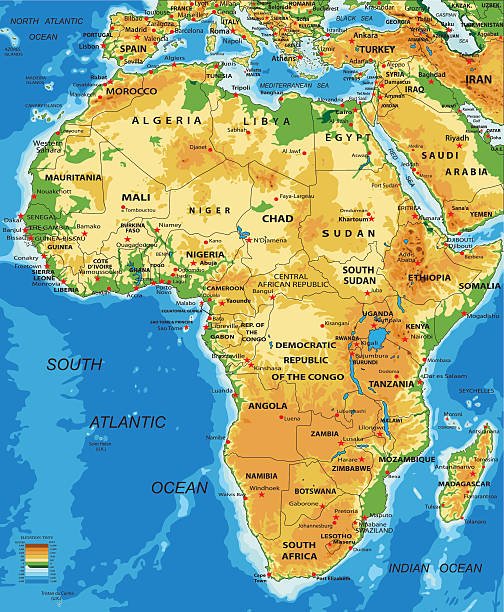
When examining the vastness of Earth's continents, a fascinating geographical question often arises: Does Africa cover all four hemispheres? The answer is a resounding yes. Africa, the second-largest continent, possesses a truly unique geographical position that enables it to extend into the Northern, Southern, Eastern, and Western Hemispheres. This remarkable distinction highlights not only the continent's immense size but also its pivotal role in global geography, climate, and human history.
Understanding how Africa achieves this feat requires a brief look at how the Earth is divided. Our planet is sectioned into four primary hemispheres by two imaginary lines: the Equator, which divides the Earth into the Northern and Southern Hemispheres, and the Prime Meridian, which, along with the 180th meridian (Antimeridian), separates it into the Eastern and Western Hemispheres. Africa's sprawling landmass crosses both of these critical longitudinal and latitudinal lines, granting it a presence in every quadrant of the globe.
Defining the Hemispheres and Africa's Position
To fully appreciate Africa's unique standing, it's essential to grasp the concept of hemispheres. These divisions are fundamental to understanding global positioning and have significant implications for climate, time zones, and even cultural development.
The Equatorial Divide: Northern and Southern Hemispheres
The Equator, an imaginary line circling the Earth at 0 degrees latitude, is equidistant from the North and South Poles. Everything north of the Equator is in the Northern Hemisphere, and everything south is in the Southern Hemisphere. Africa straddles this crucial line with remarkable breadth.
- Countries in the Northern Hemisphere: A significant portion of North Africa lies entirely within the Northern Hemisphere. Nations like Algeria, Egypt, Libya, Morocco, Tunisia, and Mauritania are prime examples. The vast Sahara Desert, spanning much of North Africa, is predominantly in the Northern Hemisphere.
- Countries in the Southern Hemisphere: Far to the south, countries such as South Africa, Namibia, Botswana, Zimbabwe, Lesotho, Eswatini (formerly Swaziland), and Madagascar are firmly situated in the Southern Hemisphere. These regions experience opposite seasons compared to the Northern Hemisphere.
- Countries Straddling the Equator: What makes Africa particularly unique is the number of countries that are bisected by or lie very close to the Equator. These include Gabon, Republic of the Congo, Democratic Republic of the Congo, Uganda, Kenya, and Somalia. The small island nation of São Tomé and Príncipe also has territory in both hemispheres, with its main island located just north of the Equator and a smaller island, Rolas, directly on it. This equatorial belt is known for its tropical climates and rich biodiversity.
The fact that a single continent contains both the arid expanses of the Sahara in the north and the temperate climates of South Africa in the south is a direct consequence of its extensive reach across the Equator. This latitudinal span gives Africa an incredible diversity of ecosystems and biomes, from deserts and savannas to rainforests and high mountains.
The Prime Meridian Divide: Eastern and Western Hemispheres
The Prime Meridian, or Greenwich Meridian, at 0 degrees longitude, is another critical imaginary line. It runs from the North Pole, through Greenwich, London, and down to the South Pole, dividing the Earth into the Eastern and Western Hemispheres. Africa's geographical position ensures it also has a significant presence on both sides of this line.
- Countries in the Western Hemisphere: Several West African nations are located entirely within the Western Hemisphere. These include countries such as Senegal, Mauritania, Sierra Leone, Liberia, and Côte d'Ivoire. The westernmost point of mainland Africa, Pointe des Almadies (Cap Vert, Senegal), stands testament to this western reach.
- Countries in the Eastern Hemisphere: The vast majority of Africa, particularly East, Central, and Southern Africa, falls within the Eastern Hemisphere. Nations like Ethiopia, Tanzania, Madagascar, Egypt, South Africa, and Mozambique are all firmly in the Eastern Hemisphere. The easternmost point of mainland Africa, Ras Hafun (Somalia), extends well into this hemisphere.
- Countries Straddling the Prime Meridian: Similar to the Equator, several African nations are bisected by the Prime Meridian. These include Ghana, Togo, Burkina Faso, Mali, and Algeria. For instance, Ghana's capital, Accra, is very close to the meridian, and some parts of the country lie on either side.
The intersection of the Equator and the Prime Meridian is a fascinating point, located in the Gulf of Guinea, off the coast of West Africa. Although this intersection is over water, it underscores Africa's central position relative to both key global dividing lines. This confluence of major geographical markers reinforces the assertion that Africa covers all four hemispheres.
The Intersection of All Four Hemispheres on the African Continent
While the exact intersection of the Equator and Prime Meridian is in the ocean, the continent of Africa itself has landmasses in all four distinct quadrants formed by these lines. This is a crucial point in confirming Africa's unique status.
Consider the following:
- North-Eastern Hemisphere: Countries like Egypt, Sudan, and Ethiopia.
- North-Western Hemisphere: Countries like Morocco, Mauritania, and parts of Algeria.
- South-Eastern Hemisphere: Countries like South Africa, Madagascar, and Tanzania.
- South-Western Hemisphere: Countries like Angola, Namibia, and parts of Gabon.
This comprehensive coverage is not just a geographical curiosity; it has profound implications for understanding the continent's climate patterns, biodiversity, and human migration over millennia. For example, Africa is the only continent with significant landmasses in both the Northern and Southern temperate zones, as well as the tropical zone, thanks to its extensive latitudinal reach. Similarly, its longitudinal spread contributes to a diversity of time zones and historical trade routes that have connected the eastern and western worlds.
Geographical Facts Highlighting Africa's Hemispheric Reach
Several geographical facts further illustrate Africa's claim to spanning all four hemispheres:
- Extreme Points: The continent's extreme points are critical indicators:
- Northernmost Point: Ras ben Sakka, Tunisia (Northern Hemisphere)
- Southernmost Point: Cape Agulhas, South Africa (Southern Hemisphere)
- Easternmost Point: Ras Hafun, Somalia (Eastern Hemisphere)
- Westernmost Point: Pointe des Almadies, Senegal (Western Hemisphere)
- Size and Shape: Africa's sheer size (approximately 30.3 million square kilometers or 11.7 million square miles, including adjacent islands) and its relatively central, north-south elongated shape are key factors. Its vastness allows it to stretch from well above the Tropic of Cancer to well below the Tropic of Capricorn, and from west of the Prime Meridian to far east of it.
- Climate Zones: The continent encompasses nearly every major climate zone, from the hyper-arid Sahara Desert to the lush rainforests of the Congo Basin, and the Mediterranean climates of its northern and southern tips. This incredible climatic diversity is a direct result of its extensive latitudinal and longitudinal spread, reinforcing Africa's hemispheric coverage.
The Significance of Africa's Multipolar Geographical Position
Africa's unique position across all four hemispheres has had, and continues to have, significant implications beyond simple geography.
Global Connectivity and Trade
Historically, Africa's central location made it a crucial hub for trade routes connecting Europe, Asia, and the Americas. Its western coasts were vital for transatlantic trade, while its eastern coasts were integral to the Indian Ocean trade networks. Even today, its location makes it a strategic continent for shipping lanes and air travel, serving as a crossroads for global commerce. The ability to connect diverse markets and cultures across hemispheres has been a defining characteristic of the continent's engagement with the rest of the world.
Environmental and Biodiversity Hotspot
The vast range of climates resulting from Africa's hemispheric span contributes to its extraordinary biodiversity. From the unique wildlife of the savanna to the endemic species of its rainforests and deserts, Africa hosts a significant portion of the world's plant and animal life. Its position allows for distinct ecosystems to thrive in different hemispheres, fostering evolutionary diversity and making it a critical area for conservation efforts.
Cultural and Human Diversity
The diverse geography has also influenced the development of distinct cultures, languages, and societies across the continent. Different regions, influenced by their specific climate and geographical position, have developed unique ways of life, agricultural practices, and social structures. This cultural tapestry is a testament to the continent's ability to support a vast array of human experiences, shaped by its presence in every global quadrant.
Comparing Africa to Other Continents
It's worth noting that very few other landmasses can claim to span all four hemispheres. For instance:
- Asia: Lies almost entirely in the Northern and Eastern Hemispheres, with only a small part of Indonesia extending into the Southern Hemisphere. It does not touch the Western Hemisphere.
- North America: Exclusively in the Northern and Western Hemispheres.
- South America: Mostly in the Southern and Western Hemispheres, with a portion extending into the Northern Hemisphere, but not the Eastern.
- Europe: Entirely in the Northern Hemisphere and mostly in the Eastern, with some parts of Russia bordering the Western Hemisphere (only technically, by longitude).
- Australia: Entirely in the Southern and Eastern Hemispheres.
- Antarctica: Entirely in the Southern Hemisphere, but spans all longitudes, thus technically touching all four, although it's often discussed separately due to its polar nature and lack of indigenous population centers.
This comparison vividly underscores why Africa's ability to span all four hemispheres is a truly exceptional geographical characteristic, distinguishing it from most other major landmasses on Earth. It emphasizes the continent's central location and monumental size.
Conclusion: Africa's Unrivaled Global Reach
In conclusion, the question of Does Africa cover all four hemispheres? is definitively answered in the affirmative. Africa's colossal landmass extends across the Equator, placing it in both the Northern and Southern Hemispheres, and it is simultaneously traversed by the Prime Meridian, granting it territory in both the Eastern and Western Hemispheres. This makes Africa one of the only continents, arguably the most prominent habitable one, to boast a presence in all four primary global quadrants. This unique geographical reality has shaped its diverse climates, rich biodiversity, and complex human history, cementing its status as a truly central and globally connected continent.
Enjoyed this read?
Share it with your friends and colleagues.