10 Reasons Why Africa Is The Cradle Of Humankind

BSC Insights Admin
September 30, 2026
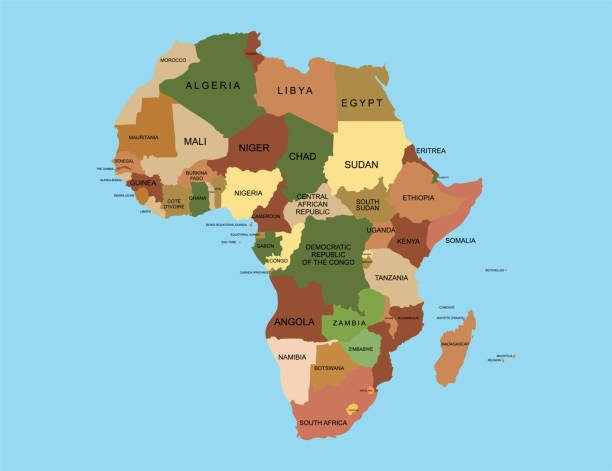
Scientific research and archaeological discoveries consistently point toward the 10 reasons why Africa is the cradle of humankind as the primary explanation for where our species originated. Extensive fossil records and genetic data demonstrate that the earliest ancestors of humans evolved on the African continent millions of years ago. By examining the unique geological and environmental conditions of the region, researchers can trace the specific path from early primates to modern Homo sapiens.
The evidence supporting this conclusion is found in various locations across the continent, from the limestone caves of South Africa to the sedimentary basins of the East African Rift. This complex history reveals how changing climates and physical landscapes forced our ancestors to adapt in ways that eventually led to the development of unique human traits.
These are the 10 reasons why Africa is the cradle of humankind
The following detailed points explain why the scientific community recognizes the African continent as the singular birthplace of the human race. Each reason is backed by decades of fieldwork, laboratory analysis, and peer-reviewed studies that highlight the specific biological and cultural milestones achieved in this region. Understanding these factors provides a comprehensive look at the deep history of our species and the environmental pressures that shaped who we are today.
1. Discovery of the Oldest Hominid Fossils
The most compelling evidence for Africa being the ancestral home of humanity is the sheer abundance and age of hominid fossils found across the continent. Sites such as the Afar Triangle in Ethiopia have yielded world-famous specimens like Lucy, a member of the species Australopithecus afarensis that lived roughly 3.2 million years ago. These fossils show a clear transition from ape-like features to human-like characteristics, particularly in the structure of the hips and legs. No other continent has produced a fossil record that reaches back so far or shows such a continuous line of evolutionary development. By studying these remains, scientists have been able to map out a family tree that definitively starts in the African grasslands and forests.
2. The Presence of the Great Rift Valley
The Great Rift Valley is a geological marvel that has played a crucial role in preserving the history of human evolution through its unique sedimentary environment. As the tectonic plates pulled apart, they created deep basins that quickly filled with volcanic ash and sediment, perfectly encasing the bones of early humans and preventing them from decaying. This geological feature runs through several countries, including Ethiopia, Kenya, and Tanzania, providing a massive graveyard of evolutionary history. The rift also created diverse microclimates, ranging from lush forests to dry savannas, which forced early hominids to adapt to new environments. Without this specific geological activity, many of the fossils we rely on today might never have been preserved for modern study.
3. Genetic Diversity Among Modern Populations
Genetic studies have shown that the highest levels of human genetic diversity are found within populations living in various parts of the African continent. This is a key indicator of the cradle of humankind because genetic diversity decreases the further a population is from its original source due to the founder effect. When small groups of humans migrated out of Africa, they only took a fraction of the total human genetic pool with them, leading to less diversity in Europe, Asia, and the Americas. Research into mitochondrial DNA and Y-chromosomes consistently points to a common maternal and paternal ancestor who lived in Africa between 150,000 and 200,000 years ago. This molecular clock confirms that modern humans resided on the continent for the vast majority of their history before expanding elsewhere.
4. Development of the First Stone Tools
The earliest evidence of technology, in the form of stone tools, has been discovered in African archaeological sites, dating back over 3.3 million years. The Lomekwi 3 site in Kenya and the Olduvai Gorge in Tanzania contain primitive cutting and scraping tools that show our ancestors were beginning to manipulate their environment. These tools, known as the Oldowan and later Acheulean toolkits, represent a massive leap in cognitive ability and manual dexterity. Being able to create sharp edges allowed early hominids to process meat more efficiently and access marrow, which provided the high-calorie diet necessary for brain growth. The progression of these tool technologies over millions of years can be traced through the African soil, showing a steady increase in complexity and planning.
5. The Evolution of Bipedalism
Africa provided the specific environmental pressures that encouraged our ancestors to move from climbing trees to walking on two legs, a trait known as bipedalism. As the dense African rainforests began to recede and give way to open savannas due to climate shifts, hominids needed to travel longer distances on the ground to find food. Walking upright was more energy-efficient for long-distance travel and allowed individuals to see over tall grass to spot predators or prey. The Laetoli footprints in Tanzania, preserved in volcanic ash nearly 3.6 million years ago, provide literal proof of hominids walking with a human-like gait. This transition was a fundamental requirement for the later development of larger brains and the use of hands for complex tasks.
6. Evidence of Controlled Fire Use
The ability to control and use fire was a transformative moment in human history, and the earliest evidence for this behavior is found in African caves. Sites like Wonderwerk Cave in South Africa contain charred bones and ash that suggest hominids were using fire as far back as 1 million years ago. Fire provided warmth, protection from nocturnal predators, and, most importantly, a way to cook food, which made nutrients easier to digest. Cooking food reduced the energy required for digestion, allowing more metabolic energy to be diverted to the brain, which contributed to the rapid increase in brain size. This cultural milestone fostered social interaction around the hearth, laying the groundwork for complex communication and tribal structures.
7. Finds of Early Modern Homo Sapiens
While early hominids are found throughout the continent, the oldest fossils of anatomically modern humans, Homo sapiens, also come from Africa. Fossils discovered at Jebel Irhoud in Morocco have been dated to approximately 300,000 years ago, pushing back the timeline for our own species significantly. Other important finds in Omo Kibish, Ethiopia, further solidify the presence of modern human features like a rounded skull and a prominent chin at very early dates. These discoveries prove that the transition to modern humans did not happen in one small corner but was a continent-wide process of evolution and interaction. This confirms that the entirety of the African continent served as a laboratory for the emergence of the human species.
8. Symbolic Thought and Early Art
The roots of human culture, including art and symbolic thought, are deeply embedded in the African landscape long before they appeared elsewhere. At Blombos Cave in South Africa, archaeologists found pieces of ochre engraved with geometric patterns and shell beads dating back over 75,000 years. These artifacts suggest that early humans were using symbols to communicate identity and social status, which is a hallmark of modern human behavior. This evidence of creative expression shows that the African ancestors of modern humans had already developed the capacity for abstract thinking and complex language. Such cultural milestones were essential for the survival and eventual dominance of Homo sapiens as they moved into new territories.
9. Adaptability to Diverse Environments
The African continent is home to an incredible variety of environments, including deserts, mountains, rainforests, and coastal regions, which served as a training ground for human adaptability. To survive, early humans had to develop flexible behaviors and diverse diets, which prepared them for the different climates they would eventually face across the globe. This inherent flexibility is why Homo sapiens were able to outcompete other hominid species that were more specialized and less able to handle change. Evidence of early humans exploiting coastal resources, such as shellfish, shows an early understanding of marine environments that would later facilitate coastal migrations. The challenges posed by the African climate essentially "forged" the resilient and innovative nature of the human species.
10. Central Location for Global Migration
Geographically, Africa is positioned in a way that allowed it to act as the central hub from which humans could eventually populate the rest of the planet. The presence of land bridges, such as the Sinai Peninsula, and narrow maritime crossings like the Bab-el-Mandeb strait provided exit points for groups moving into Eurasia. Archaeological evidence shows multiple waves of migration out of Africa, starting with Homo erectus nearly 2 million years ago and followed by modern humans much later. These migration paths are marked by stone tools and fossils that lead from the African interior toward the Middle East and beyond. Africa was not just a starting point but a continuous source of new populations and ideas that flowed outward for millions of years.
Reasons Why These Countries Are Significant as the Cradle of Humankind in Africa
1. Geological Preservation in Ethiopia: Ethiopia is often cited as a primary location because its unique sedimentary basins have preserved some of the most famous fossils in the world. The country is home to the Hadar site, where the famous Lucy fossil was found, providing a clear look at how our ancestors walked. These geological conditions make Ethiopia a crucial country in Africa that provides a timeline of human history stretching back millions of years. Researchers continue to find new specimens here that challenge and refine our understanding of the human lineage.
2. The Limestone Caves of South Africa: The Sterkfontein and Swartkrans caves in South Africa are world-renowned for their "Cradle of Humankind" status due to the high concentration of hominid remains found there. These caves acted as natural traps, preserving the bones of individuals who fell in or were dragged there by predators, creating a vertical timeline of evolution. An African country which possesses such a wealth of cave sites allows scientists to study the physical changes in hominids over vast periods of time. The discovery of Little Foot, a nearly complete skeleton, has provided invaluable data on the anatomy of our early relatives.
3. Tanzanias Olduvai Gorge: Often called the "Grand Canyon of Evolution," Olduvai Gorge in Tanzania has yielded fossils and tools that span over two million years of history. The work of Louis and Mary Leakey in this region brought the world's attention to the African origins of humanity during the mid-20th century. The gorge contains distinct layers of earth that allow for precise dating of different hominid species and their technologies. This site remains a cornerstone for understanding the African countries that played a role in the transition from scavenging to hunting.
4. Kenyas Lake Turkana Basin: The shores of Lake Turkana have been a goldmine for paleoanthropologists, offering up fossils of many different species, including Homo erectus and various Australopithecines. The arid environment and active erosion processes make it easier for researchers to spot fossils that have been buried for eons. As a which country that continues to offer new insights, Kenya has also provided evidence of the world's oldest stone tools. The Turkana Boy skeleton, found here, is one of the most complete early human skeletons ever discovered, showing how tall and modern-looking our ancestors were nearly 1.5 million years ago.
5. Moroccos Role in Modern Human Origins: While East and South Africa are often the focus, Morocco has recently become central to the story of modern humans. The Jebel Irhoud site proved that Homo sapiens were present in North Africa much earlier than previously thought, suggesting a pan-African origin for our species. This shows that the human evolutionary journey was not confined to a single valley but involved the entire continent. Morocco’s findings have forced scientists to rethink the migration and development patterns of early modern humans within the continent.
6. Chads Ancient Hominid Discoveries: The discovery of Sahelanthropus tchadensis in Chad, dating back nearly 7 million years, pushed the origin of the hominid line much further back in time. Located in Central Africa, this find suggests that the early stages of human evolution occurred across a much wider geographical range than just the Rift Valley. This African country which yielded such an ancient specimen reminds us that the vast Sahel region was once a very different, more hospitable environment. It highlights the importance of looking beyond traditional sites to find the very roots of the human family tree.
Conclusion
Reviewing the 10 reasons why Africa is the cradle of humankind reveals a consistent story of adaptation, innovation, and biological transformation. From the first steps of bipedal ancestors to the complex symbolic culture of early modern humans, every major milestone of our species occurred on this continent. It is the only place on Earth where the full spectrum of human evolution is visible in the physical landscape and the genetic makeup of the people. Any country in Africa that holds these ancient sites provides a vital link to our shared past and our collective identity. As technology advances, we will undoubtedly find even more evidence that reinforces the central role of Africa in the history of the world. The continent remains the ultimate home for every person on the planet, regardless of where they live today.
Enjoyed this read?
Share it with your friends and colleagues.