Does Africa Do Daylight Savings Time

BSC Insights Admin
October 01, 2026
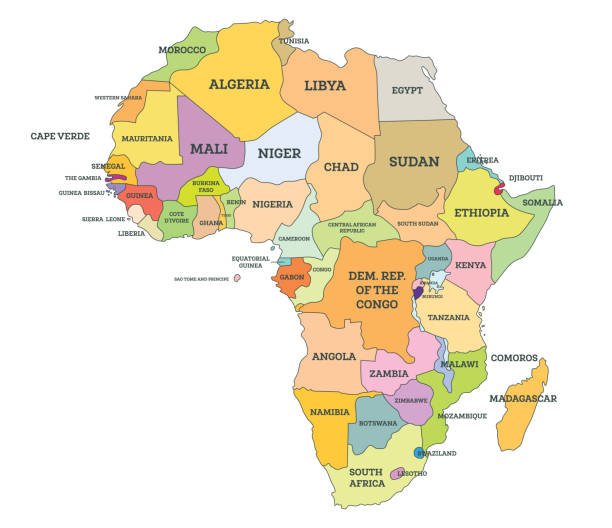
Does Africa Do Daylight Savings Time? The straightforward answer is that most countries in Africa do not observe Daylight Saving Time (DST). While a few nations have experimented with or currently implement seasonal clock changes, the vast majority of the continent maintains a standard time zone year-round. This decision is largely influenced by Africa's geographical position, particularly its proximity to the equator, and various social, economic, and cultural factors that diminish the perceived benefits of shifting clocks.
A Continent of Diverse Timekeeping: Understanding DST in Africa
Daylight Saving Time, often referred to as summer time, is the practice of advancing clocks during warmer months so that evening daylight lasts longer, and receding them in autumn. The primary rationale behind DST is to make better use of natural daylight, save energy, and potentially boost economic activity by providing more daylight hours in the evening. However, the application and benefits of Daylight Saving Time in Africa are uniquely viewed through the lens of its diverse climates and social structures.
Globally, the observance of DST is a contentious topic, with many countries, particularly in Europe and North America, engaging in ongoing debates about its efficacy and impact. In contrast, Africa's approach to seasonal time changes is generally one of non-observance. This prevailing stance is not a uniform decree but rather a convergence of individual national decisions, each rooted in specific considerations.
The Few Exceptions: African Countries That Have Observed or Currently Observe DST
While the norm in Africa is to forgo DST, there have been notable exceptions, both historically and in the present day. These instances provide crucial insights into the complexities and debates surrounding time zone adjustments across Africa.
Morocco: A Notable Anomaly
Morocco stands out as one of the few African countries that currently observes Daylight Saving Time. However, its implementation is unique. Morocco typically advances its clocks by one hour, switching from Greenwich Mean Time (GMT) to GMT+1, commonly known as Western European Summer Time (WEST). A distinctive feature of Moroccan DST is its suspension during the holy month of Ramadan. This religious exemption ensures that fasting during Ramadan adheres to natural sunrise and sunset times, avoiding the confusion and disruption that a shifted clock might cause. This practice highlights how cultural and religious factors can heavily influence timekeeping decisions.
Egypt: A History of On-Again, Off-Again DST
Egypt has a particularly tumultuous history with Daylight Saving Time. The country has repeatedly introduced, abolished, and reintroduced DST over several decades, making it a prime example of the ongoing debate within certain African nations. For instance, DST was reinstated in Egypt in 2014, abolished in 2016, and then reintroduced in April 2023. The primary arguments for its reintroduction often center on energy conservation and boosting economic activity. However, frequent changes have led to public confusion and debates about the actual benefits versus the societal disruption. Egypt's fluctuating policy underscores the challenges of implementing and sustaining seasonal time changes in regions where the advantages are not universally clear.
Other Historical Observances
Several other African nations have, at various points, experimented with DST before ultimately discontinuing the practice. These include:
- Tunisia: Observed DST for periods, but abolished it in 2009.
- Namibia: Historically observed DST, switching to 'summer time' (UTC+2) and 'winter time' (UTC+1). This practice, however, was also discontinued.
- Sudan: Had periods of DST observance but now maintains a standard time.
- Western Sahara: Often follows Morocco's time zone, including its DST adjustments.
The pattern among these historical observances reveals that while the idea of DST has been considered, the long-term commitment has generally been lacking. The reasons for their eventual abandonment often align with the broader reasons why most of Africa avoids DST, which we will explore next.
Why Most of Africa Avoids Daylight Saving Time
The predominant reason why the majority of African countries do not observe DST stems from a combination of geographical, economic, social, and practical considerations. These factors significantly reduce the perceived benefits that DST aims to deliver in other parts of the world.
Proximity to the Equator: Minimal Seasonal Daylight Variation
Perhaps the most significant geographical factor is Africa's location. A large portion of the continent lies close to the equator. In equatorial regions, the length of daylight hours remains relatively consistent throughout the year, with approximately 12 hours of daylight and 12 hours of night. There isn't a dramatic shift in sunrise and sunset times between summer and winter as observed in higher latitudes. Therefore, the core purpose of DST—to make better use of extended daylight in summer—becomes largely irrelevant. There simply isn't a significant amount of 'extra' evening daylight to save or shift. This fundamental astronomical reality makes seasonal time changes in Africa less practical and more disruptive than beneficial.
Economic and Social Disruption
Implementing Daylight Saving Time in African nations could introduce significant economic and social disruptions without clear advantages. For economies heavily reliant on agriculture, daily routines are often dictated by natural sunlight rather than artificial clock changes. Shifting clocks could create confusion for farmers, laborers, and market schedules. Furthermore, in communities where infrastructure might be less developed, adjusting to a new time twice a year can be complicated, affecting transportation, communication, and basic services. The administrative burden of updating systems, public awareness campaigns, and managing potential errors can outweigh any perceived benefits.
Energy Conservation Concerns
One of the long-standing arguments for DST is energy saving. The theory is that by extending daylight into the evening, people will use less artificial lighting. However, studies on DST and energy consumption have yielded mixed results, and the impact often varies significantly by region and climate. In many parts of Africa, energy consumption patterns might not align with the typical DST savings model. For example, in hotter climates, more evening daylight could lead to increased use of air conditioning, potentially offsetting any savings from reduced lighting. The primary energy use might be for cooling, which could increase with prolonged evening activity, rather than decrease.
Cultural and Traditional Considerations
Many African societies have deep-rooted cultural and traditional practices, as well as religious observances, that are closely tied to natural solar time. As seen with Morocco's Ramadan exemption, altering clocks can conflict with these established rhythms. Daily prayers in various faiths, communal gatherings, and traditional work schedules are often synchronized with the natural cycle of day and night. Introducing artificial time shifts could complicate these integral aspects of daily life, leading to social friction rather than harmony.
Political Stability and Simplicity
For many governments in Africa, maintaining a consistent, year-round time zone simplifies administration and public life. Avoiding the twice-yearly clock change reduces potential confusion, administrative costs, and the need for public education campaigns. In regions often grappling with other significant developmental or political challenges, the perceived marginal benefits of DST are often deemed not worth the effort or potential for disruption. A stable time zone contributes to overall simplicity and predictability, which is often preferred.
The Impact and Implications of Time Zone Consistency
The widespread non-observance of DST across Africa has several practical implications for both its inhabitants and its interactions with the rest of the world. This consistency provides a degree of stability that can be beneficial in various sectors.
Business and Commerce
For businesses operating within or across African time zones, a consistent time standard simplifies scheduling and coordination. International trade and communication with partners in countries that do observe DST require awareness of their seasonal changes, but within Africa, the lack of widespread DST reduces internal complexity. This stability can be an advantage for regional economic integration and cross-border transactions, as there are fewer sudden shifts to account for.
Tourism
Africa is a continent rich in diverse tourist attractions. For international visitors, the absence of widespread DST simplifies travel planning and reduces the potential for confusion upon arrival or during internal travel. Tourists do not need to worry about adjusting their watches for intra-country seasonal changes, contributing to a smoother travel experience. This consistent timekeeping is part of the continent's appeal for easy and predictable itineraries.
Daily Life and Health
Maintaining a fixed time zone throughout the year means that the body's natural circadian rhythms are not subjected to the abrupt shifts associated with DST. This consistency can contribute to better sleep patterns, reduced fatigue, and overall improved public health, as people do not have to repeatedly adjust their internal clocks. The debates around DST in other parts of the world often highlight the negative health impacts of these changes, which are largely avoided in non-DST regions of Africa.
Regional Integration
Many sub-regions in Africa, such as West Africa (largely UTC+0 or UTC+1) or East Africa (largely UTC+3), often share common time zones. The absence of DST enhances this regional time zone consistency, facilitating coordination for multi-national projects, cross-border infrastructure, and regional economic communities. This avoids the situation where neighboring countries might temporarily have different time offsets due to one observing DST and the other not.
Global Trends and Africa's Position
Globally, the trend regarding Daylight Saving Time is shifting. While many countries still observe it, there's a growing movement to either abolish it entirely or adopt a permanent standard time. The arguments against DST, ranging from dubious energy savings to negative health impacts and economic disruption, resonate with many nations. In this context, Africa's long-standing general non-observance of DST places it largely in alignment with the emerging global consensus that views seasonal time changes as an unnecessary complication rather than a widespread benefit.
Exploring Africa's Diverse Time Zones (Beyond DST)
Even without widespread DST, Africa is a vast continent spanning multiple longitudes, and thus encompasses several standard time zones. Understanding these time zones is key to comprehending the continent's timekeeping, irrespective of seasonal adjustments. The continent primarily uses UTC (Coordinated Universal Time) and various offsets.
| Country | Primary Time Zone (Standard Time) | UTC Offset |
|---|---|---|
| Morocco | Western European Time (WET) | UTC+0 (observes WEST/UTC+1 for DST) |
| Egypt | Eastern European Time (EET) | UTC+2 (historically observed DST, reinstated in 2023 for UTC+3) |
| South Africa | South African Standard Time (SAST) | UTC+2 |
| Nigeria | West Africa Time (WAT) | UTC+1 |
| Ghana | Greenwich Mean Time (GMT) | UTC+0 |
| Kenya | East Africa Time (EAT) | UTC+3 |
| Algeria | Central European Time (CET) | UTC+1 |
| Ethiopia | East Africa Time (EAT) | UTC+3 |
This table illustrates that while seasonal clock changes are rare in Africa, a robust system of standard time zones ensures that each region operates efficiently according to its geographical position. The consistency within these zones, unburdened by frequent shifts, defines Africa's distinct approach to time management.
Summary: Africa's Consistent Approach to Time
In conclusion, when asking does Africa do Daylight Saving Time, the answer is overwhelmingly no. The vast majority of African countries maintain a consistent, year-round standard time, largely due to their geographical proximity to the equator, which minimizes seasonal daylight variations. Historical and current exceptions like Morocco and Egypt demonstrate that while some nations have experimented with DST, its widespread adoption has been limited. The continent's preference for stable time zones reflects practical considerations related to economic stability, social rhythms, cultural practices, and a general lack of significant benefits from seasonal clock changes. This approach ensures predictability and reduces disruption, reinforcing Africa's unique and largely consistent timekeeping practices.
Enjoyed this read?
Share it with your friends and colleagues.