Is Africa Diverse

BSC Insights Admin
September 30, 2026
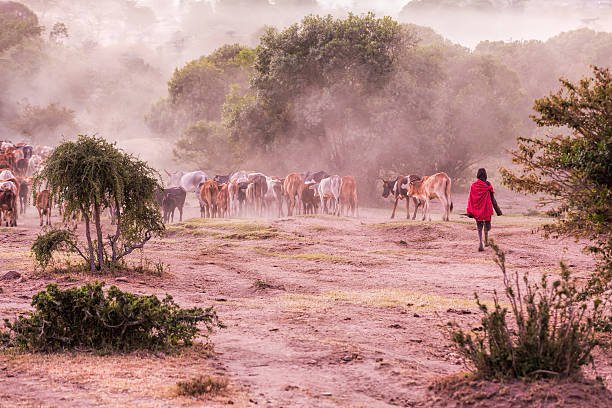
Is Africa diverse? The unequivocal answer is a resounding yes. Africa, the world's second-largest continent, is an extraordinary mosaic of cultures, languages, ecosystems, and economies, challenging simplistic narratives and revealing a profound complexity that few regions can match. Far from being a monolithic entity, its vastness encompasses an unparalleled spectrum of human and natural wonders, making the exploration of African diversity a journey into an intricate tapestry of life.
The Unrivaled Geographical Diversity of Africa
One of the most immediate indicators of Africa's immense variety is its geographical diversity. Spanning over 30 million square kilometers, the continent boasts an astonishing array of landscapes that dictate climate, resources, and human settlement patterns.
- Deserts: The Sahara Desert in the north, the largest hot desert in the world, and the Kalahari Desert in the south, define vast swathes of land, supporting unique flora and fauna adapted to extreme arid conditions.
- Rainforests: The Congo Basin, home to the world's second-largest rainforest, is a biodiverse hotspot, crucial for global climate regulation and supporting countless species, including gorillas and chimpanzees.
- Savannas: Extensive grasslands, like the Serengeti and Maasai Mara, are iconic for their spectacular wildlife migrations and support large herbivore populations and their predators.
- Mountains: Majestic peaks such as Mount Kilimanjaro, Mount Kenya, and the Atlas Mountains offer diverse ecosystems from snow-capped summits to alpine forests, influencing rainfall and local climates.
- Rivers and Lakes: The Nile River, the longest river in the world, has nurtured civilizations for millennia. Other vital waterways include the Congo, Niger, and Zambezi rivers, alongside the Great Rift Valley lakes like Lake Victoria and Lake Tanganyika, which are biodiversity havens and crucial for regional economies.
- Coastlines: Africa's extensive coastlines along the Atlantic and Indian Oceans feature diverse marine ecosystems, from pristine beaches to mangrove forests, supporting vibrant fishing communities and tourism.
This immense geographic diversity Africa has shaped the development of distinct societies, each adapting to its unique environment, further contributing to the continent's rich tapestry.
Profound Ethnic and Cultural Diversity of Africa
The human element of African diversity is arguably its most compelling. Africa is home to an estimated 3,000 distinct ethnic groups, each with its own unique traditions, customs, social structures, and artistic expressions. This level of ethnic diversity Africa is unparalleled globally.
A Kaleidoscope of African Cultures
From the nomadic Maasai of East Africa with their vibrant red shukas and intricate beadwork, to the ancient traditions of the Yoruba in West Africa known for their elaborate art and complex belief systems, and the resilient San people of Southern Africa, custodians of some of the oldest human traditions, the cultural landscape is breathtaking. These groups have preserved rich oral histories, distinct forms of governance, and unique approaches to spirituality and community.
- Art and Craft: African art is celebrated worldwide, encompassing intricate sculptures, masks, textiles, pottery, and jewelry, often imbued with deep spiritual or symbolic meaning.
- Music and Dance: Music and dance are integral to daily life and ceremonies across the continent, characterized by diverse rhythms, instruments (like the kora, djembe, and mbira), and movement styles that tell stories and convey emotions.
- Cuisine: African cuisines are incredibly varied, reflecting local ingredients and historical influences. From the injera of Ethiopia to the jollof rice of West Africa, tagines of North Africa, and the braai traditions of Southern Africa, food is a central aspect of cultural identity.
- Social Structures: Family and community ties are paramount, with diverse social hierarchies, kinship systems, and rites of passage that vary significantly from one ethnic group to another.
Understanding the cultural diversity of Africa requires appreciating the nuances and specificities of these myriad groups, moving beyond generalized notions of 'African culture'.
Remarkable Linguistic Diversity Africa
Mirroring its ethnic variety, Africa is the most linguistically diverse continent on Earth. Over 2,000 languages are spoken across Africa, representing approximately one-third of the world's languages. This vast linguistic diversity Africa underscores the continent's deep historical roots and complex human migrations.
Major African Language Families
- Niger-Congo: This is the largest family, covering much of West, Central, and Southern Africa, including widely spoken languages like Swahili, Yoruba, Igbo, and Zulu.
- Afro-Asiatic: Predominant in North Africa and the Horn of Africa, this family includes Arabic, Amharic, Oromo, and Hausa.
- Nilo-Saharan: Found in parts of East and Central Africa, with languages like Luo and Maasai.
- Khoisan: Known for its distinctive click consonants, these languages are primarily spoken by indigenous groups in Southern Africa, such as the San and Khoikhoi.
Many Africans are multilingual, often speaking a local ethnic language, a regional lingua franca (like Swahili or Hausa), and a colonial language (such as English, French, or Portuguese). This linguistic richness is a powerful testament to the continent's heritage and ongoing dynamism.
Exceptional Biodiversity in Africa
Africa's natural world is as diverse as its human population, boasting incredible biodiversity. The continent is home to a vast number of unique ecosystems and species, many of which are found nowhere else on Earth.
- Wildlife: Africa is synonymous with iconic megafauna, often referred to as the 'Big Five' (lion, leopard, elephant, rhino, buffalo), but its wildlife extends far beyond, including zebras, giraffes, hippos, gorillas, chimpanzees, and a staggering array of bird species. The continent holds some of the last remaining large wilderness areas on Earth.
- Ecosystems: From the ancient fynbos biome of South Africa, a unique floral kingdom, to the cloud forests of Rwanda, the wetlands of the Okavango Delta, and the marine life of the Indian Ocean, Africa presents a breathtaking range of habitats.
- Endemism: Many regions, particularly islands like Madagascar, are hotbeds of endemism, meaning a high percentage of their species are found exclusively there. Madagascar, for instance, is home to unique lemurs and baobab trees.
Protecting Africa's wildlife and ecosystems is a global imperative, as these natural treasures contribute significantly to planetary health and the livelihoods of countless communities.
Understanding Economic Diversity Africa
The economies across Africa are as varied as its geography and cultures. While often painted with a broad brush of 'developing,' the reality is a spectrum of economic models, resource bases, and development trajectories.
- Resource-Rich Nations: Countries like Nigeria (oil), South Africa (minerals), Democratic Republic of Congo (minerals), and Angola (oil) rely heavily on extractive industries, driving significant portions of their GDP.
- Agricultural Economies: Many nations, particularly in East and West Africa, are predominantly agricultural, with subsistence farming alongside cash crops like coffee, cocoa, tea, and cotton.
- Emerging Industries: Countries like Kenya, Rwanda, and Ghana are becoming hubs for technology and innovation, with growing startup ecosystems and digital economies.
- Tourism-Dependent Economies: Nations such as Egypt, Morocco, Tanzania, and South Africa benefit significantly from tourism, leveraging their natural beauty, wildlife, and historical sites.
- Industrial and Manufacturing Growth: Ethiopia, Egypt, and South Africa are seeing growth in manufacturing sectors, contributing to economic diversification.
The challenges and opportunities facing African economies are diverse, reflecting varying levels of industrialization, infrastructure, governance, and integration into the global market. This economic diversity Africa means that development strategies must be localized and context-specific.
Religious and Political Diversity
Africa's religious landscape is characterized by its dynamic interplay of traditional African beliefs, Islam, and Christianity. While these three major influences often coexist peacefully, their historical development and contemporary expressions are remarkably varied.
- Traditional African Religions: These diverse spiritual systems emphasize ancestral veneration, the role of nature spirits, and a holistic view of the world, often influencing or blending with other faiths.
- Islam: Predominant in North Africa, parts of the Horn of Africa, and West Africa, with various schools of thought and Sufi traditions.
- Christianity: Widely practiced across Sub-Saharan Africa, with diverse denominations from Catholicism to various Protestant and independent African churches.
Politically, Africa comprises 54 sovereign states, each with its unique post-colonial history, governance structures, and geopolitical alignments. From vibrant democracies to more authoritarian regimes, and from federal systems to unitary states, the political diversity Africa is a complex and evolving reality, often shaped by internal dynamics and external influences.
Why Understanding African Diversity is Crucial
Recognizing and appreciating the incredible diversity in Africa is not merely an academic exercise; it has profound implications for how the continent is perceived and engaged with globally.
- Combats Stereotypes: It directly challenges monolithic portrayals of Africa as a single country, a place of uniform poverty, or perpetual conflict, replacing them with a more accurate and nuanced understanding.
- Promotes Informed Engagement: For investors, policymakers, tourists, and aid organizations, an appreciation of Africa's specific contexts—cultural, economic, and political—is essential for effective and respectful interaction.
- Fosters Respect and Appreciation: A deeper understanding encourages respect for Africa's rich heritage, innovative solutions, and diverse contributions to global culture and knowledge.
- Supports Sustainable Development: Tailored development strategies that account for local customs, environmental conditions, and economic realities are more likely to succeed.
By moving beyond simplistic narratives, we begin to truly grasp the complexity and richness that define Africa.
Conclusion
In conclusion, the question, is Africa diverse, is answered with a definitive and emphatic 'yes.' Africa is not just diverse; it is a continent of unparalleled, multifaceted complexity that defies generalization. From its vast and varied geographies, encompassing everything from scorching deserts to dense rainforests and towering mountains, to its thousands of distinct ethnic groups speaking over 2,000 languages, and its rich tapestry of economies and ecosystems, Africa stands as a testament to the boundless creativity of nature and humanity. Embracing and exploring this profound African diversity is key to unlocking a more accurate, respectful, and ultimately, more rewarding understanding of this dynamic and vital continent.
Enjoyed this read?
Share it with your friends and colleagues.