Does Africa Have Earthquake

BSC Insights Admin
October 01, 2026
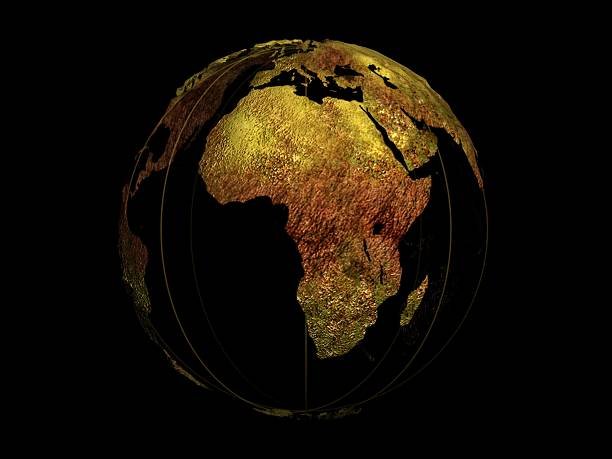
Does Africa Have Earthquakes? Unveiling the Continent's Seismic Activity
Yes, Africa does experience earthquakes. While often perceived as a continent of vast, stable landmasses, the African continent is far from seismically inert. Earthquakes in Africa are primarily driven by the dynamic forces of plate tectonics, with the most significant activity concentrated along the dramatic **East African Rift Valley** and certain northern regions. These events range from minor tremors that go unnoticed to powerful, destructive quakes that reshape landscapes and impact communities.
Understanding **seismic activity in Africa** requires a look beneath the surface, exploring the geological processes that shape our planet. The continent sits on the **African Plate**, which is not a single, unmoving block, but rather a complex system interacting with surrounding plates, leading to significant geological stresses and, consequently, earthquakes across various regions.
The African Continent's Tectonic Landscape
The Earth's outer shell is composed of several large tectonic plates that are constantly in motion. The African Plate is a major player in this global dance, encompassing the entire continent of Africa and extending westward into the Atlantic Ocean. This plate is bordered by several other major plates, and their interactions are the fundamental cause of earthquakes on and around the continent:
- To the North: The African Plate converges with the **Eurasian Plate** along the Mediterranean Sea, a boundary responsible for significant seismic and volcanic activity in North Africa.
- To the East: The African Plate is in the process of splitting apart, creating a divergent boundary known as the **East African Rift Valley**. This is the continent's most seismically active zone.
- To the South and West: The African Plate borders the Antarctic Plate and the South American Plate, largely along mid-oceanic ridges where new crust is formed, leading to offshore seismic activity.
- To the Northeast: The Arabian Plate is rifting away from the African Plate, forming the Red Sea and Gulf of Aden, another area of high seismic activity.
These interactions, particularly at the plate boundaries, build up immense stress in the Earth's crust. When this stress is released, it manifests as **earthquakes in Africa**.
The East African Rift Valley: Africa's Seismic Heartbeat
Without doubt, the **East African Rift Valley (EARV)** is the most prominent feature responsible for African continent seismic activity. This massive geological feature stretches over 3,500 kilometers (2,200 miles) from the Afar Triangle in Ethiopia down to Mozambique. It represents a **divergent plate boundary** where the African Plate is slowly but surely tearing itself apart into two new plates: the Nubian Plate (covering most of Africa) and the Somalian Plate (covering the Horn of Africa).
The process of **continental rifting** is characterized by:
- Volcanic Activity: Many active and dormant volcanoes dot the rift valley, such as Mount Kilimanjaro, Mount Kenya, and the volcanoes of the Virunga Mountains. Earthquakes often precede or accompany volcanic eruptions as magma moves beneath the surface.
- Normal Faulting: The stretching and thinning of the crust create extensive systems of faults where blocks of land drop down, forming valleys (grabens) and uplifted blocks (horsts). The movement along these faults is the direct cause of many **East African Rift Valley earthquakes**.
- Basin Formation: Deep lakes like Lake Tanganyika, Lake Malawi, and Lake Turkana have formed within the rift, often in seismically active depressions.
Countries that lie within or directly adjacent to the **East African Rift Valley** and therefore experience frequent **earthquakes in Africa** include:
- Ethiopia
- Kenya
- Uganda
- Tanzania
- Rwanda
- Burundi
- Democratic Republic of Congo (DRC)
- Zambia
- Malawi
- Mozambique
The seismic events in this region are typically shallow, meaning they occur close to the Earth's surface, which can increase their destructive potential even at moderate magnitudes.
Beyond the Rift: Other Seismic Zones in Africa
While the East African Rift Valley is the epicenter of African seismicity, it's not the only region where the ground shakes. Other **earthquake zones in Africa** exist due to different geological processes.
North Africa: Collision with Eurasia
The northern edge of the African continent is a region of significant tectonic stress due to the ongoing collision with the **Eurasian Plate**. This convergence has formed the **Atlas Mountains** and is responsible for a history of powerful earthquakes in countries like:
- Morocco: Notably, the 1960 Agadir earthquake (Magnitude 5.8) devastated the city, and a more recent 2023 Marrakesh-Safi earthquake (Magnitude 6.8) caused widespread destruction and loss of life, highlighting the severe **seismic risk in Africa's** northern corridor.
- Algeria: Has experienced numerous strong quakes, such as the 1980 El Asnam earthquake (Magnitude 7.3) and the 2003 Boumerdes earthquake (Magnitude 6.8).
- Tunisia: Also part of this seismically active belt, though generally experiencing less frequent large quakes compared to its western neighbors.
These events are often associated with complex thrust faulting and folding as the two continental plates grind against each other.
West and Central Africa: Intraplate Tremors
Most of West Africa and much of Central Africa are considered relatively stable, experiencing fewer and generally weaker earthquakes than the rift or northern margins. However, even these regions are not entirely immune to **minor tremors in Africa**. These **intraplate earthquakes** can occur due to:
- Stress Accumulation: Residual stresses from past tectonic events can build up and release along ancient fault lines within the stable cratons.
- Crustal Weaknesses: Zones of weakness in the continental crust can reactivate under regional stress fields.
While less frequent and typically of lower magnitude, such events have been recorded in countries like Ghana, Cameroon, and Nigeria, reminding us that **earthquake-prone regions in Africa** aren't always confined to obvious plate boundaries.
Southern Africa: Mining-Induced Seismicity and Natural Quakes
Southern Africa is generally considered a stable region, part of the ancient Kaapvaal Craton. However, it experiences two main types of seismic activity:
- Mining-Induced Seismicity: South Africa, with its deep gold and platinum mines, is particularly prone to human-induced earthquakes. Blasting and the collapse of mine cavities can trigger tremors, some of which can be felt widely and occasionally cause damage, though they are distinct from natural tectonic quakes.
- Natural Tremors: Some natural seismic activity occurs, particularly along offshore transform faults in the South Atlantic and Indian Oceans, and occasionally along localized fault systems within the continent. The Mozambique Channel, for instance, has recorded some offshore events.
Understanding the Causes of Earthquakes in Africa
The **causes of earthquakes in Africa** are multifaceted, reflecting the diverse geological settings across the continent:
- Divergent Plate Boundaries: The most significant cause, especially in the East African Rift Valley, where the continental crust is stretching, thinning, and breaking apart. This creates normal faults that generate frequent, shallow earthquakes.
- Convergent Plate Boundaries: Along North Africa, the collision between the African and Eurasian plates creates compressional forces, leading to thrust faulting and powerful earthquakes.
- Intraplate Stresses: Even far from plate boundaries, accumulated stress within the vast African Plate can be released along pre-existing weaknesses or ancient fault lines, causing less frequent but sometimes significant **intraplate earthquakes**.
- Volcanic Activity: The movement of magma beneath volcanoes, especially within the East African Rift, can trigger swarms of shallow earthquakes.
- Human Activities: Deep mining operations, as seen in South Africa, and to a lesser extent, the impoundment of large reservoirs (reservoir-induced seismicity) can induce or trigger seismic events.
Measuring Seismic Activity and its Impact
Earthquakes are measured using scales that quantify their magnitude and intensity:
- Magnitude: The Richter scale (or more accurately, the Moment Magnitude Scale) measures the energy released by an earthquake at its source. A higher number indicates a more powerful quake.
- Intensity: The Modified Mercalli Intensity scale describes the effects of an earthquake on the Earth's surface, humans, and buildings. It varies depending on distance from the epicenter, local geology, and building quality.
Monitoring networks, often operated by national geological surveys and international collaborations, track **seismic monitoring in Africa**. These networks provide crucial data for understanding patterns, assessing risk, and issuing warnings where possible.
Notable Earthquakes in African History
Africa's seismic history includes several devastating events that underscore the importance of preparedness:
- 1960 Agadir Earthquake, Morocco (Magnitude 5.8): While not exceptionally strong by magnitude, its shallow depth and the vulnerable construction in Agadir led to immense destruction and thousands of fatalities, highlighting urban **seismic risk in Africa**.
- 1980 El Asnam Earthquake, Algeria (Magnitude 7.3): One of the largest recorded earthquakes in North Africa, causing widespread damage and thousands of deaths, demonstrating the destructive power of strong quakes in collision zones.
- 2006 Lake Tanganyika Earthquake, DRC/Tanzania (Magnitude 6.8): A significant event along the western branch of the East African Rift Valley, causing localized damage and fears of tsunamis on the lake.
- 2016 Kagera Earthquake, Tanzania (Magnitude 5.9): This quake in northwestern Tanzania caused deaths and significant damage to homes and infrastructure, illustrating the vulnerability of communities even to moderate quakes in the Rift Valley.
- 2023 Marrakesh-Safi Earthquake, Morocco (Magnitude 6.8): A tragic event that struck south of Marrakech, causing extensive damage in rural areas and ancient cities, with over 2,900 fatalities. This was the strongest earthquake to hit Morocco in over a century.
Seismic Risk and Preparedness in Africa
Given that **Africa does have earthquakes**, assessing **seismic risk Africa** and implementing effective preparedness measures are crucial. Challenges include:
- Limited Infrastructure: Many regions lack robust, earthquake-resistant building codes or the enforcement mechanisms to ensure compliance.
- Awareness and Education: Public awareness about earthquake safety and what to do before, during, and after an event is often low.
- Monitoring Gaps: While improving, comprehensive **seismic monitoring Africa** coverage can still be sparse in some remote areas, hindering early warning capabilities.
Effective **earthquake preparedness Africa** requires a multi-pronged approach:
- Building Codes: Developing and strictly enforcing earthquake-resistant building codes, especially in **earthquake-prone regions Africa**, is paramount to saving lives and reducing economic losses.
- Public Education: Campaigns to educate communities on earthquake safety drills (Drop, Cover, and Hold On), emergency kits, and family communication plans.
- Land-Use Planning: Avoiding construction on active fault lines or unstable ground.
- Infrastructure Strengthening: Retrofitting critical infrastructure like hospitals, schools, and communication networks to withstand seismic events.
- International Cooperation: Sharing data, expertise, and resources for seismic monitoring, research, and disaster response among African nations and global partners.
The Future of African Seismicity
The geological forces shaping Africa are continuous. The **East African Rift Valley** will continue to widen, eventually leading to the formation of a new ocean basin over millions of years, effectively splitting the continent. This means that seismic and volcanic activity will remain a defining feature of this region.
Ongoing research into the **African tectonic plate** and its dynamic boundaries provides valuable insights for predicting future activity and informing mitigation strategies. As populations grow and urbanize, particularly in vulnerable areas, the importance of understanding and preparing for **earthquakes in Africa** will only increase.
Conclusion
In conclusion, the answer to "Does Africa have earthquakes?" is a resounding **yes**. Africa is a dynamic continent with significant seismic activity, primarily concentrated along the **East African Rift Valley** where the continent is actively tearing apart, and in North Africa due to the collision with the Eurasian Plate. While much of the continent's interior is relatively stable, **intraplate tremors** can occur, and human activities like mining can induce localized seismicity. Understanding the **causes of earthquakes in Africa**, implementing robust building codes, and fostering public preparedness are essential steps in mitigating the risks and building resilient communities across this seismically active continent.
Enjoyed this read?
Share it with your friends and colleagues.