Did Africa Used To Be Called Ethiopia

BSC Insights Admin
October 01, 2026
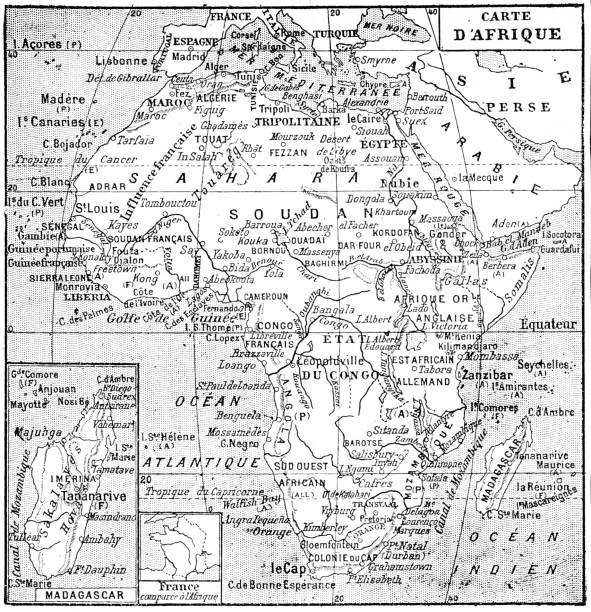
No, the entire continent of Africa was never formally called Ethiopia. This is a common historical misconception arising from ancient Greek and Roman geographical terminology. While the term "Aethiopia" was indeed used in antiquity, it referred to a broad, often ill-defined region primarily south of Egypt, encompassing various peoples considered "burnt-faced" by the Greeks, rather than the vast landmass we now know as the continent of Africa. The name "Africa" itself has a distinct and separate origin, tracing back to Roman influence in the northern part of the continent, making the idea that Africa used to be called Ethiopia a semantic and historical oversimplification.
The Ancient Concept of "Ethiopia" vs. Modern Ethiopia
To fully understand whether Africa was ever called Ethiopia, it's crucial to differentiate between the ancient geographical concept of "Aethiopia" and the modern nation-state of Ethiopia. These terms, while seemingly linked by name, represent vastly different scopes, historical contexts, and geographical extents.
Greek Origins and Geographical Scope
The term "Aethiopia" originates from ancient Greek, derived from the words "aithō" (to burn) and "ops" (face), collectively meaning "burnt-faced." This appellation was used by Greek historians and geographers, such as Homer in the 8th century BCE and Herodotus in the 5th century BCE, to describe the dark-skinned peoples living in regions south of Egypt. It was not a precise geographical designation for a continent but a generalized term for lands inhabited by various Black African populations, extending across a considerable, yet vaguely defined, expanse of northeast Africa. For these classical writers, "Aethiopia" often encompassed areas corresponding to modern-day Sudan, parts of Egypt, Eritrea, and the territory of the modern nation of Ethiopia, among others. It was a fluid concept, representing the southern extremity of the known world from a Greco-Roman perspective.
This broad, ethnically descriptive use of "Aethiopia" stands in stark contrast to the singular, clearly delineated country known as Ethiopia today, which occupies a specific geopolitical space within the Horn of Africa. The ancient "Aethiopia" was more akin to a cultural or racial zone than a clearly demarcated political or continental entity. Therefore, when discussing if Africa was known as Ethiopia, it's essential to recognize this distinction in historical usage and geographical understanding.
Roman Interpretations and Cartography
The Romans largely adopted the Greek concept of "Aethiopia." Roman geographers and cartographers, most notably Claudius Ptolemy in the 2nd century CE, included "Aethiopia" in their maps and writings. Ptolemy's Geographia, which significantly influenced European cartography for centuries, depicted "Aethiopia" as a region south of Egypt and stretching further into the interior of the continent, largely undefined in its southern limits. His work, while groundbreaking for its time, still represented a limited understanding of the vast African landmass, especially beyond the Mediterranean coast and the Nile Valley.
It's important to recognize that these ancient maps, while invaluable historical artifacts, were based on limited exploration and often relied on traveler accounts and conjecture. They lacked the precision and comprehensive understanding of the continent that developed much later. Therefore, the "Aethiopia" depicted on these maps was a significant region within the African continent, not the continent's overarching name. The idea that Africa was once called Ethiopia in a continental sense is not supported by these historical geographical records or the detailed historical naming conventions of Africa.
From Libya to Africa: The Continent's True Naming History
The naming of the entire continent we know as Africa has a distinct and gradual evolution, primarily rooted in Roman geography, completely separate from the term "Aethiopia." Understanding this trajectory helps clarify why the claim that Africa used to be called Ethiopia is inaccurate.
Roman Influence and the "Afri" Tribe
The name "Africa" is widely believed to have originated from the Romans. It was initially used to refer to a smaller region in what is now modern-day Tunisia. After conquering Carthage in the Third Punic War (146 BCE), the Romans established the province of Africa Proconsularis. This province was named after the local Berber tribe known as the "Afri" (or "Afer"). The exact etymology of "Afri" is debated, with theories linking it to words meaning "dust," "cave dwellers," or even related to the Phoenician root for "fertile land." What is clear, however, is that this was a regional designation.
As Roman influence expanded across North Africa, the name "Africa" began to be applied to larger territories. It gradually encompassed more of the North African coast that was under Roman control, stretching westward towards modern-day Morocco. This expansion was a key step in the eventual application of the name to the entire continent. The Roman concept of Africa Proconsularis was the initial seed for the continental name, not the broader 'Aethiopia' of Greek origin.
Gradual Expansion of the Name
Over centuries, particularly through the medieval period and the Age of Exploration, the name "Africa" continued to expand its geographical scope. Early European cartographers, influenced by Roman texts, began to apply "Africa" to the entire landmass south of the Mediterranean. Prior to this, regions like North Africa were sometimes referred to as "Libya" by the Greeks, a term that also lacked precise continental boundaries. For example, Herodotus referred to the entire continent as "Libya" but still placed "Aethiopia" within its southern reaches.
The standardization of "Africa" as the name for the entire continent gained significant traction with the increased European exploration and mapping during the 15th and 16th centuries. As European navigators circumnavigated the continent and gained a clearer understanding of its immense size and shape, the name "Africa" became universally adopted in Western cartography. This historical progression demonstrates that the origin of the continent Africa name is distinct and separate from the ancient usage of "Aethiopia."
Distinct Entities: Ancient Ethiopia (Aksum) and the Continent Africa
While the terms "Aethiopia" and "Africa" have intertwined histories of usage and misunderstanding, it's critical to emphasize their distinct geographical and political realities. The nation we call Ethiopia today has a rich and ancient history, but it is not synonymous with the entire continent.
The Empire of Aksum: A Powerful Historical State
Within the region broadly referred to as "Aethiopia" by the Greeks, one of the most significant and well-documented historical entities was the Kingdom of Aksum (also spelled Axum). Flourishing from approximately the 1st century CE to the 7th century CE, the Aksumite Empire was a major naval and trading power in the ancient world, with connections to Rome, Egypt, Persia, and India. Located in what is now northern Ethiopia and Eritrea, Aksum developed its own script (Ge'ez), minted its own coins, and was one of the first states in the world to adopt Christianity as its official religion.
The Aksumite Kingdom's historical significance is immense, demonstrating a powerful and sophisticated civilization in the Horn of Africa history. Its existence underscores that while the name "Aethiopia" was a general classical term, there were specific, powerful, and distinct kingdoms thriving within that broader geographical designation. Aksum was a part of the region the Greeks called Aethiopia, but it was not the whole continent, nor was the whole continent called Aksum.
Geographical Clarity: Horn of Africa
Today, the nation of Ethiopia is situated in the geological protrusion known as the Horn of Africa, a strategic region in northeastern Africa that includes Eritrea, Djibouti, and Somalia. This modern geographical designation provides crucial clarity, distinguishing the specific country from the vast landmass of the continent. The Horn of Africa has been a crucible of trade, culture, and ancient civilizations, including Punt and D'mt before Aksum.
Understanding the location of modern Ethiopia within the Horn of Africa is key to dispelling the myth that Africa used to be called Ethiopia. The nation of Ethiopia has a proud, unbroken historical lineage stretching back thousands of years, but its identity is distinct from the nomenclature of the continent it resides upon. The modern name for the continent, "Africa," represents a broader geographical reality that evolved independently.
Why the Confusion: Addressing the Misconceptions
The persistent belief that Africa was once known as Ethiopia stems from several factors, including semantic drift, historical generalizations, and the influence of religious texts.
Semantic Drift and Generalizations
In ancient times, geographical knowledge was often limited, especially concerning distant lands. Terms like "Aethiopia" were broad generalizations, used by people in the Mediterranean to categorize populations and regions far to their south. Without precise mapping and extensive exploration, the distinction between a vast region and an entire continent could easily blur in popular understanding or simplified accounts. As knowledge advanced, these broad terms gradually either became more specific or were replaced by more accurate continental designations. The ambiguity of ancient terminology is a primary reason for the confusion regarding Africa and Ethiopia naming.
Religious and Cultural Contexts
Another significant contributor to the misconception is the mention of "Ethiopia" in various influential religious texts, particularly the Bible. In the Old Testament, "Cush" or "Kush" is often translated as "Ethiopia," referring to lands south of Egypt. For example, Psalm 68:31 states, "Ethiopia shall soon stretch out her hands unto God." These biblical references often refer to a generalized land of Black people, rather than specifically the modern nation or the entire continent. The cultural and spiritual weight of these references contributed to a romanticized and generalized view of "Ethiopia" as a vast, ancient land of great significance, which could easily be conflated with the entire African continent in the popular imagination.
The Progressive Mapping of a Continent
The journey from the vague classical "Aethiopia" to the clearly defined continent of "Africa" is a testament to centuries of exploration, scholarship, and cartographic advancement.
From Classical Antiquity to the Age of Exploration
Early maps from classical antiquity, such as those influenced by Herodotus or Ptolemy, provided the rudimentary framework for understanding Africa. However, these maps typically focused on known regions around the Mediterranean and the Nile, with the rest of the continent often depicted as terra incognita (unknown land) or filled with speculative features. The "Aethiopia" on these maps was confined to a portion of the eastern and northeastern parts of this less-understood landmass.
The advent of the Age of Exploration, beginning in the 15th century, dramatically transformed the understanding and mapping of Africa. Portuguese navigators, such as Vasco da Gama, were instrumental in circumnavigating the continent, meticulously charting its coastlines. This extensive exploration led to increasingly accurate and comprehensive maps. By the 16th century, the overall shape of the African continent was largely understood in Europe, solidifying the application of the name "Africa" to the entire landmass. This era provided the definitive clarity that separated the specific geographic entities from broader ancient descriptions, confirming that historical naming conventions Africa evolved beyond ancient, generalized terms.
Key Milestones in Naming and Exploration
The evolution of Africa's naming and mapping can be viewed through several significant periods:
- Ancient Egypt (ca. 3100-30 BCE): Engaged with neighboring lands like Kush (Nubia) to the south, which was part of the region later designated as "Aethiopia" by the Greeks.
- Greek Antiquity (ca. 800 BCE - 600 CE): Coined "Aethiopia" for regions inhabited by dark-skinned peoples south of Egypt, and sometimes used "Libya" for North Africa.
- Roman Empire (ca. 27 BCE - 476 CE): Established the province of Africa Proconsularis in modern Tunisia, from which the continental name would eventually derive. Adopted Greek "Aethiopia" for the region south of Egypt.
- Arab Geographers (7th-15th centuries CE): Made significant contributions to mapping North and East Africa, referring to the entire continent as "Ifriqiya" (derived from the Roman "Africa") or "Bilad al-Sudan" (Land of the Blacks) for sub-Saharan regions, further solidifying the continental scope.
- Age of European Exploration (15th-18th centuries CE): European powers circumnavigated the continent, leading to detailed mapping and the universal adoption of "Africa" as the name for the entire landmass, effectively ending the ambiguity of ancient terms.
This timeline clearly shows a progressive understanding of continental geography, moving from localized and generalized terms to a standardized and globally recognized designation for Africa.
Conclusion
In conclusion, the assertion that Africa used to be called Ethiopia is a historical inaccuracy. While "Aethiopia" was a significant geographical and ethnic term in antiquity, referring to a broad region in northeastern Africa south of Egypt, it never encompassed the entirety of the vast African continent. The name "Africa" has a separate Roman origin, evolving from a specific province in modern-day Tunisia to ultimately designate the entire landmass through centuries of exploration and cartographic development. Understanding the distinct historical origins and applications of these terms is vital for appreciating the rich and complex history of Africa and Ethiopia's naming.
Enjoyed this read?
Share it with your friends and colleagues.