How Much Of Africa Did Europe Colonize

BSC Insights Admin
October 01, 2026
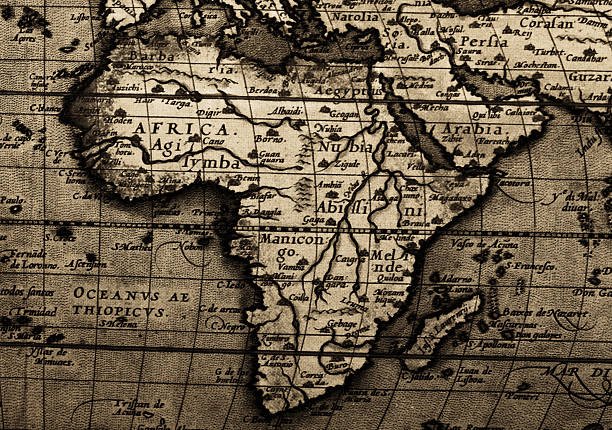
Almost the entirety of the African continent, roughly 90%, fell under European colonial rule during the late 19th and early 20th centuries. This profound period, often referred to as the Scramble for Africa, saw major European powers like Britain, France, Belgium, Germany, Portugal, Italy, and Spain carve up the vast landmass, leaving only Liberia and Ethiopia as truly independent nations. Understanding how much of Africa did Europe colonize requires delving into the historical context, the motivations of the colonizers, and the lasting legacy of this transformative era.
The Scramble for Africa: A Brief History
The European colonization of Africa was not a gradual process but rather an intense, rapid period of imperial expansion that largely took place between the 1880s and the start of World War I. Prior to this, European presence in Africa was largely confined to coastal trading posts, primarily for the slave trade and access to raw materials like gold and ivory. The interior of the continent remained largely unexplored by Europeans, often referred to as the "Dark Continent."
However, several factors converged in the late 19th century to ignite the Scramble for Africa:
- Economic Motives: The Industrial Revolution in Europe created a massive demand for raw materials (rubber, diamonds, gold, copper, cotton, palm oil) that Africa possessed in abundance. Africa also presented new markets for European manufactured goods.
- Technological Advancements: Innovations such as quinine (preventing malaria), steamships, railways, and advanced weaponry (like the Maxim gun) gave Europeans a significant advantage in penetrating and controlling the continent's interior.
- Political and Strategic Rivalry: European powers were in intense competition for global dominance. Acquiring colonies in Africa was seen as a measure of national prestige, power, and a strategic advantage against rivals.
- "Civilizing Mission": Many Europeans believed they had a moral obligation to "civilize" and Christianize African societies, often masking exploitative motives with humanitarian rhetoric.
The Berlin Conference: Carving Up a Continent
A pivotal moment in the partition of Africa was the Berlin Conference, held from 1884 to 1885. Organized by Otto von Bismarck of Germany, this conference brought together representatives from 14 European nations (including Austria-Hungary, Belgium, Denmark, France, Germany, Italy, Netherlands, Portugal, Russia, Spain, Sweden-Norway, Turkey, United Kingdom, and the United States, though the US did not participate in the final agreements) to regulate European colonization and trade in Africa. Crucially, no African representatives were invited.
The conference established the rules for claiming territory, primarily based on the principle of "effective occupation" – a power could only claim land if it could demonstrate administrative control and economic development. This fueled a frantic race to establish control over as much territory as possible, leading to the rapid division of the continent into artificial colonial boundaries that often disregarded existing ethnic, linguistic, and cultural groupings.
Principal Colonial Powers and Their Empires
By 1914, almost all of Africa, with the notable exceptions of Ethiopia and Liberia, had been parceled out among the major colonial powers in Africa. The primary European nations involved were:
- United Kingdom: Established a vast empire stretching from Egypt and Sudan down through East Africa (Kenya, Uganda, Tanganyika) to Southern Africa (Rhodesia, South Africa), and a significant presence in West Africa (Nigeria, Gold Coast, Sierra Leone, Gambia).
- France: Dominated much of North Africa (Algeria, Morocco, Tunisia) and a huge swathe of West and Central Africa (French West Africa, French Equatorial Africa), as well as Madagascar and Djibouti.
- Portugal: Maintained its historical presence, holding large territories in Angola and Mozambique, along with Guinea-Bissau, Cape Verde, and São Tomé and Príncipe.
- Belgium: Acquired the vast and resource-rich Belgian Congo (modern-day Democratic Republic of Congo), known for its brutal exploitation under King Leopold II.
- Germany: A latecomer, but quickly acquired significant territories including German East Africa (Tanzania, Rwanda, Burundi), German South West Africa (Namibia), Kamerun (Cameroon), and Togoland (Togo). These were lost after World War I.
- Italy: Another late entrant, acquiring Libya, Eritrea, and Italian Somaliland.
- Spain: Held smaller territories, notably Spanish Sahara (Western Sahara), Spanish Morocco, and Equatorial Guinea.
Mapping the Empires: Who Owned What?
To fully grasp how much of Africa was colonized, it's essential to visualize the extent of each European power's control. The continent was effectively a jigsaw puzzle of European possessions, often with little regard for the geography or human populations.
British Colonial Holdings: From Cape to Cairo
The British Empire in Africa was arguably the largest and most strategically important. Their ambition often revolved around a "Cape to Cairo" railway, aiming to connect their territories vertically across the continent. Key British colonies included:
- East Africa: Kenya, Uganda, Tanganyika (now mainland Tanzania), Nyasaland (Malawi), Northern Rhodesia (Zambia), Southern Rhodesia (Zimbabwe).
- North East Africa: Egypt (protectorate), Anglo-Egyptian Sudan.
- West Africa: Nigeria, Gold Coast (Ghana), Sierra Leone, Gambia.
- Southern Africa: Union of South Africa (a dominion), Basutoland (Lesotho), Swaziland, Bechuanaland (Botswana).
French Colonial Holdings: Vast West and North Africa
France established a vast contiguous empire, particularly in West and North Africa. French colonial policy often emphasized assimilation, attempting to integrate African elites into French culture. Major French territories included:
- North Africa: Algeria (considered part of metropolitan France), Morocco (protectorate), Tunisia (protectorate).
- French West Africa: Mauritania, Senegal, French Sudan (Mali), French Guinea (Guinea), Côte d'Ivoire, Upper Volta (Burkina Faso), Dahomey (Benin), Niger.
- French Equatorial Africa: Chad, Ubangi-Shari (Central African Republic), Middle Congo (Congo), Gabon.
- Indian Ocean: Madagascar, Comoros, Djibouti (French Somaliland).
Portuguese Colonial Holdings: Persistent Presence
Portugal was one of the earliest European powers to establish a presence in Africa and was among the last to grant independence. Their colonies included:
- Angola
- Mozambique
- Portuguese Guinea (Guinea-Bissau)
- Cape Verde
- São Tomé and Príncipe
Belgian Colonial Holdings: The Exploitation of Congo
The Belgian Congo stands out as a stark example of brutal resource exploitation under King Leopold II, where millions died under horrific conditions, primarily for rubber extraction. After international outcry, it became a Belgian colony. Belgium also administered Rwanda and Burundi as League of Nations mandates after WWI.
German Colonial Holdings: Short-Lived but Significant
Germany's colonial empire in Africa, though substantial, was relatively short-lived (1884-1919). Their key territories included:
- German East Africa (modern-day Tanzania, Rwanda, and Burundi)
- German South West Africa (Namibia)
- Kamerun (Cameroon and part of Nigeria)
- Togoland (Togo and part of Ghana)
Italian Colonial Holdings: Later Entrants
Italy sought to establish its own empire relatively late in the scramble. Their possessions included:
- Libya
- Eritrea
- Italian Somaliland (part of modern Somalia)
Spanish Colonial Holdings: Smaller Enclaves
Spain, while a significant colonial power elsewhere, held fewer and smaller territories in Africa:
- Spanish Sahara (Western Sahara)
- Spanish Morocco
- Equatorial Guinea
This table provides a summary of the main European empires in Africa:
| Colonial Power | Major African Territories |
|---|---|
| United Kingdom | Egypt, Sudan, Nigeria, Gold Coast (Ghana), Kenya, Uganda, Rhodesia (Zimbabwe), South Africa, Sierra Leone, Gambia, Somalia (part) |
| France | Algeria, Morocco, Tunisia, French West Africa (Mauritania, Senegal, Mali, Guinea, Côte d'Ivoire, Burkina Faso, Benin, Niger), French Equatorial Africa (Chad, Central African Republic, Congo, Gabon), Madagascar, Djibouti |
| Portugal | Angola, Mozambique, Portuguese Guinea (Guinea-Bissau), Cape Verde, São Tomé and Príncipe |
| Belgium | Belgian Congo (Democratic Republic of Congo), Rwanda, Burundi |
| Germany | German East Africa (Tanzania, Rwanda, Burundi), German South West Africa (Namibia), Kamerun (Cameroon), Togoland (Togo) |
| Italy | Libya, Eritrea, Italian Somaliland (part of Somalia) |
| Spain | Spanish Sahara (Western Sahara), Spanish Morocco, Equatorial Guinea |
The Exceptions: Uncolonized African Nations
Despite the overwhelming nature of the Scramble for Africa, two nations managed to largely avoid formal colonization, standing as symbols of African resistance and self-determination:
- Ethiopia (Abyssinia): Successfully repelled an Italian invasion in 1896 at the Battle of Adwa, preserving its ancient independence. Although briefly occupied by Italy during World War II (1936-1941), it was never fully integrated into a European colonial empire in the same way as other nations.
- Liberia: Established in 1822 by the American Colonization Society as a homeland for freed African-American slaves, Liberia declared its independence in 1847. Its unique relationship with the United States provided a degree of protection from direct European takeover, although it faced significant economic and political pressures from European powers.
Methods of Colonial Rule and Their Impact
European powers employed various methods of governance, broadly categorized as direct rule (France, Belgium, Germany, Portugal) or indirect rule (Britain). However, the underlying goals remained consistent: to extract resources, establish markets, and assert political control. The impact of colonialism was multifaceted and profoundly shaped the continent's trajectory.
- Economic Exploitation: Colonial economies were designed to benefit the colonizers. Africa's vast natural resources (minerals, agricultural products) were extracted with little benefit to the local populations. Cash crop economies replaced subsistence farming, leading to food insecurity. Infrastructure (railways, ports) was built primarily to facilitate resource extraction rather than for broader development.
- Political Transformation: European powers imposed artificial borders that often split ethnic groups or forced antagonistic ones together, laying the groundwork for future conflicts. Traditional political structures were dismantled or co-opted, eroding indigenous systems of governance.
- Social and Cultural Disruption: Colonial policies often suppressed local languages and cultures, favoring European ones. Missionaries introduced Christianity, challenging indigenous belief systems. Racial hierarchies were established, creating deep societal divisions. Forced labor, taxation, and displacement were common, causing immense suffering.
- Limited Development: While some infrastructure was built and basic education/healthcare introduced, these were largely insufficient and often served the colonial agenda. Investment in industrialization or comprehensive human development was minimal.
The Road to Independence and Decolonization
The mid-20th century witnessed a powerful wave of decolonization in Africa. World War I and particularly World War II weakened European powers economically and militarily, making it harder for them to maintain distant empires. The rise of pan-Africanism, growing nationalist movements within Africa, and international pressure (especially from the United Nations and the United States) all contributed to the push for independence.
Beginning with Ghana's independence in 1957, most African nations gained their sovereignty during the 1960s. This process was sometimes peaceful and negotiated, but often involved armed struggle and significant bloodshed, particularly in settler colonies like Algeria, Kenya, and the Portuguese territories.
Legacy of Colonization: Enduring Effects
The legacy of European rule in Africa is complex and continues to shape the continent today. While colonial administrations did introduce some elements of modern infrastructure, education, and medicine, these were largely overshadowed by the profound damage inflicted. Key enduring effects include:
- Economic Dependence: Many African economies remain reliant on exporting raw materials, a pattern established during colonialism, making them vulnerable to global market fluctuations.
- Political Instability and Conflict: The arbitrary colonial borders created states with diverse and often conflicting ethnic groups, contributing to internal strife and border disputes. Weak institutions and a lack of democratic traditions, often a result of colonial authoritarianism, also contributed to instability.
- Underdevelopment: The extraction-based economies and minimal investment in human capital left many countries with significant development challenges.
- Cultural Identity: The imposition of European languages, legal systems, and cultural norms continues to impact African societies, leading to ongoing debates about identity and decolonizing knowledge.
- Brain Drain: Post-independence, many African nations have faced a significant exodus of skilled professionals, often seeking better opportunities in former colonial powers, further hindering development.
Conclusion
In summary, the question of how much of Africa did Europe colonize has a stark answer: nearly the entire continent, approximately 90%, was subjugated by European powers. From the late 19th century onwards, the Scramble for Africa led to the rapid division of this vast landmass into colonial possessions, with only Ethiopia and Liberia maintaining their independence. This era of European colonization of Africa was driven by economic, political, and ideological motives, formalized by events like the Berlin Conference, and characterized by extensive resource extraction and the imposition of foreign rule. The impact of colonialism left an indelible mark, creating artificial borders, shaping political and economic structures, and profoundly influencing the social and cultural landscape. Decades after the wave of decolonization of Africa, the legacy of European rule continues to be a central factor in understanding the challenges and complexities facing African nations today.
Enjoyed this read?
Share it with your friends and colleagues.