Does Africa And Europe Touch

BSC Insights Admin
September 30, 2026
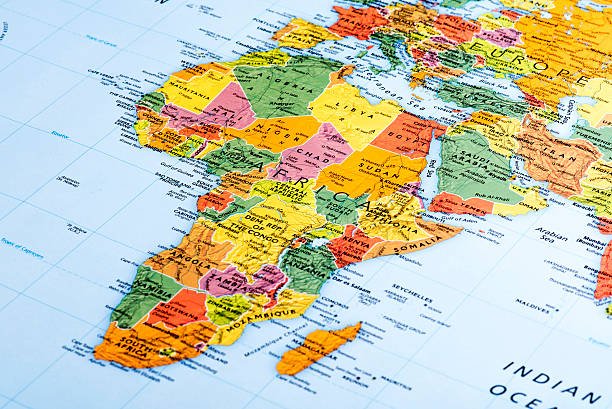
Does Africa And Europe Touch? Understanding the Geographical Proximity
No, the continents of Africa and Europe do not physically touch in the sense of a continuous landmass. Instead, they are separated by various bodies of water, primarily the vast Mediterranean Sea. However, at their closest point, the two continents are remarkably near each other, creating a unique geographical and historical dynamic. This close proximity raises many questions about their connection, both geologically and culturally, and highlights the powerful natural forces that shape our planet.
While no land bridge currently connects them, the narrowness of the Strait of Gibraltar is a powerful symbol of their close relationship. This article will delve into the precise geographical separation, the underlying geological forces at play, and the rich historical and cultural connections that have flourished despite the watery divide, exploring the concept of 'touch' beyond mere physical contact.
The Strait of Gibraltar: The Closest Embrace and Divide
The most iconic and geographically significant point where Africa and Europe come closest is the Strait of Gibraltar. This vital waterway separates the southern tip of the Iberian Peninsula (Spain) from the northern coast of Africa (Morocco) and connects the Atlantic Ocean to the Mediterranean Sea.
- Narrowest Point: At its narrowest, the strait is approximately 14.3 kilometers (8.9 miles) wide, spanning between Punta de Tarifa in Spain and Point Cires in Morocco. This distance is so small that on a clear day, one can easily see the opposing continent.
- Strategic Importance: For millennia, the Strait of Gibraltar has been a critical maritime gateway. Its strategic location makes it one of the busiest shipping lanes in the world, essential for global trade and military movements. The iconic Rock of Gibraltar, a British Overseas Territory, stands sentinel at its eastern end, further underscoring its historical and geopolitical significance.
- Oceanic Exchange: Beyond shipping, the strait is crucial for oceanography. It facilitates the exchange of water between the Atlantic Ocean and the Mediterranean Sea, influencing marine ecosystems and regional climates. Atlantic waters flow eastward into the Mediterranean, while denser, saltier Mediterranean waters flow westward out into the Atlantic below the surface.
The Strait of Gibraltar is more than just a geographical feature; it is a crossroads of civilizations, a barrier, and a bridge for migration, trade, and cultural exchange throughout history. Despite the watery divide, this narrow passage has profoundly shaped the destinies of both African and European populations.
Beyond Gibraltar: Other Proximity Points Across the Mediterranean
While the Strait of Gibraltar is the most famous point of close proximity, other areas across the Mediterranean Sea also demonstrate the geographical closeness between the two vast continents.
The Strait of Sicily: Italy and Tunisia
Further east, in the central Mediterranean, the island of Sicily (Italy) lies relatively close to the coast of Tunisia (North Africa). The Strait of Sicily, also known as the Sicilian Channel, is another significant geographical area where Africa and Europe are separated by a relatively short distance.
- Distance: The shortest distance across the Strait of Sicily is about 145 kilometers (90 miles) between Cape Bon in Tunisia and Mazara del Vallo in Sicily. While wider than Gibraltar, this stretch of water has also played a crucial role in historical migrations, trade routes, and military campaigns connecting the Roman Empire to Carthage and beyond.
- Geological Significance: This region is also characterized by relatively shallow waters and a series of underwater ridges and islands, hinting at deeper geological connections and past land bridges that may have existed millions of years ago, before significant changes in sea levels and tectonic activity.
Other Mediterranean Connections
Throughout the length of the Mediterranean, various islands act as stepping stones, though none constitute a direct land bridge between the mainlands of Africa and Europe.
- The Greek islands, while primarily linked to the European continent, are geographically close to the coast of Turkey (Anatolia), which has historical and cultural ties with both continents.
- Malta, a small island nation in the central Mediterranean, sits strategically between Sicily and the North African coast, embodying a unique blend of European and North African influences due to its long history as a crossroads.
These proximity points underscore that while a clear physical separation exists, the Mediterranean Sea has historically served as a conduit, not just a barrier, for the movement of people, goods, and ideas between Africa and Europe.
The Unseen Forces: Plate Tectonics and Continental Drift
To truly understand why Africa and Europe are so close yet do not touch, we must delve into the geological forces that have shaped Earth's surface over millions of years: plate tectonics. The Earth's outermost layer, the lithosphere, is broken into several large and small plates that are constantly moving.
The African and Eurasian Plates
The relationship between Africa and Europe is primarily governed by the interaction of two major tectonic plates:
- The African Plate, which carries the entire African continent.
- The Eurasian Plate, which encompasses most of Europe and Asia.
These two plates are engaged in a slow but powerful collision. The African Plate is moving northward, slowly but inexorably pushing towards the Eurasian Plate. This movement is a prime example of a convergent plate boundary.
Collision and Subduction
As the African Plate moves north, it is colliding with and, in some areas, subducting beneath the Eurasian Plate. Subduction is a process where one tectonic plate slides beneath another into the Earth's mantle. This immense geological pressure has several profound effects:
- Mountain Building: The collision has led to the formation of major mountain ranges in Europe, such as the Alps, and in North Africa, such as the Atlas Mountains. These ranges are the result of the Earth's crust being folded, faulted, and uplifted under immense pressure.
- Mediterranean Sea Formation: The Mediterranean Sea itself is a remnant of a much larger ancient ocean, the Tethys Ocean, which has been closing due to the northward movement of Africa. It is effectively a shrinking ocean basin caught between the converging continents.
- Seismic Activity: The ongoing collision and subduction are also responsible for significant seismic activity and volcanism in regions like Italy, Greece, and Turkey, as well as parts of North Africa. Earthquakes and volcanic eruptions are common manifestations of these deep-seated geological forces.
The reason Africa and Europe do not physically touch as a continuous landmass, despite their convergence, is because the processes of subduction and the presence of oceanic crust in the Mediterranean basin keep them separated by water. However, the relentless continental drift ensures their continued interaction, shaping coastlines and creating new geological features over vast timescales. The 'gap' we see today is merely a temporary stage in a much longer geological drama.
Historical and Cultural Intertwining: Connected by Sea, Not Just Land
Despite the geographical separation by sea, Africa and Europe share an incredibly rich and complex history of interaction, exchange, and influence. The Mediterranean Sea, rather than acting as an insurmountable barrier, often served as a highway for civilizations, traders, and migrants.
Ancient Civilizations and Empires
- Ancient Egypt and Greece/Rome: The civilizations of North Africa, particularly Ancient Egypt, had profound influences on early Greek and Roman societies. Trade routes across the Mediterranean brought goods, ideas, and technologies, forging early intercontinental connections.
- Carthage and Rome: The Punic Wars, fought between the North African city-state of Carthage and the Roman Republic, are prime examples of the fierce competition and close interaction between powers on both sides of the Mediterranean. These conflicts shaped the destiny of the entire region.
- Moorish Spain: From the 8th to the 15th centuries, much of the Iberian Peninsula (Europe) was ruled by Muslim dynasties from North Africa. This period, known as Al-Andalus, led to an extraordinary flourishing of culture, science, and art, profoundly influencing European development in areas like mathematics, medicine, and architecture. This represents one of the most significant periods of cultural exchange between Africa and Europe.
Trade, Migration, and Colonialism
Throughout the centuries, the Mediterranean has been a vital artery for:
- Trade: Spices, textiles, gold, silver, and agricultural products flowed constantly between African and European ports, contributing to the economic development of both continents.
- Migration: People have consistently moved across the strait and the sea, driven by economic opportunities, conflict, or curiosity. This movement continues to this day, shaping demographics and creating vibrant diaspora communities.
- Colonialism: In more recent history, European colonial powers exerted significant influence and control over vast swathes of the African continent, leading to complex and often painful legacies that continue to impact geopolitical relations and cultural identities.
The continuous movement of people, goods, and ideas highlights that while Africa and Europe are not a continuous landmass, their fates have been deeply intertwined for millennia. The question of 'does Africa and Europe touch' becomes less about a physical bridge and more about the historical, cultural, and human connections that have repeatedly crossed the waters.
Shared Biodiversity and Ecological Links
Even in terms of biodiversity, the proximity of Africa and Europe fosters unique ecological connections that defy simple geographical separation.
- Migratory Birds: Millions of migratory birds traverse the Strait of Gibraltar and the Mediterranean Sea twice a year, moving between their breeding grounds in Europe and their wintering grounds in Africa. This ancient aerial highway is a testament to the strong ecological links that bind the continents.
- Marine Life: The Mediterranean Sea itself is a biodiverse ecosystem, home to species that have adapted to its unique conditions, many of which are found along the coasts of both continents.
- Terrestrial Species: A famous example of shared terrestrial fauna is the Barbary Macaque, the only wild monkey population in Europe, found on the Rock of Gibraltar. Genetically, these macaques are believed to have originated from North Africa, transported across the strait perhaps by humans or during periods of lower sea levels. This demonstrates how even in the absence of a direct land bridge, faunal exchange can occur.
These ecological ties reinforce the idea that the separation, while significant, does not mean complete isolation. Nature finds its own ways to bridge the gaps, connecting ecosystems and species across the narrow water bodies that divide the continents.
The Geological Future: Will Africa and Europe Ever Touch?
Given the ongoing northward movement of the African Plate, a natural and intriguing question arises: will Africa and Europe ever physically touch and merge into a single landmass?
Geologists and Earth scientists widely agree that this is indeed the long-term geological destiny of the two continents. The process of continental convergence is still very much active, and the Mediterranean Sea is destined to close entirely over immense timescales.
Millions of Years in the Making
This grand geological event will not happen in our lifetime, nor in the next few thousand years. We are talking about processes that unfold over tens of millions of years. Current estimates suggest that:
- The Mediterranean Sea will continue to narrow.
- Eventually, the two continents will collide in a much more direct fashion, obliterating the current sea basin.
- This will lead to the formation of a colossal new mountain range, far larger and more extensive than the Alps or the Atlas Mountains, as the continental crusts crumple and uplift.
- Ultimately, a new supercontinent, often referred to as 'Afro-Eurasia' or parts of a larger future supercontinent, will form, eliminating the historical waterway that currently separates them.
This future vision underscores the dynamic nature of our planet. What we perceive as permanent geographical features are merely snapshots in Earth's deep geological history. The African and Eurasian plates are locked in a slow-motion embrace that will eventually lead to their physical union, transforming the familiar map of the world into something entirely new. So, while they do not touch now, the answer to 'will they touch?' is a resounding 'yes,' albeit in the unimaginably distant future.
Conclusion: A Story of Proximity, Not Just Separation
In conclusion, the answer to 'does Africa and Europe touch' is no, not in the direct physical sense of a continuous landmass. They are unequivocally separated by the Strait of Gibraltar and the broader Mediterranean Sea. However, this geographical separation is remarkably narrow at several key points, fostering an undeniable closeness that has profoundly influenced their shared history and development. The powerful, unseen forces of plate tectonics explain this unique relationship, with the African Plate relentlessly pushing northward towards the Eurasian Plate, slowly but surely closing the ancient Tethys Ocean basin that is now the Mediterranean.
This ongoing geological drama has shaped coastlines, created majestic mountain ranges, and continues to dictate seismic activity in the region. Beyond geology, the proximity has led to rich historical interactions, vibrant cultural exchanges, extensive trade routes, and complex migratory patterns. From ancient empires to modern-day interconnectedness, Africa and Europe have always been deeply intertwined. While they remain separated by water today, scientific predictions indicate that in the distant geological future, these two mighty continents are destined to merge, forming a new landmass and finally touching in a way that transcends our current understanding of their geographical divide. Their story is ultimately one of enduring proximity, dynamic interaction, and a future of ultimate convergence.
Enjoyed this read?
Share it with your friends and colleagues.