Did Africa Experience The Black Plague

BSC Insights Admin
October 02, 2026
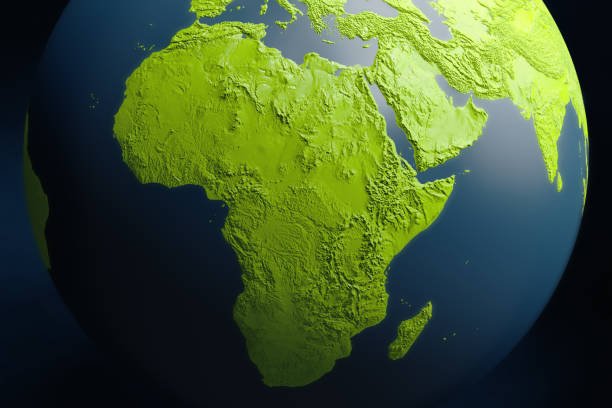
Did Africa Experience The Black Plague? Unraveling a Complex History
Yes, Africa did experience the Black Plague, though its impact was not uniform across the continent. North Africa, particularly the regions bordering the Mediterranean Sea, was significantly affected by the devastating pandemic that swept through Europe and Asia in the mid-14th century. However, the experience of sub-Saharan Africa during this period remains a subject of ongoing historical and scientific debate, with evidence suggesting a much lesser or localized impact due to various geographical and social factors.
Understanding Africa's encounter with the Black Death requires a nuanced look at historical records, trade routes, environmental conditions, and the unique challenges of historical epidemiology. The bubonic plague, caused by the bacterium Yersinia pestis, fundamentally reshaped societies, economies, and demographics wherever it took hold, and Africa's interaction with this global pandemic is a critical piece of its medieval history.
The Global Scourge: Origins and Spread of the Black Death
The Black Death, one of the deadliest pandemics in human history, originated in Central Asia and spread rapidly along ancient trade routes. Carried by fleas residing on rats, the plague reached Europe through merchant ships and overland caravans, devastating populations from the 1340s onwards. This highly virulent disease manifested in several forms, primarily bubonic, pneumonic, and septicemic plague, each with a high mortality rate.
The rapid spread of the disease was facilitated by increased global connectivity through trade. The Silk Road connected East and West, while maritime routes linked diverse continents. As goods and people traveled, so did the unseen pathogen. It is within this context of widespread contagion that we must examine how and when the Black Death arrived in Africa.
North Africa: A Confirmed Epicenter of Devastation
The Inevitable Arrival: Mediterranean Trade Routes
The Mediterranean Sea was a bustling network of trade and communication during the medieval period, connecting Europe, the Middle East, and North Africa. It was through these vital maritime links that the Black Death inevitably reached North Africa. The plague's arrival in major port cities like Alexandria, Cairo, Tunis, and Algiers was a direct consequence of their integration into the broader Mediterranean economic system.
Historical accounts from contemporary scholars, most notably the renowned Arab historian and philosopher Ibn Khaldun, provide vivid and harrowing descriptions of the plague's devastation in North Africa. Khaldun, who lost both parents to the plague in Tunis, chronicled its profound impact, describing depopulation, economic collapse, and societal disruption across the Maghreb and Egypt.
Evidence of Impact in Mamluk Egypt and the Maghreb
The Mamluk Sultanate of Egypt, a powerful state spanning Egypt and the Levant, was particularly hard-hit. Cairo, then one of the largest and most vibrant cities in the world, suffered immense fatalities. Estimates suggest that Egypt's population was drastically reduced, possibly by a third or even more, with subsequent recurrent outbreaks further hindering recovery. The Mamluk military, which relied on slave recruitment, was also severely affected, leading to political instability and shifts in power dynamics.
Similarly, cities across the Maghreb—modern-day Morocco, Algeria, and Tunisia—experienced severe mortality. The plague's arrival decimated urban populations and rural communities alike, leading to labor shortages, agricultural decline, and widespread famine. The impact of the plague in North Africa was not merely a demographic crisis; it had long-lasting economic, social, and political ramifications that reshaped the region for centuries. The loss of life in these areas mirrored the scale of devastation seen in parts of Europe and the Middle East, underscoring the universal virulence of Yersinia pestis.
The Enigma of Sub-Saharan Africa: A Different Narrative?
The Sahara Desert: A Formidable Barrier
Unlike North Africa, which was intimately linked to the plague's epicenters, sub-Saharan Africa presents a much more complex and less documented picture. One of the primary reasons for the perceived differential impact is the Sahara Desert, a vast geographical barrier that historically limited direct, extensive contact between North Africa and the regions further south. While trans-Saharan trade routes existed, they were arduous and slow, involving fewer people and different types of goods compared to the bustling Mediterranean maritime trade.
The slow pace of trans-Saharan travel, combined with the harsh desert environment, may have acted as a natural quarantine, slowing or even preventing the widespread transmission of plague-carrying rats and their fleas into the interior of the continent. The critical elements for rapid plague spread – dense urban populations, continuous movement of infected hosts, and a conducive environment for rats – were less prevalent or interconnected across the Sahara.
Lack of Direct Historical and Archaeological Evidence
Perhaps the most compelling argument for a less severe impact in sub-Saharan Africa is the dearth of contemporary written records or archaeological evidence that explicitly mentions or strongly suggests a widespread plague pandemic during the mid-14th century. While North African chroniclers like Ibn Khaldun meticulously documented the horrors, similar accounts are largely absent from sub-Saharan African sources of the period.
This absence, however, is not necessarily proof of absence. Many sub-Saharan African societies relied on oral traditions rather than written histories, and archaeological research is still uncovering much about medieval African societies. Nevertheless, without direct evidence, historians and epidemiologists must rely on indirect reasoning and comparative studies.
Hypothesized Reasons for Limited Impact
Several hypotheses attempt to explain why sub-Saharan Africa may have largely escaped the widespread devastation seen elsewhere:
- Geographical Isolation: Beyond the Sahara, dense forests, savannas, and other natural barriers could have further impeded the plague's progression.
- Trade Route Dynamics: While trans-Saharan trade existed, it was primarily focused on specific goods (gold, salt, slaves) and involved fewer high-volume merchant ships that were ideal vectors for plague-carrying rats. The established routes may not have been conducive to widespread infection.
- Population Density and Urbanization: Many sub-Saharan societies during this period had lower population densities and less urbanization compared to Europe, North Africa, or parts of Asia. Lower density makes it harder for infectious diseases to spread rapidly and sustain outbreaks.
- Climatic and Environmental Factors: The specific environmental conditions (temperature, humidity) in certain parts of sub-Saharan Africa might have been less favorable for the survival and proliferation of the specific flea species (Xenopsylla cheopis) and rat species (Rattus rattus) primarily responsible for transmitting the Black Death.
- Immunity or Genetic Factors: While speculative, some theories ponder whether certain populations may have possessed some level of natural resistance, though definitive evidence is lacking.
It's important to note that a lack of evidence of a pandemic-level event does not mean the region was entirely free of plague. Localized outbreaks of Yersinia pestis may have occurred, but without the widespread, devastating impact witnessed in other parts of the world. Therefore, when discussing sub-Saharan Africa and the Black Death, the narrative is one of likely mitigation rather than outright immunity.
Factors Influencing Plague Transmission in Africa
Understanding the varied experience of plague in Africa involves considering several interconnected factors:
- Trade Networks: The Mediterranean trade network served as a superhighway for the plague's spread into North Africa. In contrast, the trans-Saharan routes, while important, had different dynamics that limited such rapid transmission.
- Climatic Zones: Regions with temperate or arid climates, like much of North Africa, were conducive to the plague's vectors (rats and fleas). Tropical and subtropical zones further south, with different ecological profiles, might have presented varied challenges for the pathogen's establishment and spread.
- Urbanization and Sanitation: Densely populated cities with poor sanitation are ideal breeding grounds for rats and fleas. North African cities fit this description, while many sub-Saharan communities were more dispersed, potentially limiting large-scale outbreaks.
- Animal Reservoirs: The presence and distribution of natural plague reservoirs, such as specific rodent species, also play a crucial role. While plague exists endemically in parts of Africa today, the historical distribution of these reservoirs and their interaction with human populations are complex.
Long-Term Impact and Resilience
For North Africa, the long-term impact of the Black Death was profound. It led to significant demographic decline, weakened central authorities, altered land ownership patterns, and contributed to economic downturns. Cities that were once vibrant hubs of learning and trade struggled to recover. The recurring waves of plague over subsequent centuries further entrenched these challenges.
However, North African societies demonstrated remarkable resilience. They adapted to labor shortages, developed new agricultural practices, and rebuilt their economies. The Mamluk Sultanate, despite suffering immense losses, continued to be a formidable power for centuries, albeit in a transformed state.
In sub-Saharan Africa, if the impact was indeed localized or minimal, then the region's societies likely experienced fewer of these large-scale disruptions. This differential experience might have contributed to different trajectories of societal development compared to plague-ridden Europe and North Africa, though this is a complex area of historical speculation.
Modern Understanding and Ongoing Research
Recent advancements in genetics and archaeology are shedding new light on historical pandemics. The analysis of ancient DNA (aDNA) from burial sites has been instrumental in confirming the presence of Yersinia pestis in medieval European populations. Similar studies in North African archaeological sites could provide definitive genetic proof of the plague's presence and specific strains that affected the region.
Research into historical climate patterns and their influence on rodent populations and disease vectors is also ongoing. Understanding these intricate ecological relationships helps paint a more complete picture of how the plague spread and where it might have been contained. While much has been learned, the full extent of Africa's experience with the Black Death, especially in the vast and diverse sub-Saharan regions, remains an active area of historical and scientific inquiry. Future archaeological discoveries and molecular analyses hold the key to uncovering more definitive answers about this crucial period in African history.
It is important to remember that plague is not just a historical disease; it remains endemic in certain parts of the world, including some areas of Africa, requiring ongoing surveillance and public health efforts. Studying the past pandemics, like the Black Death, offers valuable lessons for understanding disease transmission and societal resilience in the face of epidemics.
Conclusion
In summary, the question, "Did Africa experience the Black Plague?" has a multifaceted answer. North Africa undoubtedly faced the full devastating force of the Black Death, suffering immense demographic and socio-economic consequences comparable to those in Europe and the Middle East. Its deep integration into Mediterranean trade routes made it vulnerable to the rapid spread of Yersinia pestis.
Conversely, sub-Saharan Africa appears to have largely avoided the catastrophic, widespread pandemic. The vast Sahara Desert acted as a significant geographical barrier, and other factors such as different trade dynamics, lower population densities, and potentially unfavorable climatic conditions for the plague's primary vectors likely mitigated its spread. While localized outbreaks cannot be entirely ruled out, there is currently no compelling historical or archaeological evidence to suggest a pandemic on the scale seen elsewhere.
The contrasting experiences highlight the complex interplay of geography, trade, environment, and societal structures in shaping the trajectory of historical pandemics. Continued research, particularly through interdisciplinary approaches combining history, archaeology, and molecular biology, will further illuminate Africa's nuanced relationship with the Black Death, deepening our understanding of this critical chapter in global history.
Enjoyed this read?
Share it with your friends and colleagues.