Africa Was First Colonized By Which Country

BSC Insights Admin
October 01, 2026
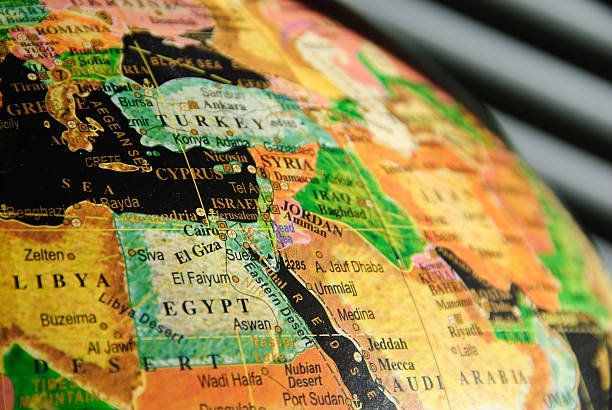
Identifying which country that Africa was first colonized by in Africa requires a look back at the early fifteenth century when European maritime powers began their expansion into the Atlantic. Portugal holds the historical distinction of being the first modern European nation to establish a permanent colonial presence on the continent, starting with the capture of the Moroccan city of Ceuta in 1415. This landmark event initiated a long period of coastal exploration and trade that eventually led to the deep partitioning of the continent by various global powers.
The journey of colonization evolved from simple trade outposts to the complex administrative structures that defined the late nineteenth century. To understand this transition, it is helpful to examine the specific nations and historical periods that marked the beginning of foreign settlement across different regions of the continent.
These are the Africa Was First Colonized By Which Country
When discussing the origins of foreign rule, we must distinguish between ancient settlers and the modern colonial era that began in the 1400s. While ancient civilizations like the Phoenicians and Romans established territories in the north, the modern concept of colonization is most strongly associated with the arrival of Portuguese explorers and subsequent European powers. The following points detail the specific nations that were instrumental in the early stages of establishing foreign control over various African territories and the historical context of their arrival.
1. Portugal and the Conquest of Ceuta
Portugal is widely acknowledged as the first European nation to initiate the modern colonial era in Africa. In 1415, King John I led a military expedition to capture the strategic port of Ceuta in modern-day Morocco, which sat at the entrance of the Mediterranean Sea. This move was motivated by a desire to control trans-Saharan trade routes and to spread Christianity in the region. The successful capture of Ceuta gave the Portuguese a foothold on the African mainland and served as a base for further explorations down the western coast. It signaled the end of the Middle Ages and the beginning of an era where European ships would dominate the global oceans. This event is often cited as the definitive starting point for the expansion of European influence into the African landmass.
2. The Discovery and Settlement of Madeira
Shortly after the success in Ceuta, Portuguese explorers discovered the uninhabited islands of Madeira in 1419. While these islands are technically part of the African tectonic plate, they were integrated directly into the Portuguese kingdom and became a laboratory for colonial agricultural techniques. The Portuguese introduced sugar cane cultivation, which proved to be incredibly profitable and set a precedent for plantation economies that would later be replicated across the Atlantic. The settlement of Madeira demonstrated that European nations could not only capture existing cities but also build new societies from the ground up on African territories. This successful settlement encouraged Prince Henry the Navigator to fund more voyages deeper into the Atlantic and along the West African shoreline. The islands remain an autonomous region of Portugal to this day, reflecting their long-standing colonial heritage.
3. Portuguese Expansion into Cape Verde
By the mid-1400s, Portuguese mariners reached the Cape Verde archipelago, which was also found to be uninhabited at the time. These islands became a crucial strategic point for the emerging Atlantic slave trade and a central hub for ships traveling to the Americas and the East Indies. The Portuguese established a permanent presence on the islands in 1462, making Cape Verde one of the oldest European settlements in the tropics. The mixing of Portuguese and West African populations on the islands led to the development of a unique Crioulo culture and language. This colonization was driven by the need for a mid-Atlantic refreshment station and a secure location to process goods and enslaved persons. It highlights how the early Portuguese strategy focused on island bases as much as mainland coastal forts.
4. The Establishment of Elmina in Ghana
In 1482, the Portuguese built São Jorge da Mina, popularly known as Elmina Castle, on the coast of present-day Ghana. This was the first major European fort built on the Gulf of Guinea and served as a massive trade center for gold and later for human trafficking. The construction of Elmina was a significant step in which country that Africa was first colonized by in Africa because it represented a permanent, fortified investment in the African mainland. The Portuguese negotiated with local African leaders to secure the land, showcasing the complex diplomatic interactions that characterized early colonial relations. For over a century, Elmina was the primary point of contact between European merchants and the gold-rich kingdoms of the interior. The fort stands today as a UNESCO World Heritage site and a somber monument to the early days of global trade and colonization.
5. Ancient Phoenicia and the Founding of Carthage
If we look further back into ancient history, the Phoenicians from modern-day Lebanon were among the first to colonize the northern shores of the continent. Around 814 BC, they founded the city of Carthage in what is now Tunisia, which eventually grew into a powerful maritime empire. Unlike the later European explorers, the Phoenicians were primarily interested in establishing a network of trading ports to facilitate their Mediterranean commerce. Carthage became so powerful that it eventually challenged Rome for supremacy during the Punic Wars. This ancient form of colonization involved the transfer of Phoenician culture, religion, and urban planning to North Africa. It proves that the concept of foreign settlement on the continent existed long before the modern era and deeply influenced the development of the Maghreb region.
6. Ancient Greece and the Province of Cyrenaica
The ancient Greeks also played a role as early colonizers, particularly in the eastern part of modern-day Libya. In the seventh century BC, Greek settlers from the island of Thera founded the city of Cyrene, which became the center of a flourishing region known as Cyrenaica. The Greeks brought their architectural styles, philosophy, and political systems to the African coast, creating a Mediterranean-style civilization on the continent. These settlements were independent city-states rather than extensions of a central Greek empire, but they represented a significant foreign presence. The legacy of Greek colonization is still visible in the remarkably preserved ruins of Cyrene and Apollonia. This period shows that African countries that Africa was first colonized by in the ancient world were often centers of intellectual and economic exchange between diverse cultures.
7. The Roman Empire in North Africa
Following the defeat of Carthage, the Roman Empire became the dominant colonial force in North Africa, turning it into the breadbasket of Rome. From approximately 146 BC until the fall of the Western Empire, Rome controlled vast territories stretching from Egypt to modern-day Morocco. The Romans built magnificent cities like Timgad in Algeria and Leptis Magna in Libya, implementing their legal systems and infrastructure across the region. This era of colonization was characterized by high levels of integration, with many Roman emperors, such as Septimius Severus, actually being of African descent. The Roman presence profoundly changed the agricultural and urban landscape of the northern coast. It remains one of the most significant examples of long-term foreign administration and settlement on the continent before the modern age.
8. The Dutch and the Cape Colony
In the mid-seventeenth century, the Dutch East India Company established a refreshment station at the Cape of Good Hope in 1652. Led by Jan van Riebeeck, this settlement was originally intended to provide fresh water and food for Dutch ships sailing to the East Indies. However, it quickly expanded into a permanent colony as Dutch farmers, known as Boers, began to move inland to find more grazing land. This expansion led to the displacement of indigenous San and Khoekhoe populations and the eventual establishment of a complex racial hierarchy. The Dutch colonization of the southern tip of Africa was unique because it involved a large-scale migration of European families intending to stay permanently. This created a distinct African country which Africa was first colonized by in terms of a localized European-descendant identity. The legacy of the Dutch presence remains central to the history and linguistic landscape of modern South Africa.
9. France and the Settlement of Saint-Louis
France began its colonial journey in Africa in the seventeenth century, focusing on the West African coast. In 1659, French merchants established the settlement of Saint-Louis on an island at the mouth of the Senegal River. This town became the first permanent French settlement in Africa and served as a base for the trade in gum arabic, hides, and enslaved persons. Saint-Louis developed into a sophisticated urban center with a unique architectural style and a mixed-race elite known as the signares. The French use of Saint-Louis as a capital for their West African territories laid the groundwork for their extensive colonial empire in the region during the nineteenth century. It illustrates how early trading posts were the seeds from which massive territorial empires eventually grew. The city is still a cultural hub in modern Senegal, preserved for its historical and colonial importance.
10. Britain and the River Gambia
The British were also early participants in the colonization of West Africa, primarily through the activities of chartered trading companies. In the 1660s, the Royal Adventurers into Africa established a presence on James Island in the Gambia River. This small island became a strategic point for the British to compete with the French and Portuguese for control over regional trade. Like many other early colonial efforts, the British presence was initially confined to small forts and coastal strips rather than large inland territories. Over time, these small holdings were consolidated into more formal colonial administrations, such as the Gambia Colony and Protectorate. The British influence in the region was driven by economic competition and the desire to secure maritime dominance. The history of the Gambia reflects the broader pattern of how European rivalries dictated the early map of the African coast.
11. Spain and the Canary Islands
Although the Canary Islands are situated off the coast of Morocco, their colonization by Spain in the fifteenth century was a major event in the history of African exploration. The Spanish spent nearly a century conquering the indigenous Guanche people before finally securing the islands for the Castilian crown in 1496. These islands became the final departure point for Christopher Columbus and subsequent explorers heading to the New World. The conquest of the Canaries provided a blueprint for the Spanish colonization of the Americas, involving the subjection of local populations and the implementation of the encomienda system. Because of their geographic location, the islands were often the first land seen by mariners returning from the West African coast. Spain's presence here made it a significant African country which Africa was first colonized by in the Atlantic maritime sphere.
12. The Ottoman Empire in North Africa
In the sixteenth century, the Ottoman Empire expanded its reach into North Africa, effectively colonizing much of the Mediterranean coast from Egypt to Algeria. Unlike the Western European maritime powers, the Ottomans governed through local regencies and governors known as Beys or Deys. This period of Ottoman rule integrated North Africa into the broader Islamic world and provided a buffer against European naval expansion for several centuries. The Ottomans brought their administrative techniques, military organization, and architectural styles to cities like Cairo, Tripoli, and Tunis. While often described as a form of imperial suzerainty, it functioned as a colonial system where the central authority in Istanbul extracted taxes and loyalty from African provinces. This era only came to an end in the nineteenth and early twentieth centuries as European powers like France and Italy began to invade the region.
Reasons Why These Countries Africa Was First Colonized By Which Country in Africa
The early colonization of Africa was not a singular event but a series of calculated moves by various nations over several centuries. Several factors explain why specific countries took the lead in this process and why certain regions were targeted before others during the initial waves of settlement.
1. Technological Advancements in Navigation: Portugal's status as the first modern colonizer was largely due to its pioneering role in maritime technology. The development of the caravel, a light and maneuverable ship, allowed Portuguese sailors to navigate the difficult winds and currents along the West African coast. Without these naval innovations, the long-distance voyages required to reach sub-Saharan Africa would have been impossible. This technical edge gave the Portuguese a head start over their European rivals for nearly a century. Their success in mapping the coastline paved the way for every other nation that followed in their wake.
2. Search for Alternative Trade Routes: A primary driver for country in Africa Africa was first colonized by initiatives was the desire to bypass the Silk Road and the Mediterranean monopolies. European powers wanted direct access to the gold mines of West Africa and the spice markets of the East. By sailing around the African continent, Portugal and later the Netherlands hoped to cut out the middlemen in the Middle East and Venice. This economic incentive made the African coastline strategically invaluable as a series of stepping stones toward global wealth. The pursuit of profit was the engine that powered the early colonial machine.
3. Geopolitical Competition in Europe: Colonization was often a reflection of the power struggles occurring within Europe itself. When one nation like Portugal became wealthy through African trade, rivals like Spain, France, and Britain felt compelled to establish their own colonies to maintain the balance of power. This competition led to a race for coastal forts and islands that could serve as naval bases and trading hubs. Many early colonies were captured and recaptured multiple times as European wars spilled over into the African theater. The continent essentially became a secondary battlefield for European monarchs seeking prestige and dominance.
4. Spreading Religious Beliefs: In the fifteenth and sixteenth centuries, the Catholic Church was a powerful advocate for overseas expansion. The Portuguese and Spanish missions were often accompanied by priests whose goal was to convert local populations to Christianity. This religious mandate provided a moral justification for the conquest of foreign lands and the subjection of non-Christian peoples. In many cases, the cross followed the sword, with mission stations being built alongside military forts. This religious aspect was a central component of countries in Africa that Africa was first colonized by during the early modern era.
5. Demand for Natural Resources: From the very beginning, Africa was seen as a source of raw materials that were in high demand in Europe and Asia. Gold, ivory, and gum arabic were among the first commodities that drew European merchants to the coast. Later, the demand for sugar led to the establishment of plantation colonies on various islands. The availability of these resources encouraged nations to move beyond simple trade and toward territorial control to ensure a steady supply. This resource-driven approach defined the economic relationship between the colonizers and the continent for centuries.
6. Strategic Maritime Locations: Many early colonial sites were chosen specifically because of their location along major shipping lanes. The African countries that Africa was first colonized by in the southern and western regions often served as vital pit stops for ships on multi-month voyages. Places like Cape Town, Saint-Louis, and the Cape Verde islands were essential for repairing ships, taking on fresh water, and allowing crews to recover from scurvy. Controlling these ports meant controlling the flow of global trade across the Atlantic and Indian Oceans. Thus, the geography of the African coastline dictated the pattern of early colonial settlement.
Conclusion
The history of how and when Africa was first colonized by various countries reveals a complex story of maritime ambition, economic greed, and cultural exchange. While Portugal led the way in the 1400s with the capture of Ceuta and the exploration of the West African coast, they were soon followed by a host of other European and even ancient Mediterranean powers. Each nation brought its own motivations and methods, leaving behind a legacy that continues to shape the geopolitical and social realities of the continent today. Understanding these early contact points is essential for anyone wishing to grasp the full narrative of African history and the origins of modern international relations. The role of the African country which Africa was first colonized by remains a foundational chapter in the story of the modern world.
Enjoyed this read?
Share it with your friends and colleagues.