Is Africa Forming A New Ocean

BSC Insights Admin
September 30, 2026
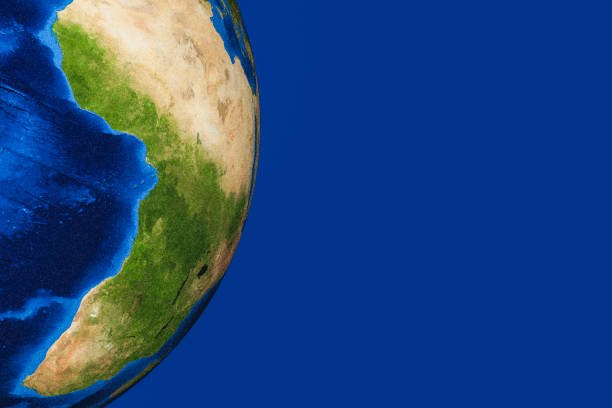
Yes, Africa is indeed forming a new ocean, albeit at an incredibly slow geological pace that spans millions of years. This monumental event is driven by the ongoing rifting of the continent along the East African Rift System (EARS), a 3,500-kilometer-long active continental rift zone where the African continent is gradually pulling apart. This process, governed by the forces of plate tectonics, will eventually lead to the separation of the eastern part of Africa, forming a new oceanic basin where water will eventually fill the widening gap.
The Dynamic Earth: Understanding Plate Tectonics
To grasp how a continent can split and a new ocean can emerge, it's essential to understand the fundamental concept of plate tectonics. The Earth's outermost layer, the lithosphere, is broken into several large and small pieces called tectonic plates. These plates are constantly moving, albeit very slowly, driven by convection currents within the Earth's mantle beneath them. The interactions at the boundaries of these plates—convergent (colliding), divergent (moving apart), and transform (sliding past each other)—are responsible for earthquakes, volcanic activity, mountain building, and the formation of ocean basins.
The splitting of Africa is a classic example of a divergent plate boundary at play within a continental landmass. Unlike oceanic divergent boundaries where new seafloor is generated, continental rifting involves the stretching, thinning, and eventual breaking apart of continental crust. This process is a precursor to the formation of a new ocean.
The East African Rift System: A Continent Under Stress
The East African Rift System (EARS) is the most prominent and active zone of continental rifting on Earth today, making it a critical area for scientists studying the early stages of ocean formation. Stretching from the Afar Triple Junction in Ethiopia through Kenya, Tanzania, and into Mozambique, the EARS is a vast network of valleys, volcanoes, and fault lines that bears witness to the immense forces at work beneath the surface.
What is the East African Rift?
The EARS is not a single crack but a complex series of rifts and faults, often characterized by dramatic landscapes including steep escarpments, deep valleys, and numerous volcanoes. It represents the zone where the African plate is actively undergoing extension. Specifically, the Somali Plate (which includes much of East Africa) is pulling away from the larger Nubian Plate (which constitutes most of the rest of Africa) and the Arabian Plate.
Key Features and Dimensions
- Length: Approximately 3,500 kilometers (2,200 miles) from north to south.
- Width: Varies significantly, ranging from tens to hundreds of kilometers.
- Depth: Rift valleys can be hundreds to thousands of meters deep.
- Volcanic Activity: Home to many active and dormant volcanoes, including Mount Kilimanjaro, Mount Kenya, and Erta Ale.
- Lakes: Contains a chain of deep, elongated lakes such as Lake Tanganyika, Lake Malawi, and Lake Turkana, many of which are vital sources of freshwater and biodiversity hotspots.
Volcanic Activity and Earthquakes
The EARS is seismically and volcanically active, providing direct evidence of the ongoing tectonic processes. Earthquakes, though generally not as powerful as those at subduction zones, are frequent and shallow, indicating crustal fracturing. Volcanic eruptions, particularly in the northern parts of the rift (like the Afar region), are a result of magma rising from the mantle into the thinned continental crust. This magmatic activity is crucial for the eventual formation of new oceanic crust.
The Mechanics of Rifting: How a Continent Breaks Apart
The process of continental rifting is a gradual, multi-stage phenomenon:
- Stretching and Thinning: Initially, the continental crust and lithosphere begin to stretch and thin under extensional forces. This is similar to pulling a piece of dough; it gets thinner in the middle.
- Faulting and Subsidence: As the crust thins, it breaks along a series of faults, creating rift valleys where blocks of land drop down (subsidence). This forms the characteristic grabens and horsts topography seen in the EARS.
- Magma Upwelling: The thinning of the lithosphere reduces the pressure on the underlying mantle, causing it to melt and produce magma. This magma rises, intruding into the crust and sometimes erupting as volcanoes. This magmatic intrusion further weakens the crust.
- Oceanic Crust Formation (Seafloor Spreading): If the rifting continues for a sufficient duration (millions of years), the continental crust will eventually rupture completely. At this point, magma will consistently rise to the surface, solidify, and form new oceanic crust. This process, known as seafloor spreading, is what creates ocean basins.
The Red Sea and the Gulf of Aden are excellent modern examples of where this process has progressed to the point of forming young oceans. They represent the next stage for the EARS.
Evidence of a Growing Rift: Signs from the Ground
Scientists monitor the East African Rift closely using various techniques, gathering compelling evidence that supports the hypothesis of a new ocean forming:
- Visible Surface Cracks: Occasionally, dramatic surface ruptures occur, like the 2018 crack in Kenya, which was several meters wide and kilometers long. While these are localized expressions of deeper stresses, they visibly demonstrate the ongoing separation.
- Seismic Activity: Regular shallow earthquakes indicate active faulting as the crust stretches and breaks.
- Volcanic Activity: Active volcanoes, especially in the northern Afar region, show that magma is indeed rising and interacting with the crust.
- Geodetic Measurements (GPS): Global Positioning System (GPS) data precisely track the movement of landmasses. Measurements show that the Somali Plate is moving eastward away from the Nubian Plate at a rate of a few millimeters to a few centimeters per year. This seemingly small movement accumulates to significant separation over geological timescales.
- Heat Flow Anomalies: Higher than normal heat flow from the Earth's interior is observed in rift zones, indicating rising magma and thinning lithosphere.
The Plates Involved: A Three-Way Pull
The East African Rift System is primarily influenced by the divergence of three major tectonic plates:
- The Nubian Plate: This plate comprises the majority of the African continent and is generally stable.
- The Somali Plate: This smaller plate encompasses Somalia, parts of Ethiopia, Kenya, and Tanzania. It is slowly pulling eastward away from the Nubian Plate.
- The Arabian Plate: To the north, the Arabian Plate is also pulling away from the African continent, having already created the Red Sea and the Gulf of Aden. The Afar Triple Junction is where these three plates meet and diverge.
The combined pulling forces at these divergent boundaries are what ultimately drive the continental breakup in East Africa.
From Rift Valley to Ocean Basin: A Glimpse into the Future
What will Africa look like in the distant future if this rifting continues? Geologists predict a sequence of events:
- Wider Rift Valleys: The existing rift valleys will continue to widen and deepen.
- Inundation by Seawater: As the valleys drop below sea level, seawater from the Red Sea and the Gulf of Aden will eventually flood the basin, creating a long, narrow sea. This stage would be analogous to the present-day Red Sea.
- Formation of a New Ocean: Over tens of millions of years, as seafloor spreading continues, this narrow sea will expand into a full-fledged ocean, complete with a mid-ocean ridge. The eastern part of Africa, often referred to as the Somali microplate, will become a large island continent, much like Madagascar but on a grander scale.
This future African ocean would fundamentally redraw the map of Africa, creating new coastlines and potentially altering global ocean currents and climate patterns over eons.
The Long-Term Impact and Geological Timelines
It's crucial to reiterate that this transformation is occurring on a geological timescale, not a human one. The process will take tens of millions of years to fully unfold. While observable changes like surface cracks can happen relatively quickly, the formation of an entire ocean basin is a monumental undertaking of Earth's internal forces.
The eventual separation will create a dramatic new geography. East Africa's current ecosystems will be significantly altered, and new marine ecosystems will emerge in the nascent ocean. The implications for biodiversity, climate, and even human populations (if they exist in that distant future) are immense, though speculative.
Understanding the Pace: Not an Overnight Event
The separation rate along the East African Rift is typically measured in millimeters per year. For example, some segments are pulling apart at roughly 2-7 millimeters annually. To put this into perspective:
- In 1,000 years, the separation would be about 2-7 meters.
- In 1 million years, it would be 2-7 kilometers.
- To create an ocean hundreds or thousands of kilometers wide requires many tens of millions of years.
So, while the scientific evidence is clear that Africa is splitting and a new ocean is being born, it's a process that will not be completed within any human lifespan or even within many generations. Our descendants, far into the future, might witness more significant changes, but for now, it remains a slow, majestic testament to the Earth's dynamic nature.
Conclusion
In summary, the answer to "Is Africa forming a new ocean?" is a resounding yes, though with the critical caveat of geological time. The East African Rift System is an active laboratory demonstrating the initial stages of continental breakup, driven by the fundamental forces of plate tectonics. Evidence from seismic activity, volcanic eruptions, visible surface ruptures, and precise GPS measurements all point to the gradual separation of the Somali Plate from the Nubian Plate. This process, which has already created features like the Red Sea, will, over tens of millions of years, lead to the inundation of the rift valleys by seawater and the eventual formation of a vast new oceanic basin, fundamentally reshaping the African continent.
Enjoyed this read?
Share it with your friends and colleagues.