Did Africa Freeze During The Ice Age

BSC Insights Admin
September 30, 2026
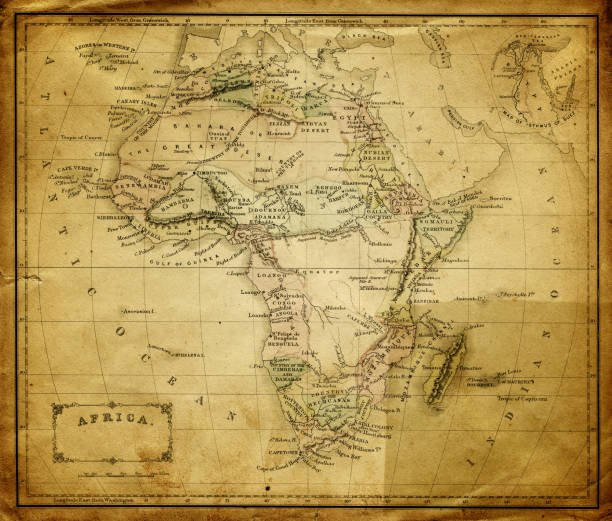
No, Africa did not freeze entirely during the Ice Age, also known as the Last Glacial Maximum (LGM), which occurred approximately 26,500 to 19,000 years ago. While the continent experienced significant climate shifts, becoming generally cooler and much drier, widespread continental ice sheets similar to those in North America and Eurasia never covered Africa. Instead, its climate response was highly regionalized, with high-altitude mountains developing glaciers, vast deserts expanding, and tropical regions experiencing cooler, often drier conditions.
Understanding the Ice Age and Its Global Impact
The term 'Ice Age' commonly refers to the Last Glacial Maximum, a period within the broader Pleistocene epoch when global temperatures plummeted, and immense ice sheets grew to cover large parts of the Northern Hemisphere. This global cooling was driven by complex interactions of orbital cycles, atmospheric CO2 levels, and ocean currents. The sheer volume of water locked in these ice sheets led to a significant drop in global sea levels, exposing vast land bridges and altering coastlines worldwide. While its most dramatic effects were seen in higher latitudes, the global climate shifts Africa experienced were profound, though distinctly different.
Africa's Varied Climate Response During the Last Glacial Maximum
Africa's large size and diverse topography meant that the impact of the Ice Age varied dramatically across its regions. Instead of a uniform deep freeze, the continent saw a mosaic of cooler, drier, and in some high-altitude areas, glaciated environments.
Northern Africa: Expansion of Aridity and Local Glaciation
The region encompassing the Sahara Desert and North Africa experienced significantly colder and more arid conditions. The Sahara desert during Ice Age periods expanded far beyond its current boundaries, becoming an even more formidable barrier to movement. Dust storms were more frequent and intense, depositing layers of dust across the Atlantic Ocean. However, even within this aridity, there were exceptions. The high peaks of the Atlas Mountains in the Maghreb region, for instance, supported small glaciers, providing concrete evidence of localized freezing conditions at elevated altitudes.
East Africa: Glaciers on High Peaks and Lower Lake Levels
East Africa glacial periods are well-documented, particularly on its tallest mountains. Peaks like Mount Kilimanjaro, Mount Kenya, and the Ruwenzori Mountains (Mountains of the Moon) supported extensive valley glaciers that were much larger than their remnants today. For example, geological evidence shows that Mount Kenya had an ice cap extending down to approximately 3,000 meters above sea level. Lower elevations in East Africa experienced cooler temperatures, and many of the Great Rift Valley lakes, such as Lake Victoria and Lake Tanganyika, saw significantly lower water levels or even dried up in parts due to reduced rainfall and increased evaporation, indicating a generally drier environment.
Central and West Africa: Cooler Tropics and Savannization
While nowhere near freezing, tropical Africa Ice Age conditions meant generally cooler and often drier climates. The vast equatorial rainforests of Central and West Africa contracted considerably, fragmenting into smaller refugia. Areas that are currently dense forest transformed into more open woodland or savanna environments, a process known as savannization. This shift in vegetation zones was driven by reduced precipitation and lower temperatures, affecting the distribution of species and creating new ecological pressures. Despite these changes, the core of these regions remained tropical, albeit a cooler, drier version of it.
Southern Africa: Aridity and Ecosystem Shifts
Southern Africa also felt the pervasive grip of the Ice Age. The region was generally cooler and significantly drier than today. Deserts and semi-arid zones, such as the Kalahari and Namib, expanded, pushing back grasslands and temperate forests. Rainfall patterns shifted, leading to reduced river flow and lower groundwater tables. While no extensive glaciation occurred at lower altitudes, the Drakensberg Mountains, for example, experienced periglacial conditions, characterized by permafrost and freeze-thaw cycles without true glaciers. This led to significant shifts in plant and animal distributions, with many species adapting to increasingly arid environments.
Evidence for Africa's Ice Age Climate
Paleoclimate scientists piece together Africa's Ice Age past using a variety of sophisticated methods, providing robust evidence for the described climate shifts:
- Glacial Deposits and Moraines: On high mountains like Kilimanjaro and Mount Kenya, geological features such as moraines (accumulations of glacial debris) and U-shaped valleys are clear indicators of past extensive glaciation.
- Lake Sediment Cores: Analyzing sediment layers from ancient lake beds provides a wealth of information. Pollen grains reveal past vegetation types, while microscopic algae (diatoms) and mineral composition indicate changes in water levels, salinity, and aridity. For instance, cores from Lake Malawi show periods of extreme aridity during the LGM.
- Ocean Sediment Cores: Cores from the Atlantic and Indian Oceans off the coast of Africa contain dust particles blown from the continent, showing increased desertification and wind transport during the Ice Age.
- Fossil Records: The distribution of plant and animal fossils provides clues about past environments. Changes in species composition and the presence of cold-adapted species (or their absence) help reconstruct ancient ecosystems.
- Dune Fields: Ancient, stabilized sand dunes far from present-day deserts, particularly in southern Africa (e.g., Kalahari), indicate periods of greater aridity and expanded desert conditions.
- Speleothems (Cave Formations): Stalagmites and stalactites can record changes in rainfall and temperature over millennia through their isotopic composition.
Impact on African Flora and Fauna
The Ice Age impact on Africa dramatically reshaped its ecosystems. Vegetation zones shifted, leading to significant changes in biodiversity patterns. The contraction of rainforests and expansion of savannas and deserts forced many species to adapt, migrate, or face extinction. For example, many forest-dependent species found refuge in isolated pockets, leading to genetic diversification over time. Conversely, species adapted to open grasslands and arid environments thrived and expanded their ranges. The larger, more powerful species, often referred to as African megafauna Ice Age inhabitants, such as giant buffalo and large antelopes, also faced pressure due to changes in water sources and vegetation. These ecological transformations played a crucial role in shaping the continent's current biodiversity.
Human Resilience and Adaptation in Africa
Crucially, Africa was the cradle of humanity, and Homo sapiens were very much present and thriving during the Last Glacial Maximum. While the cooler, drier conditions posed challenges, early humans demonstrated remarkable adaptability. Archaeological evidence suggests that populations moved to more hospitable areas, often near reliable water sources or coastal refugia. They developed sophisticated hunting and gathering strategies, utilizing diverse resources from coastal environments to the expanding savannas. This period was pivotal for human evolution and migration, with subsequent waves of human expansion out of Africa occurring both before and after the LGM. The ability of early humans to navigate and adapt to the African climate during the Last Glacial Maximum is a testament to their ingenuity and resilience.
Why Africa Didn't Experience Widespread Freezing
The fundamental reason why Africa didn't freeze globally during the Ice Age lies in its geographical position and unique climatic factors:
- Equatorial Location: The vast majority of Africa lies within the tropical and subtropical zones, receiving high levels of solar insolation even during periods of global cooling. The sun's energy prevented widespread freezing at lower altitudes.
- Lack of High-Latitude Landmasses: Unlike North America and Eurasia, Africa lacks significant landmasses at high latitudes where ice sheets could easily form and spread. Its land area rapidly tapers towards the south, limiting the extent of any potential southern ice formation.
- Oceanic Influences: While ocean currents shifted, warm ocean waters surrounding much of the continent helped moderate temperatures, particularly along coastal areas, preventing the sustained conditions necessary for continental glaciation.
- Topography: Only the highest mountain ranges provided the necessary altitude for temperatures to drop below freezing point consistently enough to support glaciers.
Comparing Africa to Other Continents
To truly grasp Africa's Ice Age experience, it's helpful to compare it with other continents. While North America and Eurasia were buried under massive ice sheets several kilometers thick, extending well into what is now the United States and Central Europe, Africa's experience was distinctly different. Its Ice Age was characterized by a massive expansion of deserts and savannas, fragmented rainforests, and significant glaciation only on its highest peaks. Australia, similarly, experienced increased aridity and desertification but no widespread glaciation. South America saw some mountain glaciation in the Andes and aridification in its lower latitudes, sharing some parallels with Africa's response.
Summary: Africa's Ice Age Reality
In conclusion, the question, Did Africa freeze during the Ice Age, can be definitively answered with a nuanced 'no'. While the Last Glacial Maximum brought profound global climate shifts Africa-wide, characterized by cooler and significantly drier conditions, it did not lead to the formation of continental ice sheets that covered large portions of the landmass. Instead, the continent experienced localized glaciation on its highest mountains, a dramatic expansion of its deserts (especially the Sahara), a contraction of its tropical rainforests, and widespread shifts in vegetation across its diverse regions. Africa's unique geography ensured its role as a stable, albeit climatically dynamic, cradle for humanity, allowing early human populations to adapt and thrive amidst these environmental transformations.
Enjoyed this read?
Share it with your friends and colleagues.