Did Africa Give Judaism To The World

BSC Insights Admin
September 30, 2026
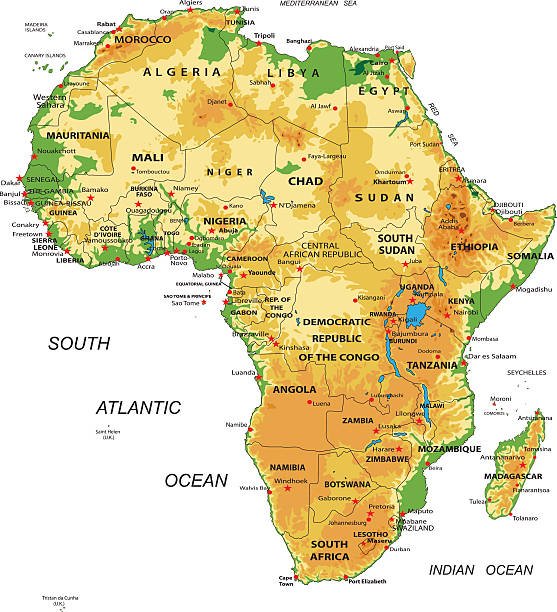
Introduction: Unraveling the Roots of Judaism and Africa's Role
While Africa profoundly impacted Jewish history and provided refuge for vibrant Jewish communities, the foundational origins of Judaism are primarily rooted in the Ancient Near East, specifically the lands of Mesopotamia and Canaan (modern-day Israel/Palestine). Therefore, in the strictest sense, Africa did not 'give Judaism to the world' as its place of genesis. However, dismissing Africa's undeniable influence on the historical trajectory, cultural diversity, and enduring presence of Jewish people would be a significant oversight. This article delves into the true origins of Judaism, explores Africa's critical historical connection, and examines how various African communities shaped and preserved Jewish identity over millennia.
Understanding the intricate relationship requires differentiating between a religion's geographical origin and the significant roles other regions play in its development, survival, and diversification. Judaism, as we know it, emerged from a specific historical and cultural matrix that was distinct from the indigenous cultures of sub-Saharan or even most of North Africa at the time of its inception. Yet, the continent served as a cradle for a significant portion of Jewish history, from biblical narratives to thriving medieval communities and unique ancient traditions.
The Ancient Near East: Cradle of Monotheism
The historical and religious consensus places the origins of ancient Israelite religion, the precursor to modern Judaism, firmly within the context of the Ancient Near East. This region, encompassing modern-day Iraq, Syria, Lebanon, Jordan, and Israel/Palestine, was a melting pot of cultures, religions, and empires. The narrative of Abraham, considered the patriarch of Judaism, originates from Ur of the Chaldees in Mesopotamia. His journey led him to Canaan, which became the Promised Land and the spiritual homeland of the Jewish people.
- Mesopotamian Background: Early biblical narratives connect the patriarchs to Mesopotamia, a region rich in complex mythologies, legal codes, and a pantheon of gods. While monotheism was revolutionary, elements of the cultural milieu influenced early Israelite thought.
- Canaanite Context: The land of Canaan, where the Israelites settled, was home to various polytheistic cults. The development of Israelite monotheism, centered on the worship of a single God, Yahweh, was a direct and often confrontational response to these surrounding religious practices. The establishment of Jerusalem as the spiritual capital and the construction of the First Temple solidified this unique identity.
The formative period of Judaism, including the development of its core theological tenets, legal framework, and liturgical practices, occurred within this specific geographic and cultural landscape. The Torah, the foundational text, primarily describes events and laws pertinent to the people of Israel within the Ancient Near East.
The Formative Role of Ancient Egypt
Despite not being its birthplace, Egypt's connection to early Israelite history is undeniable and deeply embedded in Jewish tradition. The stories of Joseph, the enslavement in Egypt, and the Exodus are not merely historical accounts; they are foundational narratives that define Jewish identity, covenant, and the very concept of freedom.
The Exodus Narrative: A Cornerstone of Jewish Identity
The story of the Exodus, recounting the liberation of the Israelite slaves from Pharaoh's oppressive rule under Moses's leadership, is arguably the single most important event in the Jewish collective memory. It represents the birth of the Israelite nation and its covenant with God at Mount Sinai.
- Slavery and Liberation: The period of Israelite servitude in Egypt, though its historical details are debated by archaeologists, is central to the Jewish narrative of suffering and redemption. It forged a collective identity and a shared trauma that continues to resonate.
- Formation in the Wilderness: Following their escape, the Israelites spent forty years in the Sinai wilderness, during which they received the Torah and established the laws and rituals that would govern their society. This period, while geographically on the border between Africa and Asia, is intrinsically linked to the departure from Egypt.
The Passover festival, one of the most significant holidays in Judaism, directly commemorates the Exodus, underscoring Egypt's enduring symbolic importance. This period signifies a profound, albeit painful, interaction with an African power that shaped the trajectory of the Jewish people.
Historical Evidence of Jewish Presence in Ancient Egypt
Beyond the biblical narratives, archaeological and historical evidence points to a significant and long-standing Jewish presence in Egypt, particularly during later periods.
- Elephantine Papyri: A Glimpse into a Jewish Military Colony: In the late 5th century BCE, a Jewish military colony flourished on Elephantine Island in southern Egypt. The Elephantine Papyri, a collection of ancient documents written in Aramaic, reveal details of their daily life, legal affairs, and even the existence of a Jewish temple dedicated to Yahweh, operating alongside Egyptian deities. This community maintained ties with Judea but developed its own unique practices, illustrating a vibrant Jewish life on African soil long before the common era.
- Hellenistic Judaism in Alexandria: A Center of Learning and Diaspora Life: During the Hellenistic period, particularly after the conquest of Alexander the Great, Alexandria in Egypt became one of the largest and most influential Jewish centers in the world. Its Jewish population, numbering in the hundreds of thousands, played a crucial role in the development of Hellenistic Judaism. Here, the Septuagint, the first translation of the Hebrew Bible into Greek, was produced, making Jewish scripture accessible to a wider, Greek-speaking world. Alexandrian Jewish philosophers like Philo attempted to reconcile Jewish theology with Greek philosophy, leaving a profound mark on both Jewish and early Christian thought.
Judaism's Flourishing in North Africa
Beyond Egypt, North Africa became a significant hub for Jewish communities, particularly after the destruction of the Second Temple in Jerusalem in 70 CE and during various Roman and Byzantine persecutions. Waves of Jewish migration and conversion led to the establishment of thriving communities across the Maghreb region.
Roman and Byzantine Eras: Growth and Development
Jewish communities existed in Roman North Africa (modern-day Tunisia, Algeria, Morocco) from at least the 1st century CE. Archaeological evidence, including synagogues and inscriptions, attests to their widespread presence. These communities integrated into the Roman world while maintaining their distinct religious identity. With the decline of Roman rule and the rise of the Byzantine Empire, Jewish life continued, though often facing increased pressures.
The Golden Age of North African Jewry
The Arab conquest of North Africa in the 7th and 8th centuries initially brought a period of relative tolerance and prosperity for many Jewish communities. This era, particularly from the 9th to the 12th centuries, is often referred to as a 'Golden Age' for North African Jewry, paralleling the broader Islamic Golden Age.
- Kairouan and Fez: Centers of Rabbinic Scholarship: Cities like Kairouan (in modern Tunisia) and Fez (in modern Morocco) became renowned centers of Jewish learning and rabbinic scholarship. Scholars from these communities contributed significantly to the development of Jewish law, philosophy, and poetry. Figures like Rabbi Nissim ben Jacob of Kairouan and Judah ibn Kuraish of Fez were intellectual giants whose works influenced Jewish thought globally.
- Cultural and Intellectual Contributions: North African Jewish communities served as vital links in the transmission of knowledge between the Middle East, Spain, and later Europe. They adapted to their surroundings, contributing to the rich tapestry of Sephardic culture, which fused Jewish traditions with Arabic language and aesthetics. The communities maintained intricate trade networks, contributing significantly to the region's economy.
For centuries, North Africa was home to some of the largest, most influential, and intellectually vibrant Jewish populations outside of the Land of Israel, demonstrating Africa's crucial role in sustaining and enriching Jewish civilization.
The Unique Narrative of Ethiopian Judaism (Beta Israel)
Ethiopia represents one of the most intriguing and ancient Jewish communities in Africa, the Beta Israel, often fueling discussions about Africa's role in Judaism's spread and perceived origins. Their history is distinct from other African Jewish communities, being largely isolated for centuries.
Ancient Origins and Theories
The precise origins of the Beta Israel are shrouded in ancient history and various theories, making them a subject of intense academic and historical debate.
- Descent from King Solomon and Queen of Sheba?: One popular legend, recorded in the Ethiopian national epic Kebra Nagast, suggests that the Beta Israel are descendants of Menelik I, the son of King Solomon and the Queen of Sheba, who brought the Ark of the Covenant to Ethiopia. While not historically verifiable, this narrative reflects a deep-seated connection to ancient Israel.
- Migration from Ancient Egypt or Yemen?: Other theories propose that the Beta Israel originated from ancient Jewish communities in Egypt who migrated south along the Nile, or from Jewish traders and migrants from Yemen across the Red Sea. Another hypothesis suggests they are descendants of early inhabitants of Ethiopia who adopted Judaism before the advent of Christianity.
Regardless of their precise origin, the Beta Israel have maintained a unique form of Judaism for thousands of years, characterized by practices that predate the Talmud and reflect ancient Israelite traditions.
Distinct Practices and Enduring Faith
For centuries, the Beta Israel practiced a form of Judaism often referred to as 'pre-Rabbinic.' Their religious texts were primarily the Torah (Orit), and they adhered to strict dietary laws (kashrut), Sabbath observance, and festivals derived directly from the Pentateuch. They did not traditionally follow the Talmud or later rabbinic commentaries until their reconnection with global Jewry.
- Pre-Talmudic Traditions: Their religious leadership, known as 'kesim' or 'kahenat,' guided the community. They observed unique festivals and rituals, such as the Sigd festival, a celebration of renewing the covenant with God and longing for Jerusalem. Their distinct liturgical language, Ge'ez, further set them apart.
- Modern Recognition and Aliyah: Despite centuries of isolation and, at times, persecution, the Beta Israel steadfastly maintained their Jewish identity. In the late 20th century, following extensive debates and recognition by Israeli religious authorities, large-scale airlifts, notably Operation Moses and Operation Solomon, brought the vast majority of Ethiopian Jews to Israel. This mass 'Aliyah' (immigration to Israel) is a powerful testament to their enduring faith and Africa's role in preserving a unique branch of Judaism.
Distinguishing Origins from Historical Influence and Presence
It's crucial to differentiate where a religion originates from where it flourishes, is influenced, or provides a sanctuary for its adherents. Judaism's geographical genesis is firmly in the Ancient Near East, distinct from the African continent.
The Core Geographic and Cultural Matrix of Judaism
The foundational texts, narratives, and early development of Judaism are intrinsically tied to Mesopotamia, Canaan, and the Sinai Peninsula. The evolution from polytheistic surroundings to radical monotheism, the establishment of the covenant, the giving of the Torah, and the construction of the Temples all occurred within this Asian context. The primary language of Judaism, Hebrew, and its subsequent liturgical languages like Aramaic, are Semitic languages originating from the same region.
African Contributions to Jewish Diversity and Resilience
However, the question 'Did Africa give Judaism to the world?' goes beyond mere geography of origin. Africa, particularly Egypt and North Africa, served as a vital stage for Jewish history. It was a place of:
- Sanctuary and Refuge: From the biblical narrative of Joseph and Jacob's family seeking refuge in Egypt during famine, to Jesus's family fleeing to Egypt, and countless Jewish communities finding safety from persecution in North Africa throughout history.
- Cultural Exchange and Development: African Jewish communities, especially in Alexandria and the Maghreb, were dynamic centers of intellectual and cultural life. They facilitated the translation of texts, engaged in philosophical discourse, and produced significant rabbinic scholarship that enriched global Jewish thought.
- Preservation of Ancient Traditions: The Beta Israel of Ethiopia represent a living link to ancient forms of Judaism, having preserved traditions that illuminate the faith's early practices, largely due to their geographical isolation within Africa.
- Demographic Strength: For long periods, African Jewish communities constituted a substantial portion of the global Jewish population, playing a critical role in the continuity of the Jewish people.
Thus, while the seed of Judaism was not planted on African soil, Africa provided the fertile ground where that seed could grow, adapt, and diversify into many vibrant expressions, ensuring the continuity and richness of Jewish heritage.
Key Takeaways and Conclusion
In conclusion, the direct answer to 'Did Africa Give Judaism To The World' is no, in terms of its initial genesis. The origins of Judaism are firmly rooted in the Ancient Near East, in the lands of Mesopotamia and Canaan, now modern-day Israel and surrounding regions. However, this definitive answer does not diminish the profound and indispensable role Africa has played in Jewish history, culture, and survival. From the formative period of the Exodus narrative to the flourishing intellectual centers of Alexandria and Kairouan, and the ancient, enduring faith of the Beta Israel in Ethiopia, Africa has been much more than a peripheral backdrop.
Africa provided a crucible for development, a haven for its people, and a rich tapestry for its diverse expressions. The continent fostered unique Jewish communities that contributed significantly to rabbinic scholarship, philosophical thought, and the preservation of ancient traditions. Understanding this complex relationship offers a more complete and nuanced picture of Jewish history, highlighting Africa's critical contribution not as the origin, but as a vital stage where Judaism endured, evolved, and enriched itself, thereby giving a distinct and resilient dimension to global Jewish heritage.
Enjoyed this read?
Share it with your friends and colleagues.