How Long Did Africa Rule The World

BSC Insights Admin
October 07, 2026
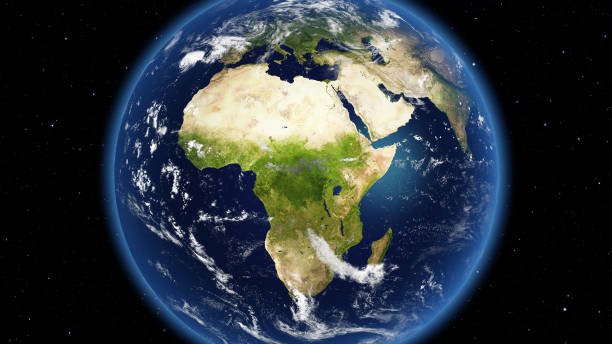
When considering how long did Africa rule the world, it's crucial to understand that 'rule' here refers less to a singular, continuous political dominion and more to an unparalleled, millennia-long period of profound global influence, innovation, and foundational contributions to human civilization. Africa has been the epicenter of human development for millions of years, the birthplace of humanity, and home to some of the most powerful and influential empires whose reach extended across continents, shaping trade, knowledge, and culture long before the modern era.
Africa's global impact began with the very dawn of humanity and continued through powerful ancient and medieval empires that exerted significant economic, cultural, and intellectual sway over vast regions of the world. From the unparalleled architectural and scientific marvels of Ancient Egypt to the immense wealth and scholarly traditions of West African kingdoms like Mali and Songhai, Africa has repeatedly played a central role in shaping the course of human history and development.
The Cradle of Humanity: Africa's Undeniable Primal Influence
Africa's most fundamental and enduring 'rule' over the world lies in its undisputed status as the cradle of humanity. For approximately 6 million years, hominid evolution unfolded on the African continent, culminating in the emergence of Homo sapiens about 300,000 years ago. This makes Africa the ancestral homeland of every human being on Earth, a form of foundational 'rule' that transcends political boundaries and time.
Origin of Humankind and Early Innovations
The earliest humans evolved in East Africa, spreading across the continent before embarking on the 'Out of Africa' migration waves that populated the rest of the globe. This period saw the development of fundamental human traits, including bipedalism, the use of tools (like the Oldowan and Acheulean technologies), and the very beginnings of language and complex social structures. These initial African innovations laid the groundwork for all subsequent human technological and cultural advancements, establishing Africa as the original wellspring of human ingenuity and survival strategies.
Early Societal Development and Cultural Foundations
As early humans diversified and adapted to various African environments, they developed diverse cultural practices, belief systems, and artistic expressions. Evidence of sophisticated abstract thought and symbolic behavior, such as cave paintings and personal adornments, dates back tens of thousands of years in various African sites. These early cultural foundations represent Africa's initial contribution to the tapestry of human civilization, influencing how societies would form and interact for millennia to come.
Ancient African Empires and Their Global Reach
Beyond its role as the birthplace of humanity, Africa hosted powerful ancient civilizations that profoundly influenced neighboring regions and beyond. These empires established complex societies, advanced technologies, and extensive trade networks, demonstrating significant forms of 'rule' through cultural exchange, economic dominance, and military strength.
Ancient Egypt's Enduring Legacy
Perhaps the most famous ancient African civilization, Ancient Egypt, flourished for over 3,000 years, from approximately 3100 BCE to 30 BCE. Its influence was vast and long-lasting, extending across the Near East, the Mediterranean, and down the Nile into Nubia. Egypt's contributions include:
- Architecture: The Pyramids of Giza and monumental temples remain unparalleled engineering feats.
- Writing Systems: Hieroglyphs provided one of the earliest forms of comprehensive written communication.
- Mathematics and Astronomy: Advanced calculations for construction and accurate calendar systems.
- Medicine: Sophisticated medical texts and surgical practices.
- Art and Religion: Distinctive artistic styles and complex theological systems that influenced Western thought.
The Nile River was the artery of this civilization, enabling agriculture and trade that sustained a powerful state for millennia, making it one of the longest-lasting and most influential civilizations in world history.
The Power of Kush and Nubia
South of Egypt lay the powerful kingdoms of Nubia, including the Kingdom of Kush, which rivaled and even surpassed Egypt in certain periods. Kush controlled vital trade routes, especially for gold, ivory, and exotic goods. For about a century (747-656 BCE), Nubian pharaohs of the 25th Dynasty ruled over both Egypt and Kush, demonstrating a significant period of African political control over a vast and strategically important region. Meroë, its later capital, became a hub of iron production, culture, and trade, leaving behind impressive pyramids and unique Meroitic script.
The Kingdom of Axum's Red Sea Dominance
In what is modern-day Ethiopia and Eritrea, the Kingdom of Axum rose to prominence from the 1st to the 7th century CE. Axum was a major naval and trading power, controlling the critical Red Sea trade routes between the Roman Empire (and later Byzantium) and India. It was one of the first states in the world to adopt Christianity as its official religion in the 4th century CE, and its influence extended to the Arabian Peninsula. Axumite coins found in various regions attest to its extensive economic reach and participation in global commerce.
Medieval African Dominance: Wealth, Knowledge, and Trade
The medieval period (roughly 8th to 16th centuries CE) saw the rise of incredibly wealthy and sophisticated empires in West and East Africa, whose economic and intellectual contributions made a profound global impact.
West African Gold Empires: Ghana, Mali, and Songhai
The empires of West Africa, fueled by immense gold reserves, commanded trans-Saharan trade routes that connected sub-Saharan Africa with North Africa, the Middle East, and Europe. These empires demonstrated significant forms of economic and cultural 'rule' through their wealth and scholarship.
- Ghana Empire (c. 300 – 1100 CE): Known as the 'Land of Gold,' Ghana controlled the trade of gold and salt, accumulating vast wealth and maintaining a powerful army. Its sophisticated administration and military ensured its dominance for centuries.
- Mali Empire (c. 1235 – 1600 CE): The successor to Ghana, the Mali Empire under rulers like Sundiata Keita and the legendary Mansa Musa became one of the wealthiest empires in world history. Mansa Musa's pilgrimage to Mecca in 1324-1325 CE, where he distributed so much gold that he reportedly caused inflation in Egypt, brought Mali to the attention of the wider world. Timbuktu, a major city within Mali, became a renowned center of Islamic scholarship, housing vast libraries and universities that attracted scholars from across Africa and beyond. Its intellectual output on subjects like astronomy, mathematics, and medicine was globally significant.
- Songhai Empire (c. 1464 – 1591 CE): Following the decline of Mali, the Songhai Empire rose to become the largest and most powerful empire in West Africa. Under rulers like Sonni Ali and Askia the Great, Songhai further expanded its territory, consolidated trade, and maintained Timbuktu's status as an intellectual hub, continuing Africa's legacy of intellectual and economic 'rule'.
East African City-States and Indian Ocean Trade
Along the East African coast, a network of independent city-states, collectively known as the Swahili coast, flourished from the 10th to the 15th centuries. Cities like Kilwa, Mombasa, and Zanzibar were major players in the Indian Ocean trade network, connecting Africa to the Arabian Peninsula, Persia, India, and even China. They exported gold, ivory, timber, and slaves, importing silks, spices, and ceramics. This vibrant cultural melting pot gave rise to the Swahili language (a Bantu language with significant Arabic influence) and a unique architectural style, demonstrating Africa's pivotal role in global maritime trade and cultural exchange.
Great Zimbabwe's Enigma
In Southern Africa, the city of Great Zimbabwe (c. 11th – 15th centuries CE) stood as the capital of a powerful kingdom, controlling a vast inland empire. Its impressive stone structures, built without mortar, are a testament to advanced engineering. Great Zimbabwe was a major trading hub for gold and ivory, connecting its resources to the East African coast and the wider Indian Ocean network, showcasing another powerful sphere of African economic 'rule' and influence.
Africa's Contributions Beyond Political Power
Africa's 'rule' also manifests in its foundational contributions to human knowledge and culture, areas often overlooked when solely focusing on political dominance.
Advancements in Science and Mathematics
Beyond Egypt's well-documented scientific prowess, other African societies also made significant contributions:
- Calendars and Astronomy: Many African societies developed sophisticated calendar systems based on astronomical observations, crucial for agriculture and religious practices.
- Mathematics: The Ishango Bone, dating back over 20,000 years, found in modern-day Congo, is considered by some to be the oldest evidence of arithmetic in human history, suggesting early African understanding of tally marks, prime numbers, and multiplication.
- Metallurgy: African societies were pioneers in iron smelting and metalworking, developing advanced techniques centuries before many other parts of the world.
Cultural and Artistic Influence
African art, music, storytelling, and oral traditions are incredibly diverse and have profoundly influenced global culture. From the intricate bronze castings of the Benin Kingdom to the vibrant textiles of West Africa and the rhythmic complexity of African music, these forms of expression have inspired artists and movements worldwide, demonstrating a powerful and continuous cultural 'rule'.
Agricultural Innovations
Africa is the origin of many important crops, including coffee, sorghum, millet, and various types of yams. African farmers developed ingenious agricultural techniques adapted to diverse environments, contributing significantly to global food security and farming practices over millennia.
Periods of Challenge and Resilience
While this article focuses on periods of African 'rule' and influence, it is also important to acknowledge that the continent faced significant challenges, particularly during the transatlantic slave trade and the era of colonialism. These periods severely disrupted established African systems, leading to immense suffering and the exploitation of resources and human potential. However, even through these dark times, African resilience, cultural preservation, and ongoing contributions to global society persisted, albeit in different forms.
The Enduring Legacy of African Influence
So, how long did Africa rule the world? The answer is not a simple timeframe, but a continuous narrative stretching from the very origins of humanity to the present day. Africa 'ruled' as the genetic origin of all people, the foundational innovator of human tools and language, the home of powerful empires that dictated global trade routes, and a consistent source of intellectual, cultural, and scientific advancement. Its influence has been pervasive and foundational, shaping diverse aspects of civilization across millennia.
Africa's historical influence is multifaceted and ongoing. Its legacy is etched into the DNA of every person, the foundations of mathematics, the principles of ancient architecture, the global trade networks, and the rich tapestry of human culture. While the form of 'rule' evolved from primal origins to imperial dominance and cultural diffusion, Africa's role as a primary shaper of the world has been undeniably long and profound, making its historical significance immeasurable.
Enjoyed this read?
Share it with your friends and colleagues.