Does Africa Use Gmt

BSC Insights Admin
September 30, 2026
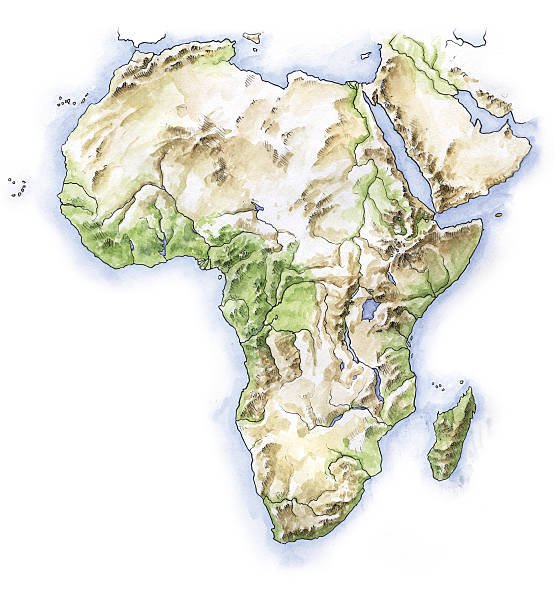
When considering the vast continent of Africa, the question, “Does Africa use GMT?”, is a common one that simplifies a more complex reality. The straightforward answer is that while Africa does not universally use GMT (Greenwich Mean Time), many of its time zones are directly aligned with GMT or variations derived from it, such as GMT+1, GMT+2, and GMT+3. This means that parts of Africa observe GMT+0, making them synchronous with GMT, while other regions operate on time offsets relative to GMT, often referenced by the more precise Coordinated Universal Time (UTC).
Africa spans a significant longitudinal range, necessitating multiple time zones to accurately reflect solar time across its various regions. Therefore, instead of a single time standard, the continent is divided into several time zones, each carefully chosen to suit local geographical and administrative needs. Understanding Africa's approach to time involves delving into the historical context of GMT and the modern dominance of UTC, as well as examining the specific time zones adopted by individual African nations.
Understanding GMT and Coordinated Universal Time (UTC)
To fully grasp Africa's relationship with GMT, it's essential to first understand what GMT is and how it relates to its modern successor, UTC.
What is GMT?
Greenwich Mean Time (GMT) is the mean solar time at the Royal Observatory in Greenwich, London. Historically, it was the global standard for civil time, serving as the primary reference point from which all other time zones were calculated. For many years, mariners, scientists, and countries worldwide relied on GMT to synchronize clocks and coordinate activities across different longitudes. Its significance stemmed from the Prime Meridian, located at Greenwich, being the zero point of longitude.
The Rise of UTC
While GMT was foundational, it has largely been superseded by Coordinated Universal Time (UTC) as the international standard for timekeeping. UTC is a high-precision atomic time standard, maintained by a network of atomic clocks around the world. It provides a more stable and accurate reference for time, especially crucial for scientific research, international communications, and digital systems. UTC is a compromise between traditional timekeeping based on Earth's rotation (like GMT) and the ultra-precise atomic clock time. It is adjusted with leap seconds to keep it within 0.9 seconds of GMT.
GMT vs. UTC: Is There a Difference?
For most practical, everyday purposes, GMT and UTC are considered interchangeable. Both represent the same time at the Prime Meridian (0 degrees longitude). However, there is a technical distinction: GMT is a time zone and can be affected by Daylight Saving Time in some regions (though the UK no longer uses GMT in summer, switching to British Summer Time, BST, which is UTC+1). UTC, on the other hand, is a time standard that does not observe Daylight Saving Time and remains constant throughout the year. When discussing global time zones and their offsets, referencing UTC (e.g., UTC+1, UTC-5) is the more accurate and technically precise method, though many still use GMT interchangeably.
Africa's Time Zone Landscape
Africa spans from approximately 17 degrees West longitude to about 51 degrees East longitude, covering a range of nearly 68 degrees of longitude. This vast east-west extent naturally dictates the need for multiple time zones. African nations generally adhere to four primary time zones, directly or indirectly related to GMT/UTC:
Western European Time (WET) / Greenwich Mean Time (GMT)
Several countries in West Africa and North Africa are directly on the GMT+0 or UTC+0 time zone, meaning their local time is the same as Greenwich Mean Time. This alignment facilitates commerce and communication with Europe and other parts of the world that use this baseline.
- Countries include: Morocco, Mauritania, Senegal, Gambia, Guinea-Bissau, Guinea, Sierra Leone, Liberia, Côte d'Ivoire, Ghana, Togo, and São Tomé and Príncipe.
- Key Highlight: These nations effectively operate on Greenwich Mean Time, making direct time conversions straightforward.
West Africa Time (WAT)
Moving eastward, many countries in West and Central Africa observe West Africa Time (WAT), which is GMT+1 or UTC+1. This means they are one hour ahead of GMT.
- Countries include: Algeria, Angola, Benin, Cameroon, Central African Republic, Chad, Republic of the Congo, Democratic Republic of the Congo (western part), Equatorial Guinea, Gabon, Niger, Nigeria, Tunisia.
- Key Highlight: These countries are typically one hour ahead of GMT/UTC, reflecting their longitude further east.
Central Africa Time (CAT)
Further east, Central Africa Time (CAT) is observed, which is GMT+2 or UTC+2. Nations in this zone are two hours ahead of GMT.
- Countries include: Botswana, Burundi, Democratic Republic of the Congo (eastern part), Egypt, Eswatini (formerly Swaziland), Libya, Lesotho, Malawi, Mozambique, Namibia, Rwanda, South Africa, Sudan, South Sudan, Zambia, Zimbabwe.
- Key Highlight: Many nations in Southern and parts of North-Eastern Africa utilize GMT+2, aligning with their geographical position.
East Africa Time (EAT)
The easternmost parts of Africa, including the Horn of Africa and island nations in the Indian Ocean, observe East Africa Time (EAT), which is GMT+3 or UTC+3. These regions are three hours ahead of GMT.
- Countries include: Comoros, Djibouti, Eritrea, Ethiopia, Kenya, Madagascar, Mayotte (France), Mauritius, Réunion (France), Seychelles, Somalia, Tanzania, Uganda.
- Key Highlight: These countries are three hours ahead of GMT/UTC, due to their furthest eastern longitudes on the continent.
Specific Examples: From Morocco to Mauritius
- Morocco: Generally observes GMT+0 (or UTC+0). However, it periodically adjusts for Daylight Saving Time, switching to GMT+1 for parts of the year, usually excluding Ramadan.
- Nigeria: Firmly on WAT (GMT+1), consistently one hour ahead of GMT.
- Egypt: Adheres to CAT (GMT+2). While Egypt has historically experimented with Daylight Saving Time, it often maintains GMT+2 year-round.
- South Africa: Also on CAT (GMT+2), with no Daylight Saving Time, providing a consistent time reference for the southern region.
- Kenya: Operates on EAT (GMT+3), three hours ahead of GMT, reflecting its position in East Africa.
The Impact of Time Zones on African Life
The existence of multiple time zones across Africa has various practical implications for daily life, commerce, and communication.
Business and Trade
For businesses operating internationally or across different African countries, managing time differences is crucial. Coordinating meetings, shipments, and financial transactions requires careful attention to time zones. For instance, a company in Lagos (WAT, GMT+1) doing business with a partner in Nairobi (EAT, GMT+3) faces a two-hour time difference, which needs to be factored into scheduling. Companies often use universal time converters to avoid errors.
Travel and Tourism
Travelers exploring the diverse landscapes of Africa will frequently cross time zone boundaries. While internal flights within a single time zone might not present a challenge, flights spanning the continent, such as from Senegal to Somalia, will involve significant time adjustments. Tour operators and travelers must be aware of these changes to ensure timely arrivals and departures.
Communication
Maintaining effective communication across a continent with varying time zones can be a challenge. Families, friends, and colleagues separated by hundreds or thousands of miles must consider time differences when making calls or scheduling virtual meetings. Digital communication tools often help by displaying local times or converting schedules, but human awareness remains key.
Daylight Saving Time (DST) in Africa
Unlike many parts of Europe and North America, Daylight Saving Time (DST) is not widely observed in Africa. The majority of African countries maintain a consistent time standard throughout the year. A few nations, like Morocco, have historically implemented DST to maximize daylight hours and save energy, but such practices are rare and often subject to change based on government policy or cultural considerations (e.g., aligning with Ramadan).
Why So Many Time Zones? The Geography of Africa
The distribution of time zones in Africa is not arbitrary; it's a direct consequence of its geography and a result of historical and political factors.
Longitudinal Span
Africa is the world's second-largest continent, stretching approximately 8,000 kilometers (5,000 miles) from its westernmost point in Senegal to its easternmost point in Somalia. This immense longitudinal span covers about 68 degrees of longitude, which theoretically would suggest at least five distinct standard time zones (each standard time zone generally spans 15 degrees of longitude). The actual number of primary time zones (four) is a practical simplification to manage time across such a vast area, while ensuring that local time roughly corresponds to the sun's position.
Political and Historical Considerations
While geography dictates the need for multiple time zones, the exact boundaries and choices of specific time zones are often influenced by political and historical factors. During the colonial era, European powers often imposed their own time standards or aligned the time zones of their colonies with their home countries. Post-independence, nations have made choices based on:
- National Unity: Some countries, despite their longitudinal span (e.g., Angola), choose to remain within a single time zone for administrative simplicity and national unity, even if it means some areas deviate slightly from ideal solar time.
- Regional Alignment: Aligning with neighboring countries for ease of trade and cross-border interaction is another common consideration.
- Economic Ties: Proximity to major global economic hubs and their time zones can also influence a country's choice.
Managing Time Across Africa: Practical Tips
For anyone dealing with time across Africa, whether for business or leisure, being prepared can save time and prevent miscommunication.
Using a Universal Time Converter
The most straightforward way to manage time differences is to use a reliable universal time converter. Numerous free online tools and smartphone applications can instantly convert times between different cities or time zones. This is especially useful for scheduling international calls or virtual meetings.
Awareness for Travelers and Businesses
Travelers should always confirm the local time upon arrival in a new African country. This includes resetting watches and checking device settings. Businesses should communicate deadlines and meeting times clearly, explicitly stating the time zone (e.g., 10:00 AM WAT or 1:00 PM EAT) to avoid ambiguity.
Digital Tools and Applications
Modern operating systems (computers and smartphones) automatically adjust for time zones when traveling, provided location services are enabled. Calendar applications can also display events in multiple time zones, making scheduling across the continent much simpler. Utilizing these digital tools effectively can streamline coordination.
Future of Time Zones in Africa
As Africa continues to integrate economically and technologically, there might be ongoing discussions about time zone harmonization. While a single African time zone is highly improbable due to the continent's size, regional blocks might explore further synchronization.
Potential for Harmonization
Regional economic communities within Africa, such as ECOWAS (Economic Community of West African States) or EAC (East African Community), might consider further alignment of time zones among member states to facilitate trade and reduce administrative complexities. Any such changes would be driven by economic and political consensus rather than solely geographical factors.
Economic Integration and Time Zones
As the African Continental Free Trade Area (AfCFTA) progresses, seamless communication and coordination across borders become even more critical. While not a primary driver of time zone changes, the broader goal of economic integration may provide additional impetus for countries to consider the practical benefits of aligning their time with close trading partners.
Conclusion
In summary, while Africa does not uniformly use GMT, it heavily relies on GMT and its offsets (GMT+0, GMT+1, GMT+2, GMT+3) to define its time zones. The continent is segmented into several major time zones—Western European Time (GMT+0), West Africa Time (GMT+1), Central Africa Time (GMT+2), and East Africa Time (GMT+3)—each corresponding to its vast longitudinal span. Understanding these various Africa time zones and their relationship to the global standard of UTC is crucial for anyone interacting with the continent, from business professionals to travelers. The dynamic interplay of geography, history, and modern requirements dictates how time is kept across Africa, ensuring a functional and practical approach to synchronizing life across its diverse nations.
Enjoyed this read?
Share it with your friends and colleagues.