Did Africa Have Kings

BSC Insights Admin
September 30, 2026
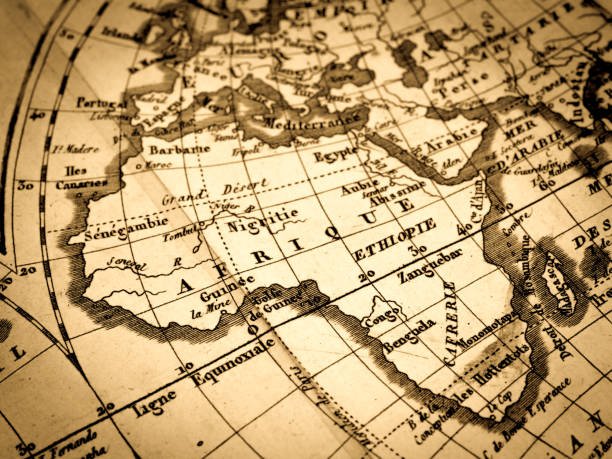
Yes, absolutely. Africa had a profoundly rich and diverse history of kings, queens, emperors, and various forms of monarchical rule long before the arrival of European colonial powers. From ancient pharaohs to powerful medieval emperors and influential queens, the continent was home to countless sophisticated kingdoms and empires that shaped its political, economic, and cultural landscape for millennia. The notion that Africa lacked organized, centralized governance, including monarchies, is a misconception often rooted in colonial-era narratives that overlooked or deliberately downplayed the continent's complex pre-colonial history.
Understanding the question "Did Africa Have Kings" requires delving into the vast tapestry of pre-colonial African history, which reveals a multitude of distinct political systems, royal lineages, and powerful states stretching across the continent. These **African kingdoms** and **African empires** were centers of trade, learning, and cultural innovation, demonstrating unique forms of governance and sophisticated social structures.
The Myth of a Stateless Africa: A Historical Correction
For too long, certain historical narratives have perpetuated the idea of Africa as a "dark continent" without centralized states or developed political systems. This perspective is fundamentally flawed and ignores extensive archaeological, oral, and written evidence. In reality, **ancient African rulers** and their elaborate court systems were integral to the continent's development. From the shores of the Nile to the sands of the Sahara, and through the dense forests and vast savannas, powerful monarchs oversaw flourishing societies, intricate trade networks, and impressive architectural feats.
The existence of **African monarchies** is not an isolated phenomenon but a consistent feature throughout much of the continent's history. These ranged from divine kingships, where rulers were seen as living deities, to powerful warrior kings who commanded vast armies, and even influential queen mothers who held significant political sway.
Ancient Roots: Pharaohs, Kings, and Candaces of North and Northeast Africa
Some of the earliest and most well-known examples of monarchical rule in Africa originate from its northeastern regions, setting a precedent for royal leadership for thousands of years.
The Pharaohs of Ancient Egypt
Perhaps the most iconic **ancient African kings** were the pharaohs of Egypt. Ruling for over 3,000 years, these monarchs were not just political leaders but were considered divine beings, serving as intermediaries between gods and humans. Pharaohs like Narmer (often credited with unifying Upper and Lower Egypt), Khufu (builder of the Great Pyramid), Hatshepsut (a powerful female pharaoh), and Ramesses II (known for his military campaigns and monumental constructions) oversaw a civilization renowned for its advancements in art, architecture, science, and governance. Their **royal lineage Africa** is one of the longest and most thoroughly documented in human history.
Kings and Candaces of Nubia (Kush)
South of Egypt, the ancient kingdom of Nubia (Kush) flourished, often rivaling and at times conquering Egypt itself. The Nubian monarchs, including their powerful female rulers known as "Candaces" (Kandake), commanded significant empires. Meroë, its capital, was a hub of iron production and trade. The Candaces, such as Amanirenas, who famously led forces against the Roman Empire, exemplify the prominence of **queens of Africa** in positions of ultimate authority. The **history of African monarchies** is incomplete without acknowledging the sophisticated royalty of Kush.
West Africa's Golden Age: Empires of Wealth and Wisdom
West Africa gave rise to a succession of incredibly wealthy and powerful empires, built on the trans-Saharan trade routes, particularly in gold, salt, and kola nuts. These empires were governed by renowned **great African kings** whose influence extended across vast territories.
The Ghana Empire: Land of Gold
Flourishing from the 6th to 13th centuries, the Ghana Empire (distinct from the modern nation-state) was known to Arab scholars as the "Land of Gold." Its kings, or "Ghanas," grew immensely wealthy by controlling the trans-Saharan trade. They established a complex administrative system and a powerful army, ensuring stability and prosperity. The capital, Koumbi Saleh, was a vibrant city with distinct Muslim and non-Muslim quarters, showcasing a sophisticated urban culture under royal patronage.
The Mali Empire: Mansa Musa's Legacy
Succeeding Ghana, the Mali Empire (13th to 17th centuries) became one of the largest and wealthiest empires in the world. Its most famous ruler, **Mansa Musa**, undertook a legendary pilgrimage to Mecca in the 14th century, distributing so much gold that he reportedly devalued it in Cairo for years. Under his reign, and those of other powerful Malian emperors, cities like Timbuktu and Djenné became renowned centers of Islamic scholarship, trade, and culture, with royal libraries and universities attracting scholars from across the globe. This era exemplifies the majesty of **African emperors**.
The Songhai Empire: A Center of Learning
The Songhai Empire (15th to 16th centuries) rose after Mali's decline, becoming the largest empire in West African history. Under dynamic rulers like Sonni Ali Ber and **Askia the Great**, Songhai expanded its territories, reformed its administration, and further cemented Timbuktu and Djenné as intellectual powerhouses. Askia the Great, in particular, was a brilliant administrator who established a sophisticated bureaucracy, standardized weights and measures, and actively promoted education and justice, demonstrating the advanced governance of **pre-colonial Africa**.
Central and Southern Africa: Diverse Forms of Kingship
Monarchical structures were equally prominent in other regions of Africa, adapting to local environments and cultural nuances.
The Kingdom of Kongo: A Powerful Central African State
Established around the 14th century in Central Africa (modern-day Angola and Congo), the Kingdom of Kongo was a highly centralized state ruled by the ManiKongo. It had a complex administrative hierarchy, a sophisticated legal system, and robust trade networks long before European contact. Its early interactions with the Portuguese were initially based on diplomatic equality between two powerful royal courts, highlighting its significant stature as one of the major **royal courts of Africa**.
Great Zimbabwe: A Monument to Southern African Royalty
In Southern Africa, the Kingdom of Zimbabwe flourished from the 11th to 15th centuries, constructing the monumental stone city of Great Zimbabwe. This impressive site, with its massive dry-stone walls, was the royal capital and a center for a vast trading network extending to the East African coast. The rulers, whose names are largely lost to time, presided over a highly organized society that controlled significant gold resources, demonstrating a sophisticated **history of African monarchies** in the region.
The Zulu Kingdom: Shaka Zulu's Reign
In the 19th century, the Zulu Kingdom emerged as a formidable military power in Southern Africa under the brilliant and ruthless leadership of **King Shaka Zulu**. Shaka revolutionized military tactics and organization, forging a small chiefdom into a vast and feared empire that reshaped the political landscape of the region. His successors continued to lead the Zulu nation, famously challenging British imperial expansion in the late 19th century, underscoring the resilience and power of **Zulu kings**.
East Africa: Merchants, Emperors, and Sultans
East Africa also boasted powerful and enduring monarchical traditions, often influenced by trade and cultural exchange.
The Enduring Ethiopian Empire
One of the longest-lasting monarchies in the world, the Ethiopian Empire (Abyssinia), with roots tracing back to the Aksumite Kingdom (c. 1st century AD), claimed an unbroken Solomonic dynasty. Its emperors, such as Ezana of Aksum (who adopted Christianity) and Menelik II (who famously defeated Italian colonial forces at the Battle of Adwa), ruled a Christian empire surrounded by predominantly Muslim states, maintaining its independence and distinct cultural identity for centuries. The **Ethiopian emperors** are a testament to continuous monarchical rule in Africa.
Swahili City-States: Merchant Princes and Sultanates
Along the East African coast, a series of prosperous Swahili city-states like Kilwa, Mombasa, and Zanzibar developed. While not always kingdoms in the traditional sense, many were ruled by powerful sultans or merchant princes who controlled vast Indian Ocean trade networks. Their wealth and political influence were significant, making them vital nodes in global commerce and contributing to the diverse forms of **African royalty**.
The Prominent Role of Queens and Queen Mothers
A distinctive feature of many **African monarchies** was the significant role played by women. Queens, queen mothers, and female regents often wielded immense political, economic, and spiritual power. This contrasts sharply with many European monarchical traditions where female rule was often contested or relegated.
- Candaces of Kush: As mentioned, these warrior queens governed the Nubian kingdom with formidable authority.
- Queen Amina of Zazzau: A legendary 16th-century Hausa warrior queen in what is now Nigeria, who expanded her kingdom's territory and influence through military conquest.
- Queen Nzinga Mbande of Ndongo and Matamba: A 17th-century Angolan queen who valiantly resisted Portuguese colonization for decades, demonstrating exceptional diplomatic and military prowess.
- Yaa Asantewaa of the Ashanti Empire: A queen mother who led the Ashanti rebellion against the British in 1900, symbolizing fierce resistance and female leadership.
These examples underscore that the question "Did Africa Have Kings" must also include the undeniable presence and power of **queens of Africa**, who were often crucial figures in governance and defense.
The Legacy of African Monarchies: Shaping a Continent
The existence of these diverse and powerful **African kingdoms** and **African empires** had a profound and lasting impact on the continent. They:
- Fostered Economic Development: Through control of trade routes, taxation, and resource management, monarchs facilitated economic growth and wealth accumulation.
- Developed Sophisticated Governance: They established complex administrative systems, legal codes, and diplomatic relations that maintained order over vast territories.
- Promoted Cultural and Intellectual Growth: Royal patronage supported art, architecture, literature, and scholarship, leading to centers of learning like Timbuktu.
- Maintained Identity and Resistance: In the face of external threats, particularly during the era of colonialism, these royal structures often provided the framework for organized resistance and the preservation of cultural identity.
The study of these **great African kings** and their realms is crucial for a comprehensive understanding of global history and for correcting historical inaccuracies that have often marginalized Africa's contributions.
Conclusion
In conclusion, the answer to "Did Africa Have Kings" is an emphatic and resounding yes. Africa was home to a vast array of sophisticated and powerful monarchies, empires, and kingdoms that spanned thousands of years and covered every region of the continent. From the ancient pharaohs of Egypt and the Candaces of Nubia to the legendary emperors of Mali and Songhai, the enduring Ethiopian emperors, and the fierce Zulu kings, **African rulers** built and sustained complex civilizations. These **African monarchies** were not only centers of political power but also hubs of economic prosperity, intellectual advancement, and cultural innovation, profoundly shaping the course of **pre-colonial African history**. Acknowledging this rich royal heritage is essential for appreciating the true depth and diversity of human civilization.
Enjoyed this read?
Share it with your friends and colleagues.