Did Africa Experience The Ice Age

BSC Insights Admin
October 01, 2026
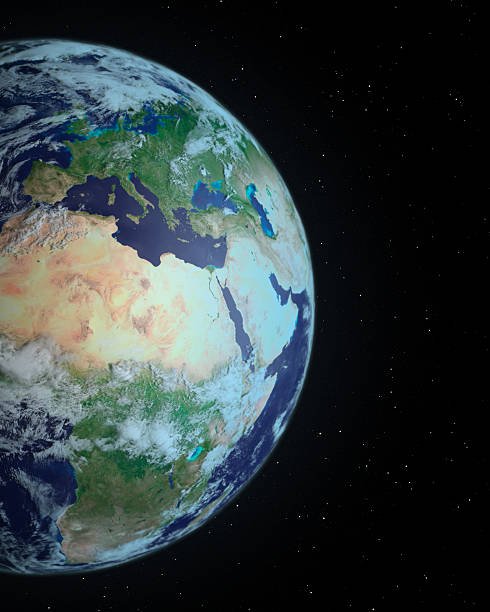
When people think of the Ice Age, images of woolly mammoths roaming vast, frozen landscapes in North America and Europe often come to mind. This leads to a common question: did Africa experience the Ice Age? The answer is a resounding yes, but its experience was profoundly different from the northern continents. While Africa did not endure widespread continental ice sheets, it underwent significant and dramatic climatic shifts, including periods of increased aridity, widespread changes in vegetation zones, and the expansion of glaciers in its highest mountain ranges during the Pleistocene Epoch, often referred to as the most recent Ice Age.
Understanding the Ice Age in a Global Context
The term "Ice Age" typically refers to a prolonged period of reduced global temperatures, resulting in the expansion of polar ice caps and the growth of glaciers across various parts of the world. The most recent and widely discussed period of significant global cooling is the Pleistocene Epoch, which spanned from about 2.6 million years ago to roughly 11,700 years ago. During this epoch, the Earth experienced multiple cycles of glacial and interglacial periods. Glacial periods were colder and drier, with ice sheets advancing, while interglacial periods were warmer and wetter, causing ice to retreat.
It is crucial to understand that an Ice Age is not a uniform global deep freeze. Rather, it represents a complex interplay of global climate forces that manifest differently depending on geographic location, topography, and ocean currents. For a continent like Africa, positioned predominantly in tropical and subtropical latitudes, the direct impact of continental glaciation was limited to its highest peaks, but the indirect effects on its diverse environments were monumental.
Africa's Unique Glacial Footprint: High-Altitude Ice
Unlike North America or Eurasia, Africa's vast landmass never saw the advance of kilometer-thick ice sheets across its plains. Its equatorial and tropical positioning meant that temperatures, even during peak glacial periods, remained too warm at lower elevations for extensive glaciation. However, the drop in global temperatures during the Last Glacial Maximum (LGM), roughly 26,500 to 19,000 years ago, was sufficient to cause significant glacier expansion on Africa's highest mountains.
Key Glaciated African Peaks:
- Mount Kilimanjaro (Tanzania): Africa's highest peak, it hosted much larger ice caps during the Ice Age than it does today. Geological evidence, such as moraines (accumulations of glacial debris), indicates that glaciers extended down its slopes to significantly lower altitudes.
- Mount Kenya (Kenya): The second-highest mountain in Africa, Mount Kenya also supported a much more extensive ice cover. Research has shown that during the LGM, glaciers on Mount Kenya were significantly larger, leaving clear geomorphological traces of their past extent.
- Rwenzori Mountains (Uganda/DR Congo): Known as the "Mountains of the Moon," the Rwenzoris are a series of glaciated massifs. During glacial periods, the ice fields in the Rwenzoris were far more extensive, creating dramatic landscapes that bear the scars of powerful ice action.
- Ethiopian Highlands: While not as extensively glaciated as the East African peaks, there is evidence of limited glacial activity in some of the highest parts of the Ethiopian Highlands during certain cold periods.
These isolated pockets of glaciation serve as direct evidence that Africa experienced the Ice Age, at least in its high-altitude regions. The retreat of these glaciers over millennia, and particularly in recent decades, offers a stark reminder of past and ongoing climatic shifts.
Dramatic Climatic Shifts: From Green Sahara to Arid Expanses
The indirect effects of the Ice Age on African climate were far more widespread and impactful than the limited mountain glaciation. Global temperature drops influenced atmospheric circulation patterns, ocean currents, and ultimately, precipitation regimes across the continent.
The Sahara Desert's Transformation:
Perhaps one of the most remarkable examples of African climate history during the Ice Age is the dramatic transformation of the Sahara Desert. While today it is the world's largest hot desert, during specific interglacial periods within the Pleistocene, particularly the African Humid Period (roughly 14,500 to 5,500 years ago, overlapping with the end of the last Ice Age and early Holocene), the Sahara was much greener and wetter. This "Green Sahara" was characterized by:
- Expanded Lake Systems: Giant paleolakes, such as ancient Lake Mega-Chad, were vast inland seas, supporting rich ecosystems.
- River Networks: Numerous rivers flowed across the landscape, providing vital water sources.
- Vegetation: Savannas, grasslands, and even forests replaced arid scrub, supporting diverse fauna.
Conversely, during the peak cold and dry periods of the Ice Age, the Sahara expanded dramatically, becoming even more arid than it is today. These cycles of greening and desertification profoundly shaped migration routes and the distribution of life across northern Africa.
Wider African Climate Zones:
Across the rest of the continent, the Ice Age brought significant changes:
- East Africa: The East African Rift Valley climate, a cradle of human evolution, experienced alternating wet and dry phases. Lakes within the rift, like Lake Victoria and Lake Tanganyika, saw fluctuating levels and even periods of drying out. These shifts significantly influenced available resources and habitats for early hominids.
- Southern Africa: Regions that are currently semi-arid or savanna experienced shifts towards more desert-like conditions during glacial maxima, and expansion of woodlands during wetter phases.
- Central Africa: Even the tropical rainforests of the Congo Basin likely contracted into smaller "refugia" during drier periods, expanding again during wetter intervals. This contraction and expansion is believed to have played a role in the speciation of many rainforest species.
Sea Level Changes and Their Impact on Africa
A crucial global consequence of the Ice Age was the massive withdrawal of water from the oceans to form continental ice sheets. This led to a substantial drop in global sea levels, estimated to be up to 120-130 meters lower than present during the LGM. These lower sea levels had several significant impacts on Africa:
- Expanded Coastlines: Africa's coastline would have extended much further outwards, exposing vast stretches of continental shelf. This created new land for ecosystems and potentially altered coastal currents and nutrient upwelling.
- Land Bridges: While Africa wasn't directly connected to other continents by land bridges in the same way Asia connected to North America, lower sea levels could have facilitated easier crossings of narrow straits (e.g., Bab-el-Mandeb at the mouth of the Red Sea), which is relevant to early human migration.
- Changes in River Estuaries: Major rivers like the Nile and Congo would have extended their courses much further across exposed continental shelves before reaching the ocean, altering their delta formations.
The Ice Age's Influence on Human Evolution and Migration
The Pleistocene Epoch Africa is not just a geological story; it's also the backdrop for the most critical chapters of human evolution. Early hominids and later anatomically modern humans were profoundly shaped by the continent's dynamic climate.
The oscillating wet and dry periods, the expansion and contraction of the Sahara, and the fluctuating levels of East African lakes created a shifting mosaic of environments. These environmental pressures are thought to have driven:
- Adaptation and Innovation: Hominids had to adapt to rapidly changing landscapes, developing new tools, hunting strategies, and social structures.
- Migration Routes: The "Green Sahara" corridors facilitated intermittent northward movements of early humans out of Africa, particularly during humid phases when water and resources were available. Arid phases would have acted as formidable barriers, isolating populations.
- Speciation: Environmental fragmentation caused by aridification could have led to the isolation of populations, potentially contributing to the evolution of new species or subspecies.
The narrative of the "Out of Africa" migrations is intricately linked to these glacial-interglacial cycles, highlighting how global climatic shifts dictated the course of human history.
Evidence from Paleoclimatology and Paleontology
Scientists reconstruct Africa's past climates using a variety of sophisticated techniques and evidence:
- Lake Sediment Cores: Drilling into the beds of African lakes (both extant and ancient paleolakes) provides layered records of past environmental conditions. Pollen grains trapped in these sediments indicate past vegetation types, while mineral composition reveals aridity or humidity levels.
- Ocean Sediment Cores: Cores from the Atlantic and Indian Oceans off Africa's coasts contain microfossils and isotopic data that reflect past sea surface temperatures, ocean currents, and dust deposition from the continent.
- Speleothems (Cave Formations): Stalagmites and stalactites in African caves can preserve isotopic signatures of past rainfall and temperature, offering highly resolved climate records.
- Fossil Records: Changes in the distribution and types of fossilized plants and animals provide direct evidence of past ecosystems and climate zones. For example, finding hippo fossils in what is now deep desert suggests a very different past environment.
- Geomorphological Evidence: As mentioned, moraines and U-shaped valleys on high mountains are clear indicators of past glaciation. Ancient riverbeds and lake shorelines also trace past water bodies.
These lines of evidence collectively paint a detailed picture of how African glacial periods were periods of profound environmental change, not just isolated cold snaps.
Distinguishing Africa's Ice Age Experience
It's important to differentiate Africa's experience from the more dramatic glacial advances seen in the Northern Hemisphere. When we ask, "Did Africa experience the Ice Age?" we should not imagine a continent entirely covered in ice. Instead, envision a continent undergoing significant environmental turbulence:
- Temperature Drops: While not leading to widespread ice sheets, temperatures across Africa were notably cooler, especially at higher elevations and during certain periods.
- Altered Precipitation: The most significant impact was on rainfall patterns, leading to cycles of extreme aridity and significant pluvial (wet) periods.
- Vegetation Shifts: This directly caused vast changes in flora and fauna, transforming deserts into grasslands and rainforests into drier woodlands, and vice versa.
- Sea Level Effects: Lower sea levels significantly altered coastlines, exposed continental shelves, and affected marine ecosystems.
These changes were profound enough to reshape landscapes, influence the distribution of species, and play a pivotal role in the trajectory of human evolution.
The Legacy of the Ice Age on Modern Africa
The climate patterns and geological features of modern Africa are a direct legacy of the Ice Age effects on Africa. The distribution of its diverse ecosystems, from the Sahara to the rainforests and savannas, bears the imprint of past climatic fluctuations. The high-altitude glaciers, though rapidly shrinking today due to global warming, are relicts of a colder past.
Understanding Africa's climate history during the Ice Age provides crucial insights into the continent's environmental resilience and vulnerability. It highlights the natural variability of Earth's climate and serves as a vital baseline for assessing current anthropogenic climate change. The speed and scale of current changes are unprecedented compared to many past natural shifts, making the study of paleoclimates in Africa even more relevant today.
Conclusion
In conclusion, while Africa was spared the colossal continental ice sheets that enveloped much of North America and Eurasia, it absolutely did experience the Ice Age. Its experience was characterized by dramatic shifts in climate, leading to periods of heightened aridity and lush greening, particularly evident in the waxing and waning of the Sahara Desert. Furthermore, Africa's highest peaks, such as Mount Kilimanjaro and Mount Kenya, hosted much larger glaciers. These profound environmental transformations had far-reaching consequences, profoundly influencing the continent's geology, biodiversity, and most significantly, the course of human evolution and migration. The Ice Age was a period of dynamic change for Africa, leaving an indelible mark on its landscapes and its past.
Enjoyed this read?
Share it with your friends and colleagues.