How Africa Got Independence

BSC Insights Admin
September 30, 2026
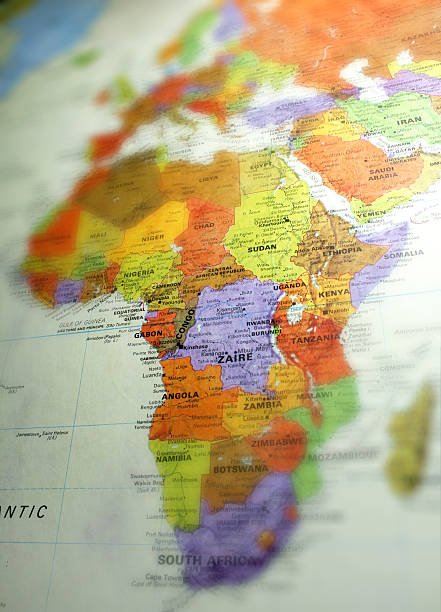
How Africa got independence was a profound and multifaceted historical process, primarily spanning the mid-20th century. It involved the liberation of numerous African nations from centuries of European colonial rule, marking a pivotal moment in global history. This period of decolonization was driven by a powerful confluence of internal nationalist movements, the tireless efforts of African leaders and activists, and significant shifts in the international geopolitical landscape. From the first waves of independence in the 1950s to the final struggles in the late 20th century, Africa's journey to self-determination redefined the continent and reshaped the world order.
The Scramble for Africa and the Imposition of Colonial Rule
To understand the path to independence, it is crucial to first grasp the context of colonial rule. The late 19th century witnessed the infamous Scramble for Africa, where European powers rapidly carved up the continent among themselves, often with little regard for existing indigenous societies, cultures, or geographical realities. By 1914, virtually the entire continent, with the exceptions of Ethiopia and Liberia, was under European control.
This colonial imposition brought with it systemic exploitation of Africa's vast natural resources, the establishment of economic systems designed to benefit the colonizers, and the suppression of local political structures and cultural identities. Borders were arbitrarily drawn, often creating multi-ethnic states that would later face internal tensions, a direct legacy of the colonial partition. Infrastructure development, while sometimes touted as beneficial, primarily served to facilitate the extraction of raw materials and military control, rather than fostering equitable growth for the African populations.
Internal Forces Driving the Struggle for Independence
The seeds of resistance were sown almost immediately upon the arrival of colonial powers, initially manifesting in localized armed struggles. However, the 20th century saw the emergence of more organized and widespread movements, fundamentally changing how Africa got independence.
The Rise of African Nationalism and Political Consciousness
Colonial rule, despite its oppressive nature, inadvertently fostered a sense of shared identity and purpose among diverse African communities. As people from different ethnic groups found themselves united under a common foreign oppressor, the concept of African nationalism began to take root. This nascent nationalism transcended tribal loyalties, cultivating a collective desire for self-governance and an end to foreign domination. Educated Africans, many of whom had studied abroad in colonial metropoles, returned home inspired by ideals of liberty and self-determination.
The Role of Educated Elites and Pan-Africanism
A crucial factor was the emergence of a class of educated African elites. These individuals, having gained exposure to Western political thought and international affairs, became articulate spokespersons for the anti-colonial cause. They formed political parties, intellectual groups, and advocacy organizations that challenged colonial narratives and demanded greater rights. A significant ideological current that propelled these leaders was Pan-Africanism, a movement advocating for the political union and solidarity of all indigenous inhabitants of Africa, regardless of colonial borders. Figures like W.E.B. Du Bois, Marcus Garvey, and later, African leaders such as Kwame Nkrumah of Ghana, played pivotal roles in shaping this consciousness.
Organized Resistance and Liberation Movements
The push for independence was characterized by a diverse range of strategies:
- Non-Violent Resistance: Inspired by figures like Mahatma Gandhi, many leaders adopted strategies of civil disobedience, strikes, and boycotts. Kwame Nkrumah in Ghana successfully mobilized the Convention People's Party (CPP) through mass political action, leading to early independence.
- Armed Struggle: Where colonial powers were particularly entrenched or unwilling to negotiate, armed struggle became the chosen path. Examples include the fierce Mau Mau uprising in Kenya against British rule, the protracted Algerian War of Independence against France, and later, the liberation movements in Portuguese colonies like Angola and Mozambique. These struggles were often brutal, incurring significant loss of life, but ultimately forced colonial powers to concede.
These movements, whether peaceful or violent, were instrumental in raising awareness, garnering popular support, and applying immense pressure on colonial administrations, laying the groundwork for the struggle for independence across the continent.
External Factors Accelerating Decolonization
While internal resistance was the engine of change, external global dynamics provided crucial tailwinds that accelerated the pace of decolonization of Africa.
Weakening of European Powers Post-World War II
The Second World War dramatically weakened European colonial powers like Britain, France, Belgium, and Portugal. Their economies were shattered, their treasuries depleted, and their moral authority diminished by the horrors of the war. Maintaining vast colonial empires became an unsustainable economic and military burden. Furthermore, the war had exposed colonial subjects to the weaknesses of their European masters and fueled their aspirations for self-rule, especially after many Africans fought alongside Allied forces for freedom and democracy abroad.
The Atlantic Charter and United Nations Pressure
A significant moral and political catalyst was the Atlantic Charter, signed in 1941 by British Prime Minister Winston Churchill and U.S. President Franklin D. Roosevelt. Among its principles was the right of all peoples to choose their own form of government – the principle of self-determination. Although initially conceived for post-war Europe, this principle was seized upon by African nationalists as a universal right. The subsequent formation of the United Nations in 1945 provided a powerful international platform for anti-colonial advocacy. The UN General Assembly, particularly with the growing number of independent Asian and Latin American states, consistently passed resolutions condemning colonialism and urging independence for non-self-governing territories, putting immense diplomatic pressure on colonial powers.
The Cold War Context
The emergence of the Cold War between the United States and the Soviet Union also played a complex but significant role. Both superpowers, vying for global influence, sought to align newly independent nations with their respective ideological blocs. While neither was genuinely committed to African liberation for purely altruistic reasons, their competition often led them to support anti-colonial movements or pressure colonial powers to decolonize, seeing new nations as potential allies or areas of influence. The USSR, in particular, adopted an anti-imperialist stance, providing ideological and sometimes material support to liberation movements, further complicating the colonial powers' ability to maintain control.
Key Moments and Iconic Leaders in the Fight for Independence
The period between 1957 and the early 1990s saw the rapid dismantling of colonial empires across Africa. Here are some pivotal moments and figures:
Ghana: The Pioneer of Independence (1957)
Ghana's independence in 1957, led by the charismatic Kwame Nkrumah, was a monumental event. It was the first sub-Saharan African nation to achieve independence from colonial rule, sending a wave of hope and inspiration across the continent. Nkrumah's famous declaration, "Ghana, your beloved country, is free forever," resonated with millions of Africans still under colonial subjugation.
The "Year of Africa" (1960)
The year 1960 is often referred to as the "Year of Africa" because 17 African nations gained independence, predominantly from France and Britain. This dramatic wave underscored the unstoppable momentum of the decolonization movement. Notable countries that became sovereign in 1960 include:
- Democratic Republic of Congo
- Nigeria
- Senegal
- Mali
- Madagascar
- Cameroon
- Togo
- Benin (Dahomey)
- Niger
- Burkina Faso (Upper Volta)
- Côte d'Ivoire
- Chad
- Central African Republic
- Republic of the Congo
- Gabon
- Mauritania
- Somalia
The Fierce Struggle: Algeria and Kenya
Some paths to independence were particularly brutal. The Algerian War of Independence (1954-1962) was a protracted and violent conflict that resulted in immense casualties on both sides before Algeria finally gained its freedom from France. Similarly, the Mau Mau rebellion in Kenya (1952-1960) saw brutal suppression by the British, but ultimately contributed to Kenya's independence in 1963, with Jomo Kenyatta becoming its first president.
Challenges and Tragedies: The Congo Crisis
The independence of the Belgian Congo in 1960, with Patrice Lumumba as its first Prime Minister, quickly descended into chaos, known as the Congo Crisis. This period was marked by mutinies, secessionist movements, foreign intervention, and Lumumba's assassination, highlighting the fragility and complex geopolitical maneuvering that often accompanied the birth of new nations.
Southern Africa: The Last Bastions of Colonialism and Apartheid
The southern part of Africa experienced some of the longest and most brutal struggles for independence. Portugal clung to its colonies (Angola, Mozambique, Guinea-Bissau) until 1975, when a revolution in Portugal itself brought an end to its empire. Southern Rhodesia (Zimbabwe) only achieved majority rule in 1980 after a long guerrilla war. The most protracted struggle was against apartheid in South Africa, a system of institutionalized racial segregation and white minority rule. The tireless efforts of the African National Congress (ANC) and iconic figures like Nelson Mandela, who spent 27 years in prison, ultimately led to the dismantling of apartheid and South Africa's first democratic elections in 1994, marking a symbolic end to the era of formal colonial and settler rule on the continent.
The Legacy and Challenges of Post-Colonial Africa
While gaining independence was a monumental achievement, it was merely the first step in a long and arduous journey for African nations.
Building New Nations and Institutions
Newly independent states faced the immense task of nation-building. This involved creating stable political institutions, fostering national unity among diverse ethnic groups often separated by colonial borders, developing economies largely structured for colonial extraction, and establishing national identities. Leaders were challenged to balance the aspirations of their people with the practicalities of governance.
Economic Independence and Neo-Colonialism
Many African nations discovered that political independence did not automatically translate into genuine economic independence. The term neo-colonialism emerged to describe the continued economic and political influence exerted by former colonial powers and other global actors through trade agreements, foreign aid, debt, and corporate control over resources. This often hindered diversification and genuine economic self-sufficiency, leaving many African economies vulnerable to external forces and global market fluctuations.
Political Instability and Regional Conflicts
The arbitrary borders inherited from the colonial era often led to internal ethnic strife and regional conflicts. The lack of robust democratic institutions in some states, coupled with the pressure of Cold War alignments, contributed to political instability, military coups, and civil wars in various parts of the continent during the immediate post-independence period.
The African Union and Continental Unity
In response to these challenges and to promote solidarity, the Organization of African Unity (OAU) was founded in 1963, succeeded by the African Union (AU) in 2002. These organizations aim to foster unity, promote peace and security, advocate for sustainable development, and represent a united African voice on the global stage. They embody the continuing Pan-African spirit that drove much of the independence movement.
Conclusion
How Africa got independence is a powerful narrative of resilience, determination, and the universal human desire for freedom. It was a complex, hard-won victory shaped by internal African agency and strategic external shifts. The journey involved diverse paths, from peaceful negotiations to protracted armed conflicts, and was championed by a pantheon of visionary leaders. While the immediate post-independence era brought new challenges, including economic vulnerability and political instability, the fundamental achievement of self-determination laid the groundwork for modern Africa. Today, the continent continues its pursuit of full economic independence and prosperity, building on the legacy of those who fought to reclaim their land and their destiny, embodying the enduring spirit of sovereignty and progress for all its diverse African nations.
Enjoyed this read?
Share it with your friends and colleagues.