Did Africa Ever Invade Europe

BSC Insights Admin
October 01, 2026
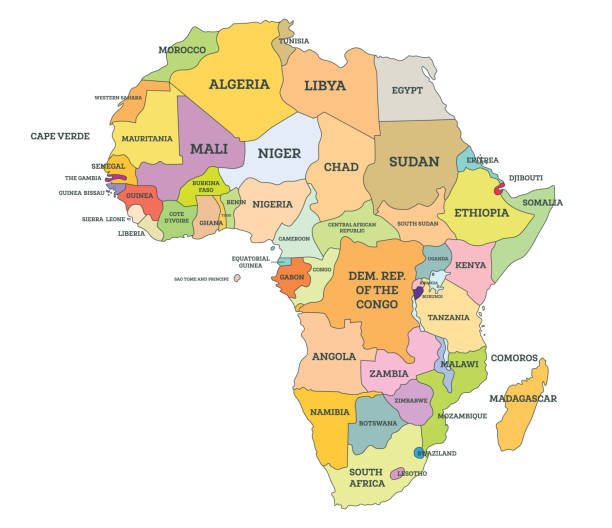
Yes, historically, forces originating from the African continent, particularly North Africa, have launched significant invasions and established prolonged presences in parts of Europe. The most prominent and historically impactful example is the Moorish conquest of the Iberian Peninsula, which began in 711 AD and led to centuries of Muslim rule in what became known as Al-Andalus. This demonstrates a clear historical precedent for African-originating powers invading and occupying European territories, shaping both the political and cultural landscapes of the continent.
The Moorish Conquest of Iberia: A Definitive African Invasion of Europe
The invasion of the Iberian Peninsula (modern-day Spain and Portugal) by Muslim forces in 711 AD stands as the most significant and sustained military incursion from Africa into Europe. These forces, often referred to as the Moors, were primarily composed of Berbers from North Africa and Arabs from the Middle East, with their base of operations firmly established in the Maghreb region of North Africa.
Background: The Visigothic Kingdom in Crisis
Before the invasion, the Iberian Peninsula was ruled by the Visigothic Kingdom, which was plagued by internal strife, succession disputes, and social unrest. This weakened state presented a significant opportunity for the burgeoning Islamic Caliphate, which had rapidly expanded across North Africa in the preceding decades. The Strait of Gibraltar, a narrow body of water separating Africa from Europe, became a strategic gateway.
The Invasion of 711 AD: Tariq ibn Ziyad's Expedition
In 711 AD, a large army, predominantly composed of Berbers and led by the Berber general Tariq ibn Ziyad, crossed the Strait of Gibraltar from North Africa. They landed at a rock formation that still bears his name today, Jabal Ṭāriq (Gibraltar). Tariq's forces quickly defeated the Visigothic king Roderic at the Battle of Guadalete. This initial victory paved the way for a rapid advance across much of the peninsula.
- Key Leaders: Tariq ibn Ziyad (Berber general) and Musa ibn Nusayr (Arab governor of Ifriqiya, modern Tunisia).
- Composition: Primarily Berber soldiers, along with some Arab commanders and cavalry.
- Strategic Objective: Expansion of the Umayyad Caliphate's influence and territory.
Establishment of Al-Andalus: Centuries of Muslim Rule
Following the initial conquests, the invaders established a powerful Islamic state known as Al-Andalus. This territory, at its greatest extent, covered most of the Iberian Peninsula. For nearly eight centuries, from 711 AD until 1492 AD, parts of Iberia were under Muslim rule, representing a continuous and profound African and Middle Eastern presence on European soil. The capital, first Cordoba, became a leading cultural, intellectual, and economic center of the medieval world, surpassing many European cities in sophistication.
During this period, there were several Muslim dynasties that governed Al-Andalus:
- Umayyad Emirate and Caliphate of Córdoba: A golden age of art, science, and learning.
- Taifa Kingdoms: Smaller, independent Muslim states that emerged after the fall of the Caliphate.
- Almoravid and Almohad Dynasties: These were significant Berber empires originating from Morocco, which crossed the Strait of Gibraltar to re-establish unity and military strength in Al-Andalus, effectively reinforcing the African connection to the European territory.
Lasting Impact and Legacy of the Moorish Presence
The Moorish presence left an indelible mark on Europe, particularly on Spanish and Portuguese culture. This was not merely a military occupation but a profound cultural exchange:
- Architecture: Iconic structures like the Mezquita of Córdoba and the Alhambra of Granada.
- Science and Philosophy: Advances in mathematics, astronomy, medicine, and philosophy, much of which was later transmitted to the rest of Europe.
- Agriculture: Introduction of new crops (e.g., rice, citrus fruits) and sophisticated irrigation techniques.
- Language: Thousands of Arabic loanwords entered Spanish and Portuguese.
- Tolerance: Periods of relative religious tolerance, allowing Christians and Jews to live alongside Muslims, though this varied over time.
The Reconquista, the Christian reconquest of the Iberian Peninsula, was a gradual process spanning centuries, culminating in the fall of Granada in 1492, marking the end of significant Muslim rule in Western Europe.
Other Significant North African Expeditions and Settlements in Europe
While the Moorish conquest of Iberia is the most prominent example, other instances of forces from North Africa invading or establishing a presence in Europe also exist.
Muslim Invasions of Sicily and Southern Italy
Beginning in the 9th century, forces primarily from Ifriqiya (modern Tunisia), led by the Aghlabid dynasty, launched a systematic conquest of Sicily. This conquest started in 827 AD and took decades to complete. Sicily became an emirate under Muslim rule for over two centuries, with significant cultural and architectural contributions.
- Sicily: Conquered in the 9th century by Aghlabid forces from North Africa. Palermo became a major Islamic city.
- Southern Italy: Muslim raids and temporary control extended to parts of mainland Italy, including Calabria and Apulia. The city of Bari even became an independent Islamic emirate for a short period in the 9th century.
- Sardinia and Corsica: Both islands experienced frequent raids and temporary Muslim control from North Africa.
These North African military campaigns in the Mediterranean were driven by strategic control of trade routes, religious expansion, and political ambition. They represent another clear instance of invasions originating from the African continent into various European territories.
Malta's Historical Ties to North Africa
The island of Malta, strategically located between Sicily and North Africa, was also conquered by Aghlabid forces from Ifriqiya in 870 AD. It remained under Muslim rule for over two centuries, experiencing a period of significant Arabization that profoundly influenced its language and culture. Although Malta is a small island, its history underscores the pattern of North African influence and control over European territories.
Beyond Direct "Invasion": Raids, Piracy, and Cultural Exchange
Beyond full-scale invasions and prolonged occupations, the relationship between North Africa and Europe has also involved centuries of raids, piracy, and complex interactions that, while not always constituting an "invasion" in the traditional sense, certainly represented military incursions from Africa into Europe.
Barbary Corsairs and Coastal Raids
For centuries, particularly from the 16th to the 19th centuries, the Barbary Corsairs (pirates and privateers) operating from North African ports (Tripoli, Algiers, Tunis, Salé) regularly raided European coastal towns. These raids extended across the Mediterranean and even into the Atlantic, targeting coastal communities in Spain, Italy, France, Portugal, and even as far north as Iceland. The primary goal was to capture slaves for ransom or sale and plunder goods, not necessarily to conquer territory, but they represented a formidable and persistent threat originating from North Africa to European shores.
Examples of areas affected by these raids include:
- Coastal regions of Italy, especially Calabria, Sicily, and Sardinia.
- The Balearic Islands and eastern coasts of Spain.
- Southern France.
- Occasional incursions into the British Isles and Scandinavia.
While these were not invasions designed for territorial conquest and long-term occupation like the Moorish example, they were significant and devastating military incursions that forced European powers to engage defensively against African-based forces.
The Ottoman Empire's Reach and North African Provinces
The Ottoman Empire, though primarily an Anatolian/Asian power, expanded to include significant portions of North Africa (Egypt, Libya, Tunisia, Algeria) as provinces. From these North African bases, Ottoman forces and their local allies sometimes participated in campaigns against European powers in the Mediterranean. For instance, the Ottoman fleet, often supplemented by ships and soldiers from its North African regencies, contested control of the Mediterranean with European naval powers like Spain and Venice.
This dynamic demonstrates how powers with their military bases and recruitment pools in Africa contributed to military pressures on Europe, even if the central command was in Istanbul.
Ancient Conflicts: Carthage and Rome
In ancient history, the powerful North African city-state of Carthage engaged in a series of monumental conflicts with Rome (the Punic Wars). While Carthage controlled significant territories in Sicily, Sardinia, and parts of Spain, and famously invaded Italy under Hannibal, these were wars between two dominant powers, not necessarily an "African invasion of Europe" in the same context as the Moorish conquest. Carthage itself was a multi-ethnic empire with strong Phoenician roots, and its presence in Europe was often as a rival colonial power rather than an 'African' conquest in the post-classical sense.
Understanding the Nuance: What Constitutes an "Invasion"?
When discussing whether Africa ever invaded Europe, it's crucial to define "invasion." An invasion typically implies a military force entering a foreign territory with the intent to conquer, occupy, or exert control. The historical examples provided, particularly the Moorish conquest of Iberia and the Muslim conquest of Sicily, unequivocally fit this definition. These were not mere raids or skirmishes but deliberate, large-scale military campaigns leading to long-term territorial control and the establishment of new political entities.
It is important to distinguish between:
- Full-scale invasion and occupation: Resulting in prolonged rule (e.g., Al-Andalus, Emirate of Sicily).
- Extensive raiding and punitive expeditions: Designed to plunder or destabilize, without intent for long-term territorial control (e.g., Barbary Corsairs).
- Wars between co-equal powers: Where both sides have bases in different continents (e.g., Punic Wars).
The historical record clearly shows instances of the first category, where forces originating from the African continent invaded and profoundly shaped parts of Europe.
Conclusion
In summary, the answer to "Did Africa ever invade Europe?" is a resounding yes. The most prominent example is the Moorish invasion of the Iberian Peninsula in 711 AD, which led to centuries of Muslim rule in Al-Andalus. This was a direct, large-scale military conquest initiated from North Africa that established a significant presence in Western Europe. Additionally, forces from North Africa also successfully invaded and governed Sicily and parts of Southern Italy, and established control over Malta for extended periods. Beyond these full-scale invasions, centuries of coastal raids by the Barbary Corsairs and the involvement of Ottoman North African provinces in Mediterranean conflicts further illustrate the complex and often militaristic interactions between the two continents. These historical events underscore a rich and dynamic history of cross-continental military engagements and cultural exchange, highlighting the profound impact that African-originating powers have had on the historical development of Europe.
Enjoyed this read?
Share it with your friends and colleagues.