Did Africa Invade Italy

BSC Insights Admin
October 01, 2026
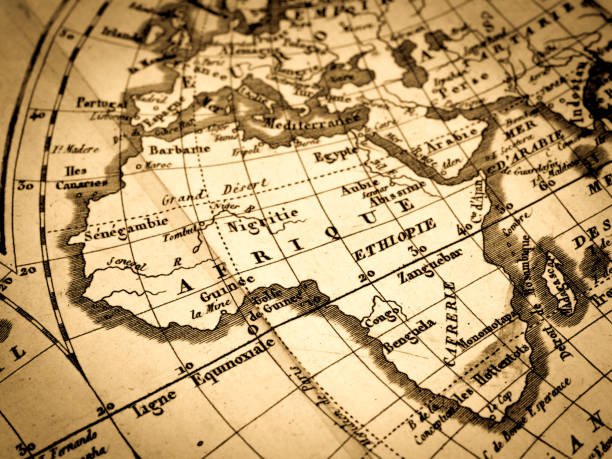
The question "Did Africa invade Italy?" is complex, but the simple answer is that various powerful entities and groups originating from the African continent, particularly North Africa, did indeed launch significant military campaigns and establish presences on the Italian peninsula and its surrounding islands over millennia. It is crucial to understand that "Africa" did not act as a unified political entity invading Italy; rather, specific kingdoms, empires, and caliphates from different regions of North Africa conducted these expeditions. These historical interactions profoundly shaped Italy's culture, demographics, and political landscape, leaving an indelible mark.
Understanding these historical incursions requires delving into specific periods and powers, from the formidable Carthaginian Empire to various Arab and Berber dynasties that exerted influence over parts of Southern Italy and Sicily. These episodes are not mere footnotes but represent pivotal moments in both African and Italian history, highlighting centuries of interconnectedness and conflict across the Mediterranean. This exploration will clarify the nature and extent of these engagements, revealing how different "African" powers interacted with the Italian peninsula at various times.
Understanding the Historical Context: Africa and Italy's Interconnectedness
The Mediterranean Sea has historically served less as a barrier and more as a highway, facilitating trade, cultural exchange, and, inevitably, conflict between the continents of Europe and Africa. For thousands of years, the peoples inhabiting the northern coast of Africa, from ancient Egypt to the Berber tribes of the Maghreb, engaged in vibrant interactions with the societies of the Italian peninsula. These relationships were often multi-faceted, involving alliances, commerce, and warfare, long before the rise of modern nation-states defined borders and identities.
Early contacts included Phoenician traders who established colonies across the Mediterranean, including in North Africa (like Carthage) and Sicily, creating a network that often linked African and Italian territories. This interwoven history means that the concept of an "invasion" from Africa needs to be contextualized within this continuous historical tapestry of interaction rather than viewed as isolated incidents.
The Punic Wars: Carthage's Challenge to Roman Dominance
Hannibal Barca and the Carthaginian Invasion
Perhaps the most famous and devastating "African invasion" of Italy came from the Carthaginian Empire, a powerful state situated in modern-day Tunisia. Carthage was a formidable naval and mercantile power with significant territorial holdings in North Africa, parts of Spain, and Sicily. Its rivalry with the Roman Republic led to the epic Punic Wars, a series of three major conflicts that spanned over a century.
The Second Punic War (218–201 BCE) is the most pertinent to the question of an invasion. It was during this conflict that the legendary Carthaginian general, Hannibal Barca, launched one of history's most audacious military campaigns. In 218 BCE, Hannibal famously led his army, complete with war elephants, across the Pyrenees and the Alps, descending into Northern Italy. His objective was not merely to raid but to decisively defeat Rome on its own soil and dismantle its growing power.
Hannibal's invasion resulted in a series of crushing defeats for the Romans, including the Battle of Trebia (218 BCE), the Battle of Lake Trasimene (217 BCE), and most famously, the Battle of Cannae (216 BCE). At Cannae, Hannibal's forces annihilated a larger Roman army, demonstrating tactical genius that is still studied today. For over a decade, Hannibal's army roamed through Italy, laying waste to the countryside, capturing cities, and attempting to break Rome's network of alliances with other Italian states.
While Hannibal inflicted immense damage and kept Rome on the defensive for years, he ultimately failed to capture Rome itself or to fully break the Roman Republic. The Romans, under generals like Scipio Africanus, eventually shifted the war to North Africa, forcing Hannibal to return to defend Carthage. The war concluded with Rome's victory, the destruction of Carthage's power, and Rome's emergence as the dominant force in the Mediterranean. The Carthaginian invasion of Italy left deep scars but also fortified Rome's resolve and military prowess.
The Vandal Kingdom: Raids and the Sack of Rome
Genseric and the North African Threat
Centuries later, another powerful entity based in North Africa posed a significant threat to Italy. The Vandals, a Germanic tribe, migrated across Europe and established a powerful kingdom in North Africa, with its capital at Carthage, in the 5th century CE. Under their ambitious king, Genseric, the Vandal Kingdom became a dominant naval power in the Western Mediterranean. From their North African base, the Vandals launched numerous raids on the coasts of Italy and its islands.
The most famous "invasion" or rather, raid, by the Vandals occurred in 455 CE, when Genseric led his fleet and army across the Mediterranean to Sack Rome. Unlike the Visigothic sack of 410 CE, which was relatively swift, the Vandal sack lasted for 14 days, during which the city was systematically plundered of its immense riches. Although the Vandals did not establish a lasting presence on the Italian mainland, their control over key islands like Sicily, Sardinia, and Corsica, coupled with their naval supremacy, allowed them to repeatedly harass the Italian coast and exact tribute, effectively controlling access to Italy from the west and south for decades.
The Vandal incursions from North Africa contributed significantly to the instability and eventual decline of the Western Roman Empire, highlighting how North African powers could project force directly onto the Italian peninsula, disrupting its political and economic life.
The Arab and Muslim Conquests of Southern Italy and Sicily
A New Wave of Incursions from North Africa
Starting in the 7th century CE, with the rapid expansion of Islam, a new and profoundly impactful wave of invasions originated from North Africa. Following the Muslim conquest of Egypt and the Maghreb, various Arab and Berber dynasties established powerful caliphates and emirates across North Africa. These new powers soon turned their attention to the strategic islands and coasts of Italy.
The most significant and lasting impact was felt in Sicily and parts of Southern Italy. The conquest of Sicily began in 827 CE with the landing of an Aghlabid army from Ifriqiya (modern-day Tunisia). This was not a swift campaign but a protracted struggle against the Byzantine Empire, which then controlled Sicily. Over several decades, the Aghlabids, followed by the Fatimids, gradually conquered the island, establishing the Emirate of Sicily by the early 10th century.
From their base in Sicily, these North African Muslim forces launched numerous raids and limited conquests on the Italian mainland. Key areas targeted included:
- Calabria: The southernmost region of the Italian mainland was frequently raided and, at times, occupied by Muslim forces.
- Puglia: Similar to Calabria, Puglia experienced significant incursions, with some coastal towns and cities falling under temporary Muslim control.
- Campania: Even regions further north, including the vicinity of Naples, faced threats and raids. In 846 CE, a large Muslim fleet even sailed up the Tiber River and sacked the outskirts of Rome, including the basilicas of St. Peter and St. Paul outside the city walls.
These Muslim presences and raids from North Africa had a profound impact:
- Cultural Exchange: Despite the conflict, these centuries led to significant cultural, scientific, and agricultural exchange. Sicily, under Muslim rule, became a thriving center of learning, art, and commerce, introducing new crops (like citrus and sugarcane), irrigation techniques, and architectural styles.
- Demographic Shift: There was a noticeable demographic shift in Sicily, with a substantial Muslim population establishing itself.
- Political Landscape: The constant pressure from North Africa forced the various warring Italian states (Byzantine, Lombard, Papal) to adapt and often to form temporary alliances or seek outside help, notably from the Normans, who eventually conquered Sicily from the Muslims in the 11th century.
The Arab conquest of Sicily and subsequent raids on mainland Italy unequivocally demonstrate instances where powers originating from North Africa not only invaded but also governed parts of the Italian geopolitical sphere for extended periods, leaving a rich and complex legacy.
Clarifying "Africa" and Nuance in Historical Narratives
It is essential to reiterate that when we discuss "Africa invading Italy," we are not referring to the continent of Africa as a single, unified political entity. The African continent is vast and diverse, home to countless peoples, cultures, and polities throughout history. The forces that invaded Italy originated from specific regions of North Africa, such as:
- Carthage: A Phoenician colony that grew into a powerful empire in modern-day Tunisia.
- The Vandal Kingdom: A Germanic kingdom that settled in Roman North Africa (modern-day Tunisia and Algeria).
- Aghlabid and Fatimid Caliphates: Arab and Berber Muslim dynasties based in Ifriqiya (modern-day Tunisia, parts of Algeria, and Libya).
These were distinct powers with their own motivations, cultures, and military compositions. Their actions, while originating from the African continent, were not representative of the entire continent. This nuance is critical for an accurate historical understanding, avoiding generalizations that can distort the past and misrepresent contemporary identities.
Long-Term Impacts and Legacy
The historical interactions, including invasions and occupations, between North African powers and the Italian peninsula left a lasting legacy:
- Architectural Influences: Especially in Sicily, one can still observe a blend of Norman, Byzantine, and Arab architectural styles, reflecting the successive periods of rule.
- Agricultural Innovations: New crops, irrigation methods, and farming techniques introduced during the Arab period transformed agriculture in Southern Italy.
- Linguistic and Cultural Traces: While Italian languages absorbed relatively few direct Arabic words compared to Spanish or Portuguese, there are traces in dialect, place names (toponyms), and culinary traditions, particularly in Sicily.
- Genetic Footprints: Historical migrations and conquests have left genetic imprints in the populations of Southern Italy and Sicily, reflecting centuries of interaction across the Mediterranean.
- Strategic Geopolitics: The strategic importance of Sicily and Southern Italy as a bridge between Europe and Africa was underscored by these conflicts, influencing subsequent European powers to control these vital territories.
These complex historical exchanges highlight that borders and identities were far more fluid in the past, and cultures were shaped by continuous cross-pollination, even through military confrontation. The story of Africa's historical influence on Italy is thus one of conflict, conquest, and profound cultural exchange.
Conclusion
In conclusion, the answer to "Did Africa invade Italy?" is a resounding yes, though with critical historical nuance. Throughout antiquity and the Middle Ages, significant military forces and political entities originating from North Africa repeatedly launched campaigns, established temporary or long-term presences, and exerted considerable influence over the Italian peninsula and its key islands like Sicily. From the existential threat posed by Carthaginian general Hannibal Barca during the Punic Wars to the destructive raids of the Vandal Kingdom, and the extensive conquest and rule by various Arab and Muslim dynasties in Sicily and Southern Italy, these interactions were pivotal. These historical episodes were not actions by a monolithic "Africa" but by specific, powerful states and empires that happened to be situated on the African continent. Their legacy is deeply embedded in Italy's history, culture, and even its landscape, affirming centuries of complex and often tumultuous Mediterranean interconnections. These periods of invasion and occupation undoubtedly shaped the course of Italian history, underscoring the deep and intricate historical ties between the two continents.
Enjoyed this read?
Share it with your friends and colleagues.