Did Africa Invade Spain

BSC Insights Admin
September 30, 2026
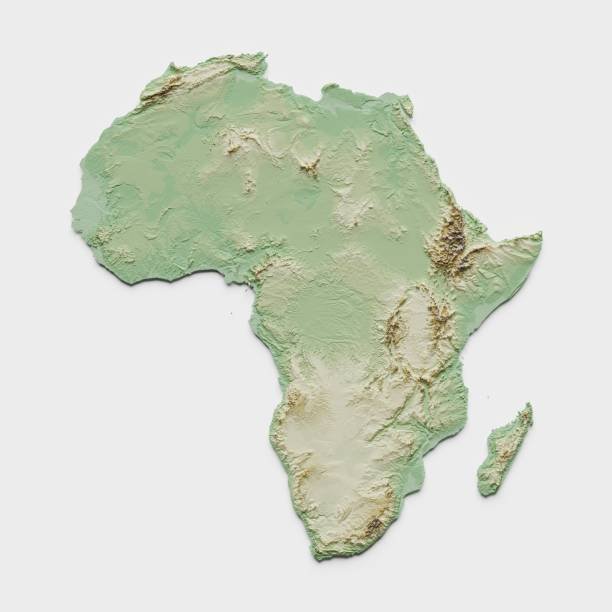
The question, Did Africa invade Spain?, is often asked, and while the answer is complex, it's generally understood that forces primarily originating from North Africa, led by the Umayyad Caliphate, initiated a significant conquest of the Iberian Peninsula starting in 711 CE. This was not an invasion by 'Africa' as a unified political entity, but rather a military expansion by an Islamic empire whose armies were largely comprised of Berbers from North Africa and Arabs from the Middle East. This pivotal event reshaped the region's history, leading to centuries of Islamic rule in what became known as Al-Andalus.
The Historical Context: Spain Before the Invasion
Before the arrival of Muslim forces, the Iberian Peninsula was dominated by the Visigothic Kingdom. This Germanic kingdom had ruled Spain since the 5th century, following the decline of the Roman Empire. By the early 8th century, the Visigothic state was plagued by internal strife, political instability, and succession disputes. These internal weaknesses played a crucial role in paving the way for the relatively swift success of the invading forces.
Political Instability and Succession Crises
- Feudal Divides: The Visigothic society was highly stratified, with a powerful nobility and a significant population of serfs and slaves.
- Religious Tensions: While largely Catholic, there were lingering Arian Christian influences and a notable Jewish population, which often faced persecution, leading to potential discontent.
- Succession Wars: A major catalyst for the invasion was the power struggle following the death of King Witiza, with Roderic usurping the throne from Witiza's heirs. This created factions willing to seek external support to regain power.
It was amidst this volatile political landscape that some Visigothic nobles, seeking to tip the scales in their favor, allegedly appealed to the emerging power across the Strait of Gibraltar: the Umayyad Caliphate.
The Moorish Conquest of Spain: Who, When, and How?
The term 'Moorish' is often used to describe the Muslim inhabitants of the Iberian Peninsula, comprising various ethnic groups, predominantly Berbers and Arabs. The Moorish invasion of Spain began in 711 CE, marking the start of a new era for the region.
Key Figures and Initial Landings
The first significant military foray across the Strait of Gibraltar was led by Tariq ibn Ziyad, a Berber general in the service of the Umayyad Caliphate. In April 711 CE, Tariq landed with a force of approximately 7,000 to 12,000 soldiers, mostly Berbers, at a strategic location that would later bear his name: Jabal Tariq (Mount of Tariq), now known as Gibraltar.
- Tarif ibn Malik: An earlier, smaller reconnaissance mission led by Tarif ibn Malik in 710 CE preceded Tariq's main invasion, testing the waters and gathering intelligence.
- Musa ibn Nusayr: Tariq's superior, Musa ibn Nusayr, the Umayyad governor of Ifriqiya (modern-day Tunisia and eastern Algeria), later joined the campaign with a larger Arab-dominated army in 712 CE.
The Battle of Guadalete and Swift Advance
The decisive confrontation occurred in July 711 CE at the Battle of Guadalete, where Tariq ibn Ziyad's forces met the army of the Visigothic King Roderic. Despite being outnumbered, the Muslim forces achieved a decisive victory, largely due to internal treachery within Roderic's army and superior tactics. King Roderic was killed, effectively ending the Visigothic Kingdom's dominance.
Following this victory, the Muslim forces advanced rapidly across the peninsula. Major cities like Córdoba, Seville, and Toledo (the Visigothic capital) fell within a few years. The conquest was remarkably swift, attributed to:
- The initial invitation by disaffected Visigothic nobles.
- The internal divisions and weakness of the Visigothic state.
- The military prowess and motivation of the invading forces.
- The willingness of some local populations, including persecuted Jews, to accept new rulers.
The Establishment of Al-Andalus: Islamic Spain
The conquered territories became known as Al-Andalus, a name that would define the region for nearly eight centuries. Al-Andalus was initially a province of the Umayyad Caliphate but later evolved into an independent emirate and then a caliphate, with its capital at Córdoba.
A New Society and Governance
Under Islamic rule, Al-Andalus developed a sophisticated and multicultural society. While Islam became the dominant religion, Christians and Jews, as 'People of the Book', were generally tolerated under the Dhimmi status, allowing them to practice their faiths in exchange for a special tax (jizya).
The administration introduced a highly organized system of governance, taxation, and justice. Agriculture flourished through advanced irrigation techniques, and cities grew into vibrant centers of trade and learning.
Cultural and Intellectual Golden Age
The period of Islamic Spain is often regarded as a golden age for science, philosophy, medicine, mathematics, and the arts. Scholars from Al-Andalus made significant contributions that influenced both the Islamic world and medieval Europe.
| Area of Contribution | Examples / Impact |
|---|---|
| Science & Medicine | Advancements in astronomy (astrolabe, observatories), surgery, pharmacology. |
| Philosophy | Translating and reinterpreting Greek philosophy (Aristotle) by figures like Averroes (Ibn Rushd) and Maimonides. |
| Mathematics | Introduction of Indian numerals (Arabic numerals), algebra, geometry. |
| Architecture | Stunning examples like the Mezquita of Córdoba, Alhambra in Granada, intricate tile work, horseshoe arches. |
| Agriculture | New crops (rice, oranges, sugar cane), advanced irrigation systems. |
The cultural exchange facilitated by Al-Andalus was immense, serving as a bridge between the East and West. Arabic became the language of scholarship and administration, while Latin and various Romance dialects continued to be spoken by the populace, gradually evolving into modern Spanish.
The Reconquista: Christian Reassertion
The Moorish conquest was not universally accepted, and a long process of Christian reconquest, known as the Reconquista, began almost immediately in the northern parts of the Iberian Peninsula. Small Christian kingdoms like Asturias, León, Castile, Aragon, and Portugal gradually pushed south over centuries.
Key Milestones of the Reconquista
- Battle of Covadonga (722 CE): Often cited as the first significant victory for Christian forces against the Muslims in the Picos de Europa, establishing the Kingdom of Asturias.
- Fall of Toledo (1085 CE): A major strategic and symbolic victory for Alfonso VI of Castile, marking a turning point in the Christian advance.
- Battle of Las Navas de Tolosa (1212 CE): A decisive victory for a coalition of Christian kings against the Almohad Caliphate, severely weakening Muslim power.
- Fall of Granada (1492 CE): The last Muslim stronghold in Al-Andalus, the Nasrid Kingdom of Granada, fell to the Catholic Monarchs, Ferdinand and Isabella, marking the end of the Reconquista and centuries of Islamic rule in Spain.
The Reconquista was a series of intermittent campaigns, punctuated by periods of peace, alliance, and cultural exchange. It fundamentally shaped the identity and formation of modern Spain and Portugal.
The Legacy and Long-Term Impact
The centuries of Islamic presence in the Iberian Peninsula left an indelible mark on Spain's culture, language, architecture, and identity. The concept of North African influence is particularly relevant when discussing this period.
Lasting Contributions
- Language: Hundreds of Spanish words are derived from Arabic, particularly in fields like agriculture, science, and administration (e.g., 'azúcar' from 'as-sukkar', 'aceituna' from 'az-zaytuna', 'almohada' from 'al-mukhaddah').
- Architecture: The unique Mudejar style, blending Islamic and Christian elements, is a testament to the enduring artistic legacy.
- Cultural Exchange: Through translations and scholarly works, Al-Andalus played a crucial role in reintroducing classical Greek and Roman knowledge to Western Europe, fostering the Renaissance.
- Agriculture and Technology: Introduction of new crops, irrigation techniques, and manufacturing processes.
This period of early 8th-century expansion profoundly altered the trajectory of Spanish history, establishing a rich tapestry of cultural interaction and conflict that continues to be studied and celebrated today. It underscores how the geographical proximity and historical ties between the Iberian Peninsula and North Africa have shaped their shared past.
Conclusion: A Nuanced Understanding
In conclusion, while it's inaccurate to state that the entire continent of 'Africa invaded Spain,' it is historically accurate that military forces, primarily composed of Berbers from North Africa and Arabs, under the banner of the Umayyad Caliphate, conquered the Iberian Peninsula starting in 711 CE. This event, often referred to as the Moorish conquest of Spain or the Muslim invasion of the Iberian Peninsula, led to the establishment of Al-Andalus, a thriving Islamic society that profoundly influenced European civilization for centuries. The complex interplay of political ambition, religious fervor, and societal factors drove these events, leaving a lasting legacy that continues to define Spanish history and culture.
Enjoyed this read?
Share it with your friends and colleagues.