Did Africa Give Judaism To The World

BSC Insights Admin
October 01, 2026
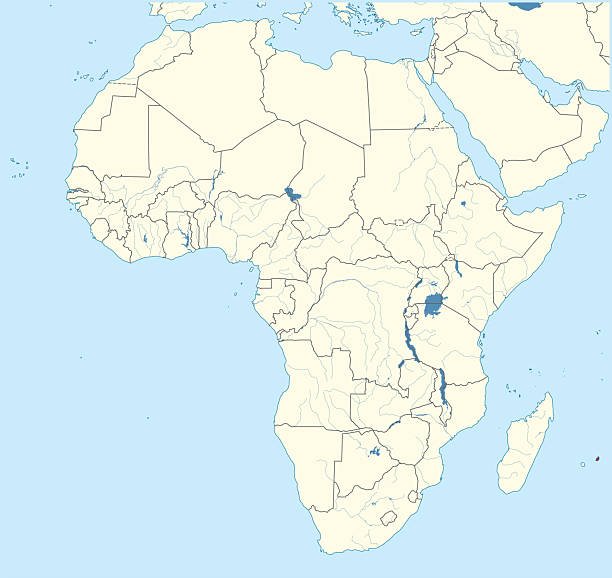
The question of whether Africa gave Judaism to the world is complex, rooted in historical interconnectedness rather than a simple origin point. While the core tenets and foundational narratives of Judaism emerged from the ancient Near East, specifically the Levant (modern-day Israel/Palestine), the African continent, particularly Egypt, played an undeniably crucial and formative role in its early history. Furthermore, Africa became home to some of the world's oldest and most unique Jewish communities, profoundly shaping the global tapestry of Jewish life.
Judaism, as a distinct monotheistic religion and ethnoreligious group, developed in the lands bordering Africa. However, its story is deeply intertwined with Egyptian history, notably through the biblical narrative of the Exodus, which describes the Israelite liberation from Egyptian bondage. Beyond these foundational texts, archaeological evidence and historical records confirm the presence of significant and vibrant Jewish communities across various parts of Africa for millennia, influencing and being influenced by their African surroundings.
The Ancient Near East and Africa: A Shared Cradle of Civilization
To understand the relationship between Africa and Judaism, we must first recognize the geographical and cultural fluidity of the ancient world. The Levant, the birthplace of Judaism, lies at the crossroads of three continents: Asia, Europe, and Africa. Ancient Egypt, a powerful African civilization, maintained extensive political, economic, and cultural ties with its neighbors in the Levant for thousands of years. This constant interaction meant that people, ideas, and religious practices flowed back and forth, creating a rich, interconnected historical landscape.
Egypt's Pivotal Role in Early Israelite History
The narratives central to Judaism’s self-identity are replete with references to Egypt:
- The Patriarchal Period: Abraham, Isaac, and Jacob all had connections to Egypt, seeking refuge or sustenance during times of famine in Canaan. Joseph's rise to power in Egypt is a prominent story.
- The Exodus: This foundational event, detailing the Israelites' enslavement and miraculous liberation from Egypt under Moses' leadership, is arguably the most significant narrative in Jewish tradition. It establishes the covenant between God and the Israelite people, the giving of the Torah (Law), and the journey to the Promised Land. The experience in Egypt profoundly shaped Jewish identity, law, and ritual.
- The Wilderness Journey: Following the Exodus, the Israelites spent forty years in the Sinai Peninsula, often considered geographically part of Africa, where much of the Mosaic Law was revealed.
These early interactions mean that while Judaism's *origin point* was not Africa, its *formative period* was inextricably linked to the African continent through Egypt. The historical memory of Egypt is embedded deeply within Jewish liturgy, law, and culture.
Ancient Jewish Communities on African Soil
Beyond the biblical narratives, archaeological and historical records attest to the long-standing presence of thriving Jewish communities in various parts of Africa.
Jewish Life in Ancient Egypt (Post-Exodus)
After the Exodus, Jewish people continued to live in and migrate to Egypt for centuries, often due to political upheaval or economic opportunity in the Levant.
- Elephantine Island (5th-4th Century BCE): Perhaps one of the most remarkable archaeological discoveries related to ancient Judaism. On Elephantine Island in the Nile River, a community of Jewish mercenaries, serving the Persian Empire, established a temple dedicated to Yahweh. Their Aramaic papyri offer invaluable insights into Jewish life, law, and religious practices during a period for which information is otherwise scarce. This community's existence challenges some traditional understandings of the centralization of worship in Jerusalem.
- Alexandria (3rd Century BCE - 7th Century CE): Alexandria, Egypt's Hellenistic capital, became one of the largest and most influential centers of Jewish life in the ancient world. Estimates suggest that by the 1st century CE, hundreds of thousands of Jews resided there, perhaps a third of the city's population. Alexandrian Jews were prominent in commerce, philosophy, and scholarship. It was here that the Septuagint, the first Greek translation of the Hebrew Bible, was produced, making Jewish scripture accessible to the wider Hellenistic world. Philosophers like Philo of Alexandria attempted to reconcile Jewish thought with Greek philosophy, demonstrating a vibrant intellectual synthesis.
These Egyptian Jewish communities were not merely passive recipients of a religion from abroad; they actively contributed to its development and dissemination, particularly through the Greek translation of the Torah which facilitated its spread across the Mediterranean world.
The Unique Case of the Beta Israel (Ethiopian Jews)
The Beta Israel, or Ethiopian Jews, represent one of the world's most ancient and distinctive Jewish communities. Their history is steeped in African soil, and their traditions, developed in relative isolation, offer a unique window into ancient Jewish practice.
- Origins and Legends: The Beta Israel have a rich oral tradition regarding their origins, often tracing their lineage to the Queen of Sheba and King Solomon, or to ancient Israelite exiles who migrated south. Historical theories include:
- Descent from Ancient Israelites: Some scholars suggest they are descendants of Jews who migrated from ancient Israel or Egypt, perhaps after the destruction of the First Temple (586 BCE).
- Indigenous Conversion: Another theory posits that an indigenous East African population converted to Judaism centuries ago, possibly influenced by South Arabian Jewish communities or early Christian-Jewish interactions.
- Distinctive Practices: For centuries, the Beta Israel practiced a form of Judaism centered around the Torah and certain biblical books, but without the Talmud or rabbinic traditions that developed elsewhere. Their spiritual leaders, the Kessim, maintained ancient rituals, sacrificial practices, and a unique liturgical calendar. They maintained strict dietary laws and Sabbath observance.
- Recognition and Aliyah: Despite long periods of persecution and debate over their Jewish status, the Beta Israel were officially recognized as Jews by Israel's Chief Rabbinate in the 1970s. Mass airlifts, notably Operation Moses (1984) and Operation Solomon (1991), brought tens of thousands of Ethiopian Jews to Israel, integrating them into modern Israeli society while striving to preserve their rich cultural heritage.
The existence and persistence of the Beta Israel demonstrate a profound and enduring Jewish presence indigenous to Africa, one that developed its own unique expressions of Jewish faith and culture.
Jewish Communities Across North Africa
North Africa also harbored ancient and influential Jewish communities, contributing significantly to Jewish history and culture.
- Carthage and Cyrenaica: Punic-era Carthage and the Roman province of Cyrenaica (modern-day Libya) hosted thriving Jewish populations dating back to the Hellenistic period. These communities were often robust, enduring until the Roman persecutions and later the Arab conquests.
- Maghreb (Morocco, Algeria, Tunisia): Jews have lived in the Maghreb for over two millennia, predating both Christianity and Islam in the region. These communities flourished under various Berber, Roman, Byzantine, and later Islamic rulers. They produced some of the most influential Jewish scholars and rabbis, including figures like Maimonides, who spent time in Morocco and Egypt. Moroccan Jewry, in particular, maintained a vibrant presence for centuries, known for its distinct customs, liturgical melodies, and strong spiritual traditions, before mass emigration to Israel and other countries in the 20th century.
These North African Jewish communities highlight the continent's role not just as a temporary refuge but as a permanent home where Jewish culture adapted, thrived, and contributed to the wider Jewish world.
Understanding 'Giving' in the Context of Origins and Development
To reiterate, the scholarly consensus is that Judaism, as a religious and ethnic identity, emerged from the ancient Near East, specifically the region of Canaan/Israel. Therefore, in the strictest sense of *origin*, Africa did not 'give' Judaism to the world.
However, framing the question solely around 'origin' might be too narrow. A more nuanced understanding reveals that:
- Formative Influence: Egypt, as part of Africa, profoundly influenced the early Israelite experience, as depicted in the biblical narratives that form the bedrock of Judaism. This was not a 'giving' of Judaism *by* Africa, but rather an integral 'shaping' of Israelite identity *through* interaction with Africa.
- Nurturing and Development: Africa provided fertile ground for the growth and development of diverse Jewish communities for thousands of years. From the philosophical synthesis in Alexandria to the unique practices of the Beta Israel and the rich rabbinic traditions of the Maghreb, African Jewish communities preserved, adapted, and enriched Jewish heritage in ways distinct from those in Europe or the Middle East.
- Cultural Exchange: Jewish communities in Africa were part of broader cultural exchanges. They contributed to the intellectual life of the continent (e.g., in Alexandria) and were influenced by African customs, languages, and social structures, creating unique expressions of Jewish identity.
Therefore, while the geographical point of origin for Judaism is the Levant, Africa has been an indispensable partner in its historical journey. It was a place where Jewish people found refuge, built thriving societies, and maintained their traditions for millennia, sometimes in remarkable isolation, and sometimes in vibrant interaction with the surrounding cultures.
The Enduring Legacy of African Judaism
The history of Jewish communities in Africa is a testament to the resilience and adaptability of the Jewish people. Today, while many ancient communities have significantly diminished due to emigration, the legacy of African Judaism continues to enrich the global Jewish tapestry. The descendants of these communities, particularly Ethiopian Jews, have brought their unique traditions and spiritual depth to Israel, creating a vibrant cultural fusion.
The ongoing study of African Jewish history contributes significantly to our understanding of the broader Jewish diaspora, illustrating the diverse ways in which Jewish identity and practice have manifested across different continents and cultures. It challenges simplistic notions of origin and instead emphasizes a complex, interconnected history where Africa played a vital and continuing role.
Conclusion: Africa's Indelible Mark on Judaism
In conclusion, while Judaism did not originate *from* Africa in the sense of its initial theological and ethnic formation occurring exclusively within the continent, Africa's role in the religion's history is undeniable and profound. Egypt was central to the foundational narratives of the Israelite people, and various parts of the continent subsequently became home to thriving, ancient Jewish communities. From the ancient Jewish temple at Elephantine to the philosophical brilliance of Alexandrian Jewry, and the unique, millennia-old traditions of the Beta Israel in Ethiopia, Africa provided a cradle, a refuge, and a dynamic environment for Jewish life and thought to flourish. These communities not only preserved Jewish identity but also developed distinctive practices and rich cultural expressions that form an integral part of the global Jewish heritage. Thus, Africa did not 'give' Judaism its initial spark, but it was a crucial partner in its development, preservation, and enduring global spread, leaving an indelible mark on Jewish history and identity.
Enjoyed this read?
Share it with your friends and colleagues.