Which Country In Africa Last Gained Independence

BSC Insights Admin
October 01, 2026
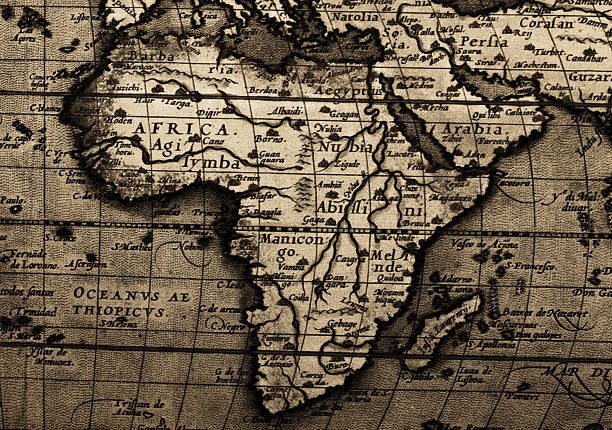
Understanding historical milestones on the continent requires identifying which country that last gained independence in Africa as a sovereign state. South Sudan holds this title, having officially separated from Sudan on July 9, 2011, making it the youngest nation on the globe. This event marked the end of a long period of internal conflict and established the country as the fifty-fourth member of the African Union.
The process of decolonization and state formation spanned several decades across the continent, with many nations achieving sovereignty in the mid twentieth century. Examining the most recent additions to the list of sovereign states reveals the complex geopolitical shifts that shaped the modern map.
These are the Countries Related to Which Country In Africa Last Gained Independence
The journey to self-determination in Africa did not happen all at once, and while many nations gained freedom in the 1960s, others achieved it much later due to complex liberation struggles or prolonged colonial arrangements. The following profiles highlight the African countries that last gained independence, showcasing the diverse paths they took to establish their own administrative borders.
1. South Sudan (2011)
The historical shift that saw a country in Africa last gained independence took place in 2011 when South Sudan officially separated from its northern neighbor. Following a massive referendum in January 2011 where over ninety-eight percent of the population voted for secession, the nation officially declared its sovereignty in July of that same year. This momentous achievement was the direct culmination of the Comprehensive Peace Agreement signed in 2005, which successfully ended decades of brutal and costly civil war between the northern and southern regions. Today, as the fifty-fourth sovereign state on the continent, South Sudan continues to build its national institutions and infrastructure from the ground up while navigating a highly complex regional landscape. The international community quickly welcomed the new republic with open arms, and it became a full member of the United Nations just days after its historic declaration. Its capital, Juba, serves as the central administrative hub where the nation directs its efforts toward achieving lasting peace, social cohesion, and sustainable economic development.
2. Eritrea (1993)
Eritrea became an independent state in May 1993 after a long and difficult armed struggle against Ethiopian rule that spanned across thirty years of relentless conflict. Before achieving its full sovereignty on the world stage, the region had been federated with and subsequently annexed by Ethiopia, leading to widespread resistance among the local population. A United Nations monitored referendum was held in April 1993, where an overwhelming majority of over ninety-nine percent of the citizens voted in favor of establishing a separate nation. This monumental event significantly altered the political landscape of the Horn of Africa, as it left Ethiopia entirely landlocked and established a new maritime player along the Red Sea. The country established its capital in the beautiful city of Asmara and quickly set about the monumental task of rebuilding its economy and national identity after decades of warfare. Today, Eritrea maintains a highly unique social structure focused on extreme self-reliance and mandatory national service to protect its hard-won freedom and sovereign borders.
3. Namibia (1990)
Namibia officially achieved its independence on March 21, 1990, after transitioning away from the illegal control of South Africa under the brutal apartheid regime. The liberation struggle was led primarily by the South West Africa People's Organization, which fought a long and difficult guerrilla war to secure the fundamental rights of the indigenous population. The transition to statehood was heavily guided and monitored by the United Nations, which oversaw the democratic elections that brought a new representative government to executive power. Namibia's independence was a landmark event that signaled the approaching end of white minority rule across the broader Southern African region. The country possesses vast and breathtaking desert landscapes along with rich mineral resources that have helped it develop a stable and relatively prosperous economy since gaining its freedom. Windhoek, the capital, serves as a center of governance that has successfully maintained a peaceful multi-party democracy and respected legal constitution for decades.
4. Zimbabwe (1980)
Zimbabwe is another nation that achieved its recognized independence relatively late compared to the initial waves of decolonization, officially doing so in April 1980. After a prolonged and bloody bush war against the white minority government of the unrecognized state of Rhodesia, the Lancaster House Agreement in London paved the way for democratic elections. This historic settlement allowed the country to finally join the global community of recognized sovereign nations and shed its colonial administrative ties. The agricultural potential and vast mineral wealth of the country were once seen by global economists as the foundation for a highly prosperous post-colonial state. While the country has unfortunately faced massive economic challenges and hyperinflation in the decades following its freedom, its independence day remains a point of deep national pride. The capital city of Harare stands as a testament to the nation's historical efforts to build a unified, educated, and self-governing society.
5. Djibouti (1977)
Djibouti gained its freedom from French colonial rule on June 27, 1977, making it a relatively young republic on the continent that emerged outside the typical independence decades. Formerly known as the Territory of the Afars and the Issas, this small nation occupies a highly strategic position at the entrance to the Red Sea and the Gulf of Aden. The process of achieving statehood involved multiple referendums as the local population sought to determine their own political destiny away from European administrative control. Despite its arid climate and extremely limited natural resources, Djibouti has leveraged its prime geographic location to become a major hub for international maritime trade and foreign military bases. The country's relative stability in a traditionally volatile region has made it an essential partner for global security and international humanitarian activities. Its local culture is a rich blend of Somali and Afar traditions, operating harmoniously within a modern administrative framework that services global trade.
6. Seychelles (1976)
Seychelles became an independent republic within the Commonwealth on June 29, 1976, after operating as a British colony for over a century of maritime history. The peaceful transition to sovereignty followed extensive constitutional conferences held in London, where local leaders negotiated the precise terms of their self-governance. This archipelago of over a hundred islands in the Indian Ocean possesses a unique Creole identity and some of the highest human development scores in the entire region. The economy relies heavily on high-end luxury tourism and sustainable industrial fishing practices to support its small but highly prosperous population. Since its independence, the government has dedicated over half of its land area to nature reserves, setting a global standard for environmental conservation and eco-tourism. Victoria, the capital, operates as one of the smallest capital cities in the world while managing a highly successful and protective oceanic economy.
7. Angola (1975)
Angola achieved its independence from Portugal on November 11, 1975, after a long and multi-faceted liberation war that involved several competing nationalist groups. The collapse of the dictatorial regime in Portugal in 1974 finally forced the European power to abandon its overseas territories, leading to a sudden and complex transition. Unfortunately, the declaration of sovereignty was immediately followed by a devastating civil war that lasted for decades as global superpowers intervened in local politics. Despite the early turmoil and massive displacement, the nation has utilized its massive reserves of petroleum and diamonds to fund large-scale reconstruction efforts since peace was achieved in 2002. Luanda, the coastal capital, has transformed into a modern metropolis filled with skyscrapers that reflects the country's aspirations for regional economic leadership. The path to freedom was exceptionally difficult, but the nation now stands as a powerful player in Central and Southern African affairs.
8. Mozambique (1975)
Mozambique is another nation that gained its freedom from Portuguese administration in 1975, specifically declaring its sovereignty on June 25 of that momentous year. The armed struggle led by the Mozambique Liberation Front had lasted for ten years before a military coup in Portugal brought a government to power that favored immediate decolonization. Like Angola, the country faced a severe shortage of skilled professionals upon the sudden departure of the colonial administration, which quickly led to a brutal internal conflict. Since the signing of a comprehensive peace accord in 1992, the country has focused on rebuilding its agricultural sector and exploiting its newly discovered offshore natural gas reserves. Maputo, the capital, is a vibrant port city that facilitates essential trade for landlocked neighbors like Zimbabwe and the Kingdom of Eswatini. The nation's long Indian Ocean coastline continues to be one of its greatest assets for future economic growth and deep regional integration.
9. Cape Verde (1975)
Cape Verde, now officially known as Cabo Verde, achieved its independence from Portugal on July 5, 1975, as part of the broader decolonization of the Lusophone world. This island nation, located off the western coast of the continent, had a liberation movement that was closely linked to the struggle in Guinea-Bissau on the mainland. Unlike many of its peers that achieved freedom during this period, Cape Verde has enjoyed remarkable political stability and has become a shining model for democratic governance. Lacking significant natural resources, the country has built a highly successful economy based on services, high-end tourism, and remittances from its massive global diaspora. The population is a unique Creole mix of African and European heritage, maintaining a rich musical and literary tradition that is celebrated worldwide. Its capital, Praia, serves as a peaceful hub for an Atlantic nation that has made exceptional progress in health and education since independence.
10. Comoros (1975)
The Comoros islands declared their independence from France on July 6, 1975, completing a wave of sovereignty movements in the Indian Ocean region. The declaration was made unilaterally by local political leaders after a referendum yielded a strong majority in favor of separation from European administration. However, the island of Mayotte voted to remain under French control, creating a complex geopolitical situation that continues to be discussed in international forums today. The nation has faced numerous political transitions and periods of instability since its independence, but it has recently worked toward greater regional integration. Known as the Perfume Isles because of its production of ylang-ylang and vanilla, the economy is largely agricultural and relies on these cash crops for foreign exchange. Moroni, the capital, reflects a rich blend of Arab and African influences that define the cultural and social landscape of the archipelago.
Reasons Why These Countries Were Among the Last to Gain Independence in Africa
1. Prolonged Armed Conflict and Civil War: Many of the countries that gained sovereignty late did so because they were locked in decades of warfare. For instance, South Sudan fought for nearly fifty years in separate civil wars before it could finally hold a democratic referendum for secession. This intense conflict destroyed infrastructure and prevented the establishment of administrative borders, delaying the formal process of achieving recognized nationhood on the global stage. Only when comprehensive peace agreements were signed and monitored by the international community could these long-standing territorial disputes be settled peacefully.
2. Resistance from Colonial Dictatorships: The timing of freedom often depended heavily on which European power was in control of the territory. While Britain and France granted independence to most of their colonies in the 1960s, Portugal operated under a dictatorial regime that refused to let go of its overseas provinces. This obstinate refusal led to the long guerrilla wars in Angola and Mozambique, making them some of the countries in Africa that last gained independence in the late twentieth century. It required a military coup in Portugal itself to finally trigger the decolonization process for these Lusophone nations.
3. Complex Regional Federations and Unions: Several nations were originally bound into federations or administrative unions with larger neighbors, making their path to separate statehood longer and more complicated. Eritrea was federated with Ethiopia and later annexed, requiring a full scale war and a United Nations referendum to finally achieve its recognized independence in 1993. Similarly, South Sudan was part of a unified Sudan, and the process of unwinding that political union took decades of negotiation and conflict. These complex arrangements meant that the borders could not be easily redrawn without significant political and social upheaval.
4. Strategic Geopolitical Interests: Some territories were held longer by colonial powers because of their strategic military or economic value. Djibouti, for example, is located at a critical maritime chokepoint between the Red Sea and the Gulf of Aden, giving France a reason to maintain control until 1977. This strategic value made the occupying powers hesitant to grant full sovereignty until they could secure agreements that protected their ongoing military interests. As a result, these nations had to navigate complex international diplomacy before they could fly their own national flags.
5. The Presence of Entrenched Settler Populations: In nations like Zimbabwe, the presence of a large and politically powerful white settler population significantly delayed the transition to majority rule and recognized independence. The local government in Rhodesia unilaterally declared independence from Britain in 1965 to maintain minority rule, leading to international sanctions and a prolonged bush war. It took fifteen years of fighting and eventual diplomatic intervention at the Lancaster House in London to finally establish the sovereign state of Zimbabwe in 1980. This resistance to majority rule was a common factor that delayed sovereignty across much of the southern part of the continent.
6. Unique Insular and Geographic Isolation: Island nations like Comoros and Seychelles had different paths to freedom that were not tied to the massive mainland liberation movements. Their small size and geographic isolation meant that the push for independence was often driven by local political elites navigating constitutional conferences in Europe rather than large scale armed conflicts. This diplomatic approach often took longer to finalize as both parties worked through the economic and administrative details of handing over power to small island administrations. Despite the lack of warfare, the negotiations required years to reach a consensus that satisfied both the local populations and the outgoing colonial powers.
Conclusion
In summary, understanding which country in Africa last gained independence requires looking at the profound history of South Sudan and its separation from Sudan in 2011. While this young republic represents the most recent nation to achieve sovereignty, it stands on the shoulders of many other nations that fought for freedom in the late twentieth century. Each of these states has navigated unique challenges to establish their borders and build national identities in a changing world. The diverse stories of liberation across the continent demonstrate the resilience and determination of its people to chart their own course. As these youngest nations continue to develop, they contribute to the rich and evolving political landscape of the entire continent.
Enjoyed this read?
Share it with your friends and colleagues.