Did Africa Used To Be Called Libya

BSC Insights Admin
October 07, 2026
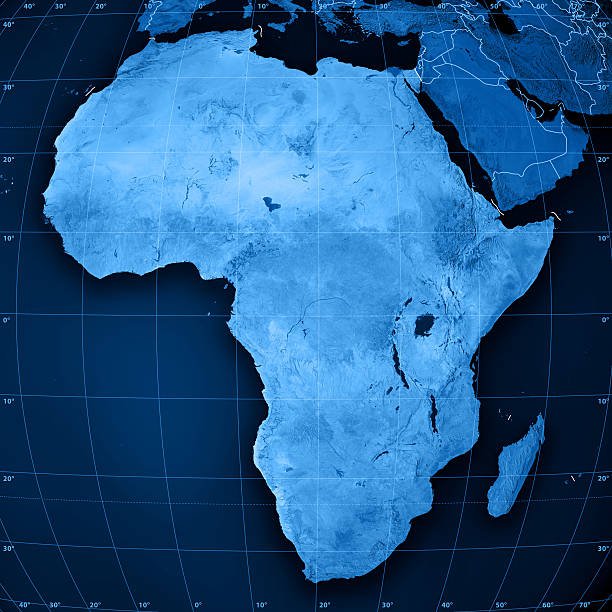
The question of whether the entire continent of Africa was once called Libya is a fascinating journey into ancient history and geographical nomenclature. While the answer is not a simple yes, it's also not a simple no. The term Libya held significant historical and geographical weight, particularly in the ancient world, referring to a vast area that encompassed much of what we now consider North Africa, and for some ancient Greek geographers, even the entire continent west of Egypt. However, the name 'Africa' itself has a distinct origin and gradually expanded to denote the entire landmass we recognize today.
Understanding this requires a dive into how different civilizations perceived and named the known world, particularly the land south of the Mediterranean Sea. The evolution of these names reflects shifting empires, expanding knowledge, and the gradual mapping of the globe, eventually leading to the widespread adoption of 'Africa' for the continent and 'Libya' for a specific nation.
The Hellenic View: Libya as One of Three Continents
For many ancient Greek geographers, the world was primarily divided into three main landmasses: Europa (Europe), Asia, and Libya. This tripartite division was a fundamental concept in Hellenic geography, dating back to figures like Hecataeus of Miletus in the 6th century BCE and famously expounded upon by Herodotus in the 5th century BCE in his Histories.
In this framework, Libya referred to all the known land west of the Nile River and south of the Mediterranean Sea. It was a broad, often ill-defined region that extended indefinitely to the south. Herodotus, for example, described Libya as one of the three great divisions of the Earth, stretching from the Atlantic to the Red Sea, bordered by the Mediterranean to the north. His understanding of Libya encompassed not just modern-day Libya but also Egypt west of the Nile, Tunisia, Algeria, Morocco, and potentially vast, unknown territories further south. The term 'Libya' for the Greeks, therefore, functioned much like a continental name, representing the southern-western portion of their known world.
It's crucial to understand that this 'Libya' was not a politically unified entity but rather a geographical designation for a vast region, much of which remained unexplored and mysterious to the Greeks. Their knowledge was largely confined to the Mediterranean coastlines and the immediate hinterlands. The inhabitants of this vast territory were generally referred to as Libyans, encompassing various indigenous tribes, including the Berber peoples and others.
The Roman Province of Africa and its Naming Influence
While the Greeks used 'Libya' broadly, the Romans introduced and solidified the name 'Africa' for a specific region, which would eventually spread across the entire continent. After the Punic Wars, particularly the Third Punic War in 146 BCE, Rome defeated its rival, Carthage. This victory led to the creation of a new Roman province in the former Carthaginian territory, which they named Provincia Africa.
This Roman province, later known as Africa Proconsularis, covered a rich and fertile area corresponding to much of modern-day Tunisia and parts of coastal Algeria and western Libya. It was a highly valued part of the Roman Empire, known for its grain production and strategic importance. The capital of this province was Utica, and later, Carthage was rebuilt and became a major Roman city.
The Etymology of "Africa"
The precise etymology of the name 'Africa' is debated, with several theories proposed:
- From the Afer people: One prominent theory suggests the name comes from the 'Afer' (or 'Afri') tribe, a group of indigenous people who inhabited the region around Carthage. The Romans might have named the province after these people.
- From the Latin word 'aprica': Meaning 'sunny' or 'exposed to the sun,' which would be apt for the continent's climate.
- From the Greek word 'aphrike': Meaning 'without cold' or 'not cold,' referring to the warm climate.
- From the Phoenician word 'afar': Meaning 'dust' or 'earth,' reflecting the region's arid landscapes.
- From the Berber word 'Ifri' or 'Ifru': The plural 'Ifren' or 'Afarq' refers to caves or caverns, and by extension, cave dwellers. The Beni Ifren were a prominent Berber tribe in North Africa.
Regardless of its exact origin, the name 'Africa' became firmly associated with this Roman province. Over time, as Roman knowledge and influence expanded across North Africa, the term 'Africa' began to be used in a broader sense to refer to other regions, eventually encompassing the entire continent. This was a gradual process, influenced by cartographers, explorers, and scholars who progressively mapped the vast landmass.
Evolving Geographical Terms: Libya vs. Africa
The terms 'Libya' and 'Africa' co-existed for centuries, with their meanings evolving and their geographical scopes shifting. For the Romans, 'Libya' generally referred to the territory to the east of their 'Provincia Africa,' specifically the region corresponding to modern-day eastern Libya, often called Libya Superior (Cyrenaica) and Libya Inferior (Marmarica and parts of Tripolitania).
During the Roman period, the entire continent was sometimes referred to as 'terra Africana' (African land) or 'Africa omnia' (all of Africa), demonstrating the expansion of the name's scope beyond just the province. Medieval European cartographers, drawing on both Greek and Roman traditions, gradually solidified 'Africa' as the name for the entire landmass, especially as exploration began to reveal the continent's true extent.
By the 16th and 17th centuries, with the Age of Exploration in full swing and European powers mapping the coastlines and interior, the name 'Africa' became the undisputed designation for the entire continent. Simultaneously, 'Libya' narrowed in its usage, eventually becoming primarily associated with the region that constitutes the modern country of Libya.
Key Differences in Scope:
- Ancient Greek 'Libya': A continental term for the landmass west of the Nile, extending south indefinitely.
- Roman 'Africa': Initially a specific province (Africa Proconsularis) in modern Tunisia, which gradually expanded to become the name for the entire continent.
- Roman 'Libya': Used to refer to regions east of Provincia Africa, primarily Cyrenaica and Marmarica.
From Ancient Libya to Modern Libya: A Name's Journey
The historical region known as Libya Antiqua or Ancient Libya covered a much larger area than the modern nation of Libya. It generally encompassed the arid lands west of the Nile Delta, stretching across what are now parts of Egypt, Libya, and Tunisia.
Regions within Ancient Libya:
- Marmarica: The northwestern coast of Egypt and the eastern coast of modern Libya.
- Cyrenaica: The prominent peninsula in eastern modern Libya, known for its Greek colonies like Cyrene. This was a fertile and culturally significant region.
- Tripolitania: The western coastal region of modern Libya, including the cities of Oea (Tripoli), Leptis Magna, and Sabratha. This region bordered the Roman province of Africa.
These regions were distinct and often under different influences – Greek, Roman, and various indigenous Berber kingdoms. The modern nation of Libya gained its name and current borders in the early 20th century, primarily through Italian colonial ambitions. When Italy colonized the Ottoman provinces of Tripolitania, Cyrenaica, and Fezzan in 1911-1912, they unified these territories and revived the ancient name 'Libya' to refer to this new political entity. This was a deliberate choice to invoke historical grandeur and a sense of continuity for the new colony.
Therefore, while the name 'Libya' has an ancient lineage tied to a vast part of the African continent, its application to the specific nation-state is a relatively recent development, drawing on historical precedent but defining a much smaller, politically delineated territory.
Mapping the Continent: How Africa Gained its Name
The transition from a regional 'Africa' to a continental 'Africa' was largely facilitated by advancements in cartography and the relentless drive of exploration, particularly during the European Age of Exploration from the 15th century onwards. Before this period, maps of the world, especially those from medieval Europe, often depicted a truncated or highly speculative African continent, with its southern extent unknown.
As Portuguese, Spanish, and later other European navigators rounded the Cape of Good Hope, explored the west and east African coasts, and eventually pushed into the interior, the true vastness and shape of the continent became clearer. These expeditions required consistent terminology, and the name 'Africa,' already established from the Roman province and gaining broader acceptance, became the default term to describe the entire landmass.
Prominent cartographers like Gerard Mercator and Abraham Ortelius, whose influential maps were widely distributed, consistently labeled the entire landmass as 'Africa.' This widespread adoption in published maps and travelogues solidified the name globally, making it the standard designation for the continent that endures to this day. The process involved a combination of inherited classical knowledge, empirical discovery, and the need for a singular, comprehensive name for a distinct geographical entity.
The naming of continents is often a complex interplay of historical accident, political power, and evolving geographical understanding. For Africa's naming history, it was the Romans' establishment of a key province and the subsequent expansion of that name by European explorers and cartographers that cemented its place.
Clarifying Misconceptions About Africa's Historical Names
The common misconception that Africa was entirely known as Libya stems from a partial understanding of ancient geography. It's easy to conflate the Greek use of 'Libya' as a continental descriptor with the modern political entity, or to overlook the Roman origin of 'Africa.' Here are some key clarifications:
- Regional vs. Continental: For the ancient Greeks, 'Libya' *was* a continental term for the land west of the Nile. However, this was their specific worldview and naming convention, not universally adopted by all civilizations, nor was it always maintained consistently throughout history.
- Roman Influence: The Romans, a later dominant power in the region, named their key province 'Africa.' This name, not 'Libya,' is what eventually expanded to cover the entire continent. The Romans used 'Libya' for specific regions east of their province.
- Evolution, Not Replacement: It wasn't a direct replacement of 'Libya' with 'Africa' for the *entire* landmass. Instead, 'Africa' grew from a regional name to a continental one, while 'Libya' gradually contracted to define a smaller, more specific region, eventually becoming the name of a modern nation.
- Ancient World Geography: Ancient maps and texts often reflect limited knowledge. What was 'known' as Libya by the Greeks was only a fraction of the actual continent, mostly its northern fringe. The true scale and diversity of Africa were not grasped until much later.
Therefore, while 'Libya' certainly held a significant place in the historical nomenclature of North Africa and was even used continentally by certain ancient cultures, it is not accurate to say that the entire continent of Africa was universally or consistently called Libya throughout history. The evolution of continent names is a testament to the dynamic nature of human knowledge and influence.
Conclusion
In conclusion, the question Did Africa Used To Be Called Libya reveals a rich tapestry of historical geography and naming conventions. No, the entire continent of Africa was not universally or consistently known as Libya throughout history. However, the term 'Libya' did serve as a broad continental designation for the landmass west of the Nile for ancient Greek geographers like Herodotus. Concurrently, the name 'Africa' originated from a specific Roman province established after the defeat of Carthage in modern-day Tunisia. This Roman 'Africa' gradually expanded in scope, eventually becoming the widely accepted name for the entire continent through centuries of exploration and cartographic development. The name 'Libya' itself eventually narrowed to define a particular region of North Africa, giving rise to the modern nation-state. Understanding this complex interplay of ancient Greek and Roman terminology is key to appreciating the history of the name Africa and how our continents received their modern designations.
Enjoyed this read?
Share it with your friends and colleagues.