Africa Was Named After

BSC Insights Admin
October 08, 2026
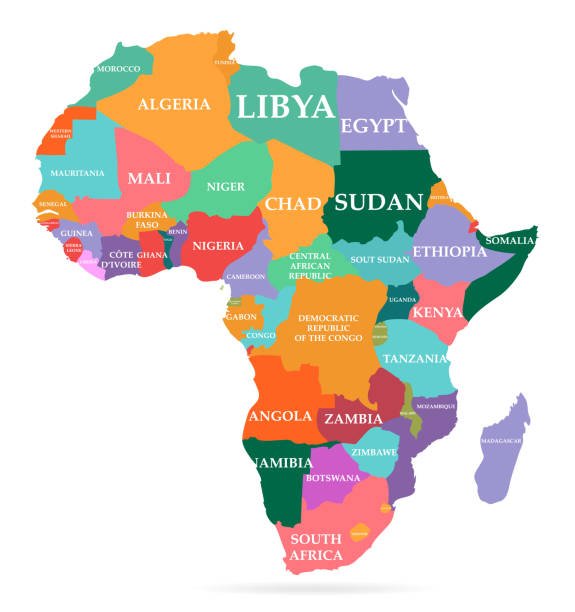
The etymology of the continent name is a fascinating topic that explores country in Africa Africa was named after through various historical and linguistic lenses. Most scholars agree that the term originated from the northern regions before being applied to the entire landmass during the Roman and medieval periods. Understanding this nomenclature helps reveal the complex interactions between ancient civilizations and the diverse peoples who inhabited the Mediterranean coastline and the Saharan interior.
Examining these roots provides a clearer picture of how external perceptions and internal identities converged to form a single geographic label over several millennia. This exploration takes us from the ancient ruins of Carthage to the scholarly halls of ancient Rome and the vibrant cultures of the Berber tribes.
These are the Which Country or Individual Africa Was Named After
The quest to determine the exact origin of the name Africa involves looking at linguistic evidence, tribal movements, and the geographical descriptions provided by ancient historians. While the modern map of the continent consists of 54 recognized nations, the name itself was originally confined to a very small area in the north. Through the following points, we will analyze the various theories regarding which country that Africa was named after in Africa and how this name eventually came to represent 30.37 million square kilometers of land and over 1.4 billion people today.
1. The Afri Tribe and the Carthage Region
One of the most widely accepted theories is that the name comes from a tribe known as the Afri who lived in the vicinity of ancient Carthage, located in modern-day Tunisia. This group was a Berber people who resided in the northern parts of the continent and interacted extensively with the Phoenician settlers. When the Romans conquered this territory after the Punic Wars, they adopted the name of the local tribe to describe the entire administrative region. Therefore, the early use of the name was not a description of a vast continent but a specific reference to a localized ethnic group. This illustrates how a single tribal designation can eventually expand to encompass a global geographic identity. Historically, this region was the gateway through which many outsiders first encountered the southern landmass.
2. The Phoenician Afar and the Dust Theory
Linguistic experts often point to the Phoenician word afar which translates to dust or soil as a potential root for the names origin. As the Phoenicians were seafaring traders who established colonies like Carthage, they would have frequently described the dry and dusty environment of the North African coast. The suffix ca was often added in Latin to denote a place or land, leading to the construction of the word Africa to mean the land of dust. This theory is supported by the geographic reality of the region, which is dominated by the Saharan climate and arid plains. It suggests that the name was originally a descriptive term for the environment rather than a political or tribal label. Such environmental naming conventions were common among ancient mariners who needed to categorize the new lands they discovered.
3. The Roman Province of Africa Proconsularis
The formalization of the name occurred when the Roman Empire established the province of Africa Proconsularis after the destruction of Carthage in 146 BC. This province covered much of what is now northern Tunisia and parts of eastern Algeria and western Libya. For the Romans, this African country which Africa was named after served as a vital agricultural hub, providing vast quantities of grain to the city of Rome. Over time, as Roman influence spread and their geographic knowledge increased, the name of this specific province began to be used for the entire landmass south of the Mediterranean. This administrative expansion is a classic example of how imperial terminology can redefine geographic boundaries over several centuries. The Roman mapmakers were instrumental in standardizing the name for use in European scholarship for the next two thousand years.
4. The Greek A-phrike and the Climate Theory
Another intriguing theory suggests that the name has Greek origins, derived from the word aphrike which means without cold or not cold. The Greek historian and scholar Herodotus was deeply interested in the lands south of the Mediterranean, and many later Greeks adopted this term to describe the warm climate of the region. This etymology fits perfectly with the perception of the continent as a place of perpetual sunshine and high temperatures. In this context, the name serves as a climatic descriptor that distinguished the southern landmass from the colder regions of Europe. While this theory is less popular among modern linguists than the tribal theory, it highlights the ancient Greek contribution to the naming of the world. It reflects the early efforts of humans to categorize continents based on their perceived physical characteristics.
5. The Latin Aprica and the Sunny Land
Similar to the Greek theory, some scholars believe the name comes from the Latin word aprica which means sunny or open to the sun. This would describe a land that is bathed in sunlight, a characteristic that certainly applies to the vast majority of the African continent. The Romans were known for naming regions based on their prominent physical features, and the intense sun of the south would have been a defining feature for any traveler. This theory aligns with the broader Mediterranean view of the south as a place of heat and light. It also complements the earlier Phoenician descriptions of a dry and dusty environment. Whether the name is Greek or Latin in its original thought, both theories emphasize the continents unique climate as a primary factor in its naming.
6. Leo Africanus and the Egyptian Roots
The famous traveler and scholar Leo Africanus proposed an interesting theory that the name might have Egyptian roots. He suggested that the word could be derived from the Egyptian term af-rui-ka which can be translated as to turn toward the opening of the Ka. In Egyptian theology, the Ka is the life force or spirit, and this phrase might refer to a place of birth or a spiritual homeland. While this theory is more speculative and less grounded in administrative history, it resonates with the idea of the continent as the cradle of humanity. Some modern Afrocentric scholars find this theory compelling because it places the origin of the name within an indigenous African civilization rather than a foreign empire. It suggests a deeper spiritual connection to the land that predates the arrival of the Romans or Greeks.
7. The Ifriqiya Connection in Islamic History
Following the Arab conquests of the seventh century, the region that the Romans called Africa was renamed Ifriqiya by the new Muslim rulers. This term was a direct transliteration of the Latin name but was used to describe the Maghreb region, specifically Tunisia and western Libya. During the Islamic Golden Age, Ifriqiya became a center of learning, trade, and culture, maintaining the name in the regional consciousness. As trade routes expanded across the Sahara, the name Ifriqiya was carried southward, further cementing the identity of the land. This period of history shows how names can survive political and religious transitions through the process of linguistic adaptation. The persistence of the name under various caliphates ensured that it remained the standard designation for the northern portion of the continent.
8. Sanskrit and the Apara Theory
A more obscure but geographically interesting theory suggests a connection to the Sanskrit word apara which means that which comes after or the west. Proponents of this theory argue that ancient Indian traders who sailed the Indian Ocean might have referred to the landmass to their west by this name. While there is little direct evidence that this specific word became the standard name for the continent, it highlights the fact that Africa was known to various global civilizations through trade. The Indian Ocean trade network was incredibly active, connecting the Horn of Africa with the Indian subcontinent for thousands of years. This theory serves as a reminder that the naming of the continent was not purely a Mediterranean affair but involved a network of global interactions. It adds a layer of eastern perspective to the primarily western-focused etymological history.
9. Berber Roots and the Word Ifri
Many linguists believe that the ultimate root of the name is the Berber word ifri which means cave or cave dweller. The Berber people of North Africa were known for their use of caves for shelter and storage, and several places in the region still carry this name today. The plural form of ifri is ifran, which might have been adapted by the Phoenicians and Romans into the term Afri. This would mean that the continent was named after the architectural and lifestyle habits of its indigenous people. This theory is particularly strong because it acknowledges the presence and identity of the Berber tribes before the arrival of outside conquerors. It roots the name of the continent in the very earth and the traditional dwellings of its inhabitants. It is a powerful example of how local geography and culture can influence global terminology.
10. Punic Influence and the Name of Carthage
The Punic language, spoken by the people of Carthage, likely played a significant role in how the name was transmitted to the Romans. Some scholars suggest the Punic word pharika meaning a land of fruit or a land of crops might be the true origin. This would be consistent with the regions reputation as a highly fertile area before the desertification of certain parts of the North. The Romans, upon hearing the Punic name, would have adapted it into their own linguistic structure. This theory bridges the gap between the indigenous Berber terms and the later Roman administrative labels. It shows that the naming of the continent was a multi-stage process involving several different languages and cultures. The transition from Punic to Latin reflects the shifting power dynamics of the ancient Mediterranean world.
11. European Cartography and the Global Label
During the Middle Ages and the Renaissance, European cartographers were responsible for applying the name Africa to the entire continent on their maps. Early maps, such as those produced by Ptolemy, already used the term, but it was the Age of Discovery that truly popularized the name. As explorers like Vasco da Gama sailed around the Cape of Good Hope, the name was extended to cover every region from the Sahara to the southern tip. By the time the Scramble for Africa occurred in the 19th century, the name was universally accepted by all global powers. This cartographic standardisation was essential for international diplomacy and trade. It transformed a local regional name into a continental identity that is recognized by every nation on earth today. The mapmakers of Europe essentially solidified the linguistic choices made by the Romans centuries earlier.
12. The Modern Adoption and Continental Unity
In the modern era, the name Africa has been embraced by the people of the continent themselves as a symbol of unity and shared heritage. During the decolonization movements of the mid-20th century, leaders like Kwame Nkrumah and Haile Selassie used the name to promote Pan-Africanism. While the name may have foreign roots, its meaning has been reclaimed and redefined by those who live there. Today, organizations like the African Union represent the collective interests of the nations that fall under this ancient name. This shows that the history of a name is not just about its origins but also about how it is used and perceived in the present. The name has evolved from a tribal label to a geographic region and finally into a powerful political and cultural identity. It remains a testament to the enduring nature of human naming traditions.
Reasons Why These Theories Relate to What Africa Was Named After in Africa
The various theories regarding the origin of the continents name are not mutually exclusive and often overlap in historical and linguistic ways. These connections explain why the name Africa became so deeply entrenched in the global vocabulary and why it persists despite its diverse possible origins.
1. Geographic Centrality of North Africa: The primary reason most theories focus on the north is that this was the region most accessible to the ancient civilizations of the Mediterranean. For the Romans, Greeks, and Phoenicians, the northern coast was the only part of the continent they could consistently reach and govern. Consequently, the names they used for the people of Tunisia and Libya naturally became the names they used for the entire landmass. This geographic bias is common in ancient history, where the name of a specific frontier region is applied to the vast unknown territory beyond it. This explains why countries in Africa that Africa was named after are almost always located in the Mediterranean zone.
2. Linguistic Evolution and Adaptation: The name Africa survived because it was easily adaptable into different languages, including Latin, Greek, Arabic, and later the European vernaculars. As different empires rose and fell, they each took the existing name and modified it to fit their own phonetic rules. This linguistic flexibility allowed the name to remain relevant for over 2,000 years, even as the political landscape changed dramatically. The shift from the Berber Ifri to the Roman Africa and then to the Arabic Ifriqiya shows a continuous chain of adaptation. This continuity is a key reason why the name was never replaced by an entirely new term. It provided a stable reference point for sailors, traders, and historians across different eras.
3. Influence of Ancient Scholarly Works: The writings of ancient historians like Herodotus, Pliny the Elder, and Ptolemy were the primary sources of knowledge for Europeans for centuries. These authors consistently used the name Africa in their descriptions of the world, which meant that every educated person in the Western world grew up with this terminology. When the printing press was invented, these classical texts were among the first to be widely distributed, further cementing the name. The authority of these ancient scholars was so great that their geographic labels were rarely questioned. Even when new lands were discovered, they were simply added to the existing framework established by the ancients. This academic tradition played a massive role in the global spread of the name.
4. The Role of Trade and Diplomacy: Throughout history, names are often standardized through the needs of commerce and international relations. As merchants from African countries that Africa was named after traded gold, salt, and spices with Europe and Asia, they needed a common way to refer to their origin. Using a single name for the continent made trade agreements and navigational charts much simpler to manage. Over time, the name became a brand that represented the wealth and diversity of the southern lands. This economic incentive for a unified name was a powerful force in its adoption across different cultures. It shows that nomenclature is often driven by practical necessity as much as by historical chance.
5. Colonial and Post-Colonial Mapping: During the era of European colonization, the partitioning of the continent required clear and standardized maps. The colonial powers used the name Africa as the overarching label for their various territories, ensuring that it was used in all official treaties and administrative documents. When these colonies gained independence in the 20th century, they chose to keep the name as a way to maintain a sense of continental solidarity. This transition from a colonial label to a symbol of independence is a crucial part of the names history. It reflects the resilience of the people and their ability to repurpose historical terms for their own ends. Today, the name is an integral part of the global political landscape.
6. The Search for Indigenous Identity: In recent decades, there has been a significant effort to uncover the indigenous roots of the name, such as the Berber or Egyptian theories. This research is motivated by a desire to show that the name has a connection to the people of the land, even if it was popularized by outsiders. By highlighting the potential link to words like ifri or af-rui-ka, scholars are attempting to give the name a more localized meaning. This search for identity is a common theme in African history and linguistics. It helps to balance the narrative by including the voices and perspectives of the continents original inhabitants. It ensures that the story of the name is as diverse as the continent itself.
Conclusion
The name of the continent is a complex legacy of ancient tribes, powerful empires, and global trade networks that have spanned thousands of years. While we may never know with absolute certainty which specific African country which Africa was named after was the very first to inspire the term, the evidence points strongly toward the northern regions of Tunisia and Libya. Whether the name describes the dust of the earth, the warmth of the sun, or the identity of a specific tribe, it has become a powerful symbol for one of the most diverse regions on the planet. Today, 1.4 billion people carry this name as part of their identity, showing that words have the power to bridge the gap between the ancient past and the modern world. The history of Africa's name is ultimately a story of human connection and the enduring nature of our shared geographic history.
Enjoyed this read?
Share it with your friends and colleagues.